How to Keep Your Trees Healthy During Hot Weather in Hawaii
Key Takeaways: Keeping trees healthy during hot weather in Hawaii requires deep watering, proper mulching, careful pruning, and strong root care to reduce heat stress and prevent damage. By following consistent, climate-aware maintenance practices, homeowners can protect tree structure, improve resilience, and ensure healthy growth throughout the hottest months.
If trees could talk, they’d probably file formal complaints about the weather right along with the rest of us. Sure, they like it warm, but there’s a limit. Tropical species thrive in warmth, but extended periods of high heat mixed with drying trade winds create conditions that weaken roots, reduce growth, and increase the risk of limb failure. Strong tree health during hot weather never happens by accident. It comes from consistent, informed maintenance that supports the entire structure from the roots upward. The solution comes from understanding how Hawaii’s heat affects the soil, the canopy, and the natural stress cycle.
Deep, Slow Watering Gives the Best Results
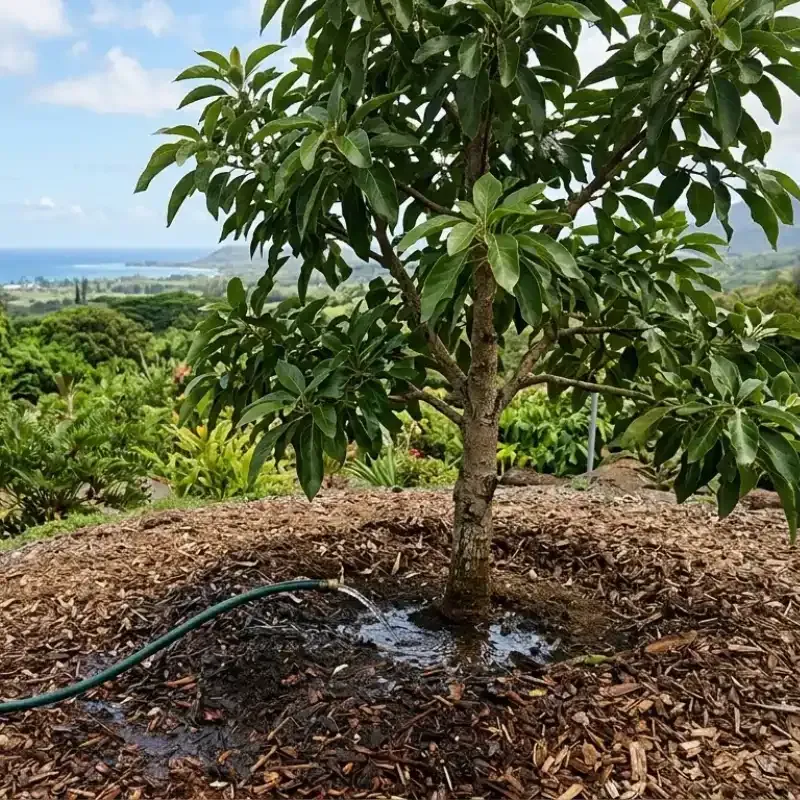
Daily surface watering creates more harm than good during heat waves. A quick splash across the topsoil never reaches the root zone that actually supports the tree. Deep watering works far better and encourages healthy root behavior. A slow flow from a hose for thirty to forty minutes at the dripline allows moisture to reach twelve to eighteen inches beneath the surface. That depth keeps the soil cool and gives roots the hydration needed to support the canopy.
This method outperforms sprinklers because it avoids evaporation and targets the zone where roots live.
A weekly deep soak often fully supports most Hawaii tree species during hot months. Soil type matters. Sandy soil drains faster and tends to require more frequent hydration. Clay or heavy volcanic soil retains water longer. Adjusting watering intervals to local soil conditions creates major improvements in tree resilience.
Mulch increases the effect of deep watering. A wide mulch ring two to four inches deep helps stabilize soil temperature and reduces moisture loss. Keeping mulch away from the trunk prevents bark rot. Many homeowners build mulch piles around the base of the tree, believing that more coverage equals more protection. That habit when avoiding proper tree trimming services in Hawaii suffocates the trunk and encourages fungus. A flat, wide ring always works better than a tall mound.
| Habit | Purpose | Notes |
|---|---|---|
| Deep watering once per week | Hydrates roots | 12–18 inches deep |
| Add wide, shallow mulch | Retains moisture | Keep away from trunk |
| Avoid aggressive pruning | Reduces stress | Wait for cooler months |
| Keep yard equipment away | Protect roots | No heavy traffic near base |
| Watch for leaf curl/discoloration | Early stress detection | Inspect weekly |
| Improve soil aeration | Oxygenates roots | Use mulch & loosening techniques |
Pruning Decisions Matter Even More During Heat
Hawaii homeowners often underestimate how strongly heat exposes weaknesses in improper pruning. Over-topping is a common mistake. Removing the upper canopy forces trees to produce fast, weak shoots that drain energy and fail to shade the trunk. High heat scorches exposed limbs and reduces the tree’s ability to regulate temperature.
Targeted structural pruning offers far stronger protection. Removing dead, crossing, or rubbing limbs opens the canopy just enough to improve airflow without stripping shade. This approach shields the bark from direct sunlight and helps regulate internal moisture levels. Trees with balanced, natural canopies handle hot weather far more effectively than trees with heavy cuts.
Heat waves also limit how much pruning the tree can tolerate at once. Removing too much foliage during extreme heat places the tree under stress. Our tree trimming team performs light shaping, deadwood removal, and hazard mitigation. Anything beyond that risks dehydration and sunscald. Major pruning should wait for cooler seasons when the tree recovers more easily.
Roots Decide How Well a Tree Survives Heat
The most common sign of heat stress in Hawaii does not appear in the leaves. The problem almost always starts underground. Compacted soil restricts oxygen movement. Without oxygen, roots lose their ability to absorb water no matter how much is added. This situation leads to wilted leaves, brittle twigs, and slow growth.
Aeration around the dripline helps. Loosening compacted soil, adding organic material, and maintaining healthy mulch prevent root suffocation. Heavy foot traffic, parked cars, and repeated mowing near the trunk often cause silent root damage. Keeping that area protected allows roots to function properly during severe heat.
Heat-stressed trees also attract pests more easily. Borers, scale insects, and fungal infections spread faster when the tree loses moisture control. Healthy, hydrated roots produce natural protective compounds that deter pests. Once roots weaken, infestations spread quickly. Maintaining deep watering and proper soil health reduces almost every major pest risk during hot months.
Tree care outcomes improve dramatically with skilled attention. Discover the positive impact of professional tree trimming services in Oahu and what sets expert work apart.
Hawaii’s Climate Creates Unique Heat Challenges
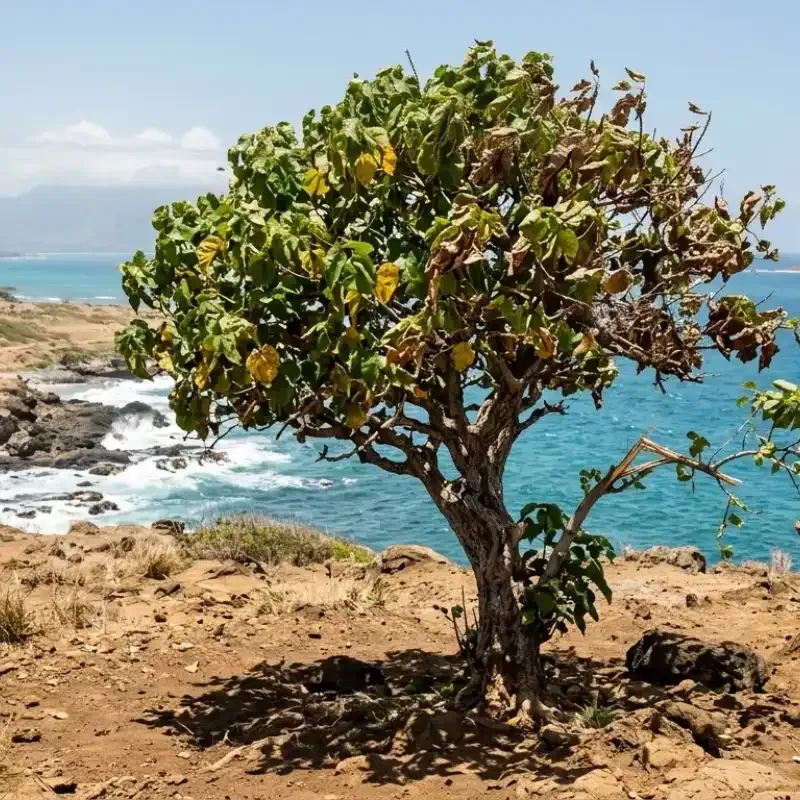
Hawaii heat does not behave like mainland heat. High humidity traps warmth around the canopy. Coastal winds carry salt that dries leaves faster. Afternoon sun works at a stronger angle than most homeowners expect. These conditions create stress cycles that repeat daily. A tree that performs well in moderate conditions quickly loses stability when strong sun mixes with low rainfall.
Storm growth also becomes a challenge. Rapid spring or early summer growth creates new branches that appear strong but lack established wood density. Hot weather then dries these young branches and makes them brittle. A sudden wind gust snaps them. Many homeowners believe the storm itself caused the damage when heat stress laid the groundwork weeks earlier.
Timing plays a major role in how well your trees grow and recover. Learn when the best time to trim trees in Hawaii is so your landscape stays healthy year-round.
Preventative Maintenance Offers the Strongest Protection
Annual or quarterly inspections prevent most major problems associated with Hawaii’s summer heat. Trees show early signs of stress long before failure occurs. Routine assessments identify weak unions, bark cracks, insect activity, and moisture imbalance. Addressing these issues before extreme temperatures arrive ensures the tree enters hot weather with strength rather than vulnerability.
Experienced climbers and pruning specialists rely on safe rigging methods and canopy access techniques to evaluate the upper structure of the tree. These inspections reveal structural problems that homeowners rarely notice from the ground. Small adjustments made early in the year reduce the need for aggressive work in summer.
Simple Habits Keep Trees Strong All Summer
A few consistent actions make a major difference in tree health during Hawaii’s hottest months:
• Provide deep watering once per week
• Add a wide, shallow mulch ring to maintain moisture
• Avoid aggressive pruning when temperatures rise
• Keep yard equipment away from roots
• Watch for early leaf curl or discoloration
• Improve soil aeration where compaction forms
These habits work together to reduce stress and help the tree maintain strong, stable growth.
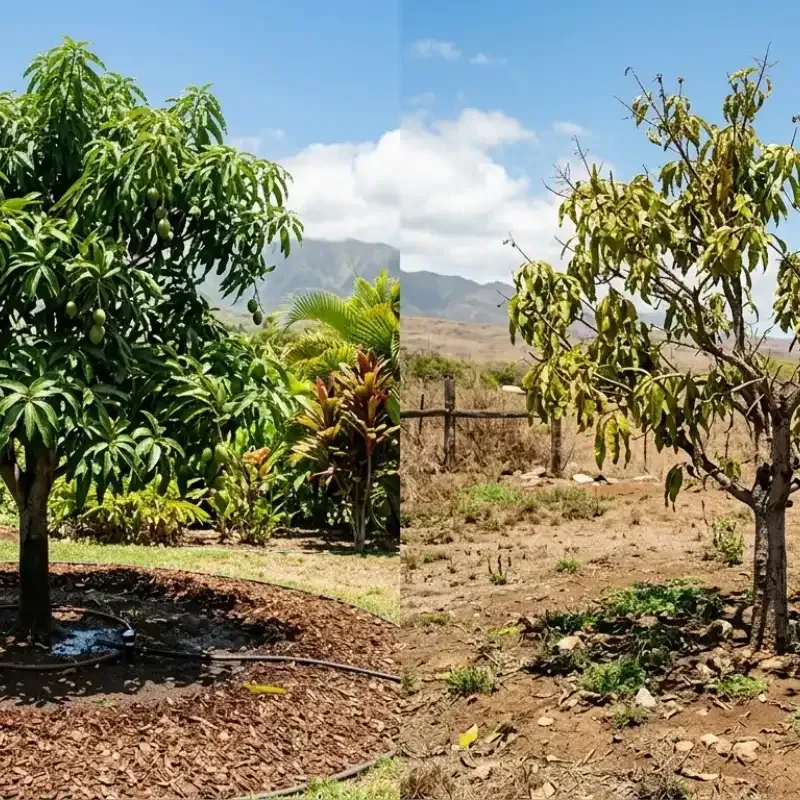
Healthy Trees Handle Heat More Easily
Trees with balanced pruning, deep roots, steady soil moisture, and consistent care handle Hawaii’s hot weather far better than neglected trees. Heat stress develops slowly and quietly, but small preventative steps stop the decline before it begins.