High-Risk Tree Removal in Oahu: How Professionals Safely Handle Hazardous Trees
Expert Insight: High-risk tree removal in Oahu requires careful planning, structural assessment, and advanced climbing and rigging techniques to safely manage unstable trees in challenging environments. By relying on experienced professionals who understand local conditions and tree behavior, property owners can avoid serious hazards and ensure safe, controlled removal.
Tree work here is complex, physical, and full of variables. Many people underestimate how unpredictable an unstable tree can be and attempt to DIY their tree removal. A tall albizia or ironwood that looks manageable from the ground can react in ways that surprise even experienced climbers, the sort of surprise that makes you rethink all your life choices in about half a second. This is why trained crews rely on established safety systems, technical rigging, and a methodical assessment process before any saw ever starts.
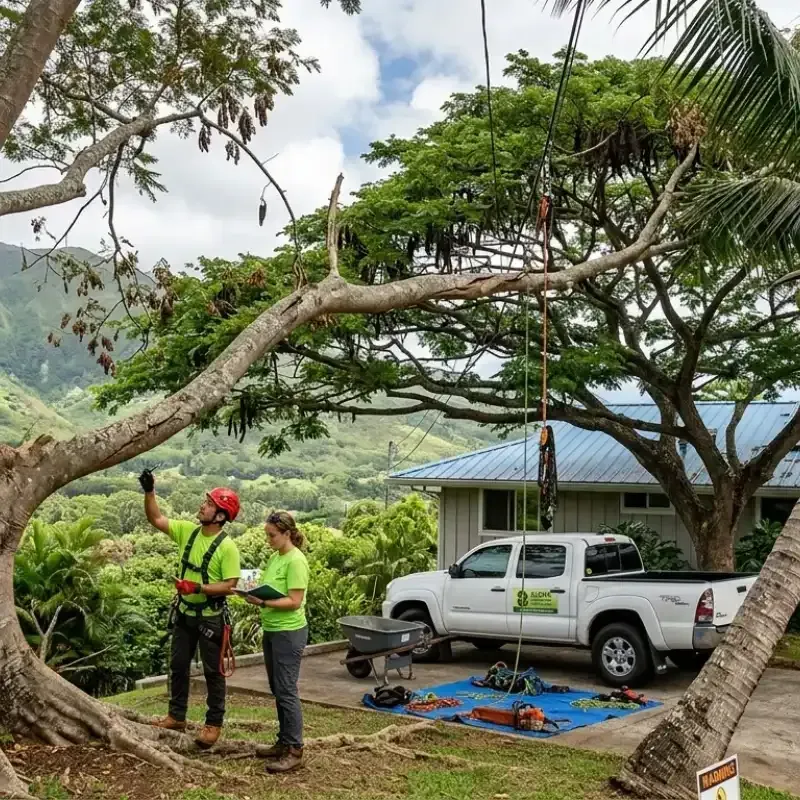
Why High-Risk Trees in Oahu Are Especially Hazardous
Oahu’s environment produces conditions that accelerate tree instability. Heavy trade winds stress the canopy year-round. Sudden rain saturates shallow soil. Some species, like albizia, grow fast but remain brittle. Others, like monkeypod, develop large horizontal limbs that become overloaded after years of overtopping.
Professional tree removal services in Honolulu, HI who work with these trees daily understand patterns that are not obvious to the public. A tree with early decay might appear sturdy until weight shifts during cutting. A leaning trunk may hide compromised roots that give out the moment tension changes. Even a small mistake, such as cutting a limb in the wrong order can redirect force toward a home, vehicle, or worker on the ground.
This is why crews begin every high-risk project with a detailed inspection. They analyze canopy weight, trunk condition, root depth, lean angle, wind direction, and the escape routes available. Nothing is rushed. High-risk removal requires a mindset shaped by experience.
Pre-Removal Evaluation and Planning
Professionals evaluate factors such as rot pockets, unusual cracking, fungal activity, and stress fractures caused by storms. These details reveal how the tree will respond once climbing and cutting begin.
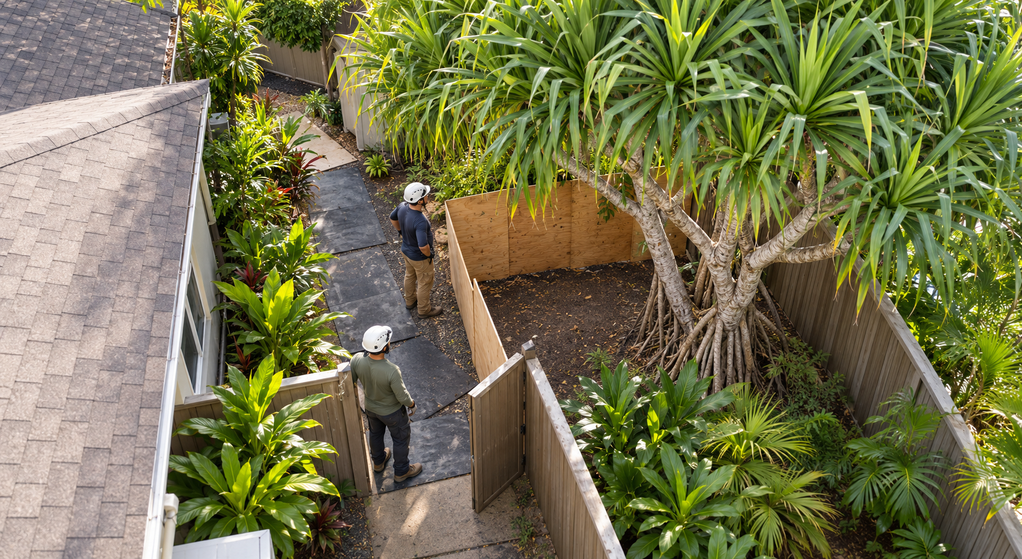
In many Oahu neighborhoods, yards are small and surrounded by roofs, fences, wires, or lanais, leaving little or no open space for a safe “fall zone.” Professionals also study the environment around the tree.
Planning often includes the following steps:
- Selecting the safest climbing route
- Determining where rigging anchors can support the load
- Choosing a lowering system strong enough for the tree species
- Establishing communication roles between climbers and ground crew
- Preparing contingency plans if the tree reacts unexpectedly
It is a structured approach that draws on years of previous jobs, including complex removals in steep valleys and tight urban spaces.
Handling Decay, Storm Damage, and Root Failure
Many of the most dangerous tree removals in Oahu involve hidden structural problems, and our Hawaii tree removal team has the experience to handle them safely. Decay inside the trunk weakens the tree long before any exterior signs appear. Storms twist the canopy until fibers separate, creating internal cracks that professionals detect through close inspection.
Root failure is another major hazard. When roots weaken, the entire tree becomes unpredictable. A climber can shift their weight and cause the base to move several inches. That kind of instability demands creative rigging strategies and constant communication across the crew.
Professionals use techniques such as:
- Securing the trunk to external anchors
- Reducing canopy weight before major cuts
- Lowering sections in smaller increments
- Reinforcing compromised areas when possible
These decisions rely on deep familiarity with local species and firsthand experience working in difficult terrain.
Climbing and Rigging Techniques That Keep Crews Safe
Experienced professionals rely on advanced climbing techniques that allow them to reach hazardous limbs without destabilizing the tree further. Climbers in Hawaii often work in unpredictable conditions, such as wet bark or wind gusts coming off the mountains.
Rigging is where expertise becomes most visible. Hazardous trees cannot simply be cut and allowed to fall. Instead, pieces are lowered slowly and deliberately using ropes, pulleys, friction devices, and anchors.

A controlled lowering system prevents heavy limbs from swinging into homes or snapping back toward climbers. Each cut is planned so the weight moves in a predictable direction. This level of precision comes from continuous training and repeated exposure to challenging scenarios, including tall albizia removals in tight valleys where even small miscalculations can create major risks.
Keeping trees healthy and attractive requires the latest knowledge and techniques. Explore trending tree trimming practices in Oahu to maintain strong, beautiful landscapes.
Why Homeowners Should Never Attempt High-Risk Removal
Some homeowners consider cutting hazardous trees themselves, especially after storms. Professionals consistently warn against it. High-risk removal is not comparable to basic trimming, and even the most confident DIY attempt can go wrong because the forces inside a stressed tree remain invisible until the moment of failure.
Without proper training, equipment, or knowledge of Hawaiian tree behavior, a homeowner may create a dangerous domino effect. One wrong cut can shift the entire canopy toward a roof. A snapped rope can send a limb through a window. A compromised trunk can split while someone is standing beneath it.
The value of a professional crew is not just the equipment. It is the ability to anticipate how the tree will behave because they have dealt with similar cases dozens, if not hundreds, of times.
Tree care is most effective when guided by proper training and experience. Discover why working with certified arborists in Oahu leads to healthier, stronger trees over the long term.
The Cleanup and Safety Verification Phase
Once the hazardous sections are removed, the job is not finished. Professionals complete a thorough cleanup to remove debris, hidden stumps, or root hazards that could affect the property later. They also verify the condition of surrounding trees, since one unhealthy tree can influence the stability of nearby vegetation.
This final step matters because it demonstrates the long-term mindset professionals bring to their work. Many develop ongoing maintenance relationships with homeowners, providing routine trimming or structural corrections that prevent future emergencies.

The Foundation of Safe Tree Removal: Experience and Preparation
High-risk tree removal in Oahu requires far more than saws and ropes. It is a practice shaped by firsthand experience, local environmental knowledge, and disciplined safety procedures. Professionals who have spent years climbing, rigging, and removing hazardous trees build an instinct for how Oahu’s species behave under pressure. That instinct is what protects properties and keeps crews safe.
When dangerous trees threaten homes or communities, the safest approach is always a methodical one. High-risk removal demands patience, precision, and the kind of field-tested judgment that only comes from working with Hawaii’s trees day after day.