Koa Tree Care in Oahu: What Homeowners Should Monitor Between Assessments
Summary
Koa care is easier to evaluate when homeowners keep a simple record of canopy condition, root-zone changes, pruning, watering, and unusual symptoms. For Oahu properties, that history helps distinguish stable conditions from active decline and gives a qualified tree professional better context when pruning, disease assessment, or risk evaluation becomes necessary.
A koa can look unchanged for months and then show a problem that is difficult to interpret without context. A care record does not diagnose the tree, but it gives homeowners and tree professionals a timeline of what changed, what work was performed, and whether a symptom is stable or progressing.
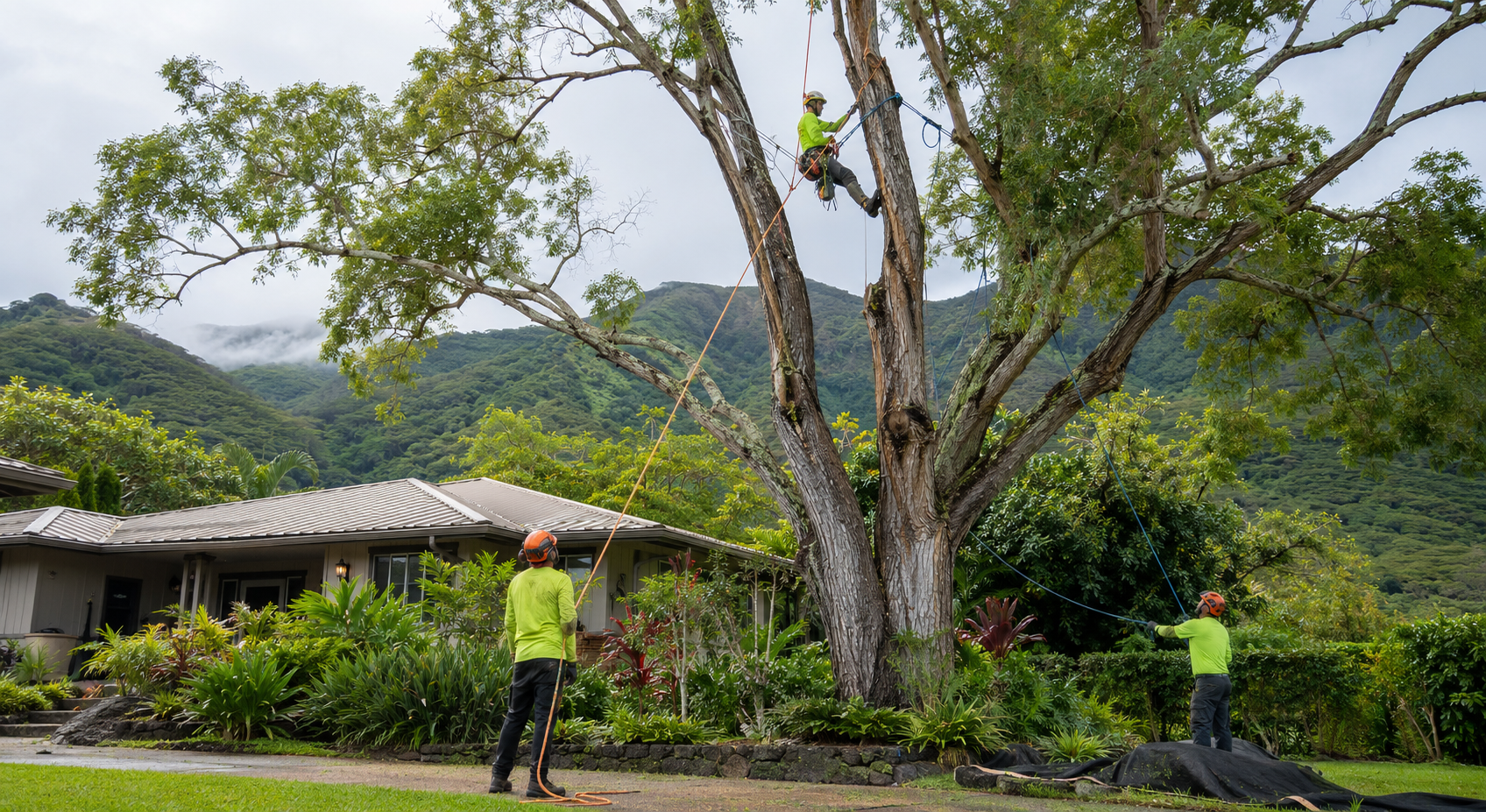
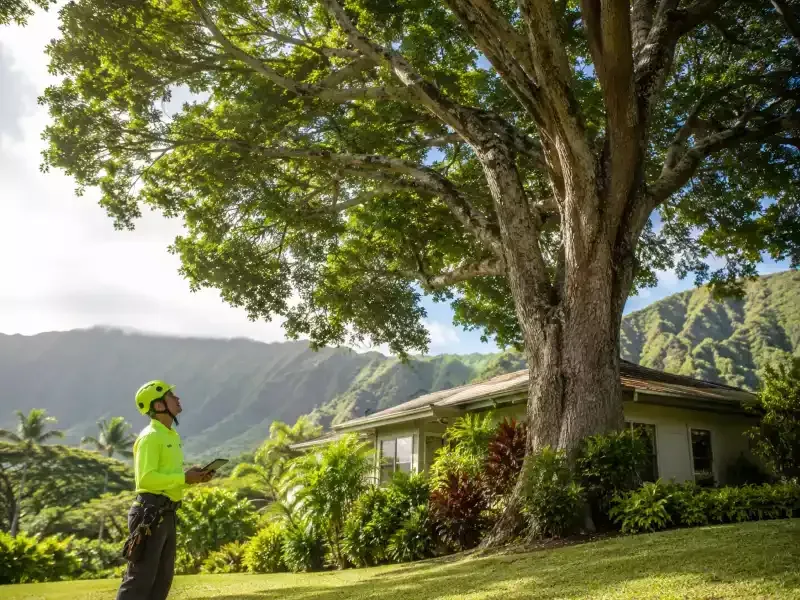
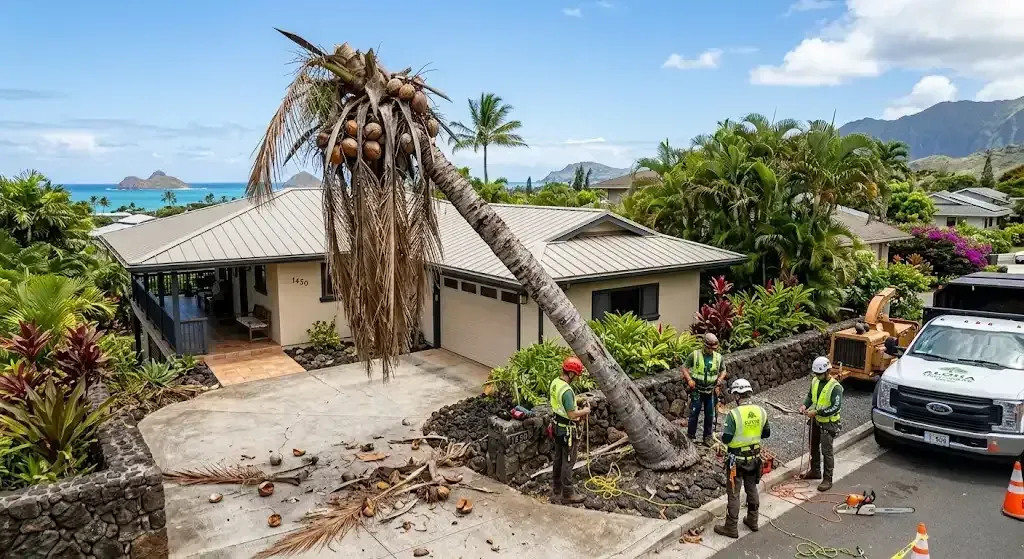
For pruning that requires climbing, rigging, or cuts near structures, professional tree trimming services throughout Honolulu and Oahu can address work beyond safe ground-level maintenance. Oahu Tree Trimming and Removal Services is owner-operated; its website reports more than eight years of hands-on tree-service experience in Hawaii and work alongside ISA-certified arborists.
Establish a Baseline Before Something Looks Wrong
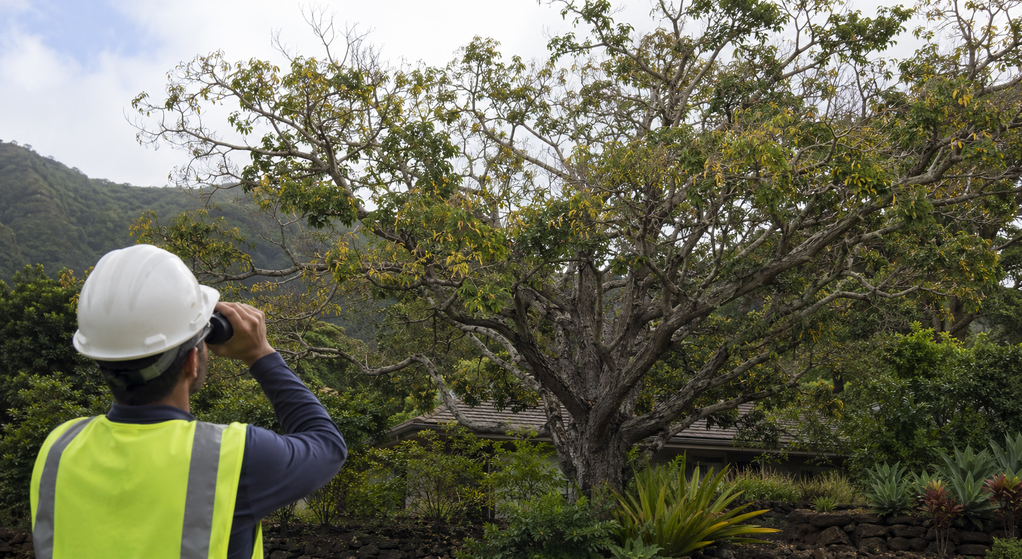
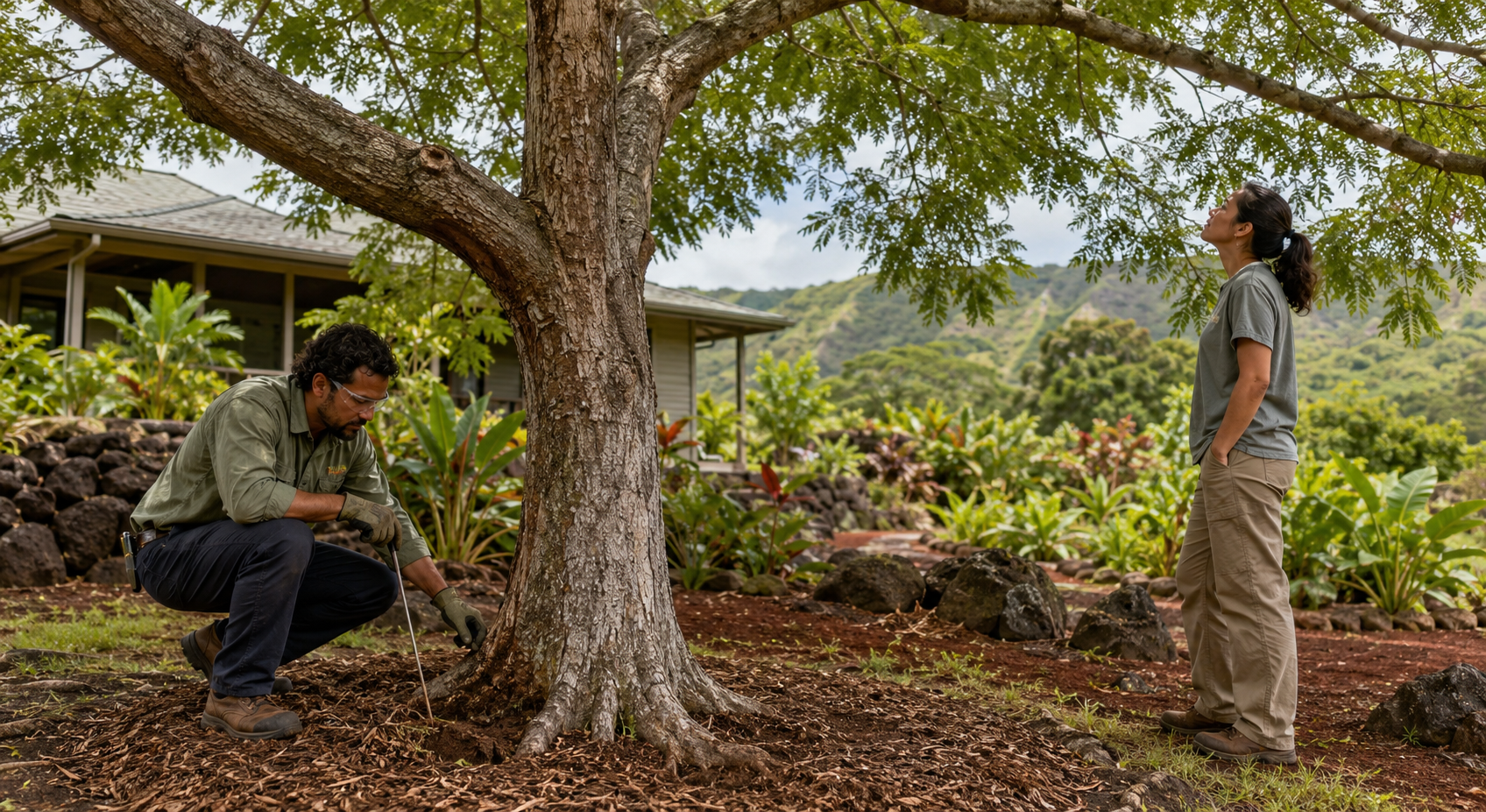
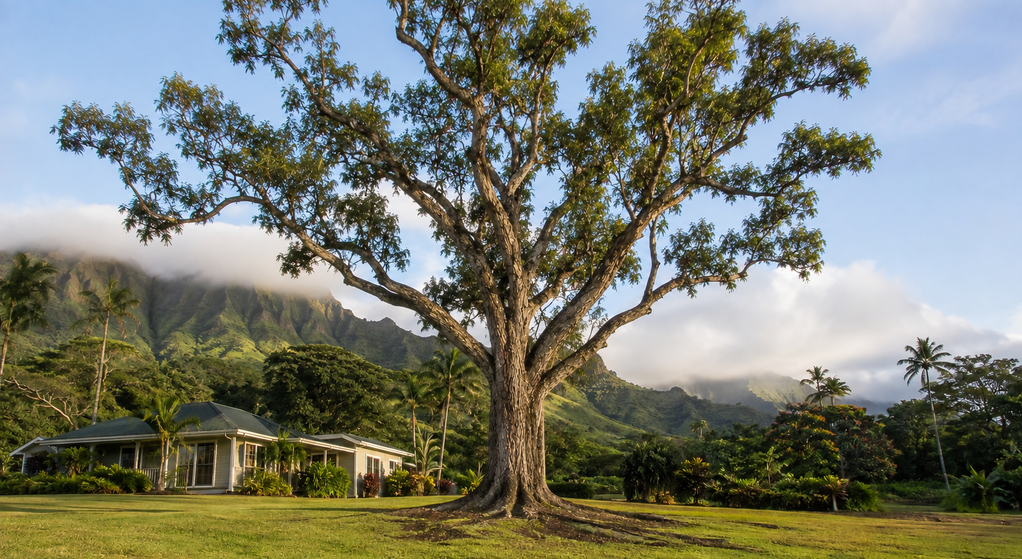
Start far enough away to photograph the full canopy, then record the trunk base, visible roots, major branch unions, and the ground around the tree. Use the same viewpoints each time so later photos are comparable.
Note canopy density, unusual gaps, dead or broken branches, visible wounds, and whether one side is becoming thinner than the other. A single photograph cannot prove health or decline, but a sequence can show whether a condition is changing.
For broader protection practices involving pruning, watering, disease prevention, and the root zone, review How to Protect Koa Trees on Residential Properties in Oahu. Use that broader guidance as context; this page is specifically about building a monitoring record between assessments.
Track Root-Zone and Site Changes
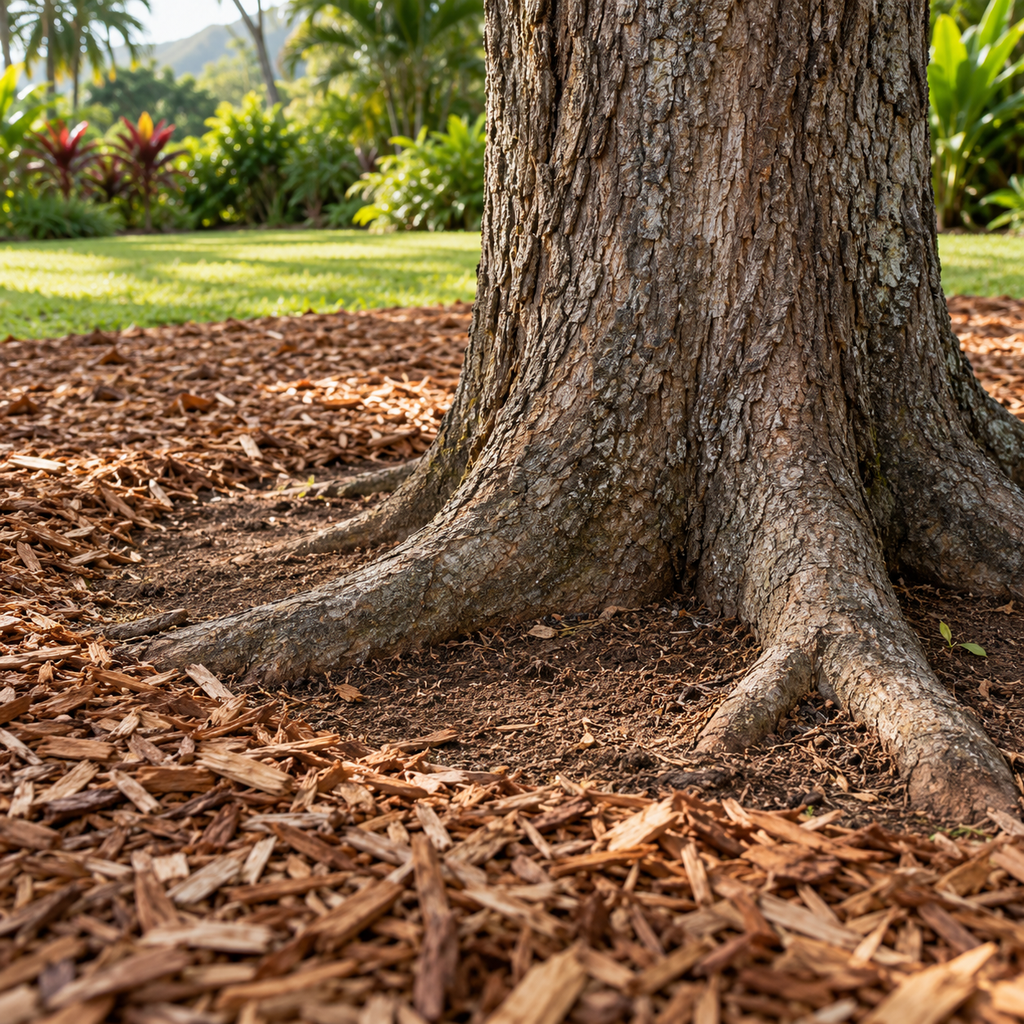
Record changes around the tree even when the canopy still appears normal. Trenching, driveway work, grade changes, new irrigation, parked vehicles, stored materials, or repeated foot traffic can alter the root environment before a visible canopy response develops.
Keep the trunk flare visible and avoid piling soil or mulch against the bark. If mulch is used, keep it broad and shallow rather than mounded against the trunk. Where construction is planned, document the proposed work area before excavation begins and raise unavoidable root conflicts with a qualified tree professional.
Watering notes are also useful. Record long dry periods, irrigation changes, drainage problems, and persistent wet areas instead of assuming yellow foliage always means the tree needs more water. Site conditions vary across Oahu, so the same calendar schedule will not suit every property.
Record Pruning Instead of Repeating It by Habit
For each pruning event, note the date, purpose, major branches addressed, and who performed the work. The reason for pruning should be specific: deadwood removal, clearance, a damaged branch, young-tree structure, or another defined objective.
Avoid using a fixed annual cutting percentage as the maintenance plan. Mature koa may need only limited work when no defect or clearance problem is present. Repeated heavy reduction can remove unnecessary live tissue and make it harder to understand later canopy changes.
Photograph the tree after pruning from the same baseline viewpoints. If symptoms appear later, the record helps separate pre-existing decline from changes that followed the work.
Watch for Patterns That May Need Disease Assessment
Sudden yellowing or wilting, progressive dieback, rapid canopy loss, bark cankers, or unusual sap flow deserves closer attention, especially when several symptoms appear together. These observations are not a diagnosis because root injury, drainage problems, insects, drought stress, and disease can overlap.
The University of Hawaiʻi Forestry Extension guidance on koa wilt describes koa wilt as a serious, often fatal disease associated with soil-borne Fusarium fungi. It notes that infection is thought to begin through the roots, that there is no cure, and that soil or plant material from affected sites should not be moved casually to uninfected areas.
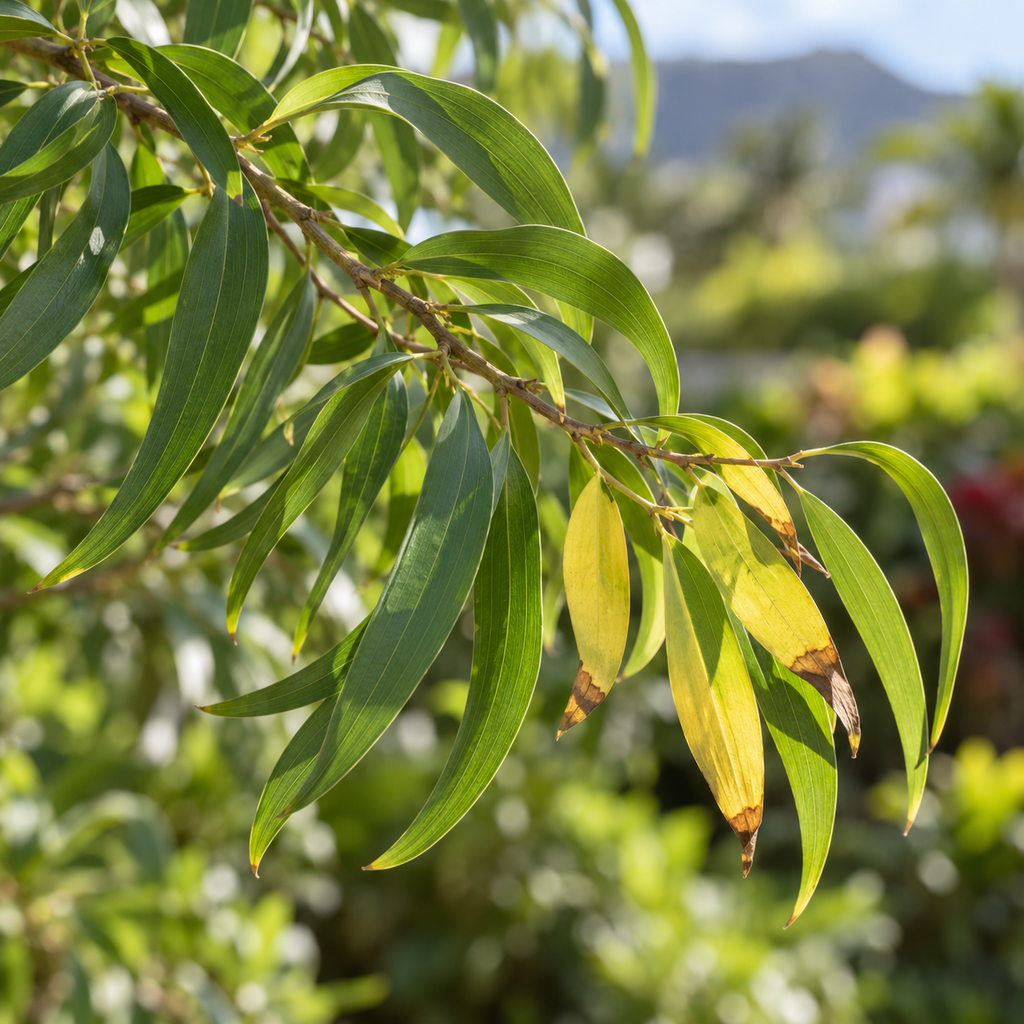
If koa wilt is suspected, record where symptoms first appeared and avoid spreading soil from the affected area. Clean tools, footwear, and vehicle tires that may carry contaminated soil. Do not treat discoloration alone as proof that koa wilt is present.
Set Clear Triggers for Professional Assessment
Some observations should move the record from monitoring to prompt assessment. Examples include a new lean, lifting or cracking soil near the base, a hanging limb, a widening trunk or branch-union crack, extensive deadwood, rapid dieback, or visible decay where failure could reach a home, road, play area, or neighboring property.
For a more detailed symptom checklist, Signs Your Koa Tree in Oahu May Be Stressed or Unhealthy helps separate canopy, root, decay, insect, and pruning-stress observations that warrant follow-up.
A qualified assessment should consider the entire tree and the consequences of failure, not only the most visible defect. Some conditions may be managed with selective pruning, root-zone protection, or monitoring; others may require a different response.

Maintain a Simple Koa Care Log
A useful record can stay simple. For each entry, note the date, recent weather or site changes, canopy observations, root-zone observations, pruning or irrigation changes, and the photo filenames or locations. Add the recommendation from any professional visit and the date of the next suggested review.
Review the log after major wind events, construction near the tree, noticeable irrigation changes, or any sudden shift in canopy condition. The goal is not to create paperwork for its own sake; it is to preserve enough history to make the next decision more informed.
Consistent observation, conservative maintenance, and clear escalation triggers give homeowners a practical way to care for a koa between professional assessments without turning every visual change into an immediate treatment.

Written By:
Kurt Manalastas
Environmental Property Care Content Writer
Kurt produces research-driven content centered on tree care, landscaping, and environmental property management. Drawing from arborist-informed practices, site-specific conditions, and practical homeowner concerns, he provides clear, actionable guidance to help readers maintain safer, healthier, and more sustainable outdoor environments.