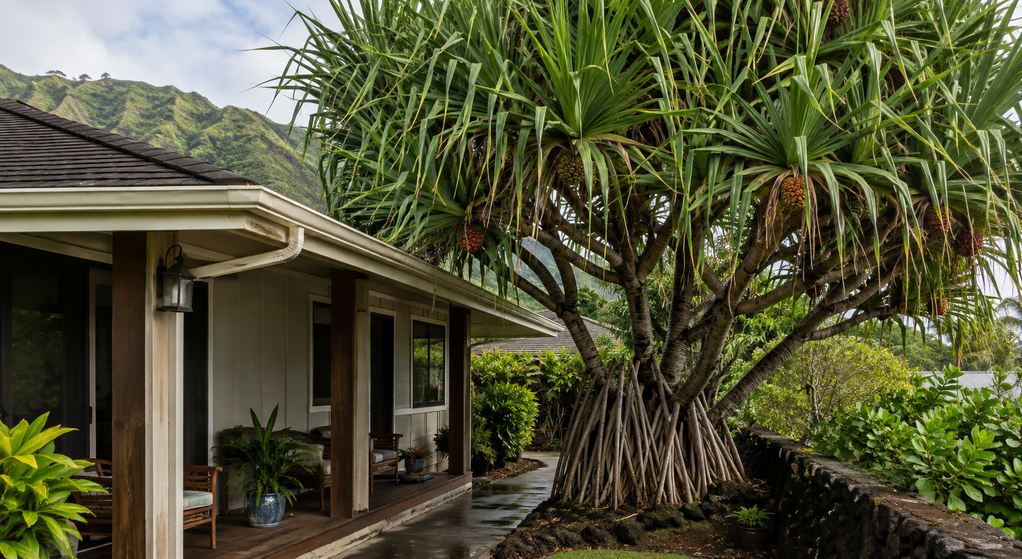
Signs a Hala Tree May Be Unsafe or Structurally Unstable
Safety Insight
A hala tree deserves prompt assessment when its lean changes, supporting roots are damaged, soil shifts around its base, or major branches split. Its unusual shape alone does not establish danger. Separate normal growth from recent changes, keep people away from suspected hazards, and seek a tree-specific assessment before deciding on removal.
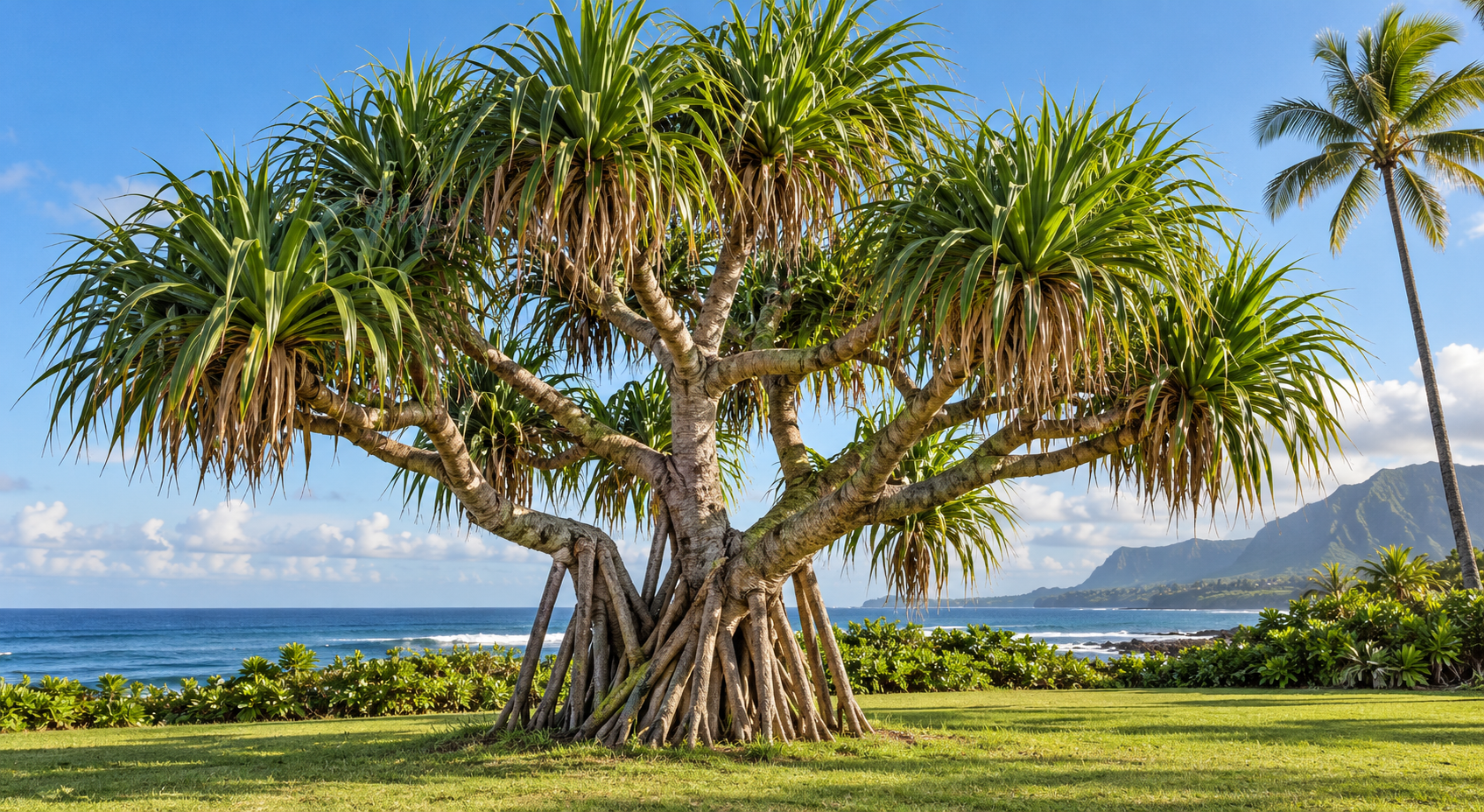
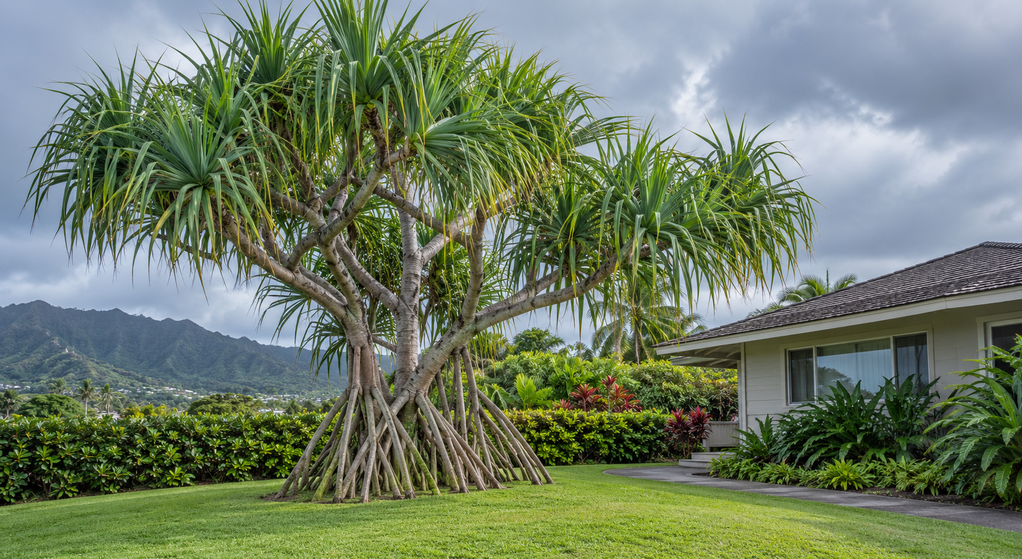
A hala’s branching crown and stilt-like roots can make structural problems difficult to judge. The useful question is what has changed: has the tree shifted, has a support been cut, or has a branch started separating? A familiar silhouette provides context, but it cannot establish that the tree is safe.
For owners considering professional tree removal services in Honolulu, the decision should begin with identifying the affected part and what could be struck. Removal is one possible outcome, not a diagnosis.
Oahu Tree Trimming and Removal Services provides tree trimming and removal across Oahu. When requesting help, describe the structural concern rather than simply asking for a cleanup or a smaller canopy.
Related reading: whether your hala tree is growing too close to your house supports one adjacent consideration, while how professionals remove large hala trees from tight spaces addresses another. This article focuses on non-event-specific structural risk.
A New Lean Matters More Than an Unusual Shape
Compare the tree with older photographs taken from a similar position. A longstanding angled trunk and a tree that shifted overnight present different questions. Avoid estimating danger from a photograph’s apparent angle alone; camera position can exaggerate a lean.
A new lean accompanied by lifted soil, fresh gaps at the base, or newly exposed roots calls for urgent professional attention. TheArbor Day Foundation’s guide to identifying hazardous tree defects identifies leaning combined with recent soil or root movement as a serious warning. It also explains that green foliage does not establish structural safety.
Record when you first noticed the change and whether it followed strong winds, heavy rain, excavation, or impact. In a Honolulu yard, mention recent drainage work or trenching as well as weather. Do not wait for another windy day to see whether the tree moves again.
Read the Prop Roots as Part of the Support System
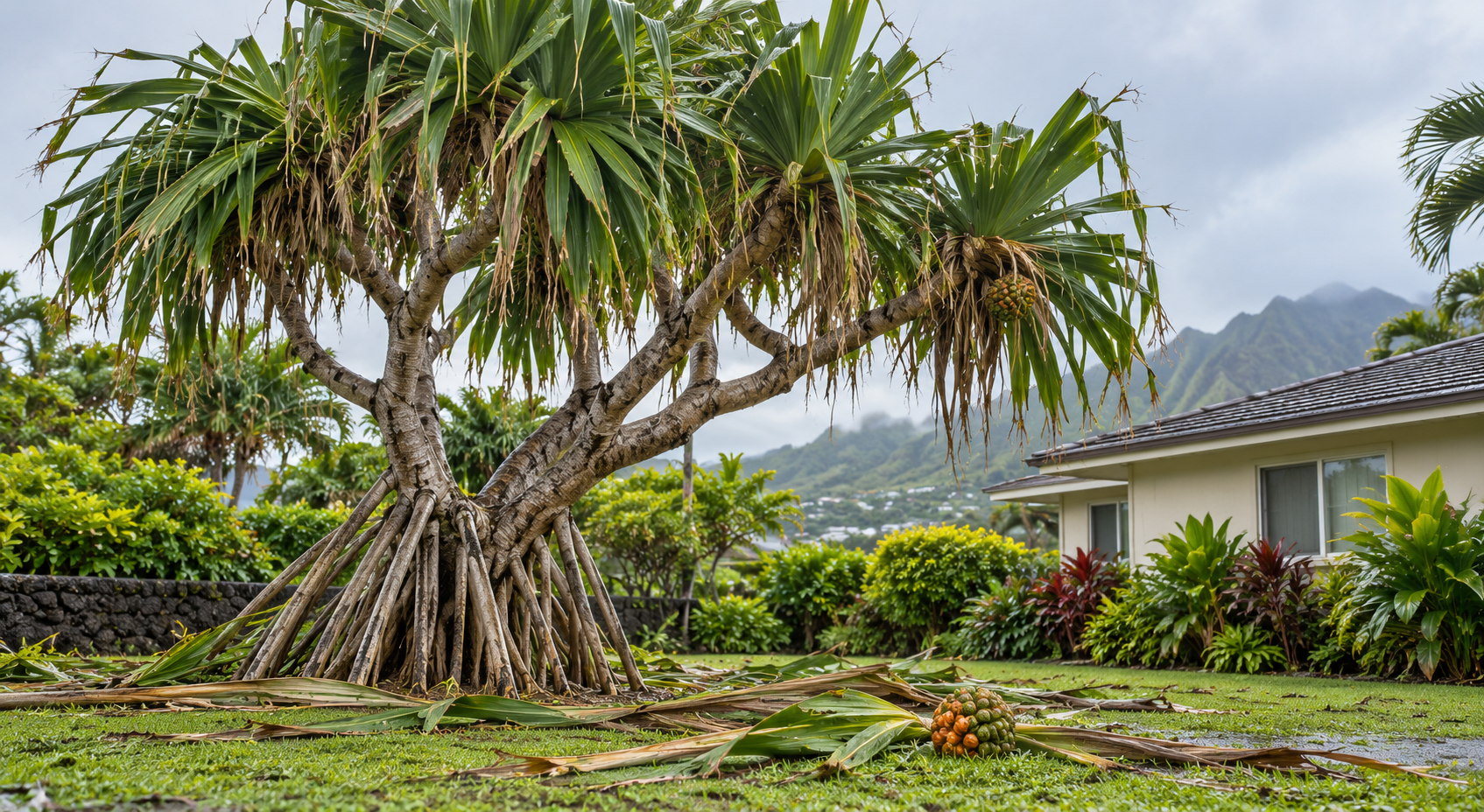
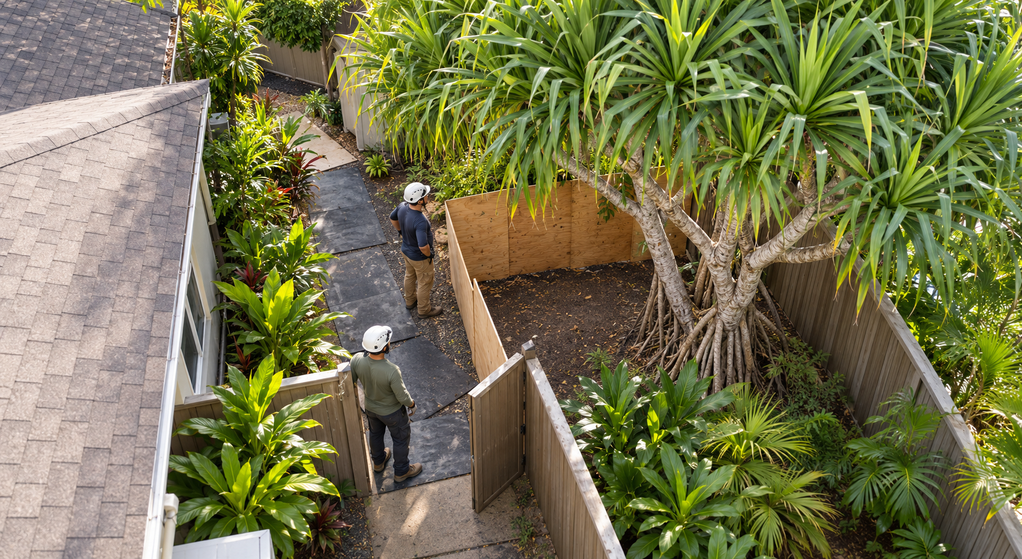
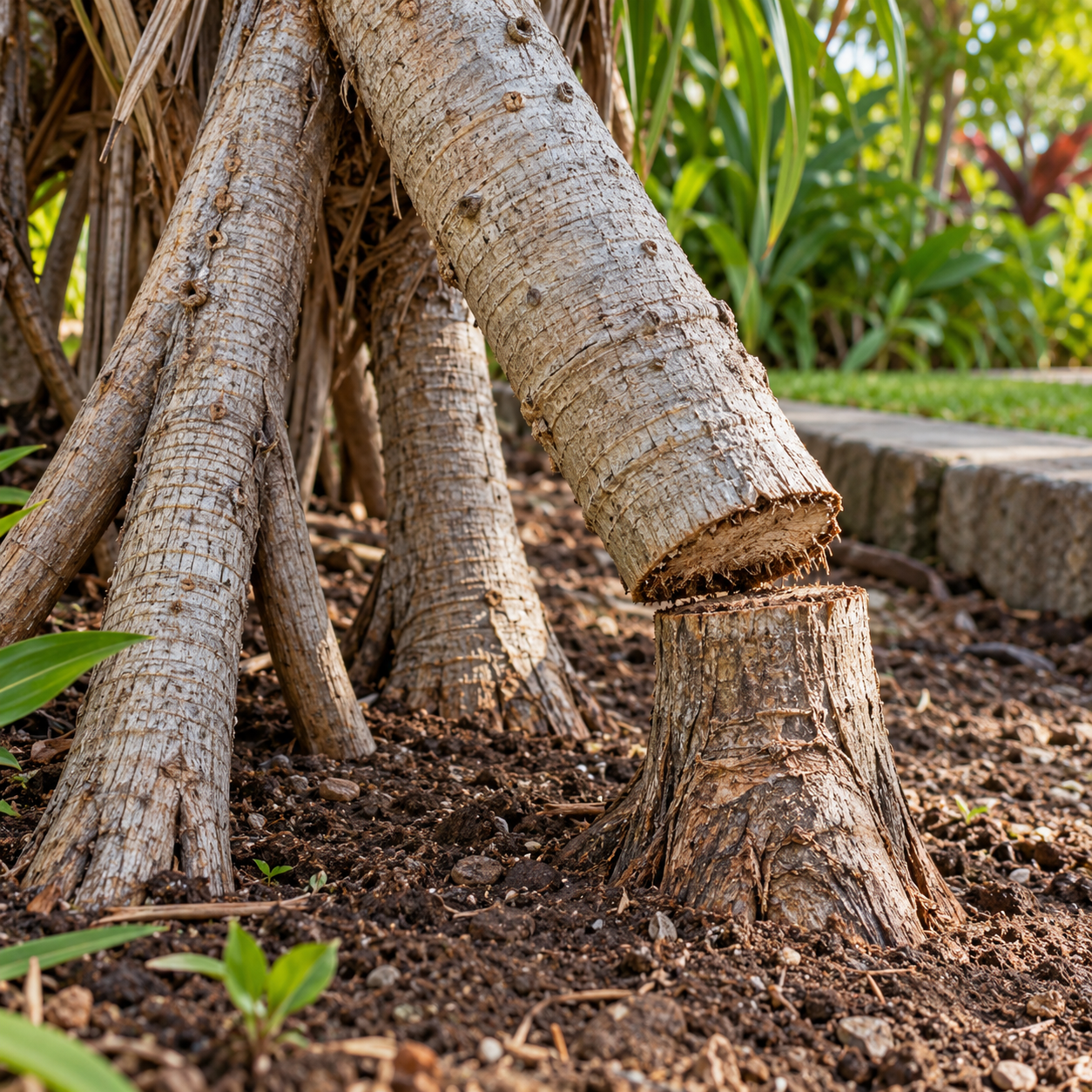
Hala naturally develops prop roots around its trunk and sometimes along branches. Their presence above ground is normal. The concern is damage or change to those supports, especially where landscaping work has altered the area.
From a safe position, note visible breaks, saw cuts, or separation where roots enter the ground. Tell the assessor if a contractor recently installed a fence footing, repaired a pipe, removed paving, or changed soil levels nearby. Include work on the neighboring side of a boundary if you know about it.
Photograph existing damage without digging, probing, or
cutting roots to investigate. A homeowner cannot determine remaining support simply by counting the roots still visible. Ask which damaged roots matter structurally and whether hidden damage needs further evaluation.
Look for Separation, Not Just Untidy Growth
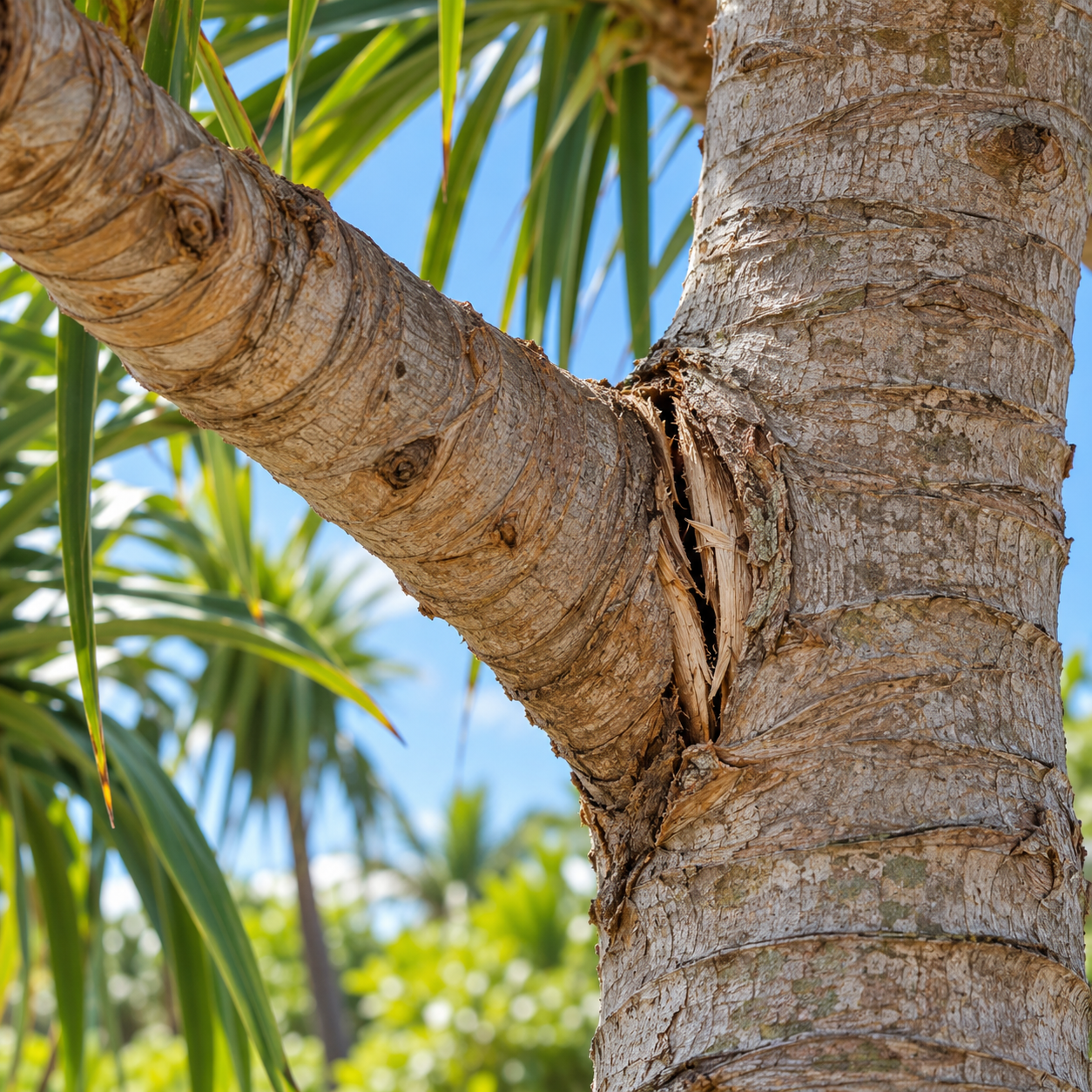
A split through a major stem, a partially detached branch, or a broken section caught overhead warrants prompt attention. Visible cavities, crumbling tissue, and fungal growth attached to the trunk or supports also deserve assessment, particularly beside a crack. Appearance alone cannot reveal the full extent of deterioration.
Describe the location precisely: “a split where the left branch joins the main stem” is more useful than “the tree looks sick.” Take a wider photograph showing the affected branch and a zoomed view from outside the potential fall area. Do not stand beneath damage to obtain a better picture.
Leaf color is a separate observation. Record browning or loss of foliage, but do not use a green crown to dismiss a structural defect. Similarly, a cleanup that removes fallen leaves does not answer whether a cracked stem can safely remain.
Decide Which Areas Must Stay Unoccupied
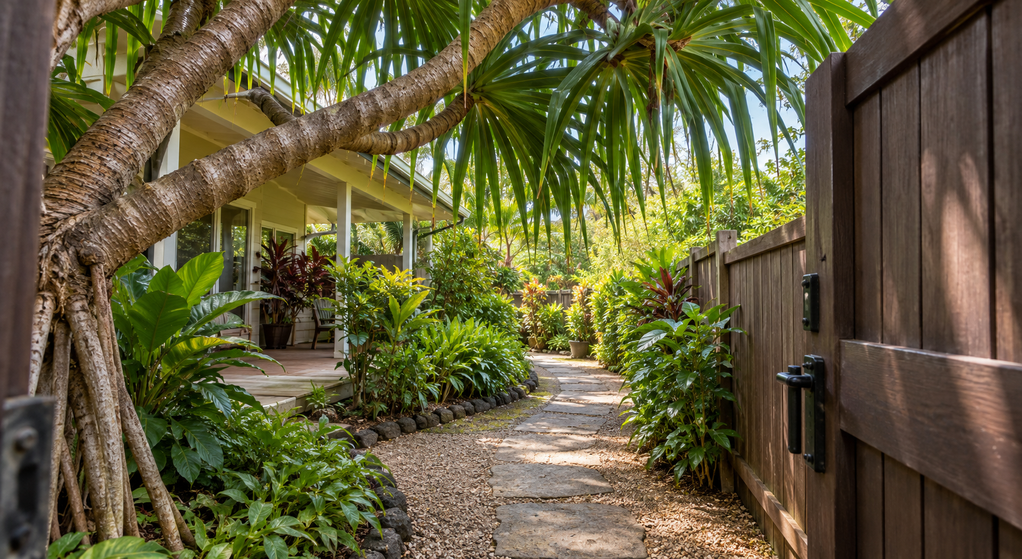
A defect becomes a practical risk when a falling part could reach people or property. Identify occupied places around the tree: a front entrance, parking space, lanai, play area, or neighboring walkway. Explain how often each is used and whether an alternative route exists.
If you suspect active movement or see suspended broken material, keep people and pets away while arranging urgent assistance. Do not enter the suspected fall area to retrieve furniture or reposition a vehicle. If the tree threatens electrical lines, stay clear and contact the utility; do not attempt tree work around them.
For an assessor, “the only entrance passes beneath this branch” is important information. Temporary access restrictions should be practical enough that household members, visitors, and delivery workers can follow them.
Ask for a Decision About the Specific Defect
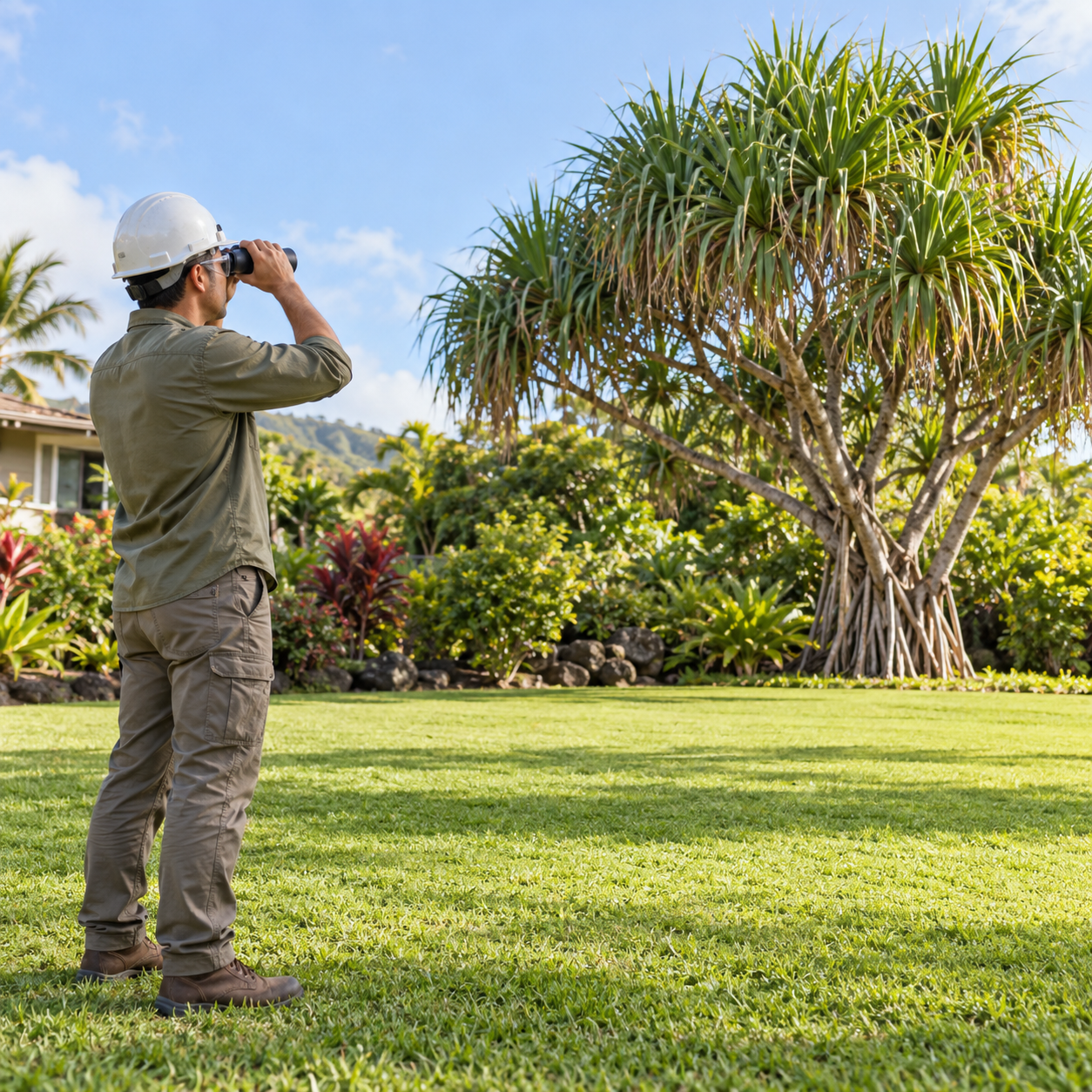
Request an assessment from an arborist familiar with hala and tree risk. Provide the photographs, timeline, and history of nearby work. Ask:
- Which part could fail, and what evidence supports that concern?
- Is the issue confined to one branch or associated with the tree’s support?
- What action is recommended, and how urgently?
- If retention is reasonable, what changes require reassessment?
-
The next step should address the observed defect. Document changes safely, protect occupied areas, and obtain a clear explanation of whether the hala can remain and under what conditions.

Written By:
Kurt Manalastas
Environmental Property Care Content Writer
Kurt produces research-driven content centered on tree care, landscaping, and environmental property management. Drawing from arborist-informed practices, site-specific conditions, and practical homeowner concerns, he provides clear, actionable guidance to help readers maintain safer, healthier, and more sustainable outdoor environments.