Where Should Hala Trees Be Planted on a Hawaii Property?
Safety Insight
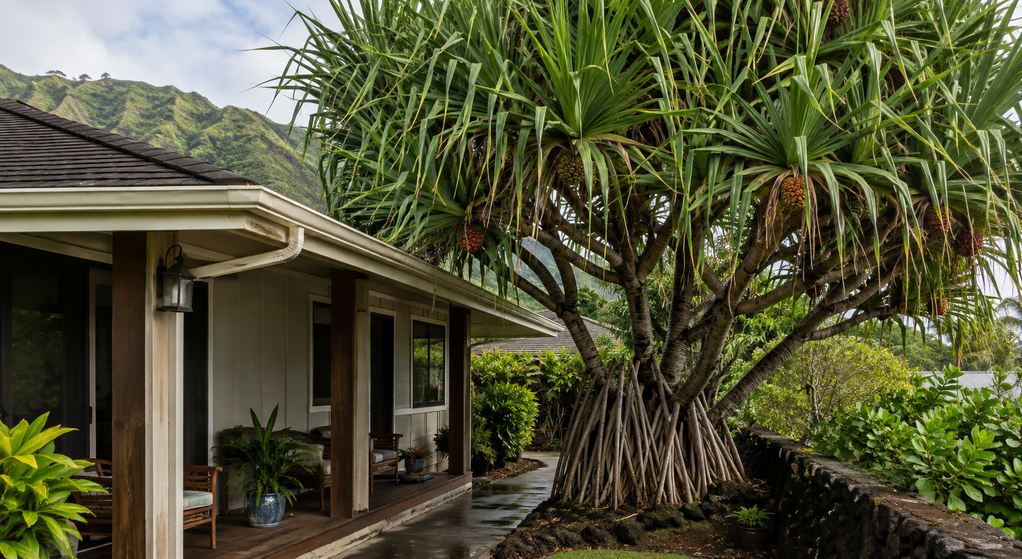
Plant hala where its mature canopy and supporting roots can occupy a generous landscape area without crowding buildings, paths, or utilities. A sunny, accessible garden space is a stronger candidate than a narrow planting strip. Compare room for growth, water access, cleanup needs, and future construction before choosing the spot.
The best place for a hala is an area you can keep available to the tree as it grows. An open garden bed or spacious yard may work well; a small gap beside the garage can become a difficult compromise. Choose the location around the mature tree, rather than the size of the nursery container.
If planting is part of replacing an existing tree, coordinate any
professional tree removal services in Honolulu before finalizing the new layout.Oahu Tree Trimming and Removal Services provides tree removal and stump services across Oahu. Clarify what will remain underground and where equipment will travel before committing to a replacement planting position.
Compare the Available Spaces Before Choosing One
Related reading: whether a hala tree is growing too close to your house supports one adjacent consideration, while managing hala trees along fences and property lines in Oahu addresses another. This article focuses on pre-planting site selection.
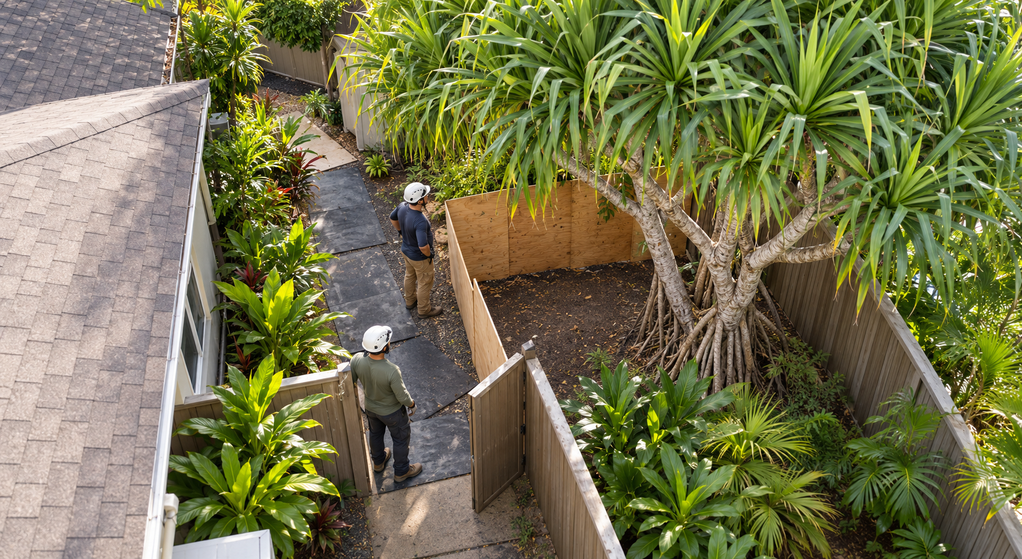
Compare the available spaces, including what each must accommodate later.
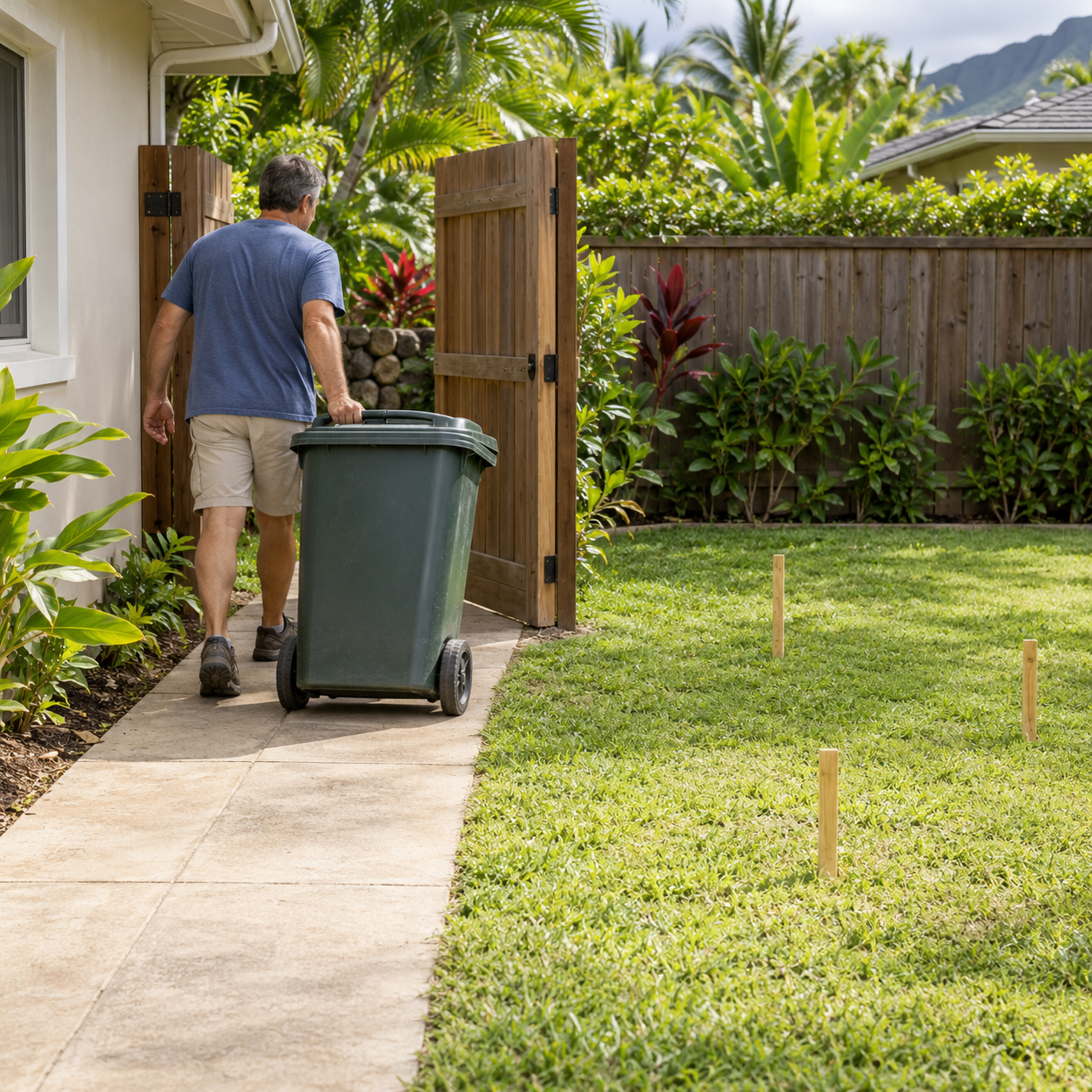
Do not assume an empty corner is unused. It may be the only route for moving bins, servicing equipment, or bringing materials into the backyard.
Mark the Mature Footprint, Not Just the Trunk
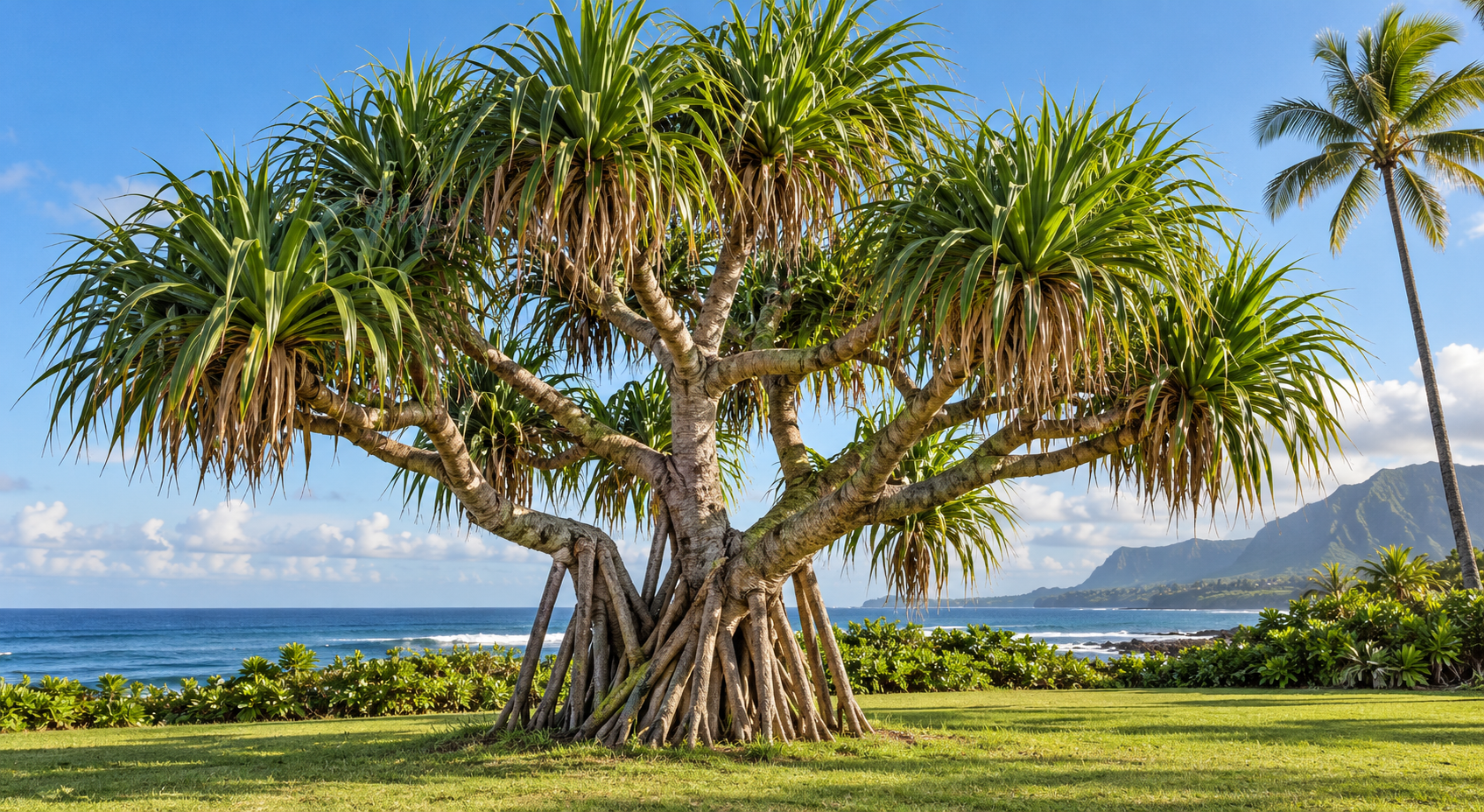
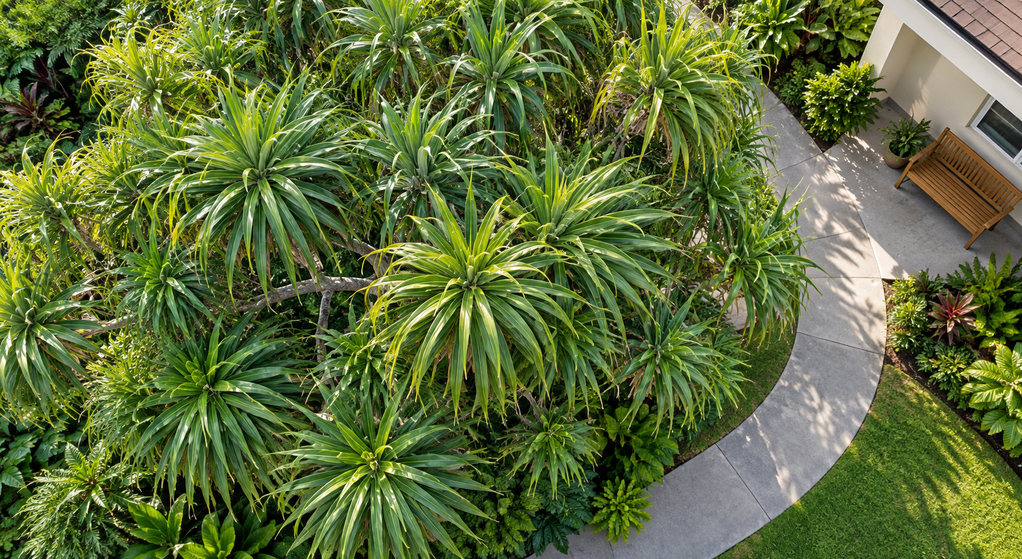
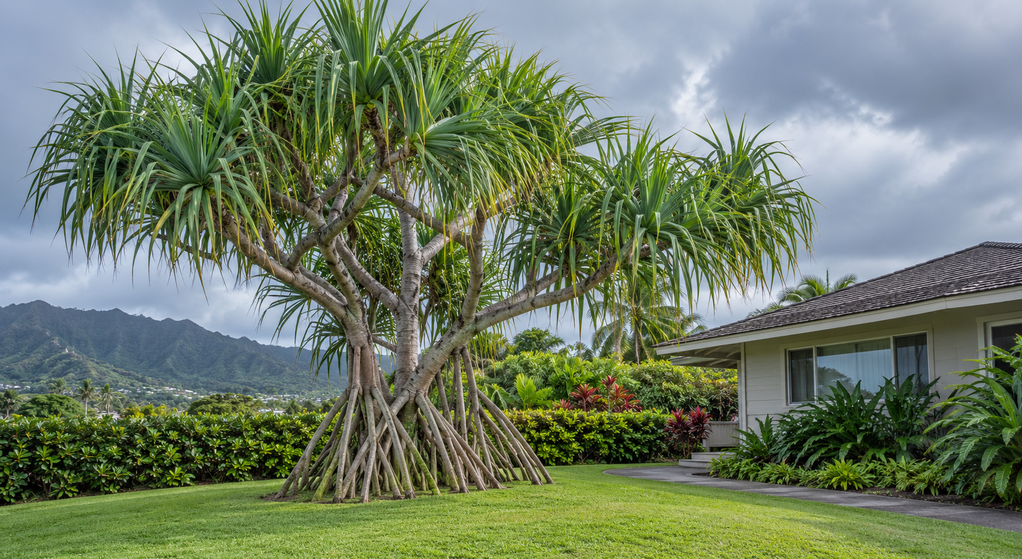
The University of Hawaii’s guidance on hala size and landscape requirements describes hala reaching approximately 20–30 feet tall with a similar canopy spread. It also identifies thick supporting prop roots around the base. These characteristics make a generous planting area important.
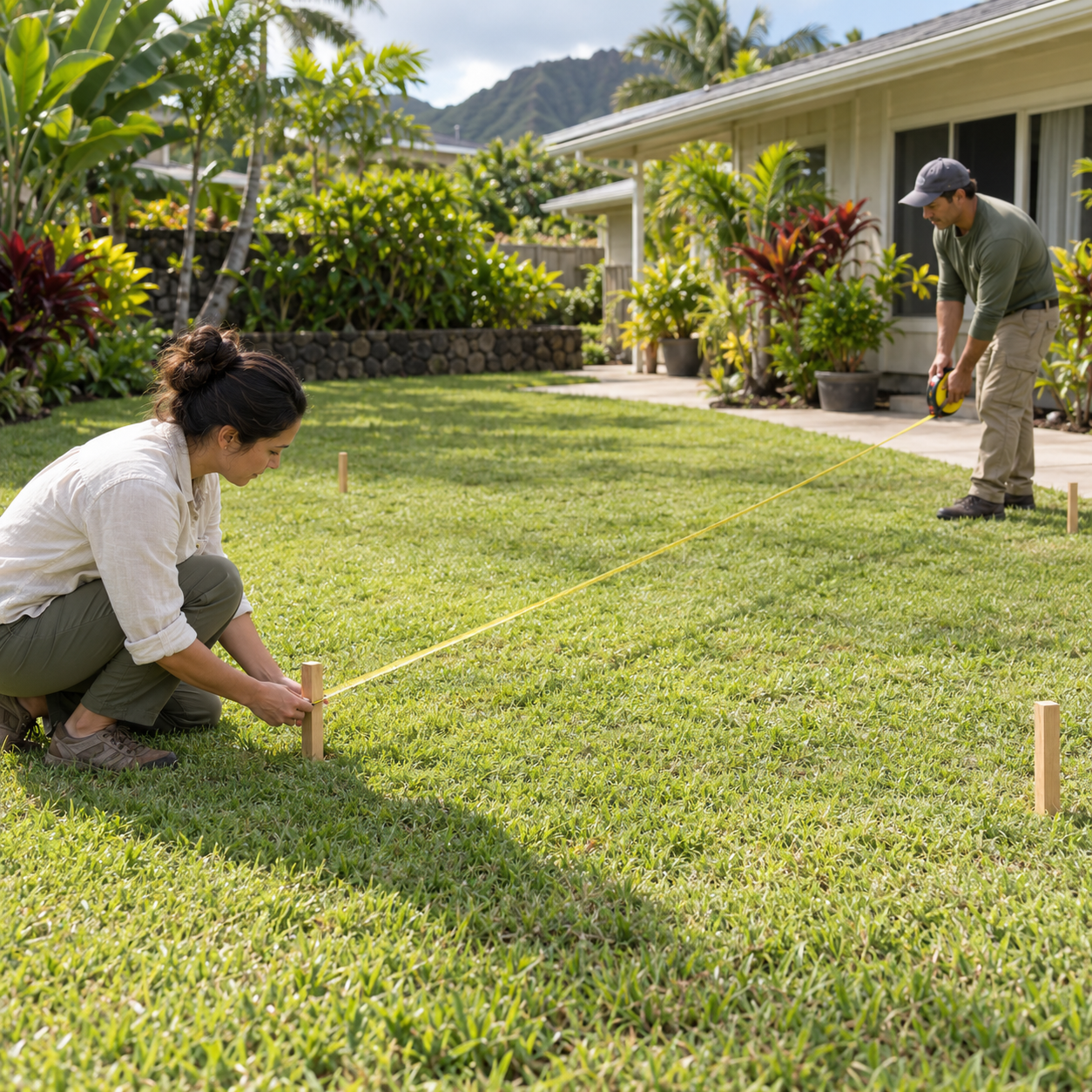
For an initial layout exercise, a 20–30-foot-wide canopy represents roughly 10–15 feet outward from its center. That is a way to visualize scale, not a guaranteed growth pattern, root boundary, or recommended building setback. The particular plant and site still need consideration.
Place a marker at the proposed trunk position and use a tape
measure to explore that spread. Compare it with eaves, windows, overhead lines, driveway access, and existing trees. Leave room to reach the house for painting, repairs, and gutter work.
Check Sunlight and Water at the Actual Planting Spot
Hala grows best in full sun, although young plants tolerate partial shade. Its tolerance of salt makes it useful in coastal landscapes, and periodic irrigation can benefit trees on managed sites. Coastal suitability does not mean every position in a coastal yard is equally practical.
Observe the proposed location at different times of day. A bright-looking corner at noon may spend much of the day behind a building or neighboring canopy. Also consider whether a planned extension or growing hedge will change that exposure.
Check how water reaches and leaves the area. Note downspout outlets, irrigation overspray, persistent puddles, and places that dry quickly. If drainage is uncertain, have the soil and site assessed before planting. Avoid prescribing the same watering schedule for every Honolulu property, and make sure the location is reachable for establishment care.
Keep Routine Cleanup Away From Essential Routes
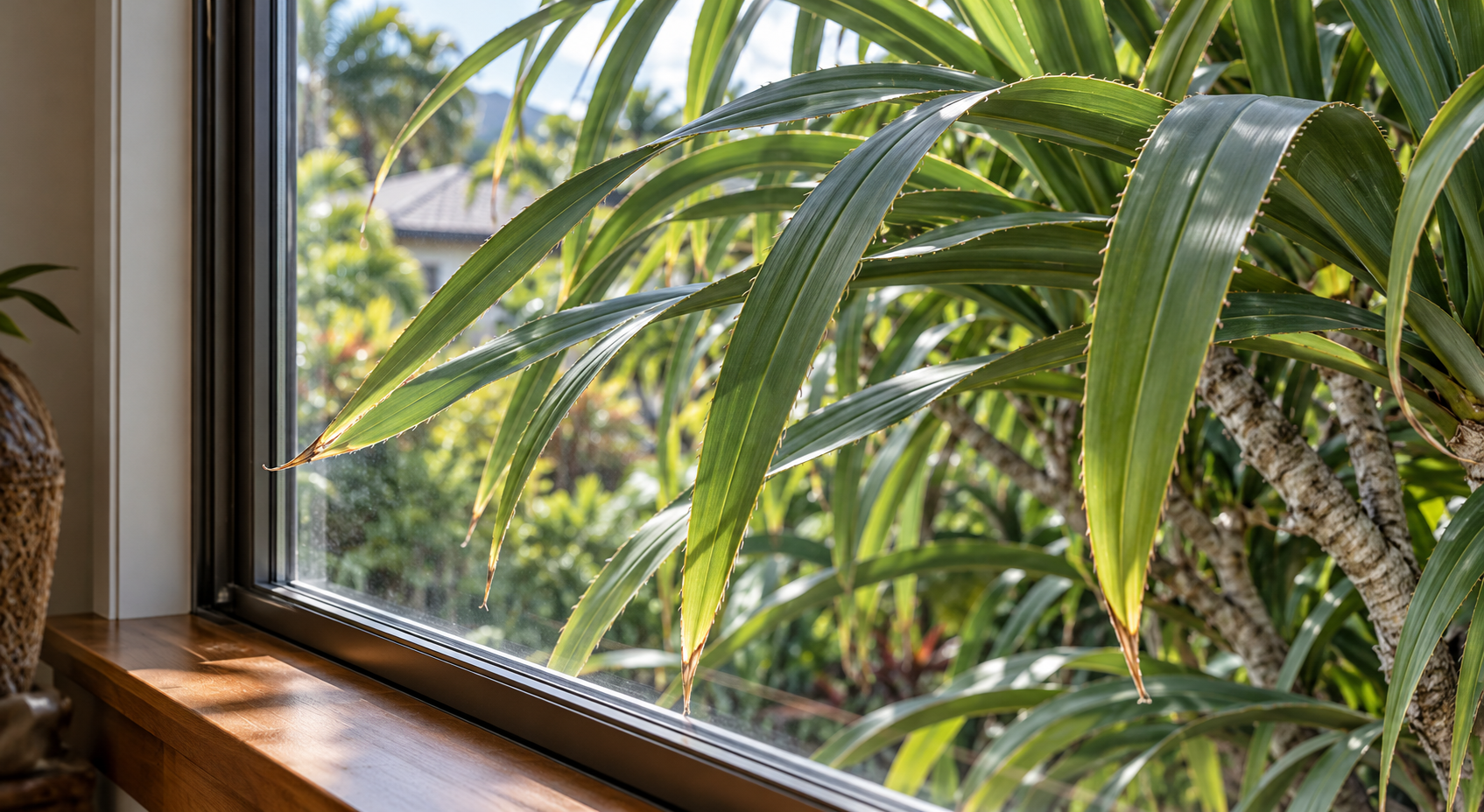
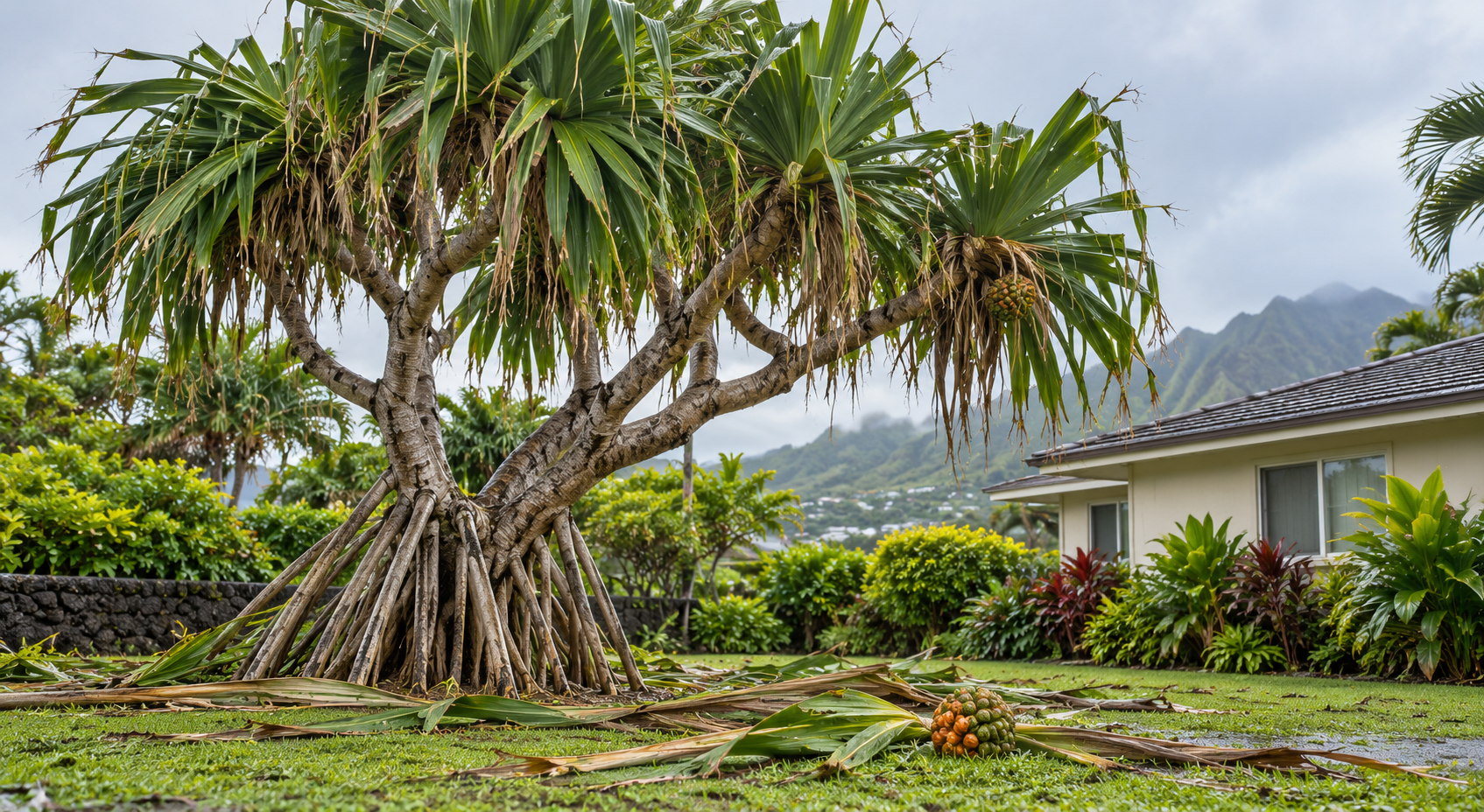
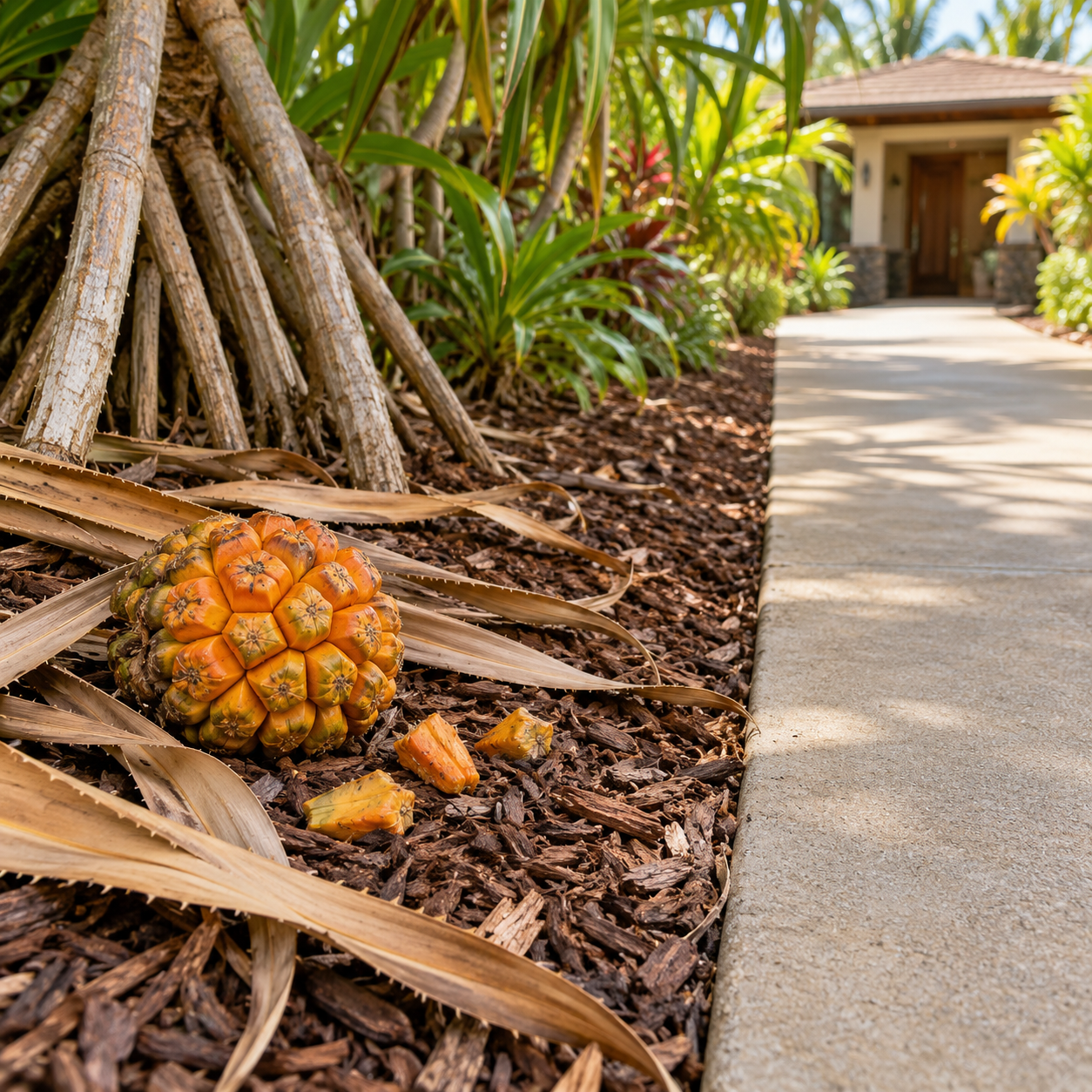
Hala has long leaves that can have prickly edges, and female trees produce substantial segmented fruit. Ask the nursery what is known about the plant being supplied, including its expected form and whether its sex is established.
Use that information to decide what belongs beneath the future canopy. A planting bed where fallen material can be collected is a different setting from a front step, pool edge, or the narrow passage beside a parked car.
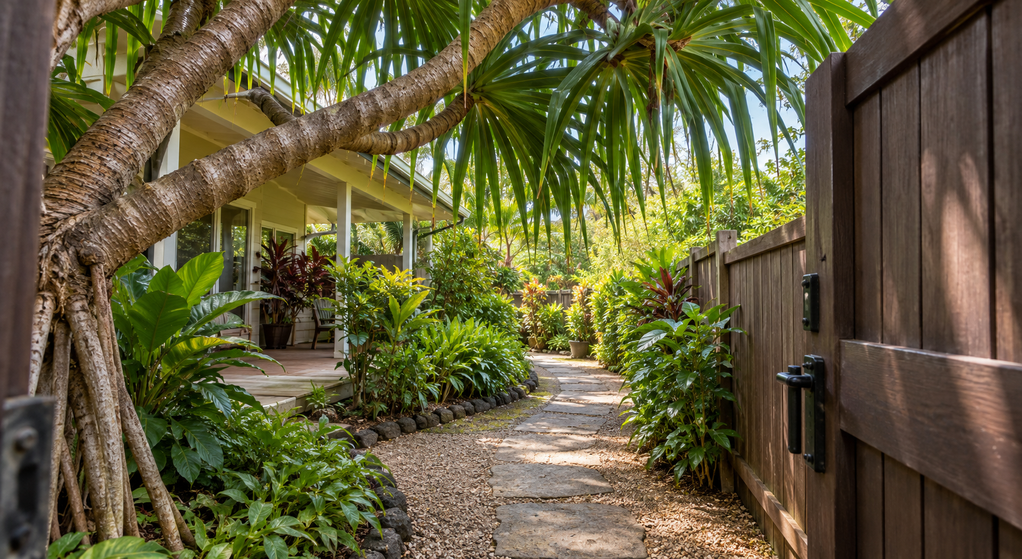
Walk the routes people use with shopping bags, laundry, or mobility aids. Position the tree so maintaining those routes does not depend on constant intervention. Also leave a practical way to collect and carry out debris without squeezing through other plants.
Reserve Space for Boundaries and Future Work
A fence-side position can look spacious when the neighboring yard is included in the view. Evaluate the space available on your own property and avoid a layout that assumes continuing access next door.
Before digging, arrange identification of underground utilities and check any property-specific planting restrictions. For an overhead-line conflict, choose another location or obtain guidance from the utility about suitable planting.
Test the Layout Before Buying the Tree
Leave temporary markers in place while you use the yard normally. Open gates, move bins, park vehicles, and check the view from doors and windows. Take the measured layout and photographs to the nursery or an arborist to discuss the particular hala you intend to plant.
Choose the location that accommodates growth and ordinary household use together. If every candidate depends on repeated heavy cutting or sacrificing necessary access, a smaller plant is the more workable choice for that space.

Written By:
Kurt Manalastas
Environmental Property Care Content Writer
Kurt produces research-driven content centered on tree care, landscaping, and environmental property management. Drawing from arborist-informed practices, site-specific conditions, and practical homeowner concerns, he provides clear, actionable guidance to help readers maintain safer, healthier, and more sustainable outdoor environments.