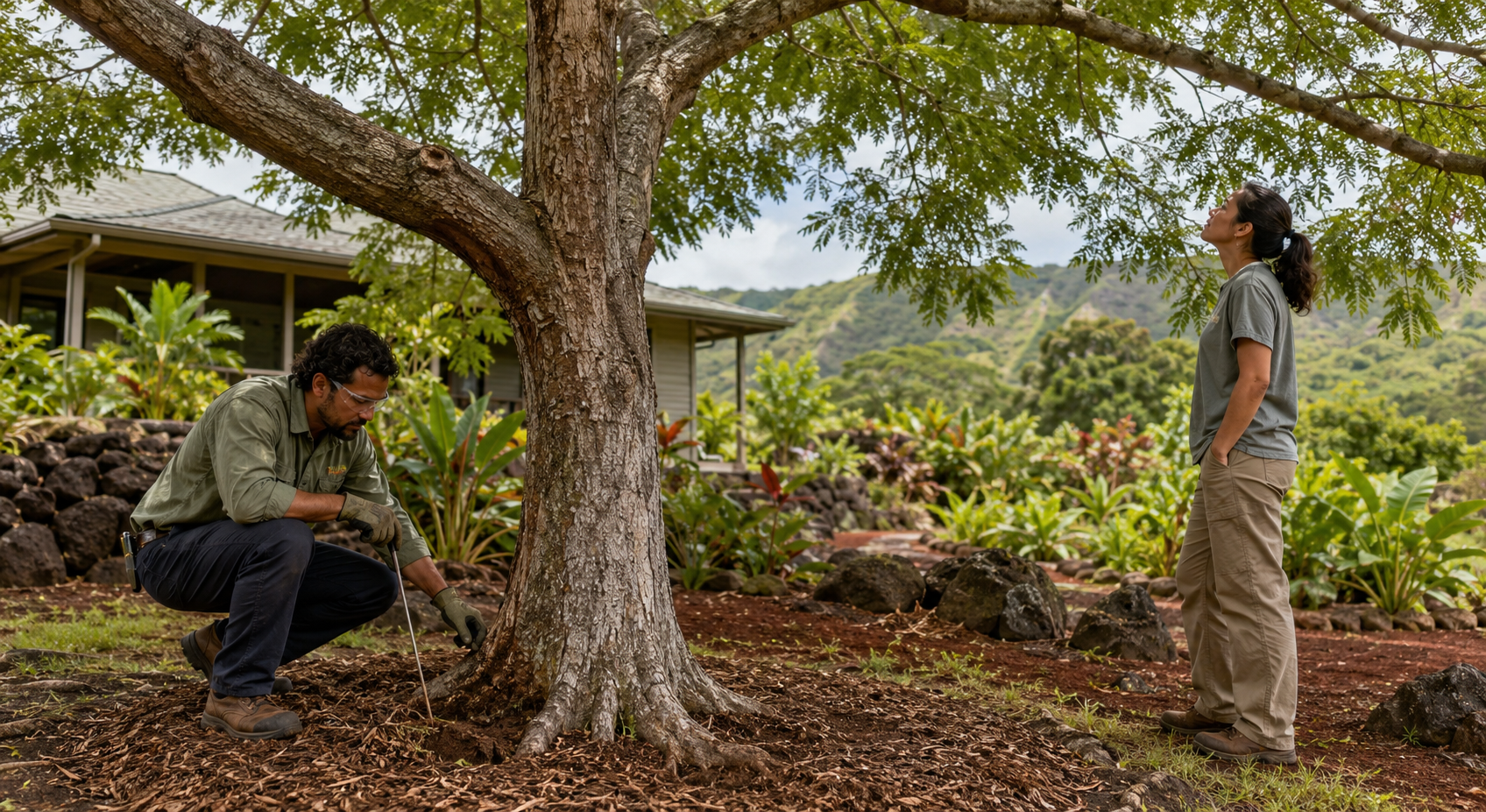
Signs of Storm Damage in Hala Trees on Oʻahu
Safety Insight
Storm damage in hala trees can involve more than shredded leaves. A changed lean, broken prop roots, split branches, or hanging sections deserves closer professional attention. Start by keeping people clear, comparing the tree with its previous condition, and documenting changes before deciding whether cleanup, pruning, or removal is appropriate.
After strong winds pass through Honolulu, fallen hala leaves and fruit can make a yard look severely damaged. Yet the amount of debris beneath a tree does not tell you whether its support system remains sound. The more useful question is what changed in the standing tree.
If a hala has partly uprooted or split toward an occupied area, an assessment may lead toprofessional tree removal services in Honolulu. Leaf damage alone is not enough to make that decision.
Oahu Tree Trimming and Removal Services provides trimming and removal across Oʻahu. When arranging help, describe the visible damage and what lies beneath it, rather than requesting a general trim before the problem is understood.
Related reading:
how a professional arborist in Oahu can help save storm-damaged trees supports one adjacent consideration, while
how professionals remove large hala trees from tight spaces addresses another. This article focuses on post-storm triage.
Look for Changes in the Hala’s Support System
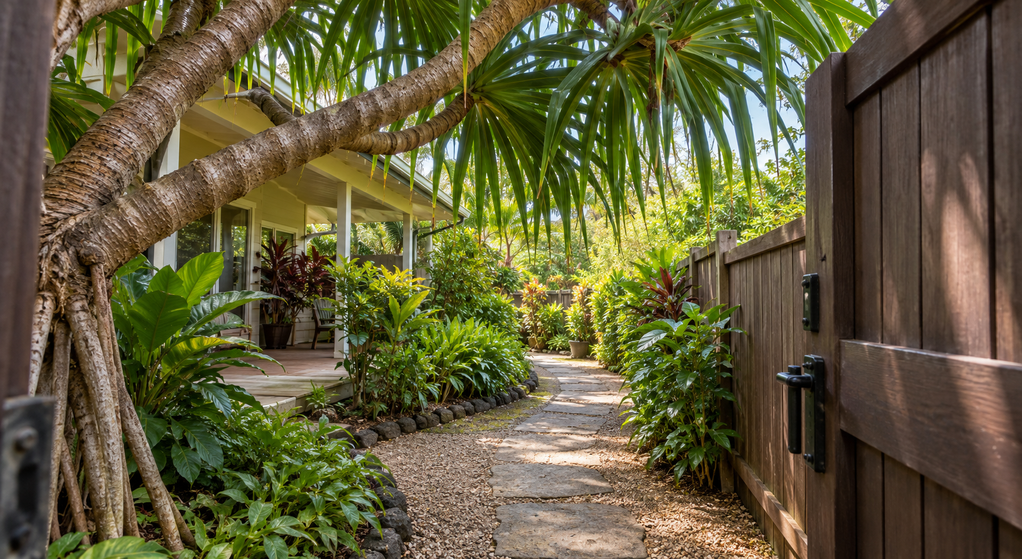
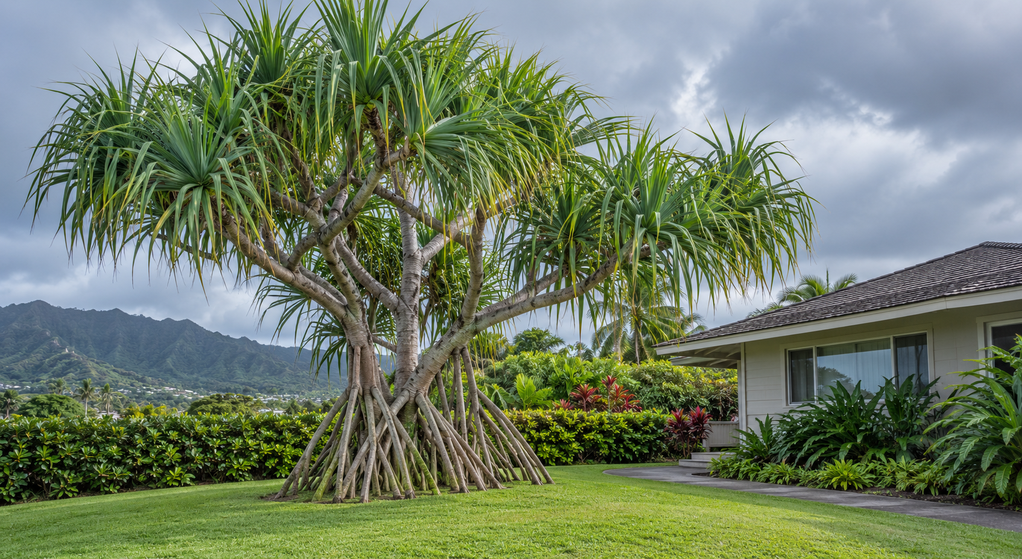
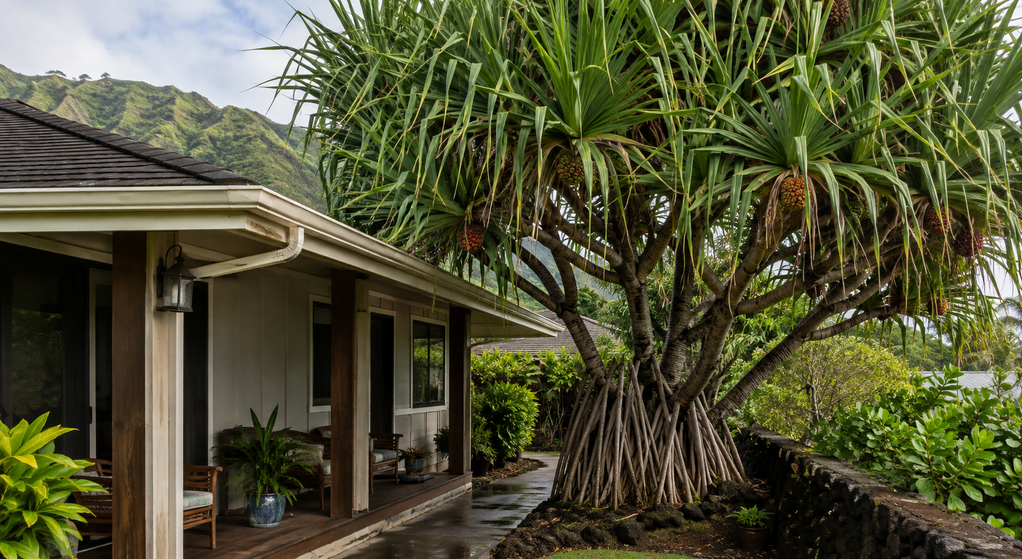
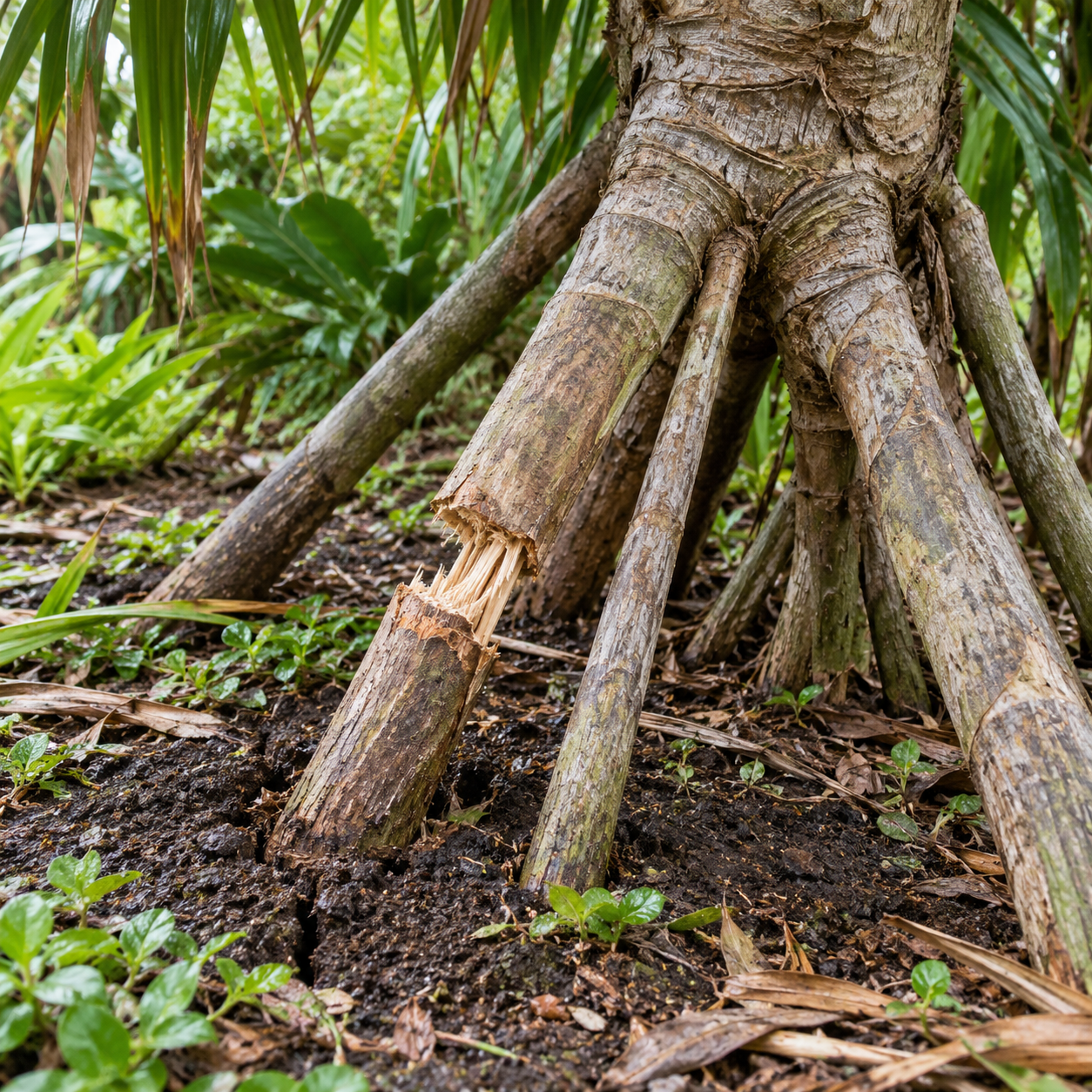
Hala, or Pandanus tectorius, develops conspicuous prop roots that extend from the trunk and sometimes branches. These aboveground supports are normal features. Their presence should not be confused with roots newly exposed by a storm.
From a safe location, compare the tree with older photographs. Look for a new tilt, fresh breaks in prop roots, or a gap where an established root previously entered the ground. Raised soil and fresh cracking around the base warrant attention, particularly when they accompany a changed trunk position.
Record combinations of signs rather than interpreting one feature alone. A long-standing lean is different from a lean that
appeared overnight. Similarly, a visible root that has looked the same for years differs from one that has just torn away from the soil.
Do not push the trunk to test its stability or cut a damaged-looking prop root to clear a path. Leave questions about remaining support for an arborist familiar with hala.
Check Branch Attachments Before Judging the Leaves
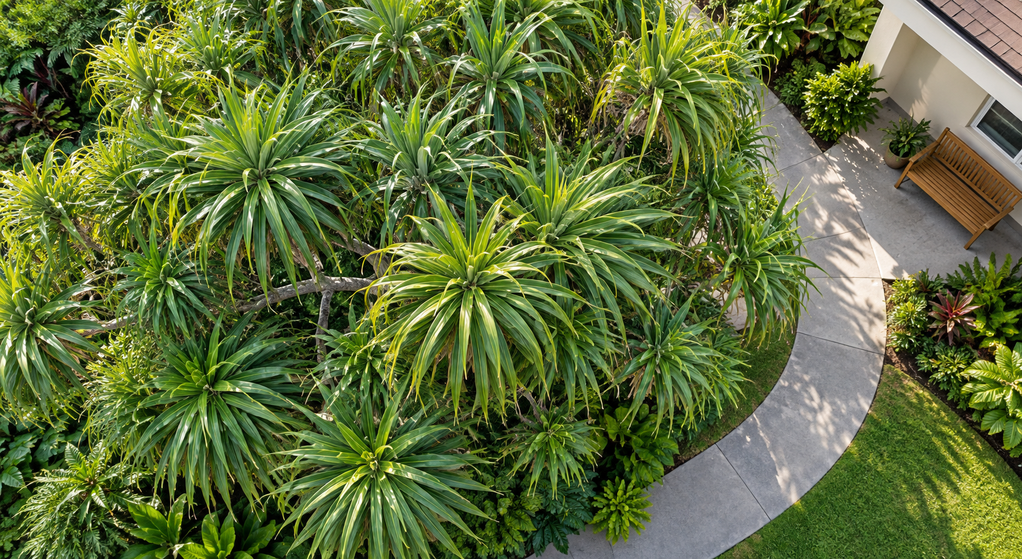
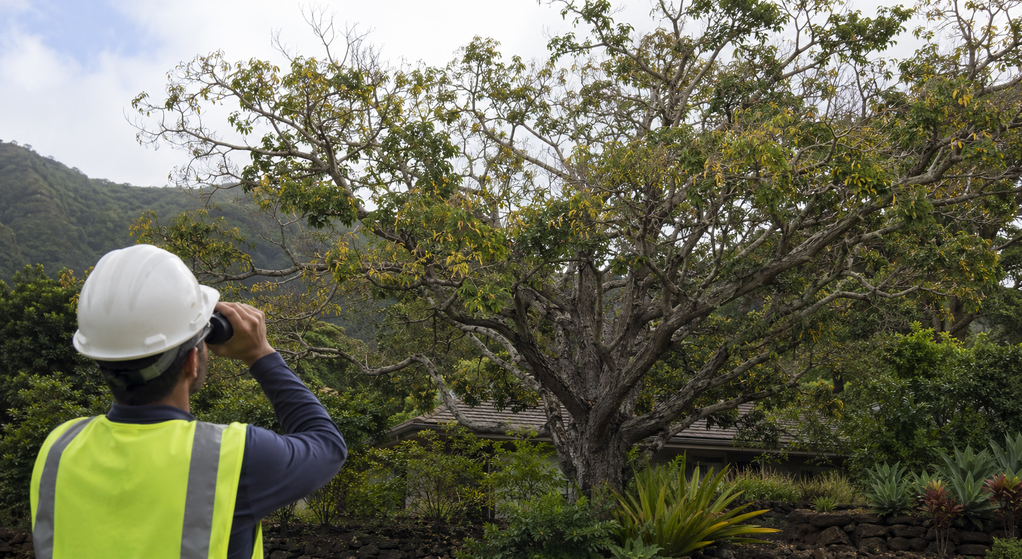
Hala’s long leaves can draw attention away from a damaged branch underneath. Observe the crown from outside its reach, using a camera’s zoom if useful. Look for a branch hanging lower than before, a fresh split at a fork, exposed broken tissue, or a detached section caught in the foliage.
The University of Florida’s guide to assessing hurricane-damaged trees and deciding what to do identifies hanging limbs, major cracks, and damaged roots as important concerns. These are general structural warning signs; a hala still needs species-appropriate assessment.
A leafy branch can be broken while its foliage remains green.
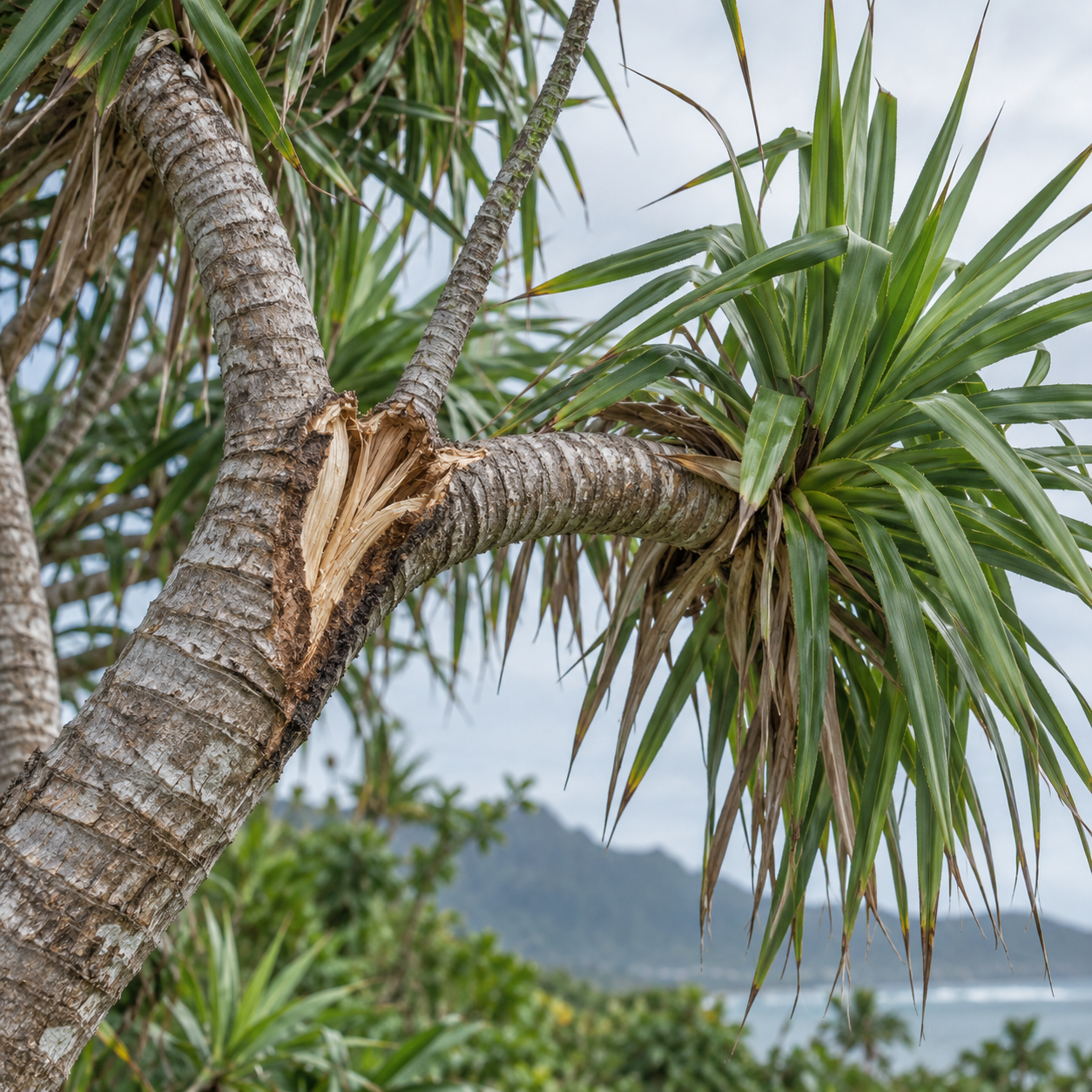
Conversely, torn leaves do not establish that the trunk or roots have failed. Photograph both the affected leaf cluster and its attachment, provided you can do so without approaching the hazard.
Avoid pulling dangling material down with a rope or reaching into the crown from a ladder. The visible piece may still be connected to another damaged section.
Separate Visible Damage From the Recovery Decision
Sort your observations into three descriptions: damaged leaves, damaged branches, and changed support. This gives the assessor a clearer starting point than saying the whole tree looks “wrecked.” Include uncertainty: “This root may have been cracked before the storm” is useful information.
Ask which injuries affect the tree’s continued stability and which mainly affect appearance. Also ask whether the assessment covers the whole tree or only the visibly broken branch. Removing one damaged section does not, by itself, answer questions about the rest.
Avoid asking for the crown to be made symmetrical immediately. First establish the purpose and extent of any proposed pruning, including whether further work would be considered later.
Let Nearby Activity Determine the Immediate Response
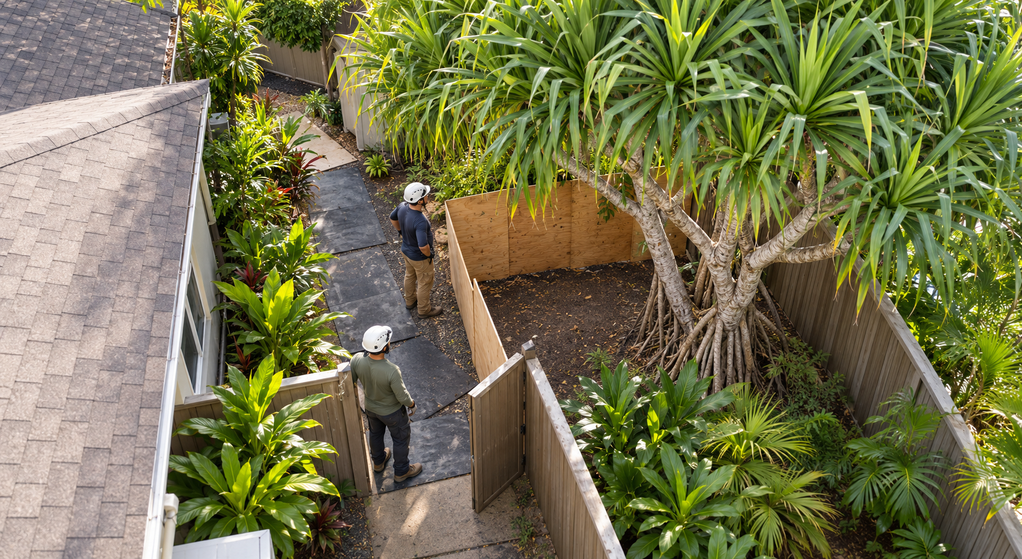
A damaged section above a front entrance requires different access arrangements from one over an unused corner of the yard. Identify entrances, parking spaces, play areas, neighboring buildings, and shared paths that could be affected.
Keep people and pets away from suspect areas while arranging assistance. Do not pass beneath a hanging branch just to collect fallen leaves. If damage involves an electrical line, stay clear and report it to the utility; ordinary yard cleanup should wait.
Prepare a Useful Record Before the Assessment
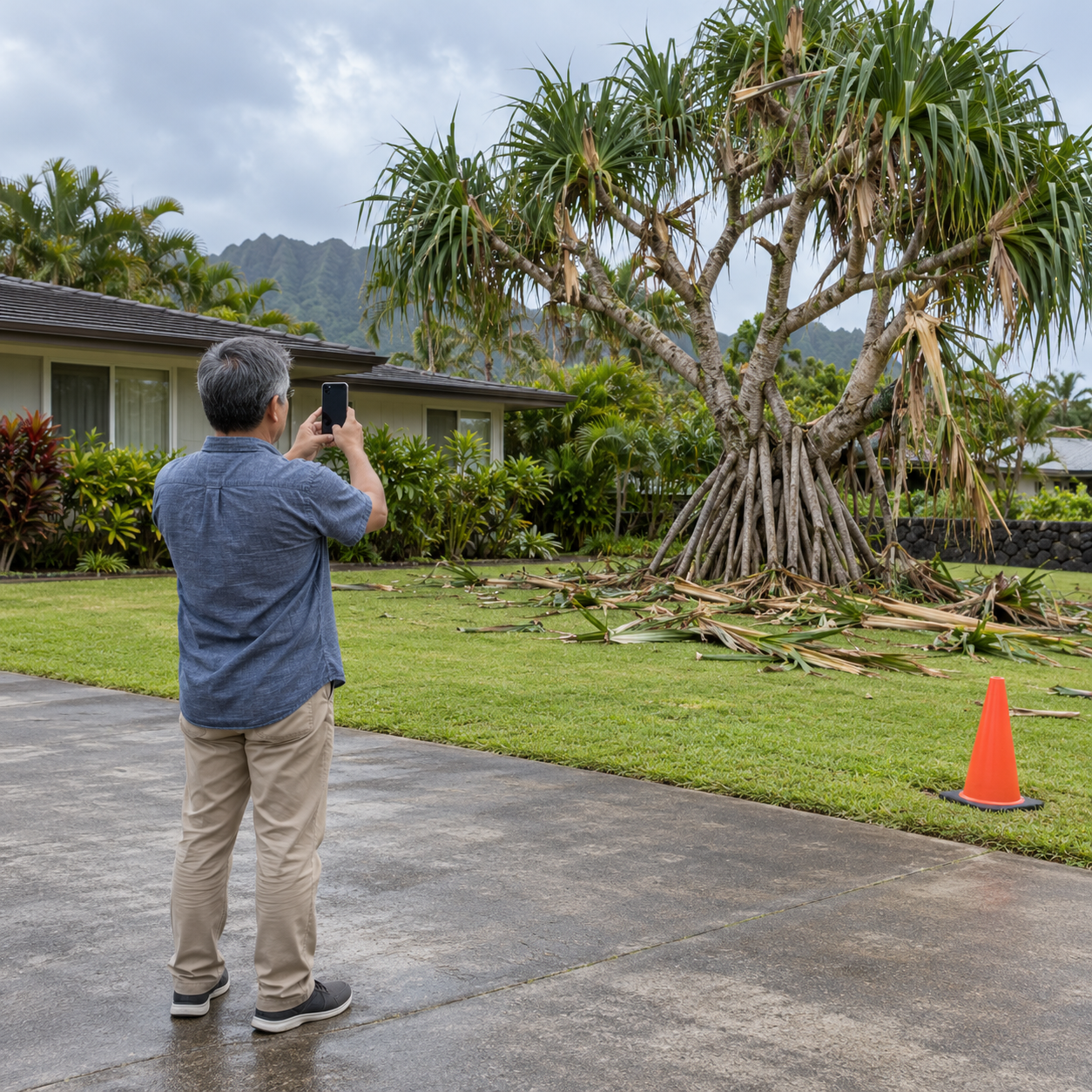
Send a whole-tree photograph, a view showing nearby structures, and zoomed images of suspected damage. Take them only from accessible, safe positions. Note when the storm occurred, when you first noticed the change, and whether older photos show the same condition.
Mention recent excavation, fence work, previous root cutting, or water pooling near the tree. Report observations without deciding that any one of them caused the damage. If additional changes appear while you wait, update the assessor rather than approaching for a closer test.
Before work begins, ask for the immediate action, the reason
for it, and any follow-up inspection needed. The soundest response starts with the hala’s structure and surroundings. A tidy yard can wait until the damaged tree has been assessed.

Written By:
Kurt Manalastas
Environmental Property Care Content Writer
Kurt produces research-driven content centered on tree care, landscaping, and environmental property management. Drawing from arborist-informed practices, site-specific conditions, and practical homeowner concerns, he provides clear, actionable guidance to help readers maintain safer, healthier, and more sustainable outdoor environments.