How to Manage Overgrown Hala Trees on Residential Properties
Summary
Managing an overgrown hala tree starts by separating cleanup, clearance, and tree-condition problems. Oahu homeowners can often solve some space conflicts without major cutting, while others require selective pruning or professional assessment. Protecting prop roots and defining maintenance triggers helps preserve a usable yard without forcing the tree into an unsuitable shape.
An overgrown hala can make a residential yard difficult to use, but “overgrown” can describe several different problems. Fallen leaves may create a cleanup burden, one cluster may block a gate, a branch may contact the house, or the tree may have changed condition. Each problem calls for a different response.
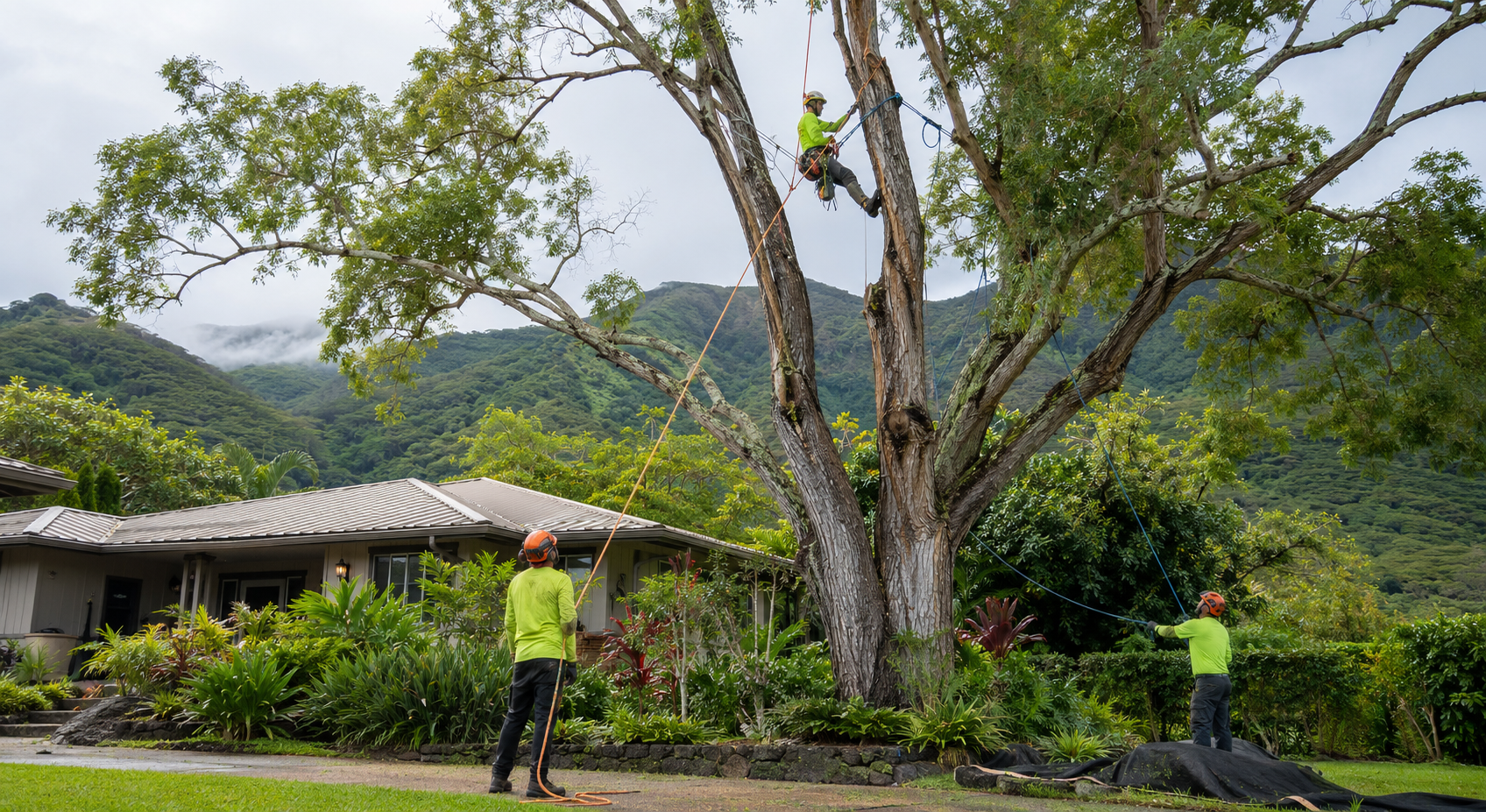
Professional tree trimming services in Honolulu and across Oahu cover pruning needs that go beyond safe ground-level cleanup. Oahu Tree Trimming and Removal Services provides owner-operated tree care throughout Oahu; its website reports more than eight years of hands-on tree-service experience in Hawaii.
First Separate Cleanup, Clearance, and Condition Problems
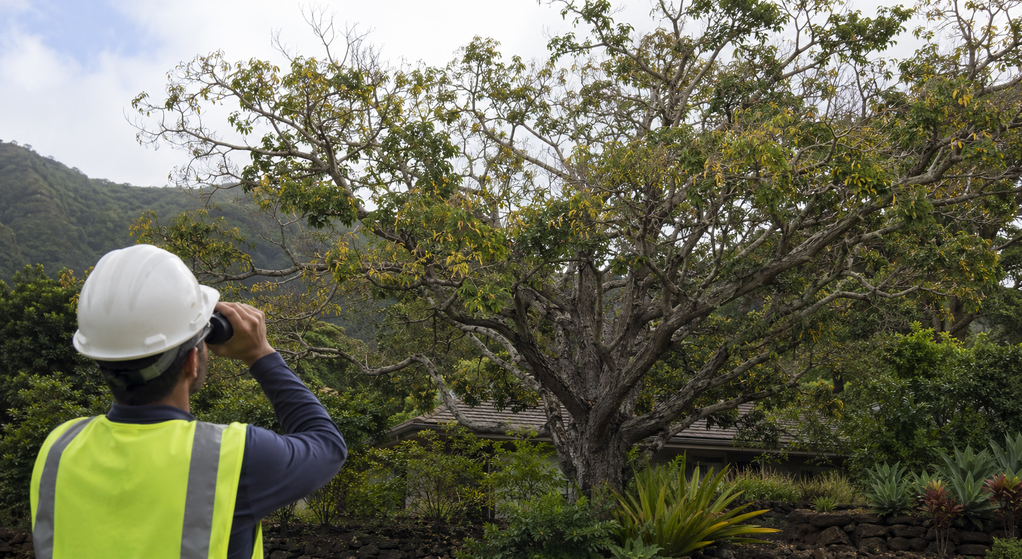
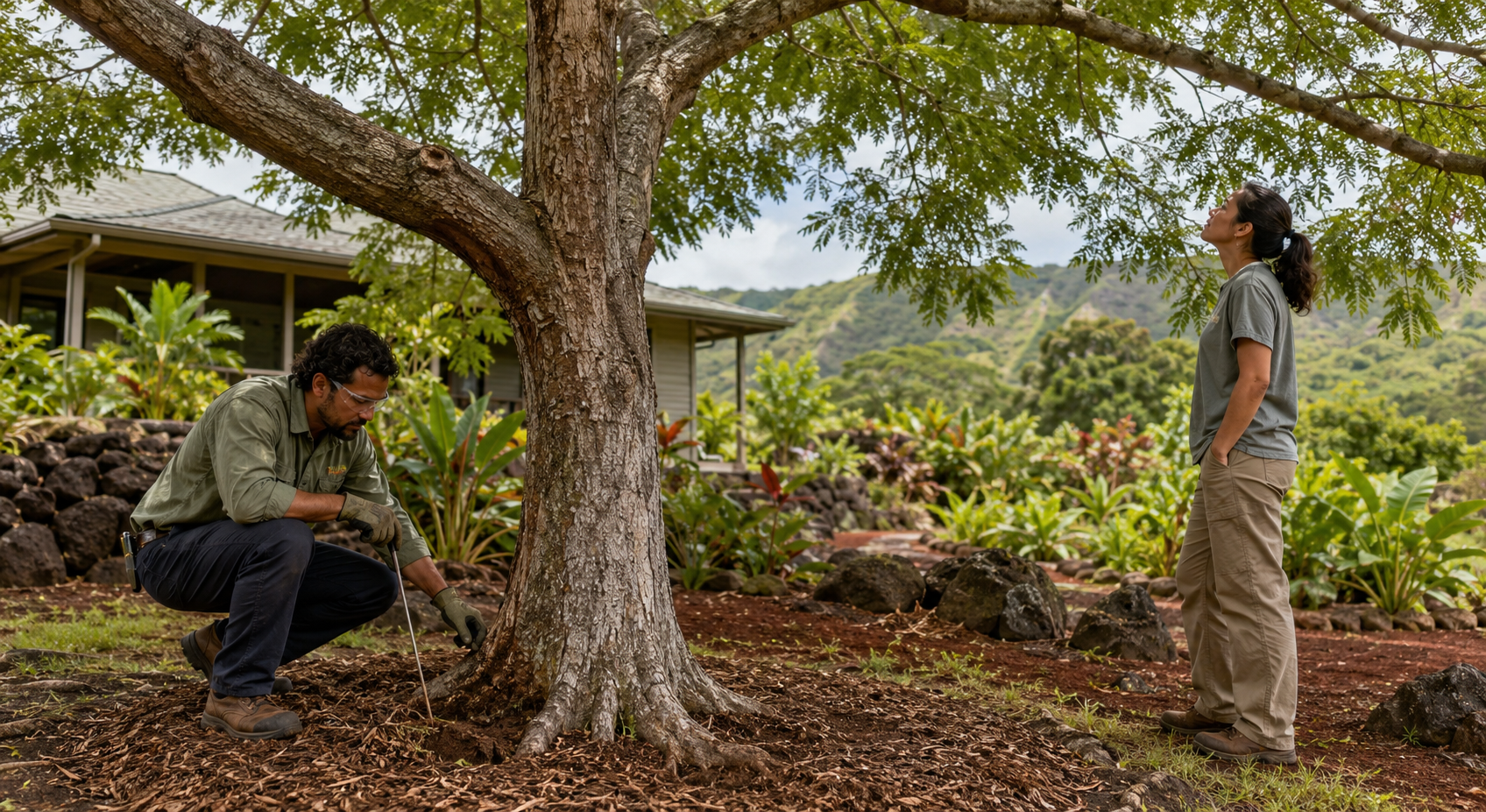
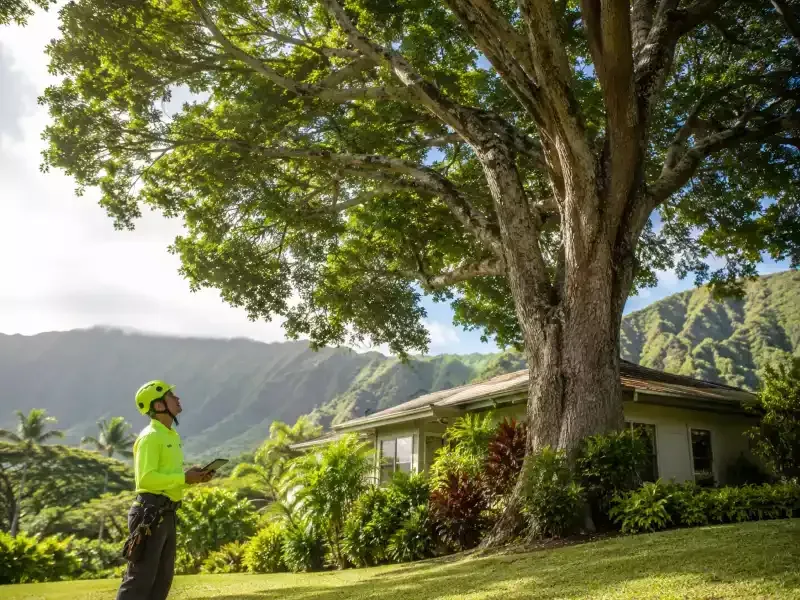
Walk around the tree from accessible ground and classify each concern before deciding what work to request. Cleanup problems involve material already on the ground. Clearance problems involve branches, leaves, or fruit interfering with access or structures. Condition problems include a new lean, fresh break, disturbed soil, or declining foliage.
This triage prevents routine debris cleanup from turning into unnecessary canopy work and prevents a possible structural concern from being treated as a cosmetic trimming job. Photograph each conflict and note when it interferes with normal use.
Try Non-Cutting Fixes for Space Conflicts First
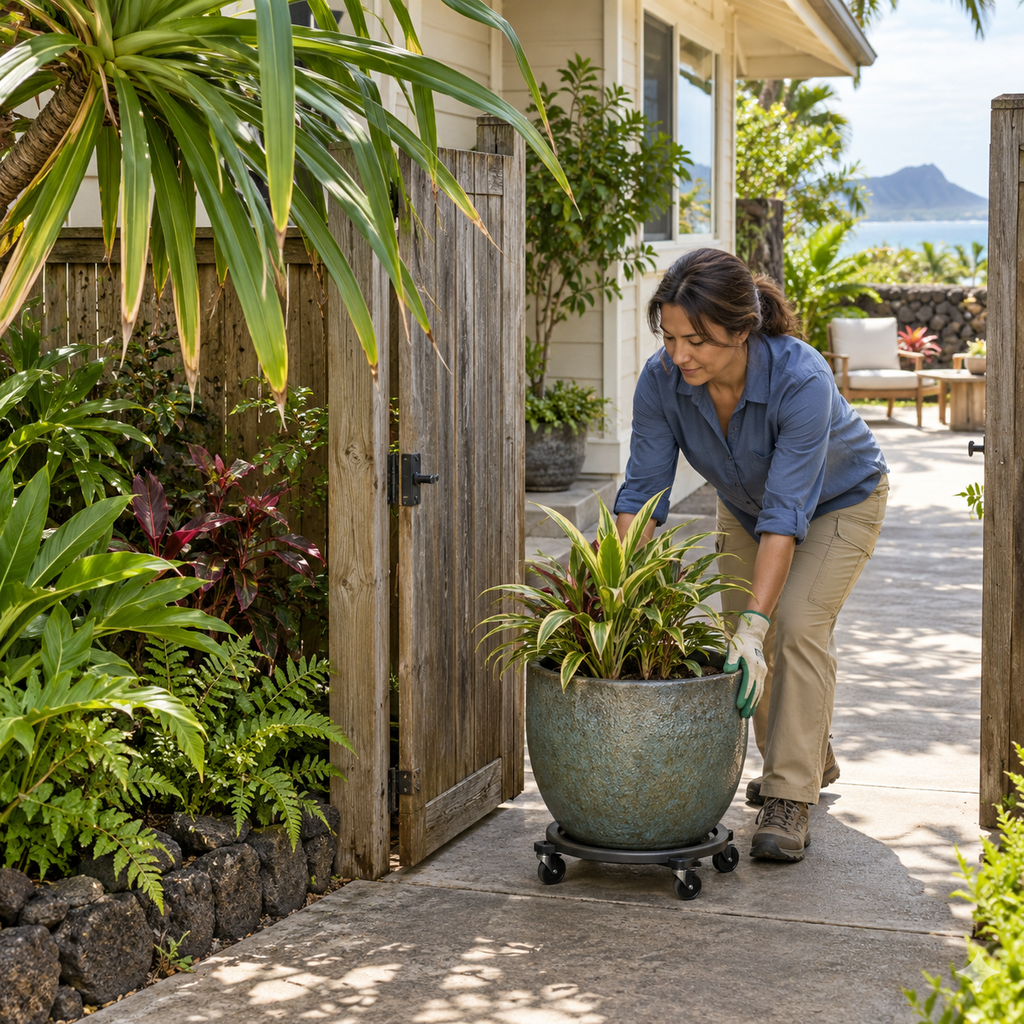
Some conflicts come from how the yard is arranged rather than from the entire tree. Moving a bench, shifting a portable planter, or changing where a vehicle is parked may restore usable clearance without altering the canopy.
Focus on the exact interference point. One leaf cluster at a gate is different from a major branch occupying the only passage to the backyard.
Non-cutting changes will not solve every situation, but testing them first helps define what pruning actually needs to accomplish.
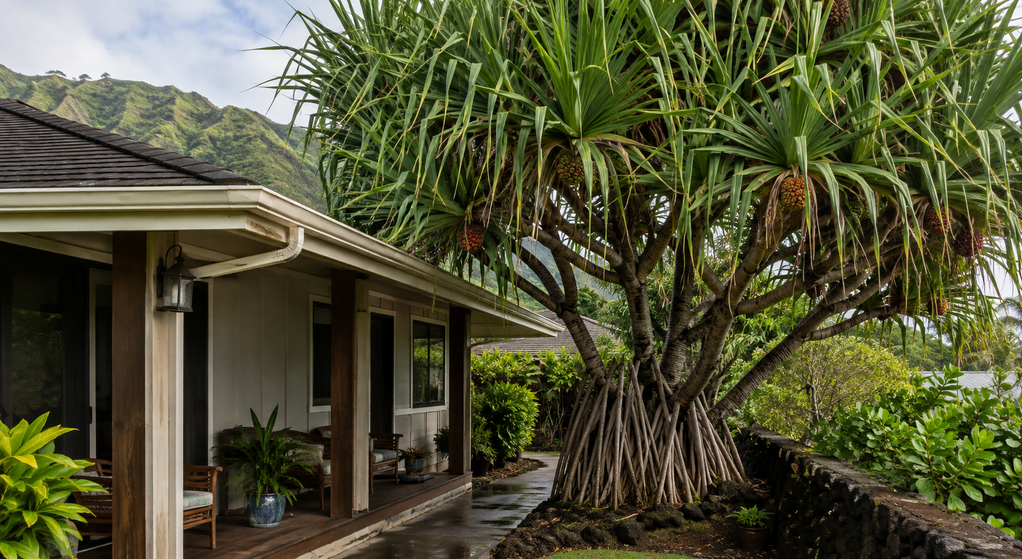
When a building conflict is involved, review Is Your Hala Tree Growing Too Close to Your House? for a more specific discussion of roof contact, root space, and longer-term fit.
Define a Selective Pruning Scope Around Hala’s Natural Form
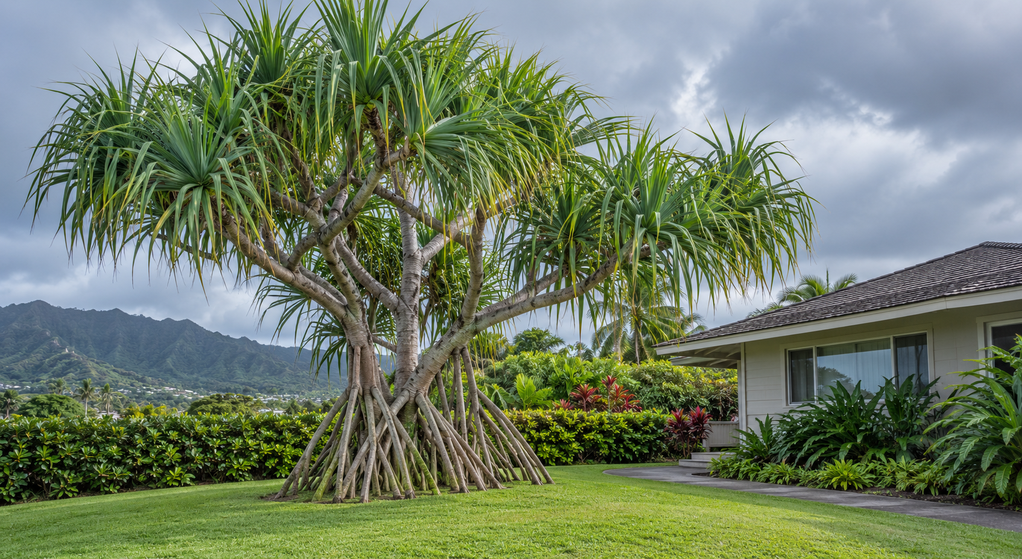
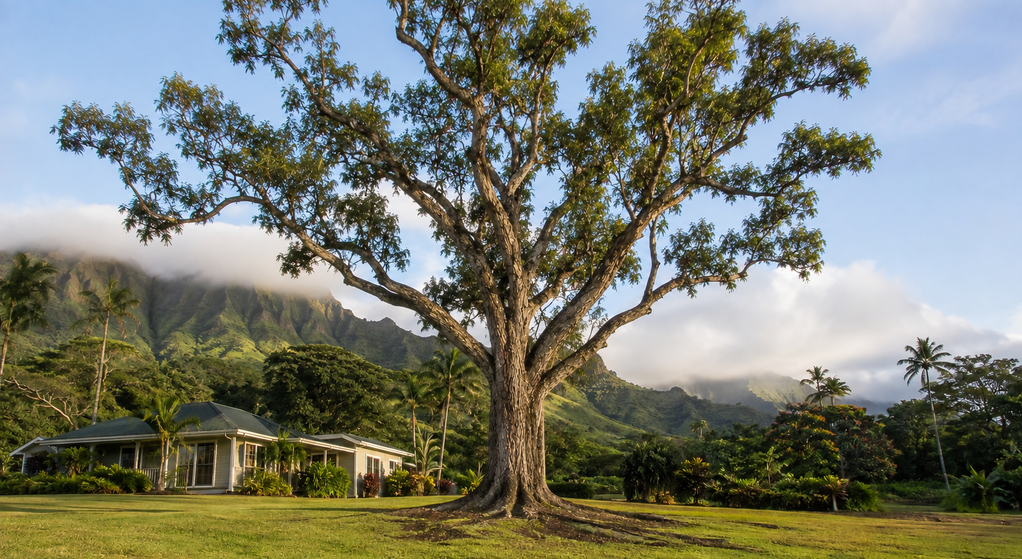
The University of Hawaiʻi Native Plants profile for hala describes a wide-branched tree with long leaves clustered toward branch ends, sharp-toothed margins on many forms, female fruit, and prominent aerial roots. Those features explain why a mature hala can occupy substantial space beyond the trunk.
Ask the tree professional to identify the branches or leaf clusters included in the scope and the clearance the work is expected to create. Avoid approving a uniform height reduction without understanding what structure and foliage would remain.
A selective scope can target a roof conflict, gate obstruction, dead or damaged growth, or fruit-drop exposure while preserving portions of the tree that are not creating a problem.
Treat Prop-Root Conflicts Separately From Canopy Clearance
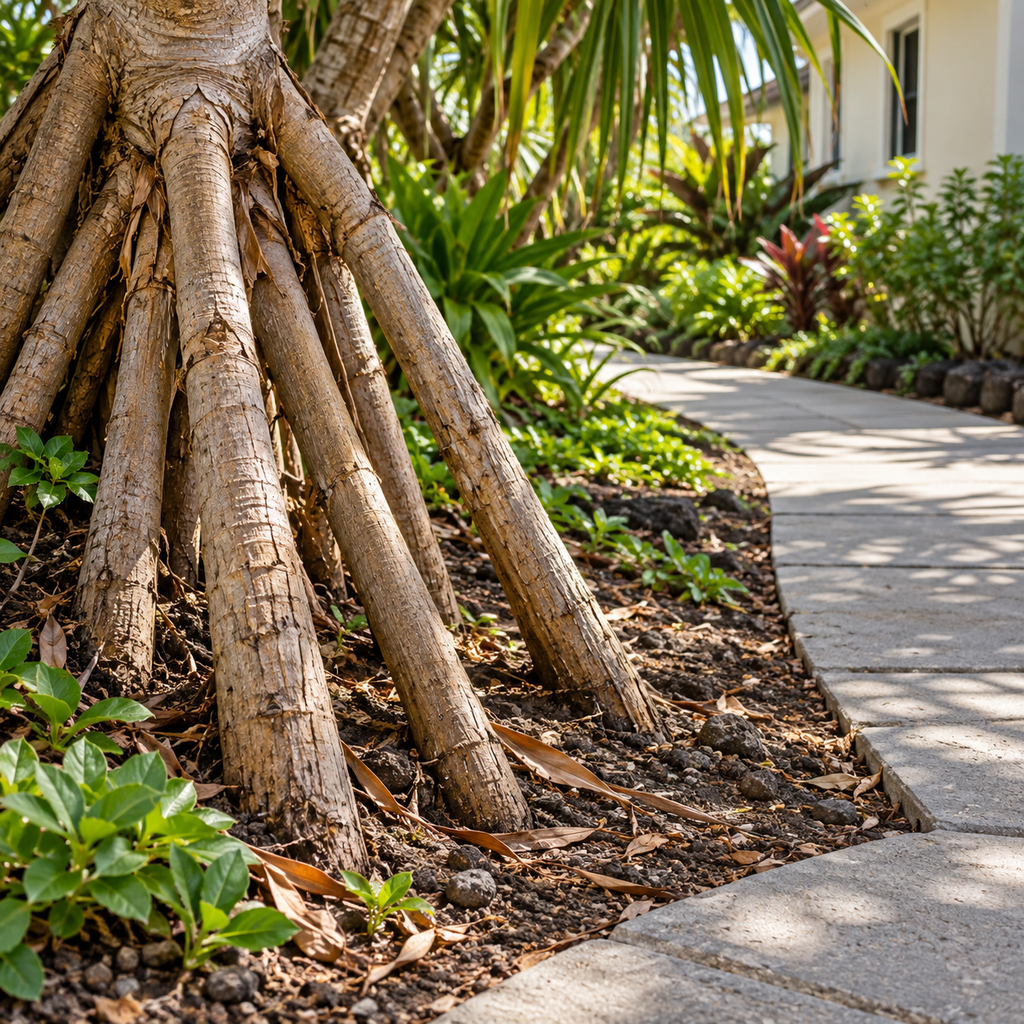
A pruning plan for overhead foliage does not automatically solve a conflict at ground level. Hala’s aerial or prop roots contribute to the support system around the base, so they should not be cut simply to widen a path or make the area look tidier without assessment.
If roots obstruct essential access, describe the required walkway width or use condition and ask what options preserve support. Depending on the site, the solution may involve changing the route, modifying adjacent hardscape, or reconsidering whether the tree still fits the location.
Pause Cosmetic Trimming When the Tree Has Changed Condition
A fresh break, newly disturbed soil, a recent lean, extensive dead material, or rapid canopy decline deserves assessment before routine shaping begins. Keep people away from unstable or hanging material while arranging help.
When to Call a Professional Arborist: Signs Your Tree Needs Expert Care provides a broader checklist for deciding when tree condition should take priority over appearance.
Ask whether the proposed work addresses the observed condition or only changes how the tree looks. If keeping the tree would require repeated major cutting, leave essential access obstructed, or preserve a credible safety concern, discuss retention and removal as separate options rather than continuing cosmetic reduction by default.
Set Maintenance Triggers Instead of a Fixed Cutting Schedule
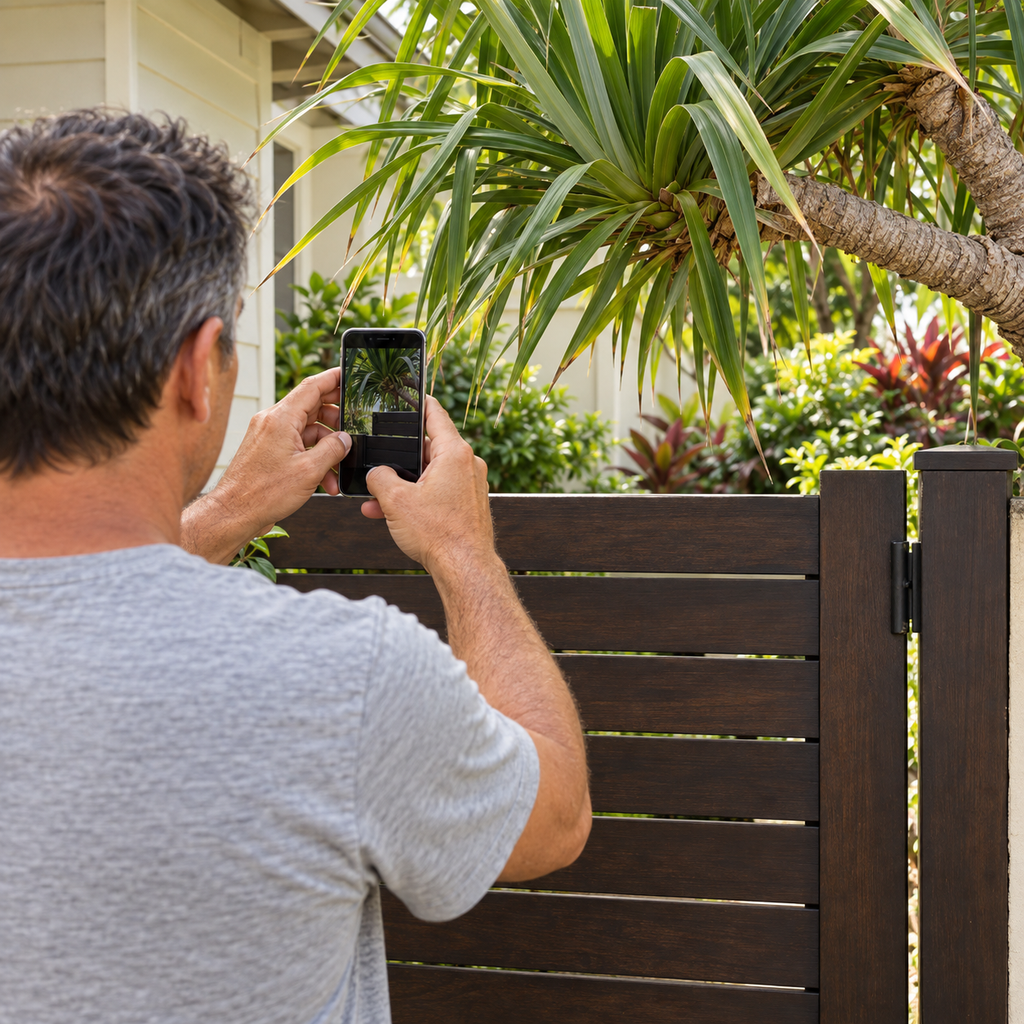
After work is complete, photograph the tree from the original viewpoints and record which conflicts were corrected. Note when gate access becomes restricted again, when branches approach a defined clearance point, or when ground-level debris begins affecting routine use.
Use those observations to trigger the next review instead of assuming every hala needs the same annual cutting cycle. The interval should reflect the tree’s growth, site constraints, and the type of conflict being managed.
Successful management leaves the property usable while keeping the work proportional to the problem. Define the conflict first, test non-cutting options, use selective pruning where needed, protect the prop-root area, and reassess when either the tree or the property’s needs change.

Written By:
Kurt Manalastas
Environmental Property Care Content Writer
Kurt produces research-driven content centered on tree care, landscaping, and environmental property management. Drawing from arborist-informed practices, site-specific conditions, and practical homeowner concerns, he provides clear, actionable guidance to help readers maintain safer, healthier, and more sustainable outdoor environments.