Is Your Hala Tree Growing Too Close to Your House?
Summary
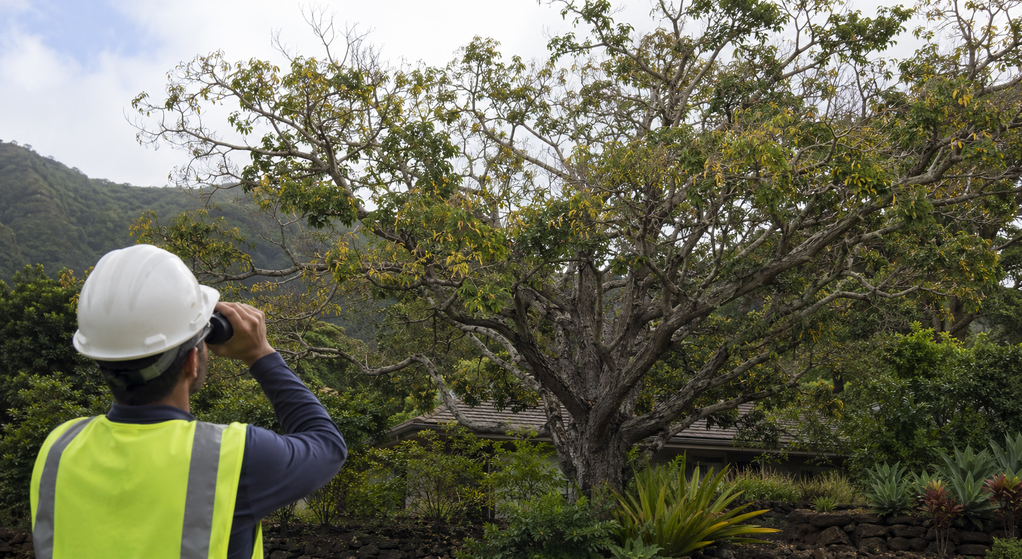
A hala tree may be too close when its branches, serrated leaves, fruit, trunk, or prop roots interfere with the roof, walls, walkways, drainage, or utilities. Distance alone does not decide the outcome. The tree’s condition, mature spread, available clearance, and options for selective management matter more.
Hala can enrich an Oahu landscape, but its broad form and prop roots require room. Proximity alone does not justify removal. The question is whether the tree can remain without damaging the home, creating a safety concern, or requiring severe cutting.
An assessment by a provider of professional tree trimming services in Honolulu and across Oahu can determine which branches can be shortened without compromising the tree, particularly over a roof or in a narrow side yard.
Oahu Tree Trimming and Removal Experts is licensed and insured in Hawaii. Owner Luke has more than eight years of hands-on experience and performs technical climbing, rigging, and pruning while working closely with ISA-certified arborists. That experience is relevant on tight-access properties where a structure limits the available working space.
How Close Is Too Close for a Hala Tree?
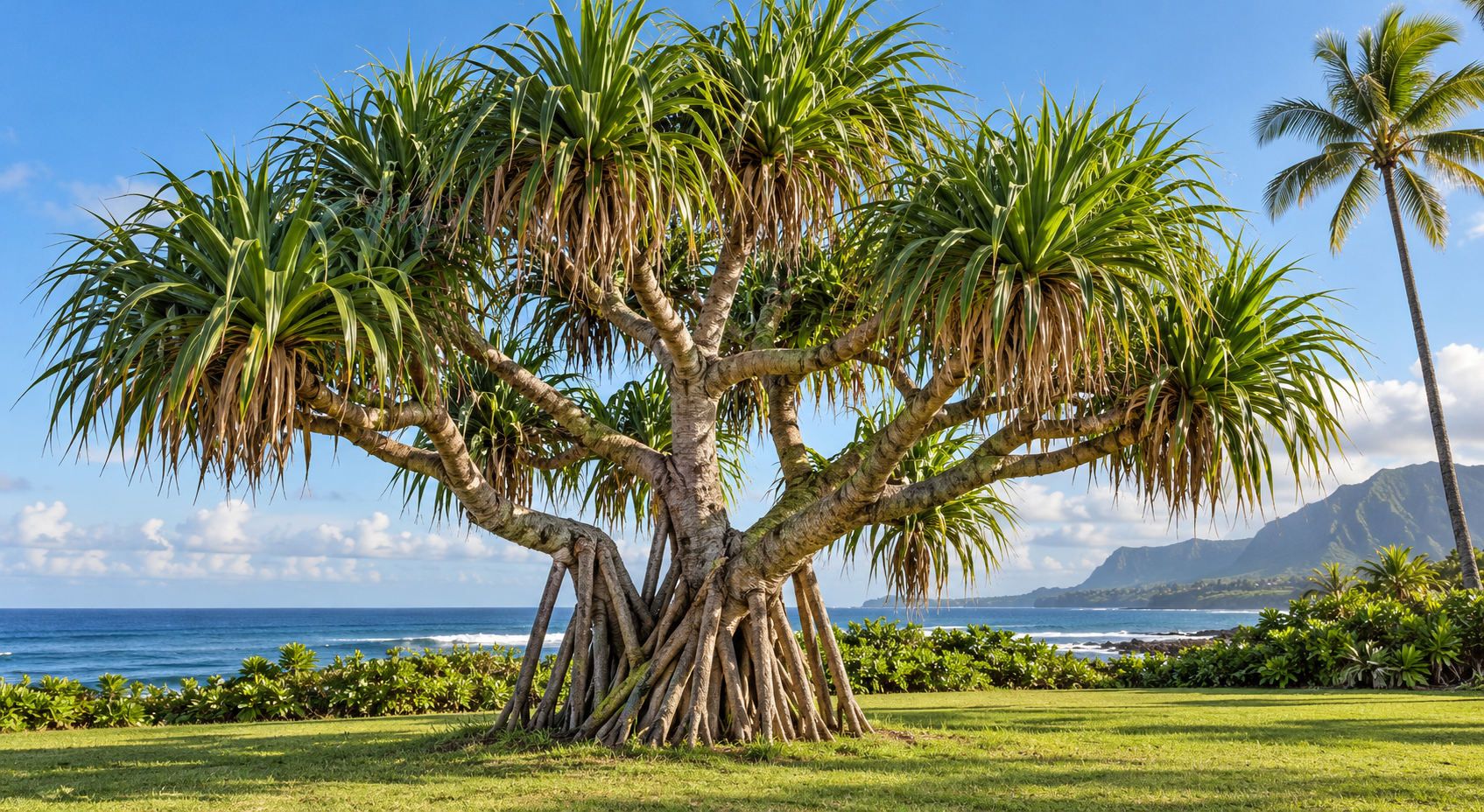
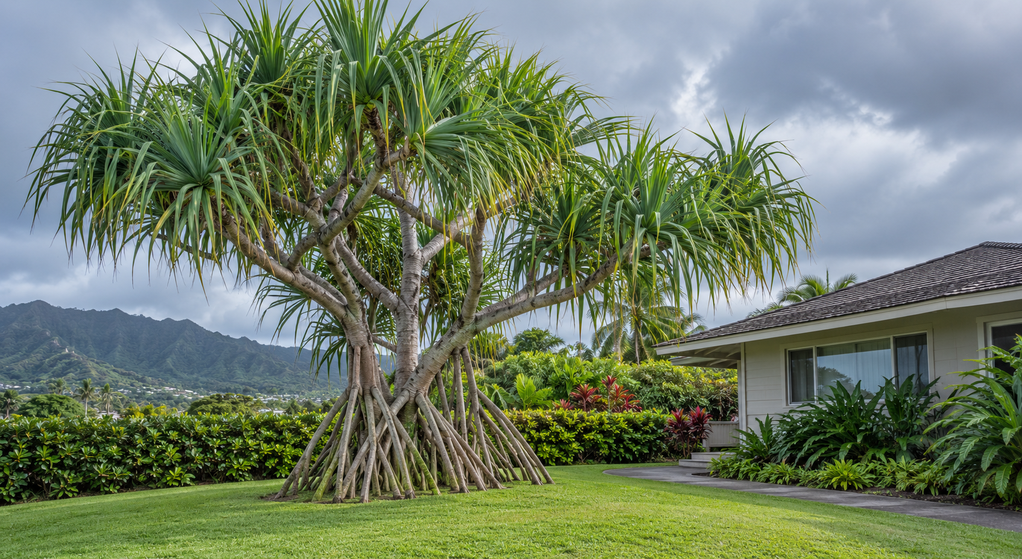
There is no trunk-to-wall measurement that settles every case. The Native Hawaiʻi Plants profile for hala lists a typical tree height of 15 to 30 feet, a spread around 20 feet, and leaves two to six feet long with sharply toothed edges on many varieties.
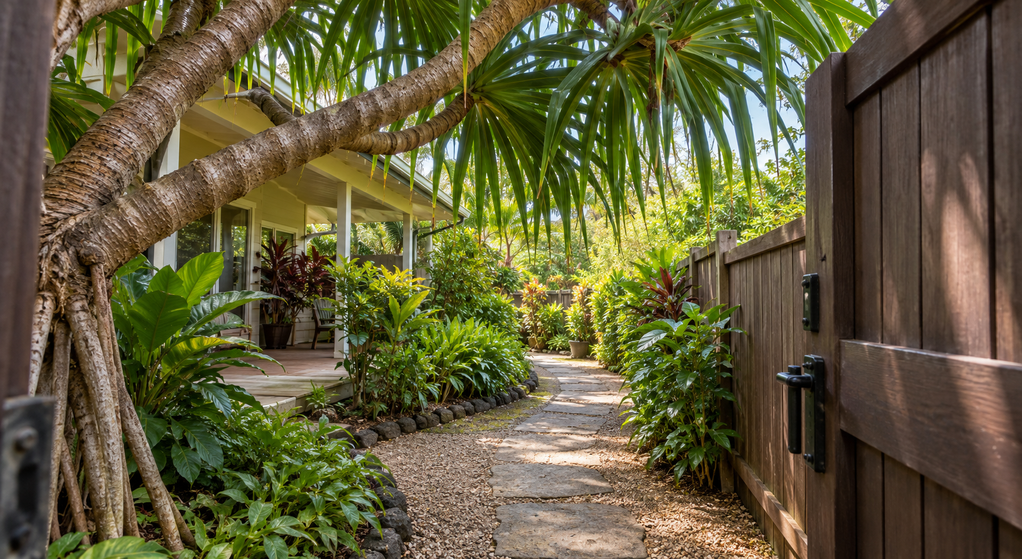
Those dimensions explain why a young hala can become crowded, but they are not a mandatory setback. A tree ten feet from a wall may grow away from the structure, while another may press against an eave, obstruct a walkway, or lean toward the roof.
Judge the overhead clearance, root space, access, and direction of growth.
Warning Signs That Proximity Is Becoming a Problem
Start with conditions visible from the ground. The guide to recognizing local tree hazards in Hawaii adds context for evaluating root damage, lean, weak branches, and other risks.
Closer inspection is justified when:
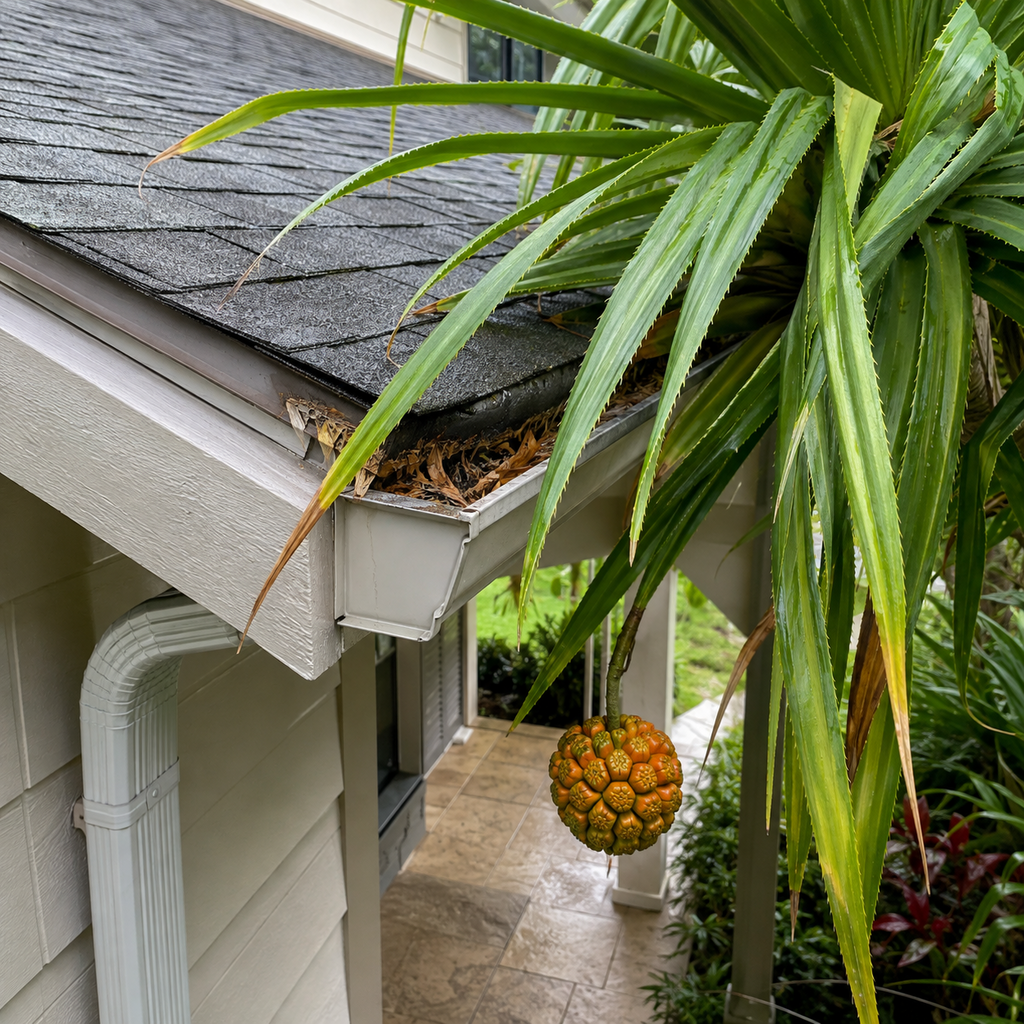
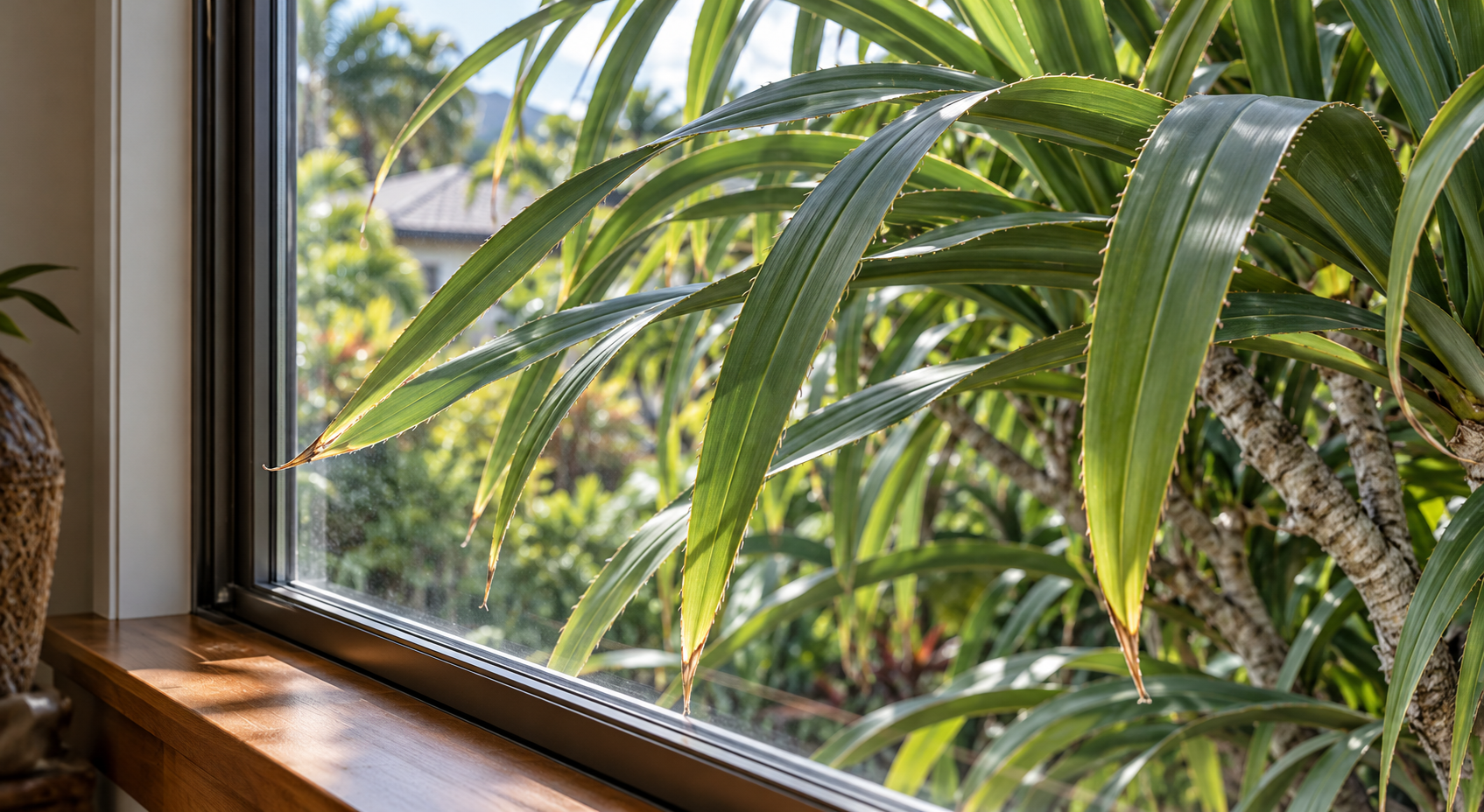
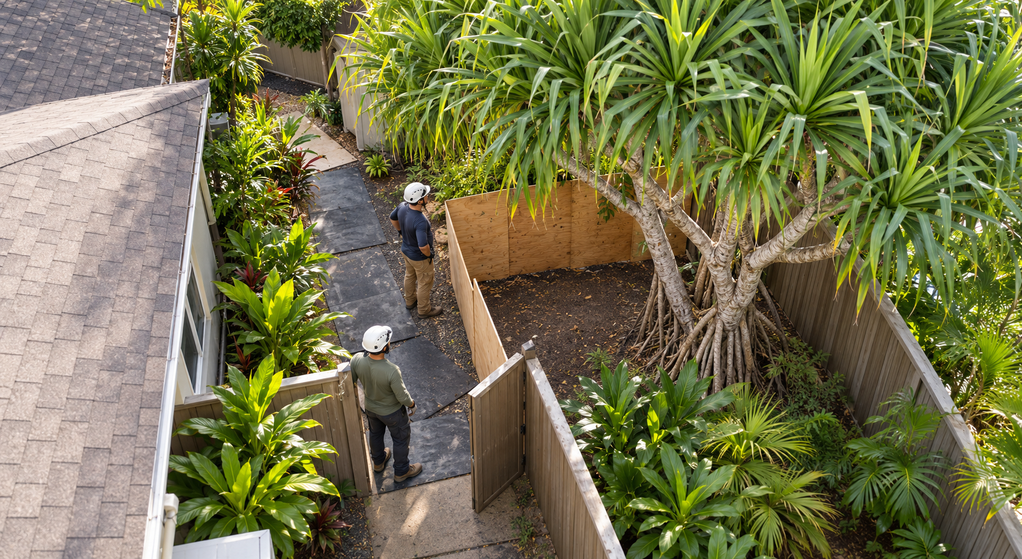
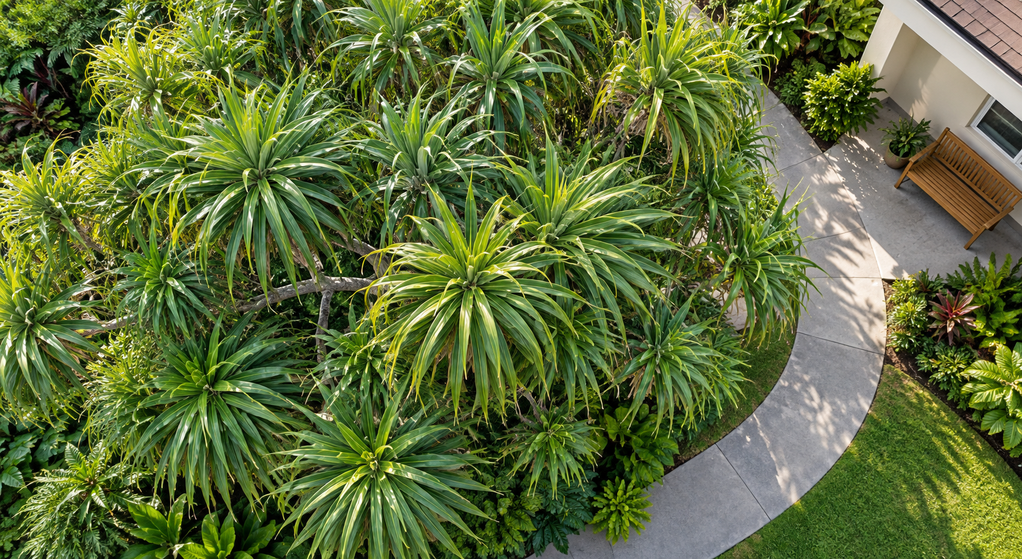
- Branches or long leaves continually scrape roofing, siding, windows, or gutters.
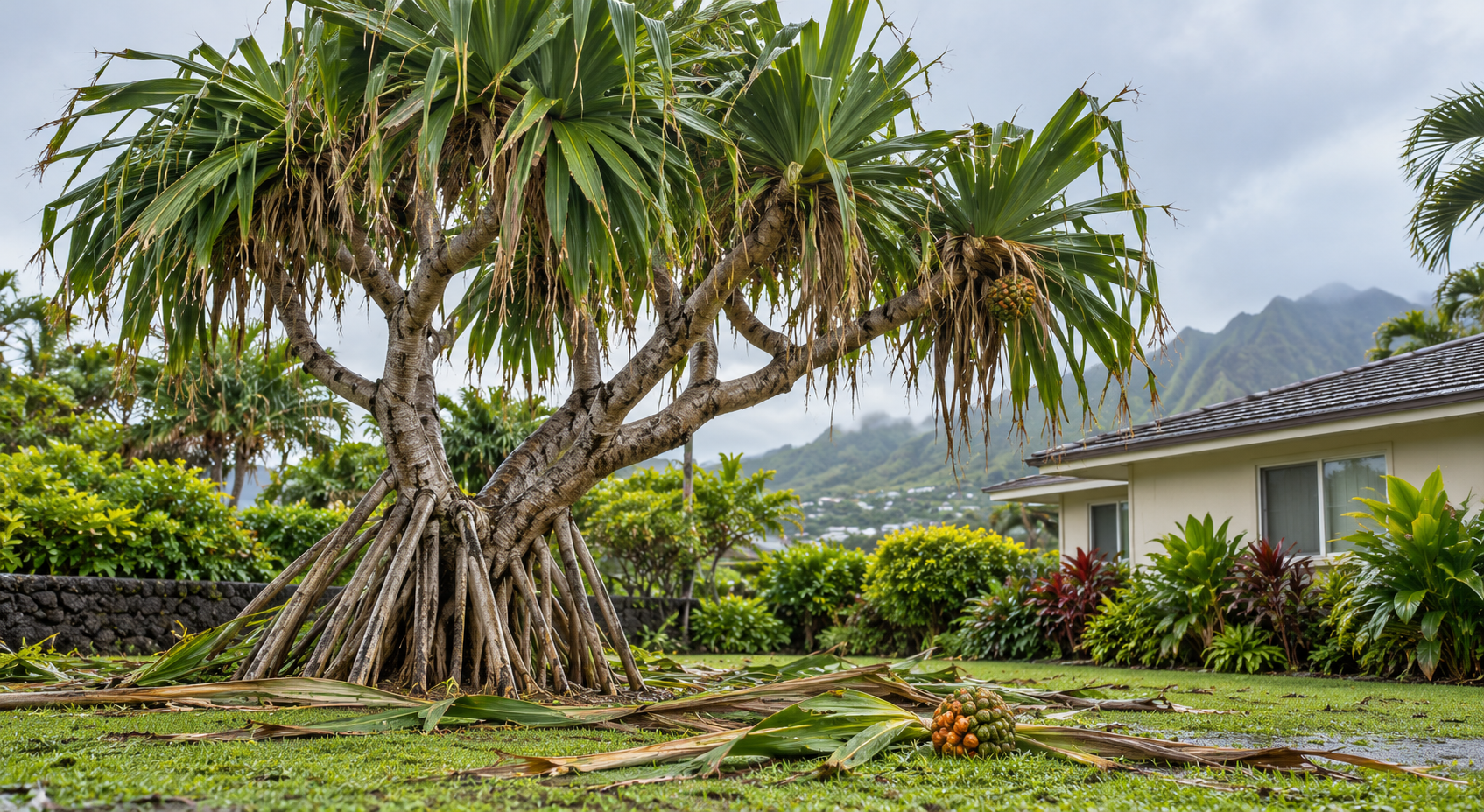
- Fruit, dead leaves, or broken growth regularly falls onto an entrance, roof, or frequently used path.
- Prop roots restrict a walkway, press against light paving, or leave too little room for safe access around the house.
- The trunk or a major branch leans toward the building, especially with recent movement or lifted soil.
- Cracks, cavities, dead sections, or weak branch attachments are visible on the house-facing side.
- Maintaining clearance would require frequent heavy cutting or removal of most growth from one side.
- Branches are near electrical service lines. Do not attempt to create this clearance yourself.
One sign does not automatically make the tree unsafe. Repeated contact, movement, structural defects, or several warning signs together make evaluation more urgent.
Roots Need a Closer Look, Not a Quick Cut
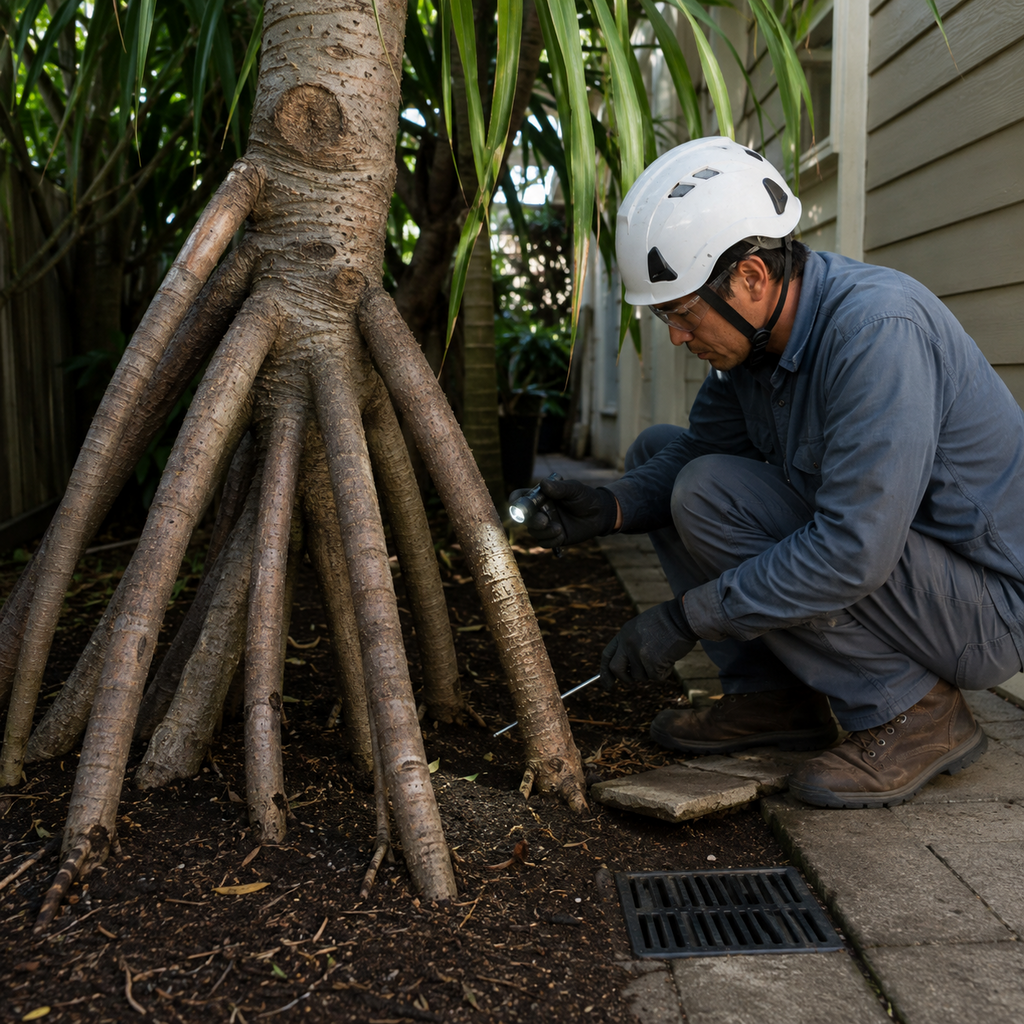
Hala’s aerial roots form thick supports around the base. They are not disposable surface growth. Because these roots contribute to support, cutting them may reduce stability or injure the tree, especially when cuts are made close to the trunk. Trenching for drainage, plumbing, or a slab can also sever hidden roots.
A concrete crack does not prove hala roots caused it. Roots may aggravate light paving or a vulnerable feature, while foundation movement can have other causes. Document both, then arrange separate tree and structural evaluations if necessary.
Do not cover, load, or drive over the root area. If a root conflicts with a drain, walkway, or foundation edge, identify its structural role before approving a cut.
Can Pruning Make the Tree Compatible With the House?
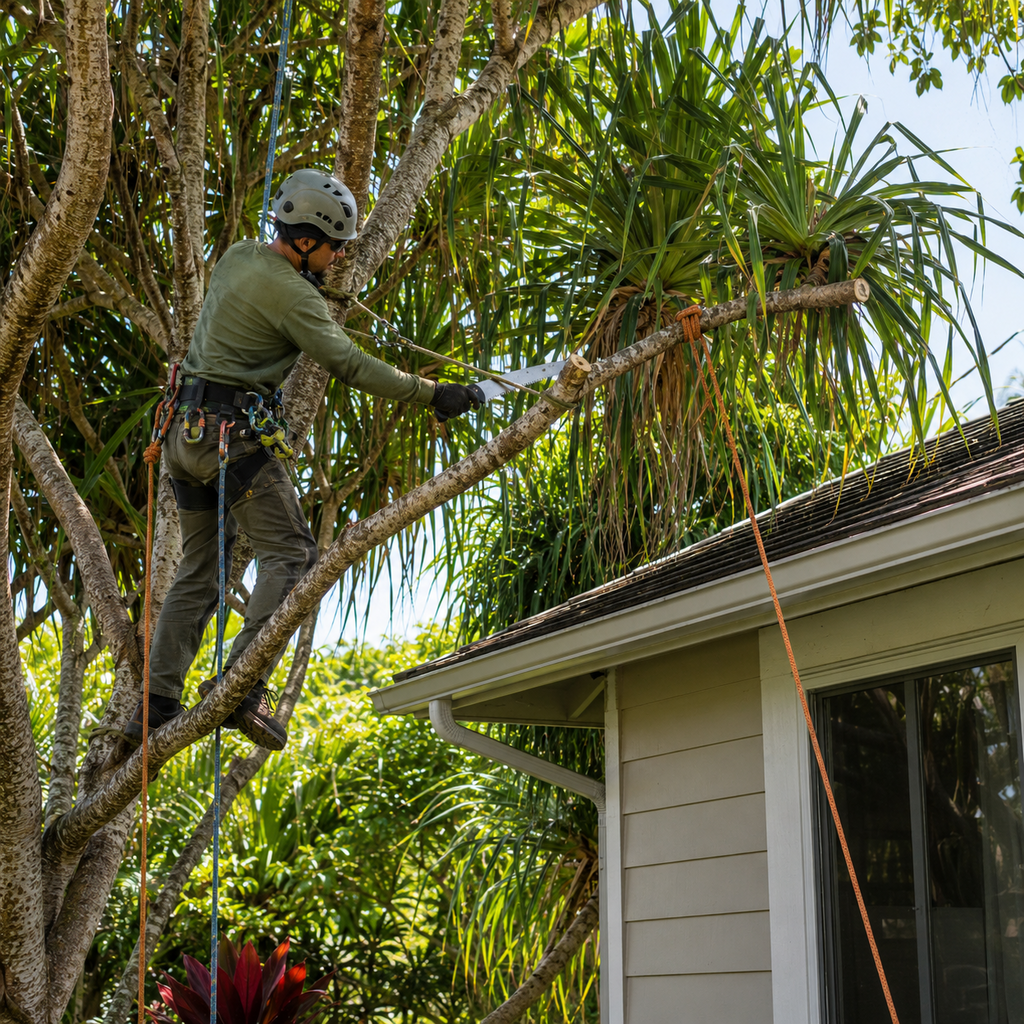
Sometimes. Selective pruning may create roof clearance, remove damaged growth, and correct a limited branch conflict. It cannot make a mature, wide-branched hala behave like a narrow ornamental plant.
Our guide to smarter and safer tree pruning practices in Oahu explains why targeted cuts are preferable to topping. Removing too much from the house-facing side can unbalance the canopy, while severe topping can trigger weak regrowth and another clearance problem.
Pruning is reasonable when a few branches cause the conflict and moderate work can maintain clearance. If maintaining clearance requires repeated aggressive cutting, the site may no longer suit the tree’s mature size.
When Removal May Be the More Reasonable Choice
Consider removal when the trunk, major roots, or primary branches conflict with the house and pruning cannot provide durable clearance. Other reasons include significant decay or instability, repeated failure over occupied areas, or planned excavation that would remove essential roots.
Hala is indigenous to Hawaii and has deep cultural value. Preservation may be preferable when sound structure and adequate clearance can be maintained. If retention depends on damaging roots or repeatedly stripping the canopy, delaying removal may make the eventual work more difficult.
What to Check Before You Decide
Record the trunk-to-house distance, then photograph the base, roof clearance, visible roots, and contact points. Note changes after strong wind or heavy rain, including fresh lean, lifted soil, or cracked branches.
During an on-site assessment, ask:
- Which branches or roots are causing the actual conflict?
- Can clearance be achieved without topping or major root cutting?
- How quickly is the conflict likely to return?
- Is the tree structurally sound enough to retain?
- Would nearby construction or drainage work change its stability?
- If removal is advised, what access and rigging will protect the house?
Do not climb a hala or cut large branches and prop roots as a test. Serrated leaves, elevated work, branch weight, and proximity to the building make trial-and-error cutting risky.
Make the Decision Based on the Whole Tree
A hala is too close when its mature growth and root structure can no longer coexist safely with the house, not simply because its trunk falls within an arbitrary distance. Moderate pruning may solve a limited conflict, but structural root loss, severe defects, or unavoidable crowding may justify removal.

Written By:
Kurt Manalastas
Environmental Property Care Content Writer
Kurt produces research-driven content centered on tree care, landscaping, and environmental property management. Drawing from arborist-informed practices, site-specific conditions, and practical homeowner concerns, he provides clear, actionable guidance to help readers maintain safer, healthier, and more sustainable outdoor environments.