Hala Tree Trimming Near Homes, Driveways, and Walkways
Safety Insight
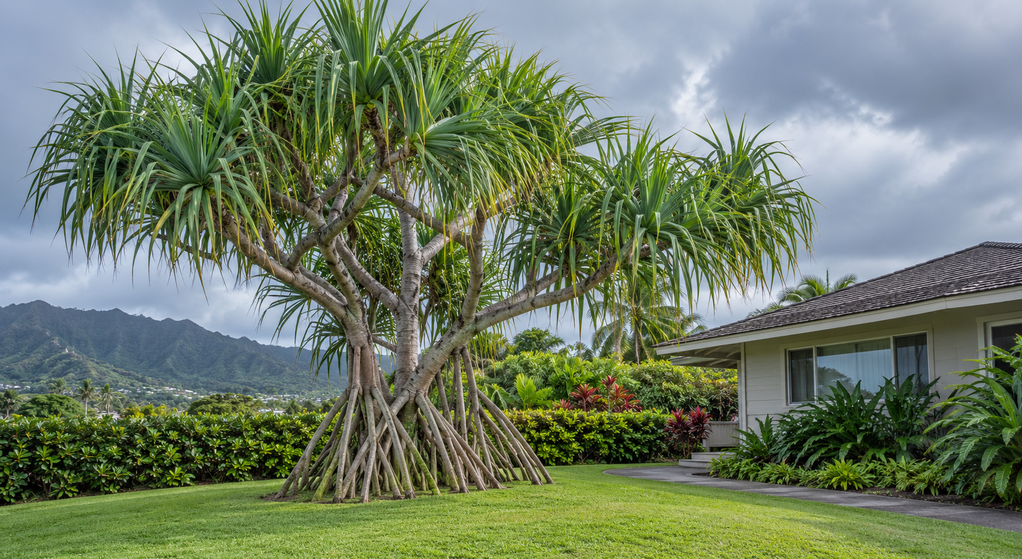
Hala trimming near a home should address specific contact points and daily access needs. Separate leaf cleanup from branch work, account for vehicles and pedestrians, and protect prop roots. A useful plan identifies what needs clearance, how that clearance can be maintained, and when changing the surrounding layout deserves consideration.
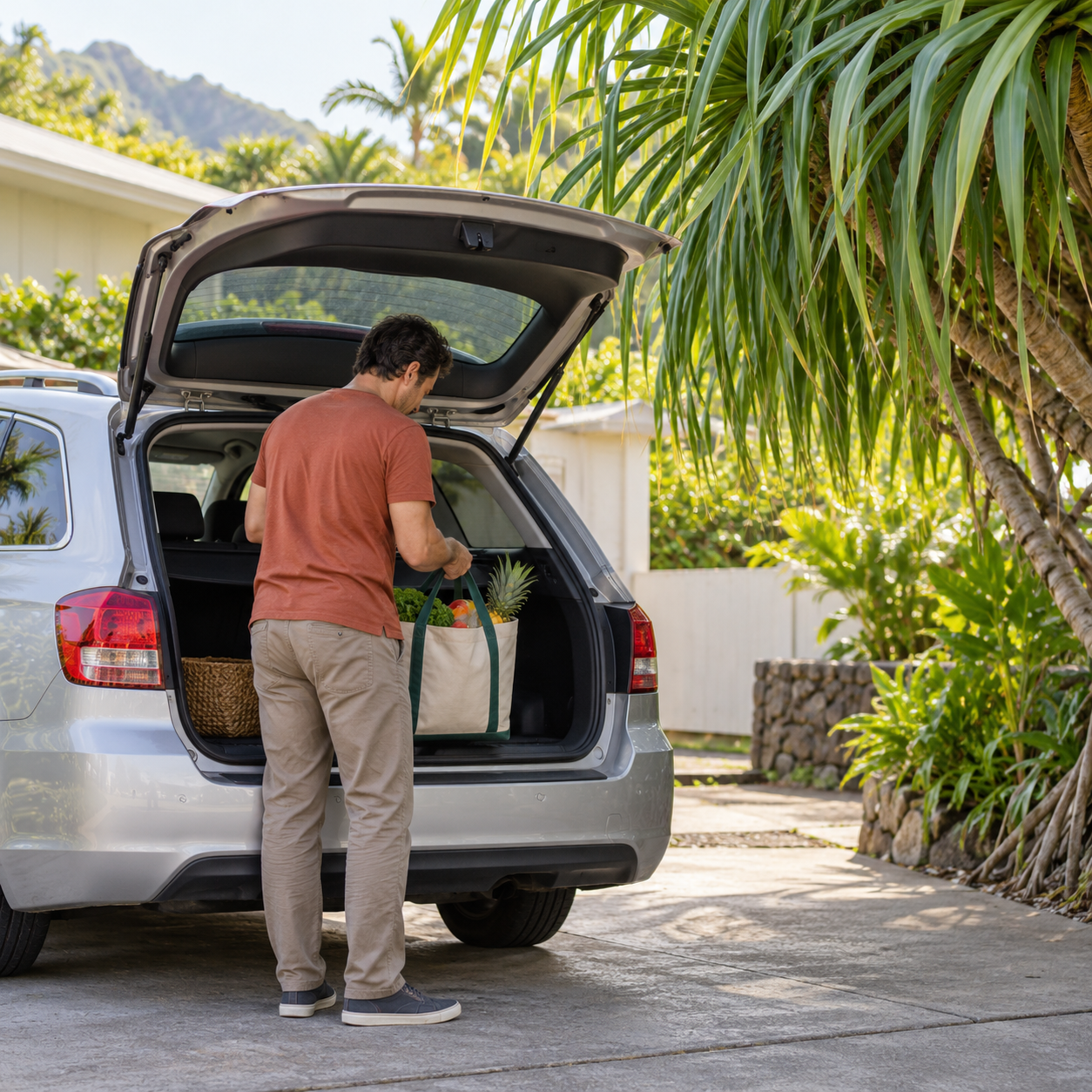
A hala beside a driveway can leave enough room for a parked car while blocking the space needed to unload groceries. Near an entrance, leaves may brush someone carrying a child even though the path looks open. These are different clearance problems, and a general request to “trim it back” leaves too much undecided.
For Honolulu property owners, the aim is usable space with a realistic maintenance burden. When retaining a tree would require unacceptable cutting,professional tree removal services in Honolulu and across Oahu become relevant to the decision. Proximity alone does not establish that removal is necessary.
Oahu Tree Trimming and Removal Services offers trimming and removal, allowing owners to discuss both options when an access conflict cannot be resolved through limited maintenance.
Related reading: assessing whether a hala tree is growing too close to your house supports one adjacent consideration, while managing hala trees along fences and property lines in Oahu addresses another. This article focuses on access/clearance planning near occupied routes.
Define Clearance Around the Way You Use the Property
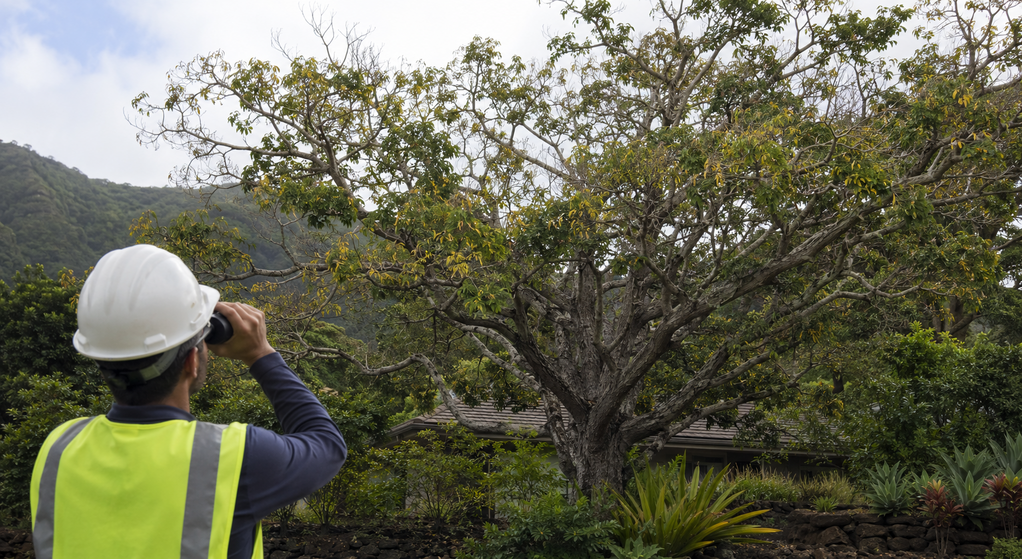
Before requesting a quote, record where the tree interferes with normal activities. Observe from the ground without reaching into the canopy or standing beneath damaged growth.
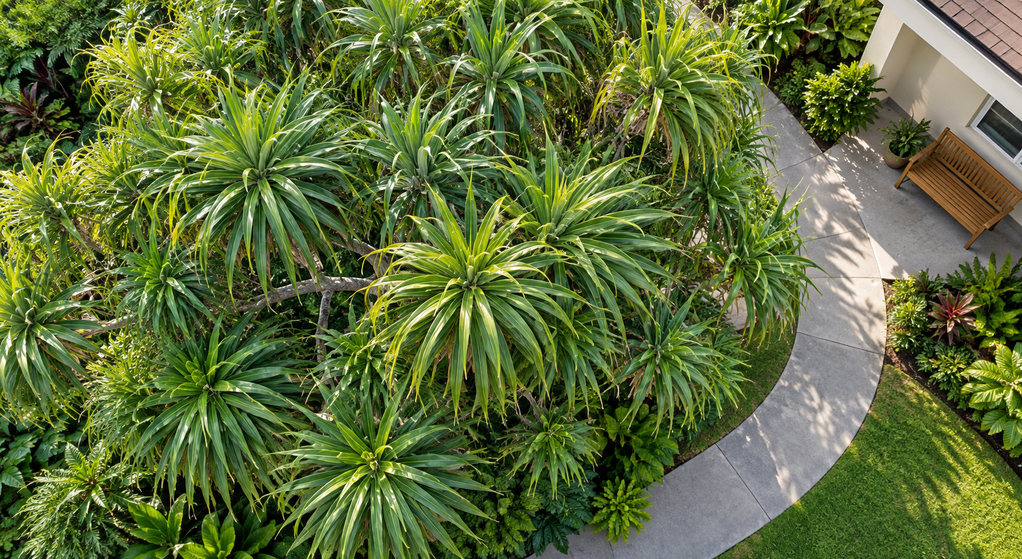
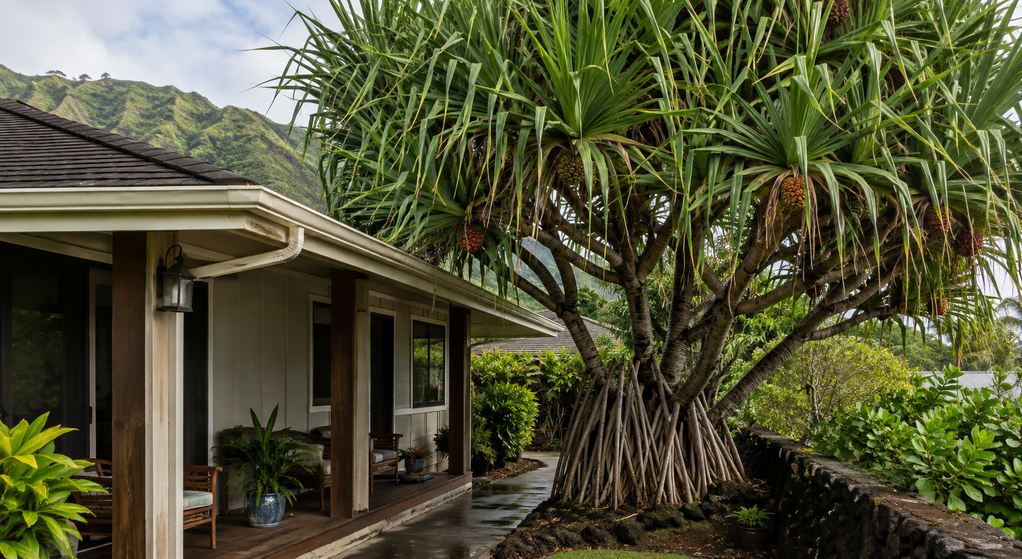
Beside the house: Identify the exact contact point: leaves against a window, growth over a gutter, or a branch extending above the roof. Include access needed for window cleaning, gutter maintenance, and repairs. A photograph from across the yard often communicates the problem better than a close-up alone.
Along the driveway: Consider the vehicles that actually use it.
An open tailgate, roof rack, passenger door, or delivery vehicle may need space that an empty driveway does not reveal. Note whether drivers must move toward a wall or pedestrians must step into the vehicle route to avoid foliage.
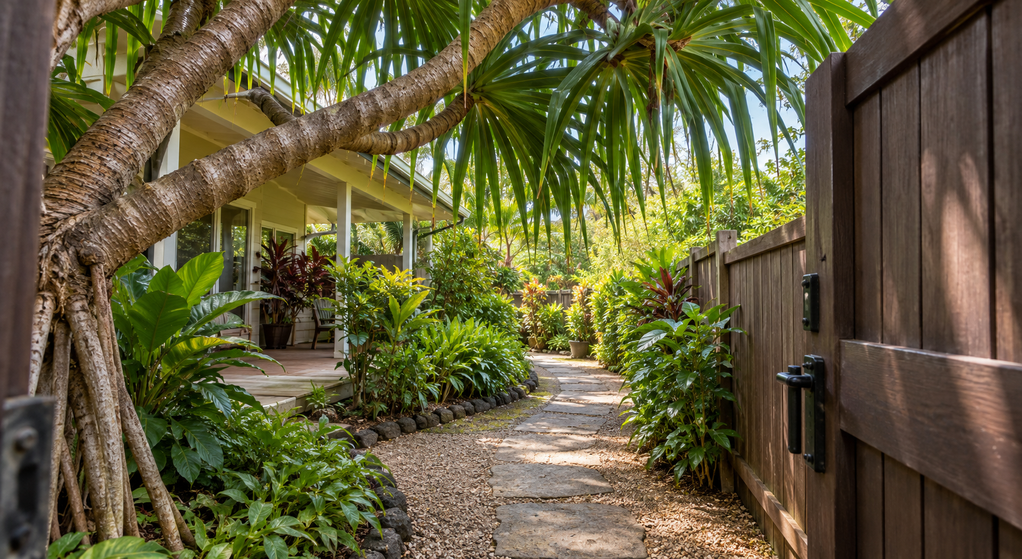
Along a walkway: Check the narrowest section and any turn near steps or a gate. Account for a stroller, mobility aid, shopping bags, and two people passing. Record the usable width rather than measuring only between the paving edges.
These observations define the desired result. They do not determine which cuts the tree can tolerate.
Separate Leaf Cleanup From Changes to the Tree’s Shape
The University of Hawaiʻi’sNative Hawaiʻi Plants guidance on hala care and pruning notes that yellow or brown leaves may be removed and that hala otherwise sheds leaves naturally. It also identifies serrated leaf edges on most varieties and potential conflicts between aerial roots and public areas.
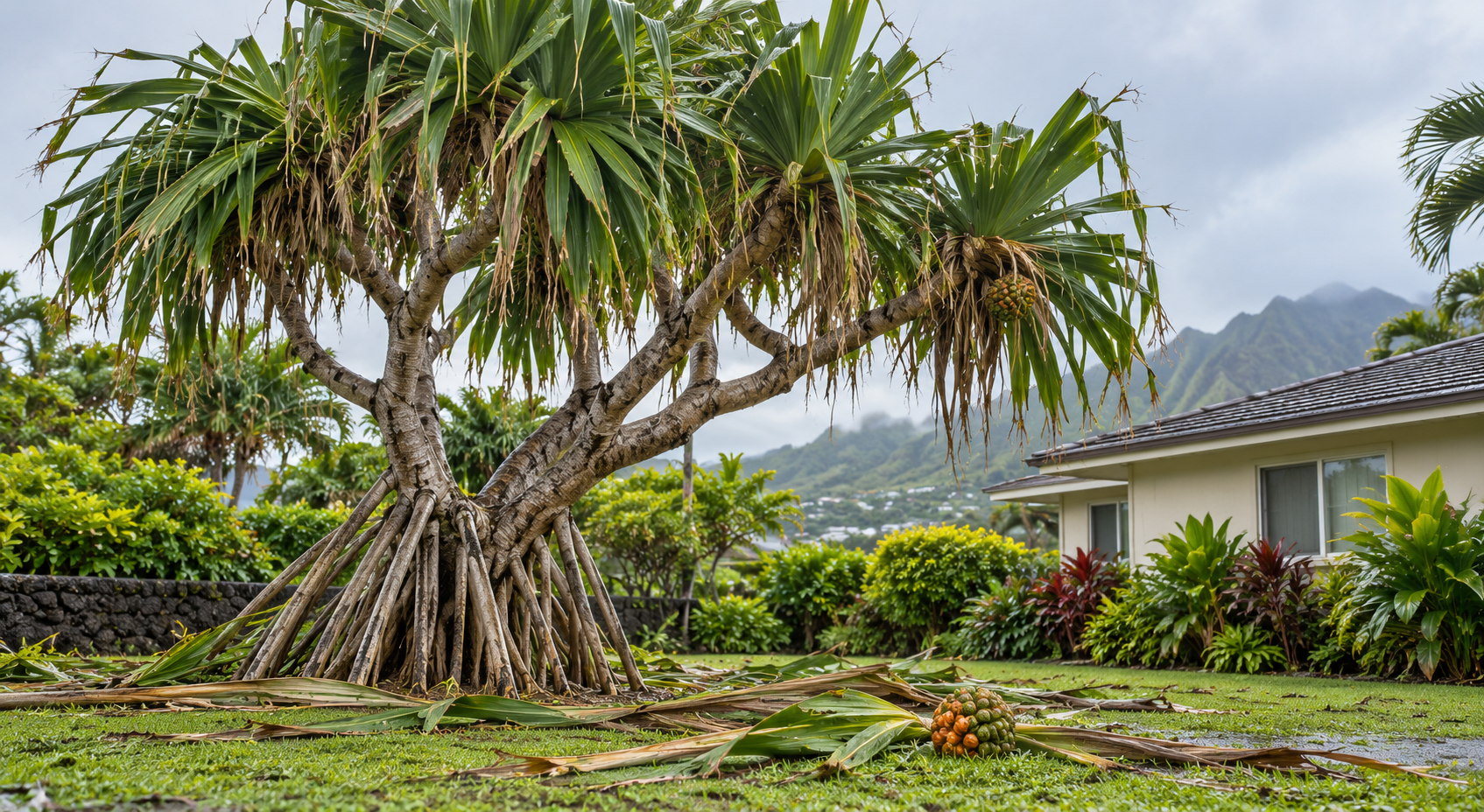
Removing old leaves may improve a passage where hanging foliage is the obstruction. It will not relocate a low branch, narrow the trunk, or solve a root conflict. Ask for those issues to be assessed separately rather than treating all visible growth as disposable.
If live foliage or branches must be removed, ask the assessor to identify the proposed cuts and explain the resulting form. Avoid approving an undefined instruction to strip everything back to the roofline or paving edge. The boundary of a building is not, by itself, a suitable pruning specification.
Treat Ground-Level Obstructions as a Separate Decision
Hala’s prop roots are supporting structures. Do not include cutting them in a routine clearance request simply because they project into a path. Have their role assessed before considering any alteration.
Where a root occupies walking space, discuss whether the route can shift or the surrounding landscape can be redesigned. Moving an edging line may be straightforward; changing a paved entrance may involve drainage, access, and construction constraints. Neither option should be assumed feasible without examining the site.

Keep proposed paving or excavation work in the same conversation. Trimming the canopy first does not settle whether later ground work is compatible with retaining the tree. If the required passage cannot fit around the existing structure, request a broader retention assessment before committing to repeated trimming.
Plan How the Entrance Will Function During Work
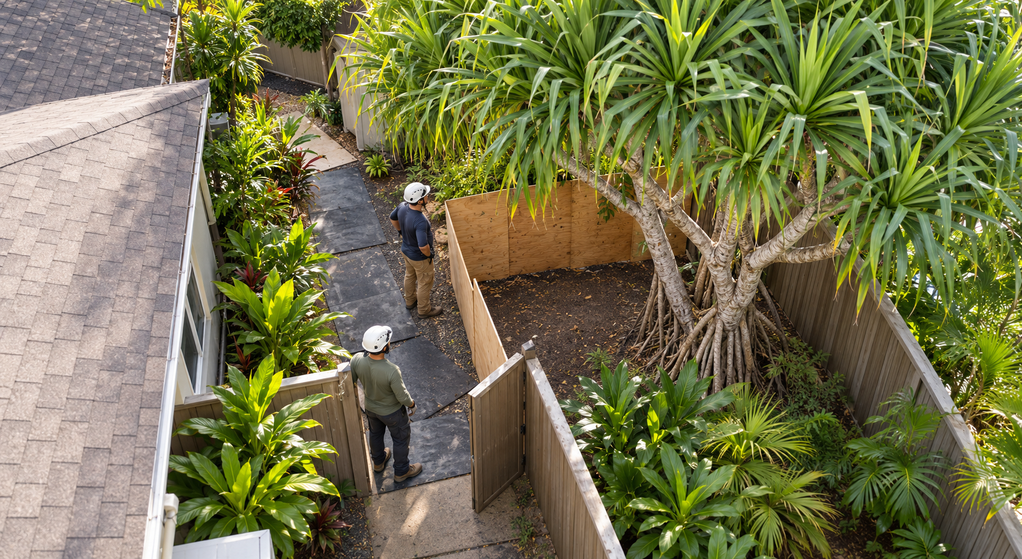
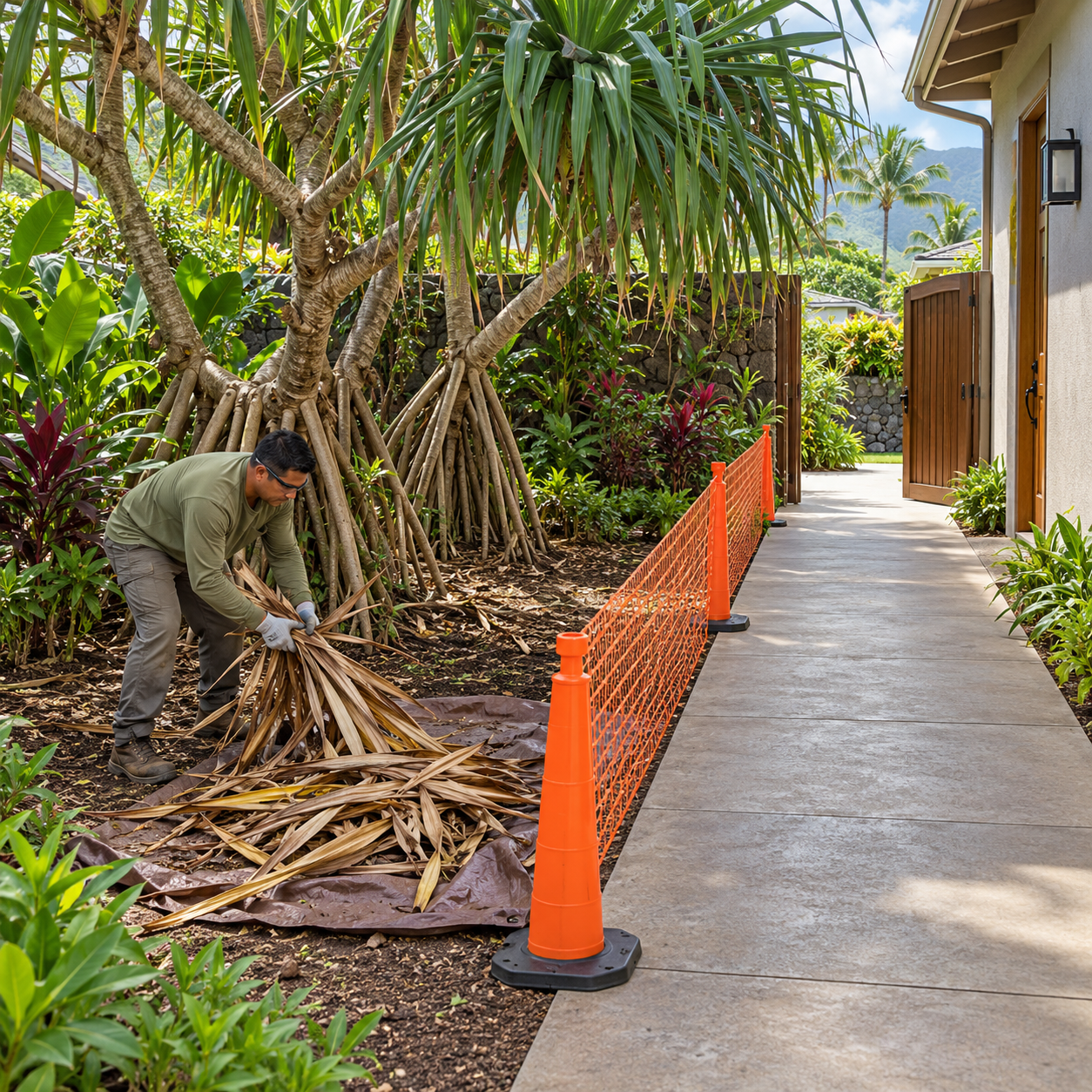
A pruning plan also needs a workable access plan. Identify where cars can be moved, which doorway residents can use, and where debris can be handled without blocking the only exit. Ask how the work area will be kept separate from pedestrians.
Do not assume branches above a driveway can simply be dropped because the car has been moved. Gates, roofing, lighting, and adjacent landscaping may still constrain the work. Elevated cutting and branches near electrical lines require appropriate professional handling.
Agree on the Result and the Follow-Up
Before approving work, ask for a scope that distinguishes old-leaf cleanup, proposed branch work, and any unresolved root or structural concerns. Include the areas to remain usable, debris removal, and arrangements for temporary access.
Afterward, compare the result with the original photographs and intended uses. Can passengers exit comfortably? Is the entrance clear when carrying bags? Has the roof-contact issue been addressed? Keep a dated record of when interference returns so the next assessment reflects actual conditions rather than an arbitrary cutting schedule.
Successful hala trimming leaves a usable property and a manageable plan for keeping it that way. Where the same conflict returns quickly or demands increasingly extensive cuts, reconsider the layout and long-term suitability of the tree before repeating the work.

Written By:
Kurt Manalastas
Environmental Property Care Content Writer
Kurt produces research-driven content centered on tree care, landscaping, and environmental property management. Drawing from arborist-informed practices, site-specific conditions, and practical homeowner concerns, he provides clear, actionable guidance to help readers maintain safer, healthier, and more sustainable outdoor environments.