Signs Your Koa Tree in Oahu May Be Stressed or Unhealthy
Tree Health Check
A stressed or unhealthy koa tree in Oahu may show warning signs such as canopy thinning, yellowing leaves, dieback, insect holes, trunk decay, root disturbance, or damage from improper pruning. Early inspection helps property owners separate temporary stress from serious decline before safety risks or removal become more likely.
Koa trees are naturally associated with Hawaiʻi’s forests, culture, and landscape, but their native status does not make them immune to health problems. A koa growing on a residential or commercial property in Oahu may struggle with compacted soil, disturbed roots, improper pruning, inconsistent moisture, insect activity, or disease. Some warning signs develop slowly, while others appear within a single growing season.
Recognizing the difference between temporary stress and serious decline can help property owners respond before the tree becomes unstable or loses major sections of its canopy. Property owners noticing signs of decline may benefit from
tree trimming services in Hawaii that begin with a whole-tree assessment and determine whether corrective pruning, monitoring, or removal is appropriate.
Start by Looking at the Entire Canopy
In our work around Oahu, Oahu Tree Trimming and Removal Services have seen homeowners focus on one brown branch while overlooking changes across the rest of the canopy. A better assessment begins from a distance. Look at the overall density, shape, color, and distribution of foliage before inspecting individual leaves or branches.
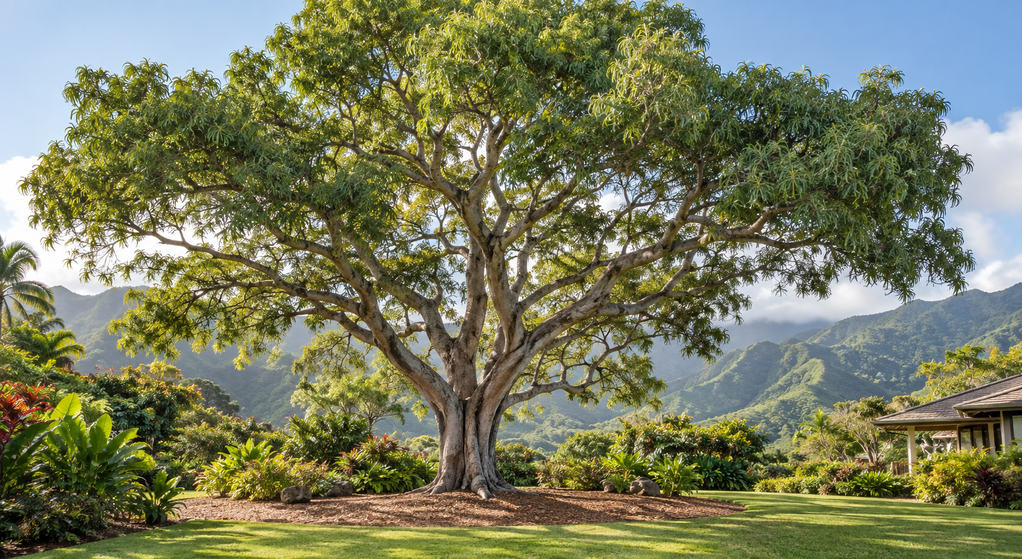
A healthy koa should have a reasonably balanced canopy for its age, growing conditions, and natural form. A stressed tree may appear unusually thin, uneven, or transparent when viewed from below. Large bare areas, repeated branch-tip death, or foliage concentrated only near the trunk deserve attention.
This matters because canopy decline often reflects a problem occurring elsewhere. Root damage, vascular disease, drought stress, poor drainage, and soil compaction can all reduce the tree’s ability to support healthy foliage. Treating the visible branch alone may do little when the underlying problem is below ground.
Yellowing, Browning, or Premature Leaf Loss
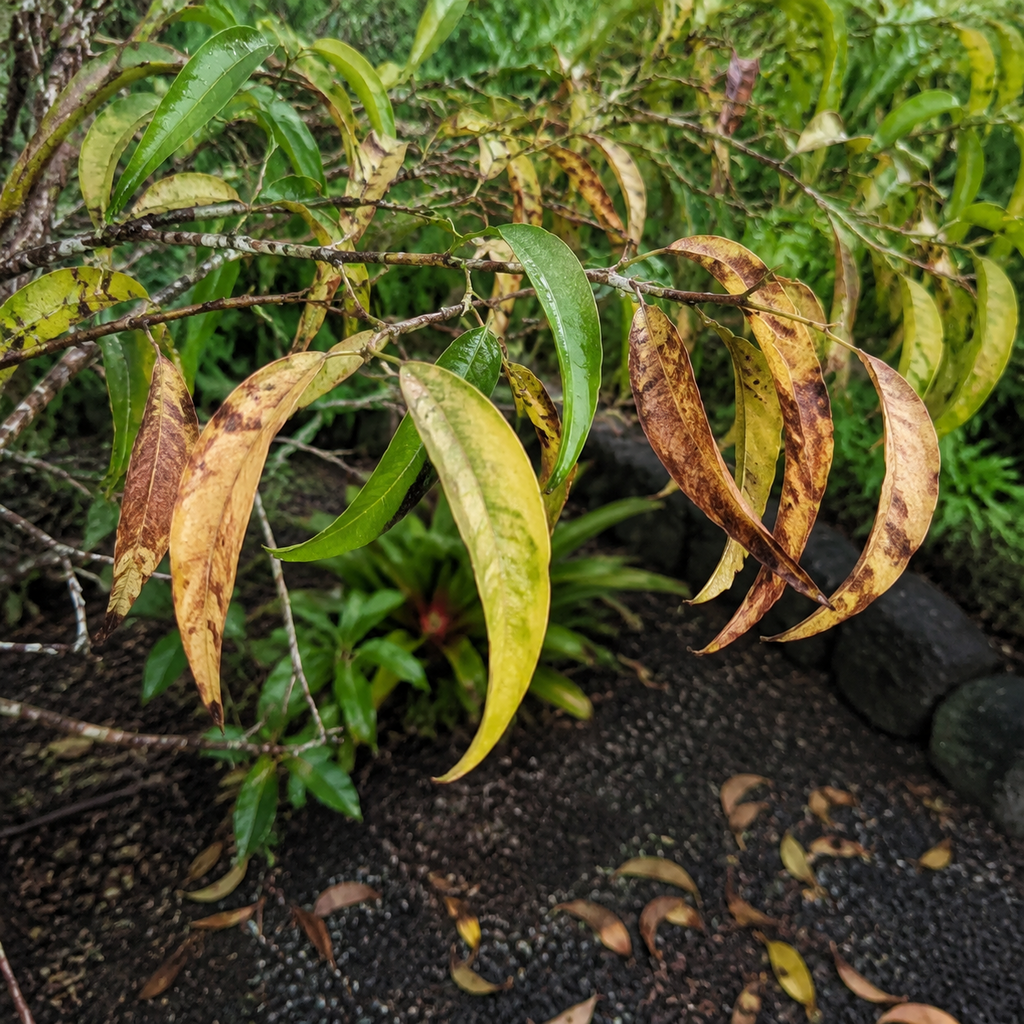
A small amount of aging foliage is normal. The concern begins when yellowing or browning spreads through several branches, appears during an unusual part of the season, or is accompanied by wilting and canopy thinning.
Koa develops flattened leaf-like structures called phyllodes as it matures. These may discolor when the tree cannot absorb or transport enough water and nutrients. Uniform yellowing can be related to root stress, poor soil conditions, or excess moisture. Irregular brown patches may point to heat exposure, physical damage, insects, or disease.
Koa wilt is one of the more serious possibilities. This soil-borne vascular disease is associated with Fusarium oxysporum f. sp. koae and can cause wilting, foliar yellowing, tissue death, dieback, and mortality. It is particularly damaging to seedlings and young trees at lower- to mid-elevation sites.
Discoloration alone does not confirm koa wilt. Overwatering, drought, root injury, and unsuitable planting conditions may create similar symptoms. Diagnosing the tree based only on leaf color is a common mistake.
Dead Branch Tips and Progressive Dieback
Dead twigs after strong winds are not unusual, but progressive dieback is different. It often begins at the tips of branches and moves inward toward larger limbs. Property owners may notice brittle twigs, peeling bark, missing foliage, or repeated failure to produce new growth.
When several sections of the crown die during a relatively short period, the tree may be experiencing systemic stress. Koa wilt can compromise the vascular system that moves water through the tree, resulting in decline and dieback. Hawaiʻi Forestry Extension identifies koa wilt as a serious, often fatal disease that can cause canopy decline, dieback, and mortality in koa.
Deadwood also creates a separate safety issue. A branch may remain attached long after it has died, especially in a protected location. Once decay develops, it can break during heavy rain, wind, or sudden loading. Dead limbs over roofs, driveways, walkways, or neighboring properties should be professionally assessed rather than ignored.
Knowing when to call a professional arborist can help prevent accidents and costly property damage.
Small Holes, Frass, or Dying Twigs
Tiny holes in koa branches may indicate boring insects. One pest of concern in Hawaiʻi is the black twig borer, which affects many native and introduced plants.
USDA Forest Service research identifies the black twig borer as a serious pest of koa that can cause significant mortality in seedlings and small saplings through boring damage and the introduction of associated fungi.
Possible signs include pin-sized entry holes, darkened twigs, wilted branch tips, or fine material resembling sawdust near affected areas. In many cases, boring insects are more successful in trees that are already stressed.
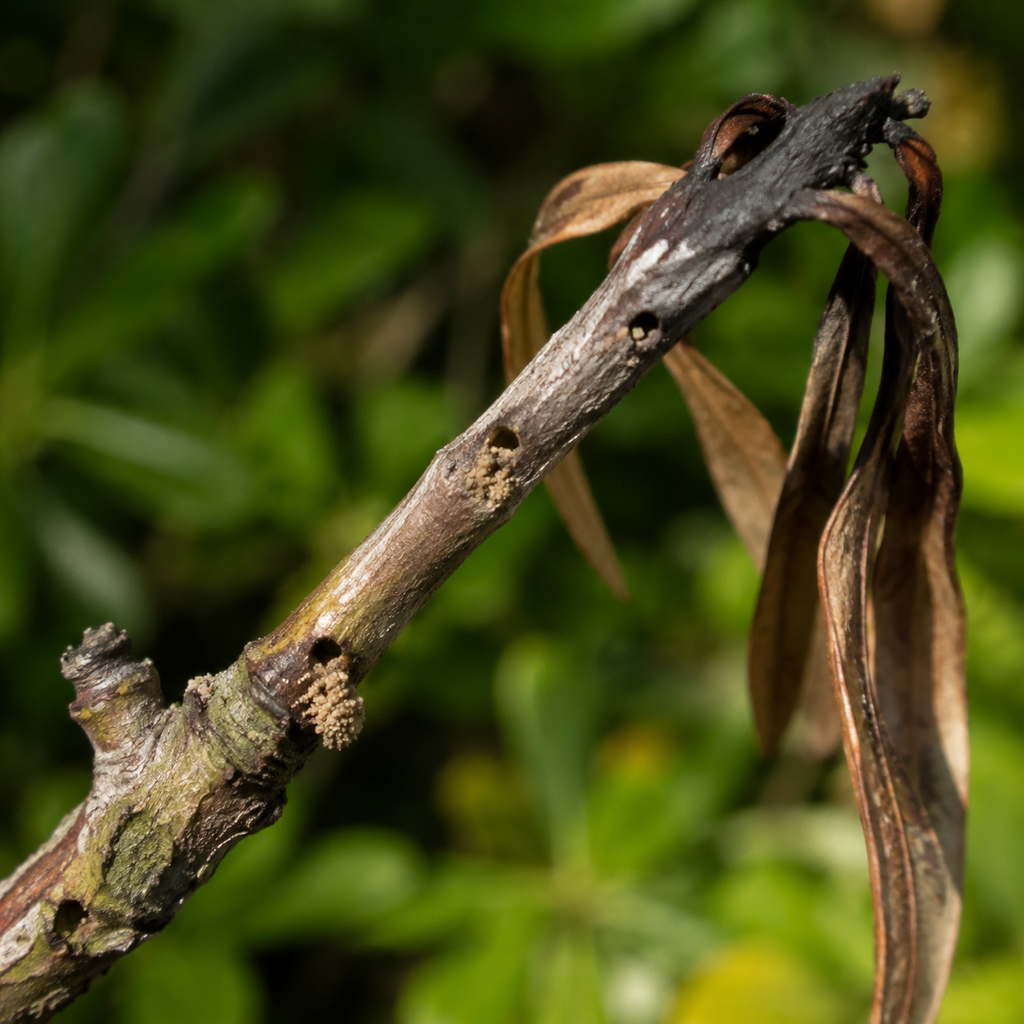
Their presence may therefore be both a problem and a clue that the koa is struggling with another condition.
Cutting off every affected branch without examining the whole tree can make matters worse. Excessive pruning removes living foliage that the koa needs for energy production. Tools should also be cleaned appropriately between cuts and properties to reduce the chance of moving pests or pathogens.
Trunk Cracks, Cankers, Cavities, and Decay
The trunk provides some of the clearest evidence of long-term trouble. Look for open wounds, abnormal swelling, sunken bark, cavities, mushrooms, soft wood, or cracks extending into major branch unions.
Not every trunk defect means the tree will fail. Mature trees can remain standing with cavities or old injuries when enough sound wood is present. The tradeoff is that external appearance does not always reveal the extent of internal decay. A small opening may lead to a larger hollow area, while a dramatic-looking surface wound may have strong wood around it.
Koa has been associated with heart and root rot organisms in Hawaiʻi, so fungal growth or advanced wood deterioration should not be dismissed as cosmetic. An experienced tree professional may examine wound closure, wood strength, canopy condition, lean, root support, and nearby targets before recommending pruning, monitoring, or removal.
Root Disturbance and Changes Around the Tree
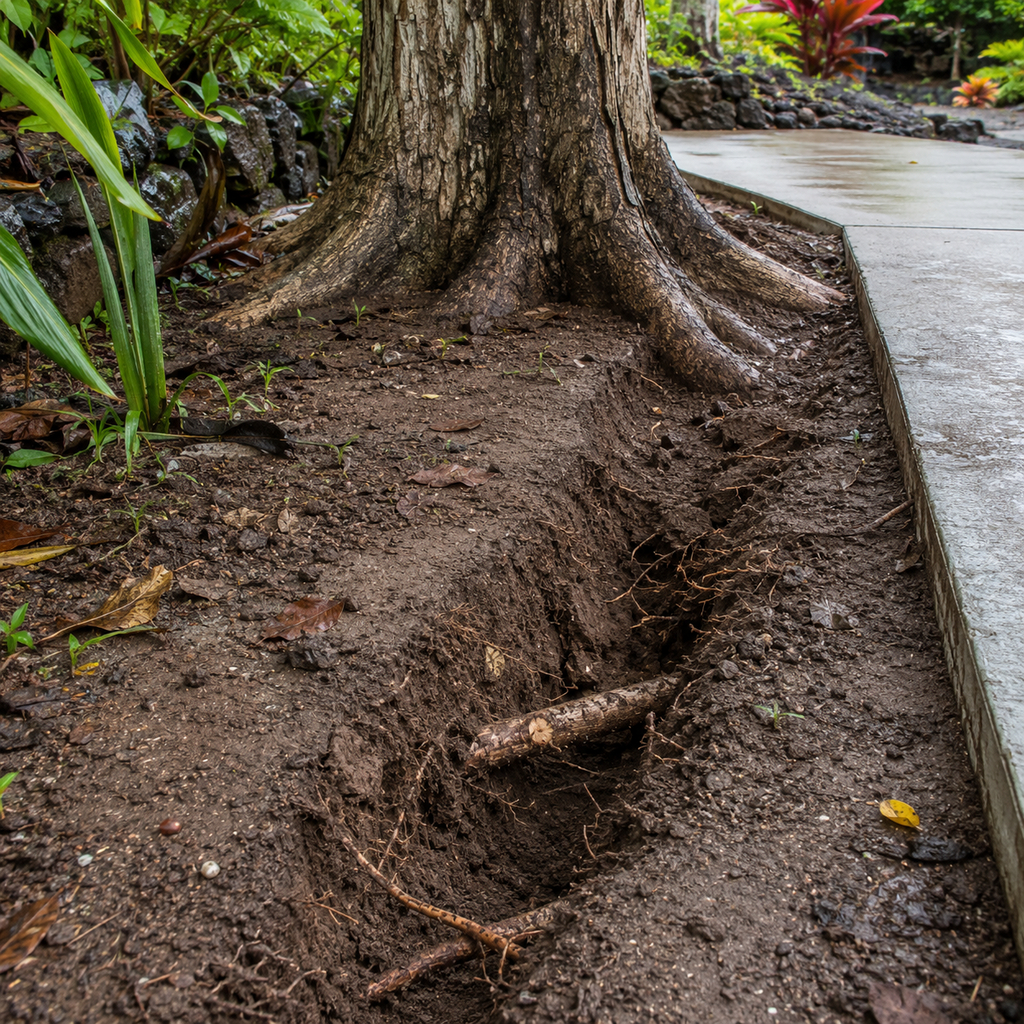
Many unhealthy koa trees are damaged below ground before visible canopy symptoms appear. Construction, trenching, driveway installation, grade changes, parked vehicles, and repeated foot traffic can cut roots or compress the soil around them.
Covering roots with additional soil is another frequent mistake. Roots need oxygen, and burying the natural trunk flare may encourage decay near the base. Heavy irrigation can also be harmful when the site drains poorly. A koa growing on a wet windward property may face different moisture pressures from one growing in a warmer, drier part of leeward Oahu.
Watch for lifting soil, severed roots, exposed decay, mushrooms near the base, or a new lean. Root damage is difficult to reverse, but reducing traffic, correcting irrigation, improving mulching practices, and protecting the root zone may prevent further decline.
Improper Pruning Can Resemble or Create Stress
Over-topping and aggressive canopy reduction are especially damaging. Removing too much foliage at once limits energy production and may trigger weak, rapidly growing shoots near the cuts. These shoots can create future structural problems because they are often less securely attached than naturally developed branches.
Based on our hands-on pruning and rigging experience in Hawaiʻi, healthy tree care usually requires selective cuts made for a specific reason. The goal may be to remove deadwood, reduce weight on a compromised limb, improve clearance, or correct a developing structural defect. Cutting branches simply to make the tree smaller can leave it more stressed and less stable.
What to Do When You Notice These Signs
Begin by documenting what you see. Take clear photographs of the canopy, affected leaves, trunk, root area, and any insect holes. Note when the symptoms began and whether nearby construction, flooding, drought, pruning, or soil changes occurred.
Avoid applying fertilizer, pesticides, fungicides, or wound sealants without a diagnosis. These products do not correct every form of stress, and unnecessary treatment can waste time while the real problem progresses.
Arrange an inspection when dieback is spreading, the trunk shows decay, large limbs are dead, roots have been cut, or the tree could strike a building or occupied area. The smartest next step may be monitoring, corrective pruning, root-zone protection, pest management, or removal. The recommendation should match the actual condition of the tree and the level of risk around it.
If pruning is being considered because of deadwood, branch dieback, or structural concerns, the cuts should be based on the condition of the entire tree rather than the most visible damaged branch. Property owners can review what to know before trimming a koa tree in Oahu to understand how tree health, branch condition, canopy structure, and safety concerns should guide pruning decisions before any significant cutting begins.
A stressed koa does not always need to be removed. Early recognition gives property owners more options. The clearest warning is not one imperfect leaf but a pattern of worsening symptoms across the canopy, trunk, and root system.

Written By:
Kurt Manalastas
Environmental Property Care Content Writer
Kurt produces research-driven content centered on tree care, landscaping, and environmental property management. Drawing from arborist-informed practices, site-specific conditions, and practical homeowner concerns, he provides clear, actionable guidance to help readers maintain safer, healthier, and more sustainable outdoor environments.