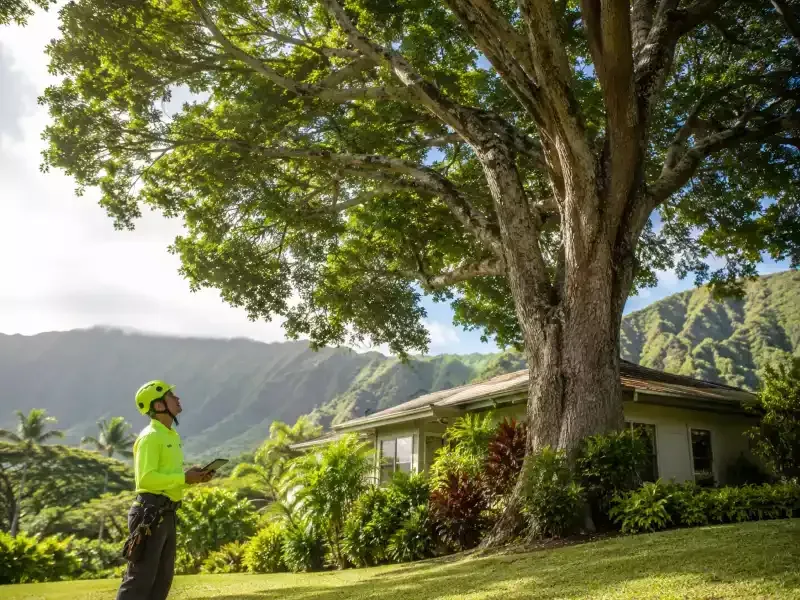
How Professionals Remove Large Hala Trees from Tight Spaces
Summary
Removing a large hala from a tight Oahu property requires a staged plan for the crown, prop-root base, access route, drop zone, equipment, and debris removal. Professionals select climbing, lift, crane, or rigging methods around site constraints, dismantle the tree in controlled sections, and define stump work separately.
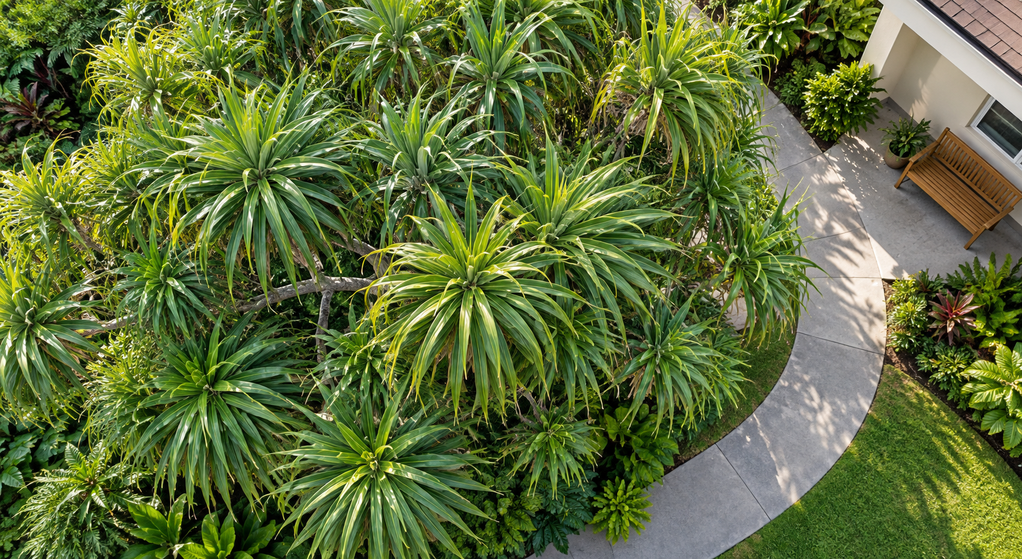
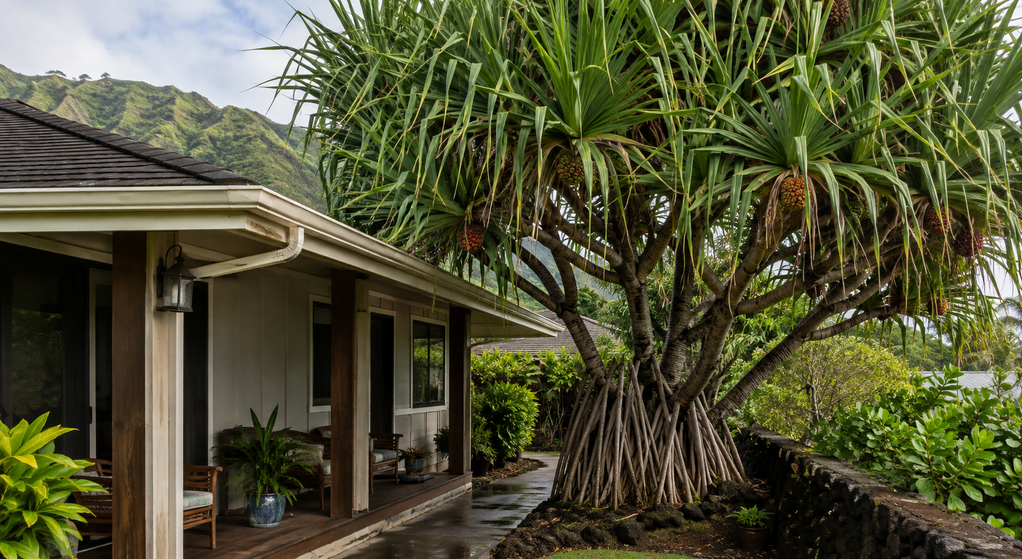
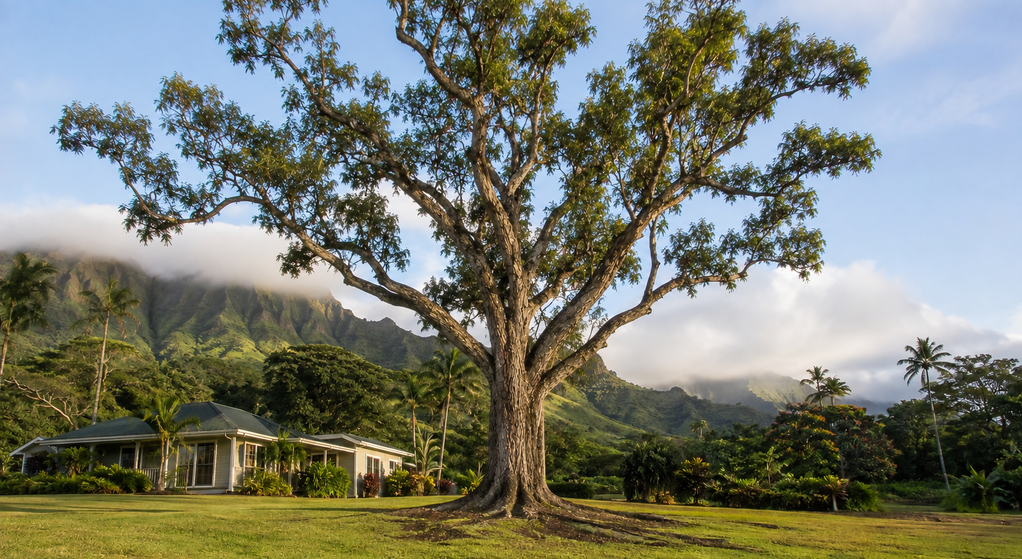
A hala crowded between a house, boundary wall, pool, or narrow side yard cannot be treated like an open-space removal. The crew needs to understand not only how to cut the tree, but how each section will be controlled, lowered, carried out, and kept away from people and property.
Professional tree removal services in Honolulu and across Oahu include sectional removal for sites where structures restrict working room. Oahu Tree Trimming and Removal Services states that it is owner-operated, licensed and insured, equipped for controlled removals and tight-access properties, and experienced with technical climbing and rigging.
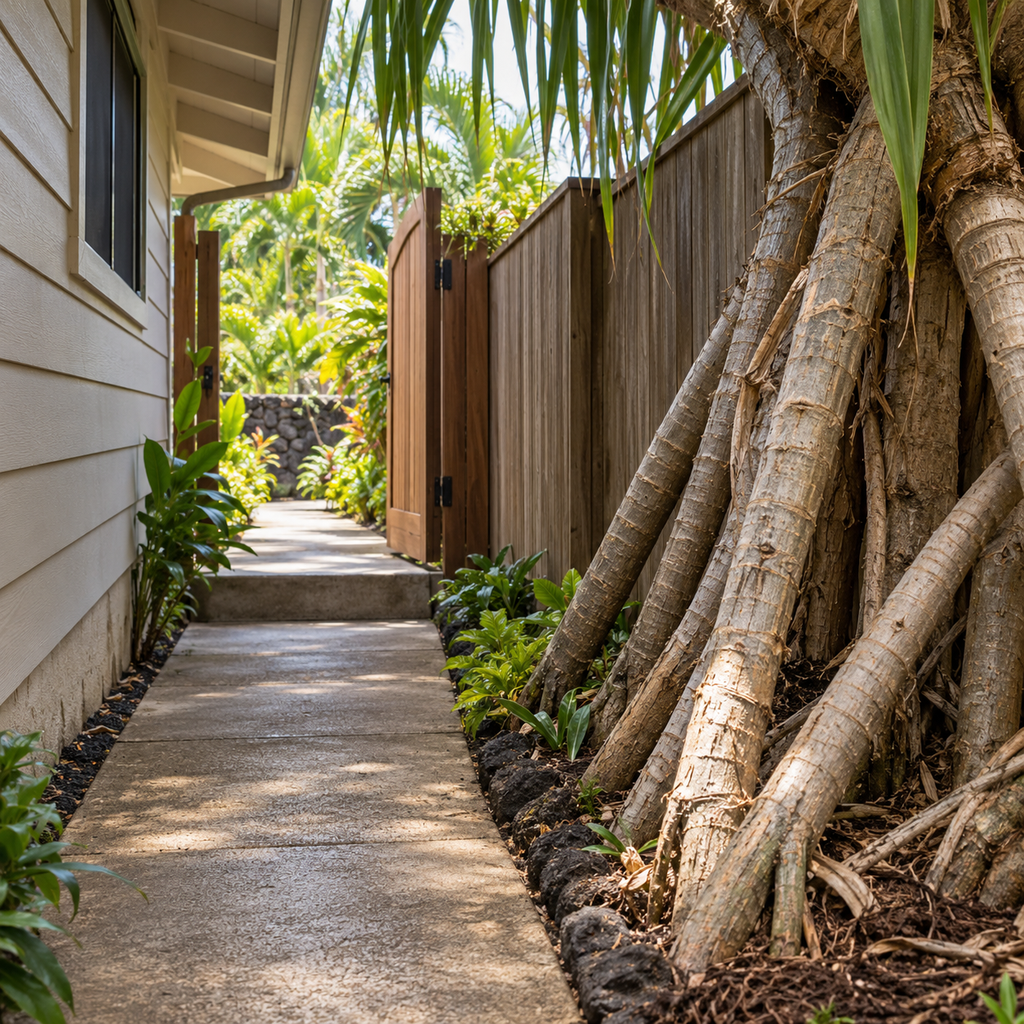
Stage 1: Map the Crown, Base, and Exit Route
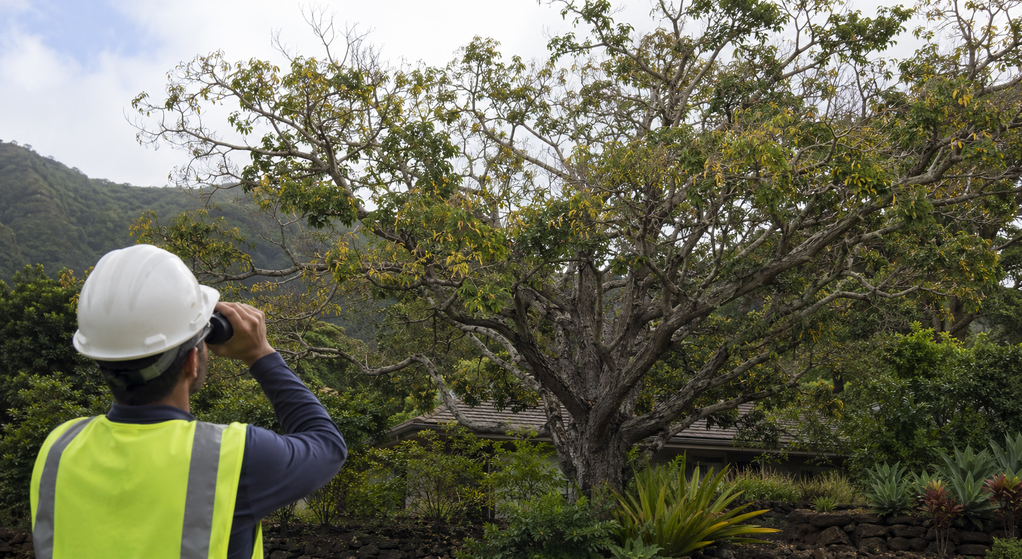
The site assessment should follow the tree all the way from the crown to the truck. Measure or note gates, steps, sharp corners, roof overhangs, air-conditioning equipment, fences, pools, overhead service wires, and the distance material must be carried.
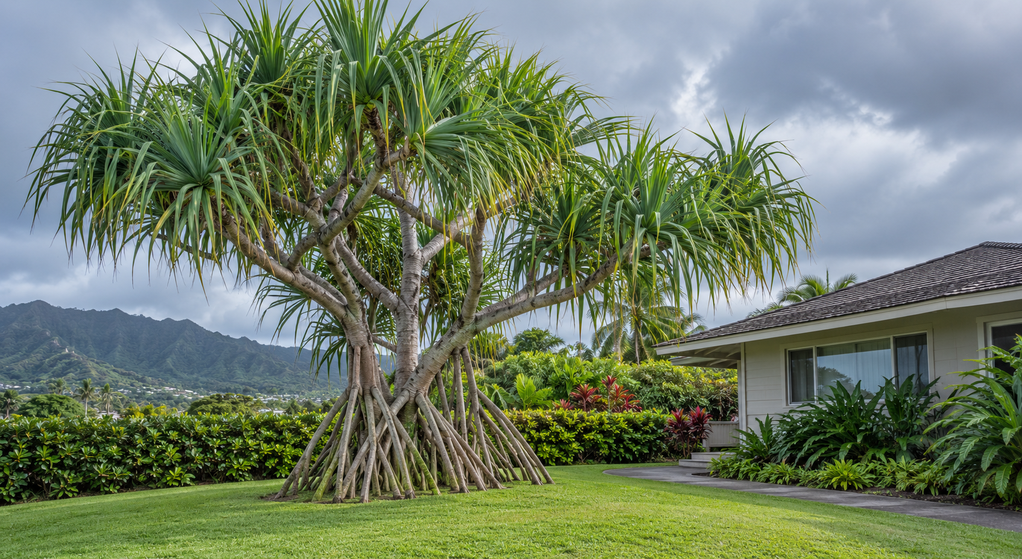
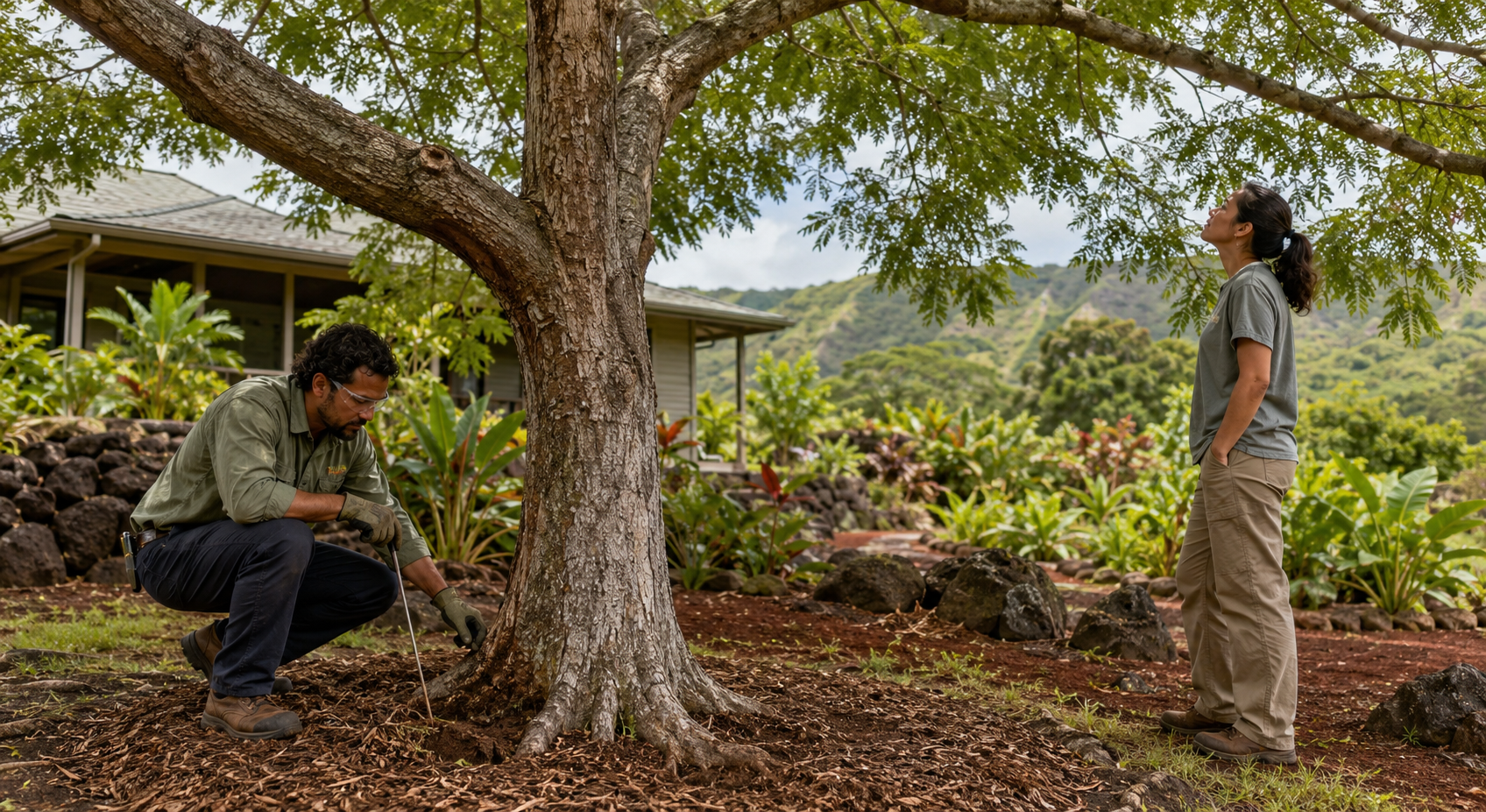
Inspect the tree itself for lean, damaged branches, decay, previous cuts, and disturbed roots. These conditions can change whether the tree is suitable for climbing or supporting rigging. Hala’s spreading form also means clearance cannot be judged from trunk position alone.
If removal is not yet decided, Is Your Hala Tree Growing Too Close to Your House? helps separate a manageable clearance problem from a site conflict that may justify a different solution.
Stage 2: Choose the Access Method Around Site Constraints
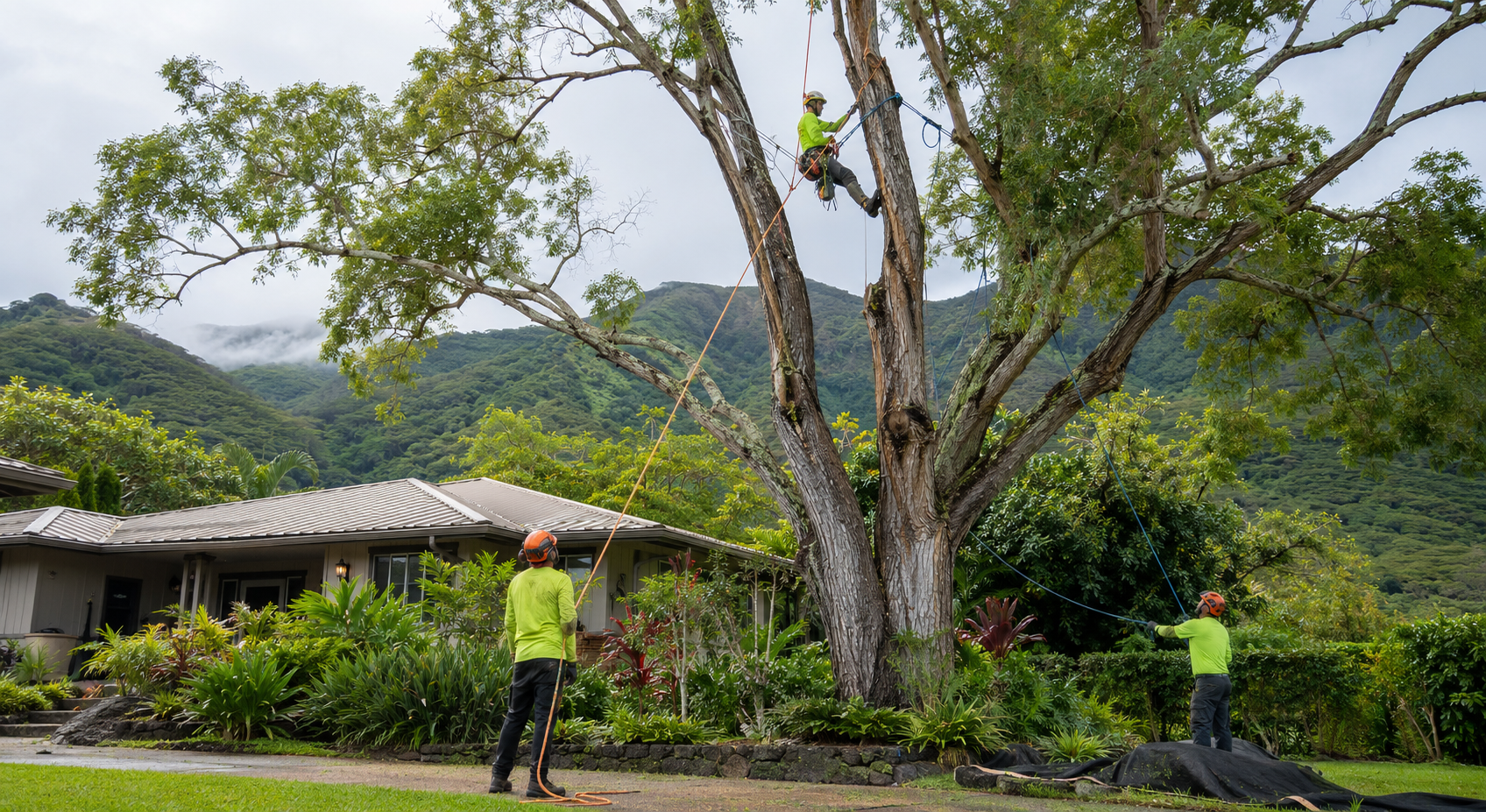
Climbing and rigging may suit a tree with adequate structural integrity and suitable attachment points. An aerial lift may provide another way to reach the crown, but only if its dimensions, reach, ground conditions, and setup area fit the property.
Crane assistance is possible on some sites, but it requires suitable positioning, reach, lifting capacity, and an engineered work plan. A nearby street does not automatically mean a crane can set up or operate safely.
Ask the estimator to explain the proposed access method and the conditions that could change it. Photographs can help with preliminary review, but they may not reveal a weak tree, inaccessible backyard, overhead conflict, or equipment setup limitation.
Stage 3: Establish the Rigging, Drop-Zone, and Electrical Plan
OSHA’s Tree Care Work Hazards guidance calls for worksite hazard assessment, determining whether rigging is necessary, establishing drop zones where falling objects are a hazard, and evaluating whether workers need to climb or use aerial lifts. It also addresses separation from energized power lines.
For the property owner, the practical questions are where controlled sections will travel, where the ground crew will receive them, and which areas must remain closed. People, pets, and uninvolved workers should stay outside the designated work zone.
Rigging does not make every branch a suitable anchor. The crew must consider the tree’s condition, attachment points, rope paths, expected forces, and equipment limits before a section is cut.
Stage 4: Dismantle the Tree in a Controlled Sequence
When there is not enough room to fell the hala intact, the crew may dismantle it in sections. The sequence depends on branch position, available support, nearby targets, and where the ground crew can safely handle material.
Long leaves and awkward branch geometry can obscure sightlines and complicate handling. Smaller pieces may be lowered or passed through a controlled route, while heavier sections may require more deliberate rigging. The objective is to control each piece before it reaches a roof, wall, path, or worker.
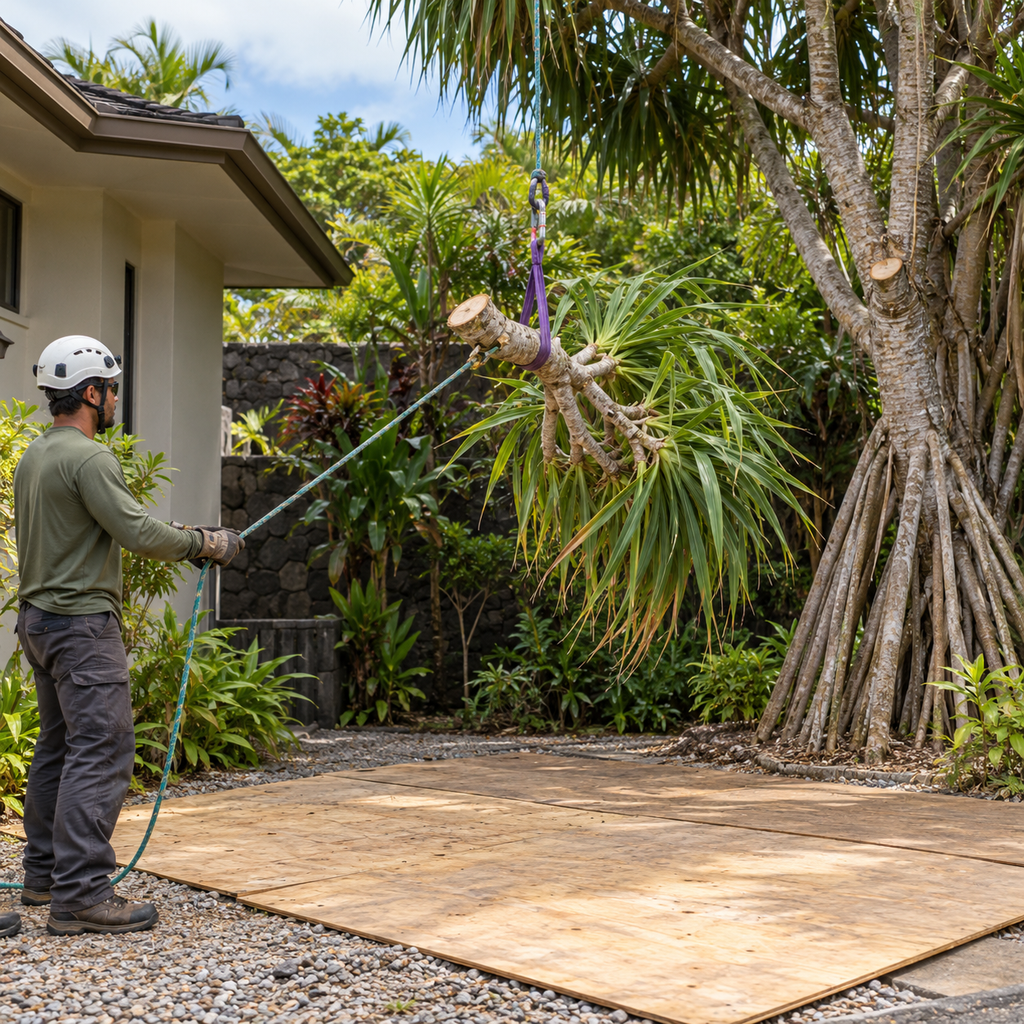
The removal sequence should also preserve whatever support the crew still needs. Cutting roots or major structural portions too early can change the stability of the remaining tree.
Stage 5: Treat the Prop-Root Base and Stump as a Separate Scope
Once the crown and trunk are removed, clarify what remains at ground level. Cutting the trunk low, grinding the stump, and excavating roots are different operations with different access and restoration requirements.
A stump grinder may not fit through the same route used by workers carrying branches. Nearby paving, retaining walls, irrigation, and buried utilities can limit how aggressively the base is removed. Describe what you plan to do with the cleared area so the contractor can define the appropriate finish.
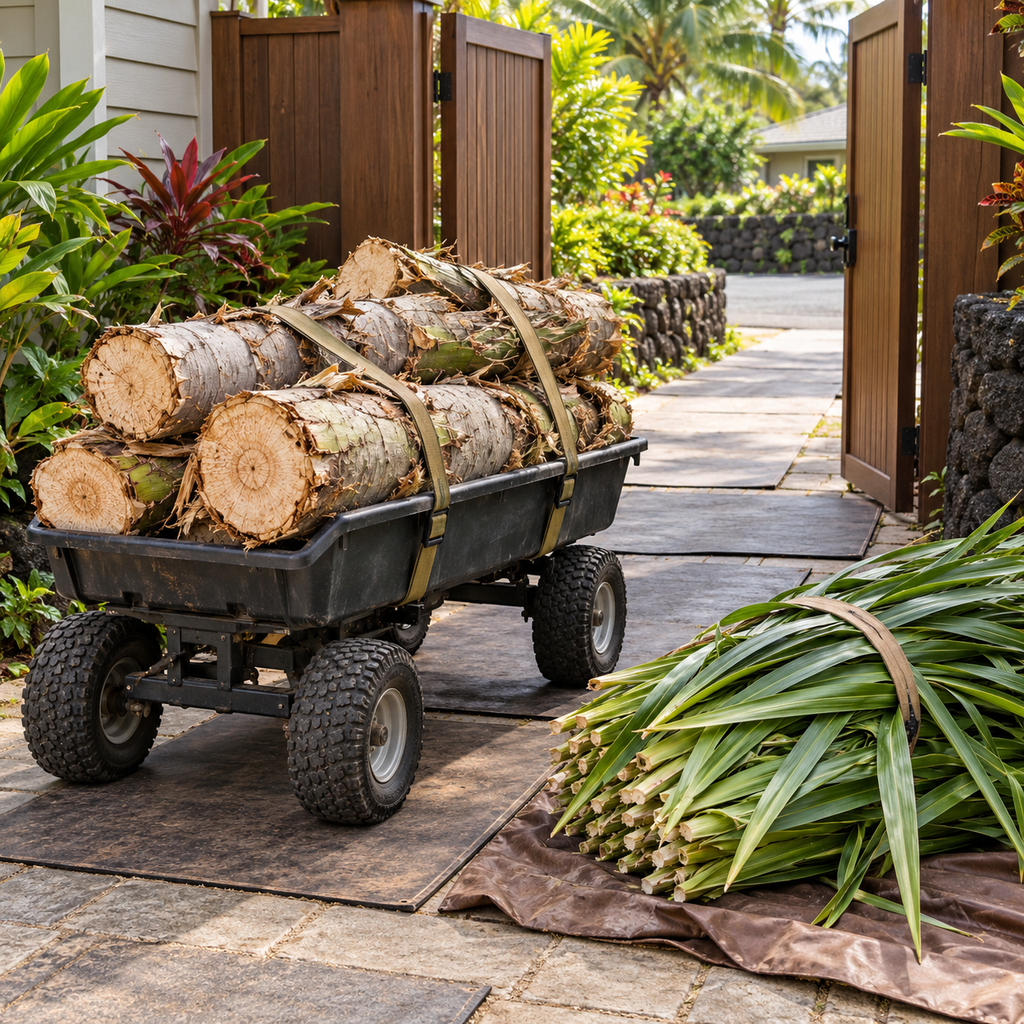
Stage 6: Plan Debris Removal and Site Restoration Before Work Starts
Hala’s long, often serrated leaves and bulky sections can be awkward to move through narrow passages. The estimate should define whether leaves, trunk sections, stump grindings, hauling, final raking, temporary fence removal, and surface protection are included.
Before scheduling, confirm the entry route, receiving area for lowered pieces, work-zone boundaries, property features that need protection or relocation, and conditions that could require a different method or rescheduling.
How to Pick the Right Oahu Tree Trimming and Removal Contractors can support the final step of comparing credentials, insurance, written scope, and estimates.

Written By:
Kurt Manalastas
Environmental Property Care Content Writer
Kurt produces research-driven content centered on tree care, landscaping, and environmental property management. Drawing from arborist-informed practices, site-specific conditions, and practical homeowner concerns, he provides clear, actionable guidance to help readers maintain safer, healthier, and more sustainable outdoor environments.