Tree Roots Near Underground Pipes: What to Confirm Before Removing the Tree
Safety Insight
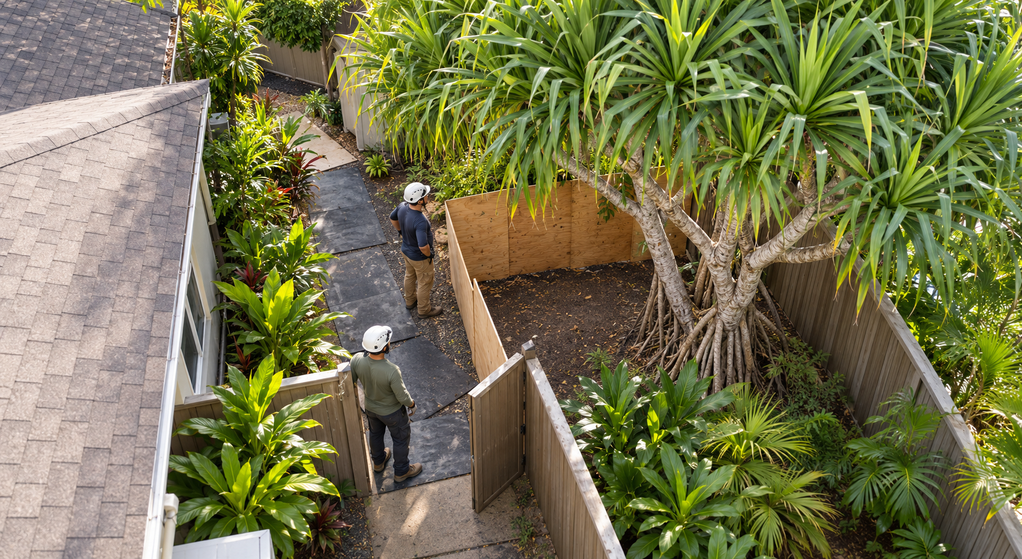
A tree near a buried pipe is not enough evidence to justify removal. Confirm which line is affected, whether roots are actually inside it, where the defect lies, and whether repairs can preserve the tree. Coordinate plumbing diagnosis, tree assessment, and underground locating before excavation or stump work.
A backed-up drain and a large tree in the yard can seem connected. Yet the tree’s position alone does not establish what caused the blockage, which roots are involved, or whether removing it will solve the problem. Cutting down a healthy tree can leave the original pipe defect unresolved.
For Honolulu property owners comparing professional tree removal services in Oahu, the useful starting point is a diagnosis of the buried line. A removal estimate cannot substitute for evidence about the pipe’s condition.
Oahu Tree Trimming and Removal Services provides tree removal and stump removal. Keep that work separate from the plumbing investigation so each proposal addresses the problem it can actually resolve.
The guide to working with certified arborists in Oahu provides context for selecting a tree assessor; difficulties when removing trees covers access if removal is justified. Keep both decisions separate from the plumber’s finding about the line.
Identify the Pipe Before Assigning the Cause
“Underground pipe” could mean a sewer lateral, drinking-water supply, irrigation line, or storm drain. Each carries different diagnostic questions. Slow fixtures may warrant a drain inspection; an unexplained water loss needs investigation of the water system. Neither symptom proves root intrusion.
Gather previous repair records and identify the affected line’s route, material, and approximate age where known. Ask who owns or maintains that section, especially where a line crosses a boundary or serves more than one property. Do not assume responsibility follows the nearest fence.
Ask for Evidence That Connects Roots to the Defect
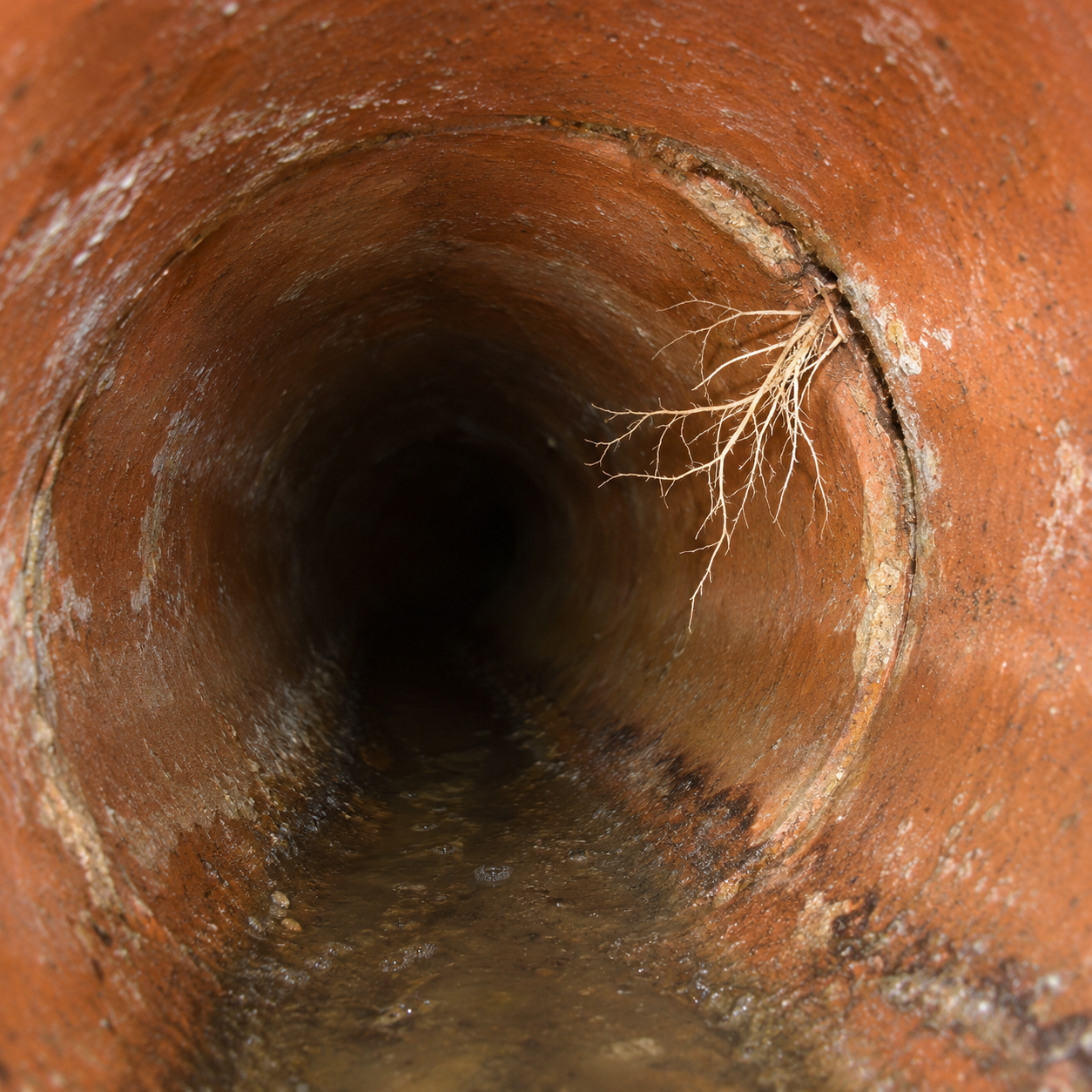
For a sewer or drain line, ask the plumber whether a camera inspection is appropriate and what preparation is needed to obtain a usable view. A heavily obstructed line may need clearing before its condition can be assessed adequately.
Request the recording and a plain-language explanation of:
- Whether roots are visible inside the pipe, rather than merely suspected nearby.
- Where they enter, such as a joint, crack, or damaged connection.
- Whether the pipe also has displacement, collapse, or another obstruction.
- How the observed defect will be located at the ground surface.
Roots can enter through openings and expand within a pipe. Seattle Public Utilities’ guide to side-sewer defects describes root intrusion and warns that removing nearby trees may not resolve the pipe problem. These are general diagnostic principles, not Honolulu ownership or repair rules. Roots in an image do not by themselves identify which tree produced them.
Distinguish “the blockage was cleared” from “the entry point was repaired.” Restored flow is useful, but an unresolved opening can remain a route for future intrusion. Ask what the plumber could not inspect and whether a follow-up inspection is needed.
Compare Pipe Repair With the Cost to the Tree
Once the defect is located, have the plumber explain feasible repair options. Depending on pipe condition and access, these might include a localized repair, replacement, or a suitable lining approach. Trenchless work is not automatically suitable for every damaged pipe, and access excavations may still be necessary.
Then have an arborist assess how the proposed work would affect the tree. Share the marked repair location and excavation dimensions, not just a description that the pipe is “near the roots.” The assessment needs to consider species, condition, root distribution, and the amount and position of proposed root cutting.
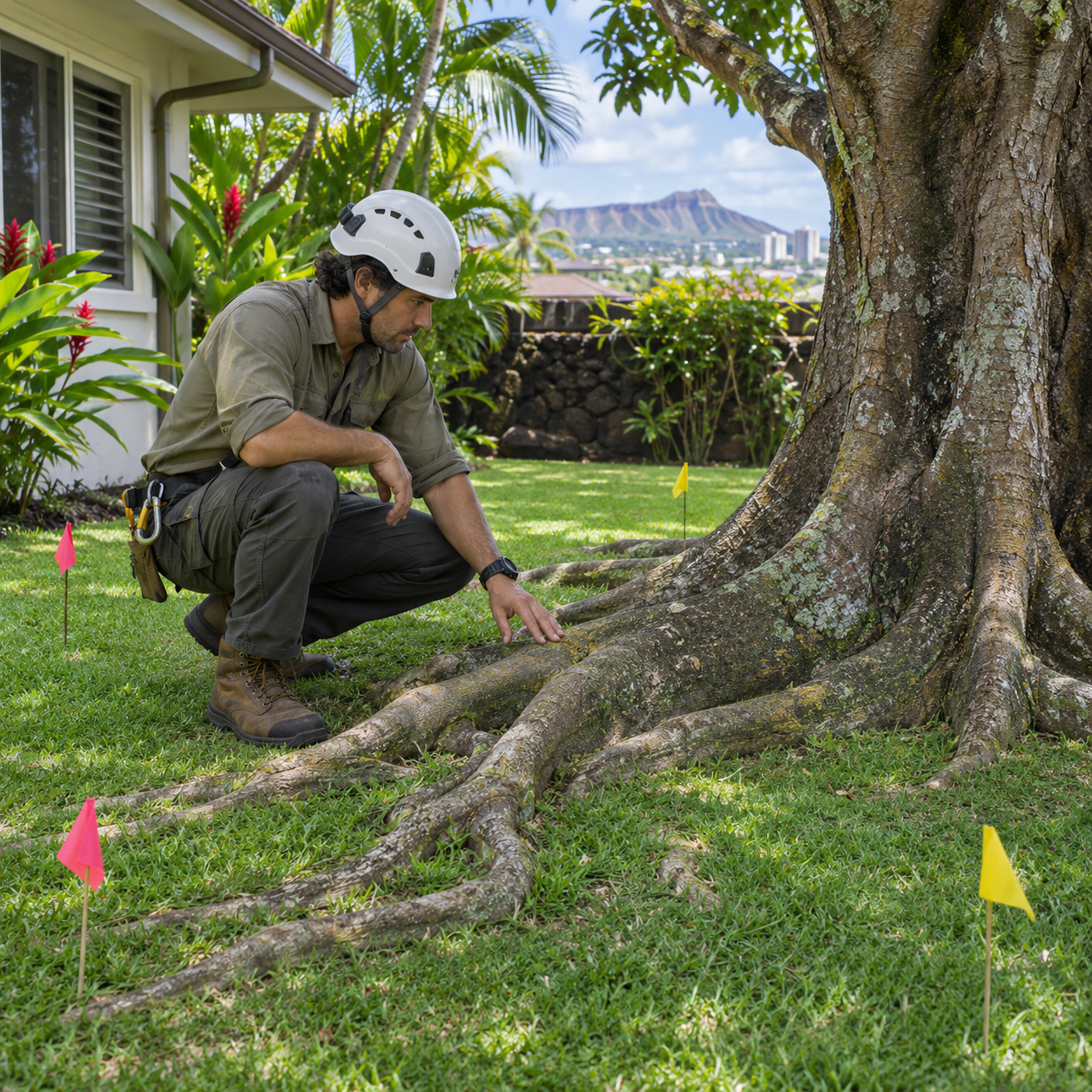
For this project, ask the arborist to assess whether the tree can remain acceptably stable and healthy after the pipe work. The International Society of Arboriculture’s construction protection guidance supports involving the arborist before excavation limits are fixed.
Root pruning is not a harmless compromise simply because it preserves the trunk. Cutting significant supporting roots can affect stability. A barrier also requires installation space and does not repair an existing pipe defect. Compare the complete options before choosing either intervention.
Define What Removal Would Actually Accomplish
Removal may be reasonable when the tree is independently hazardous, necessary excavation would severely compromise it, or a durable repair cannot feasibly coexist with its roots. Those are different findings from simply discovering roots in a drain.
Ask for the expected outcome in specific terms. Will removal provide excavation access? Address an unacceptable tree risk? Reduce a continuing source of root growth? It will not itself restore a broken pipe or extract every root already inside it.
Tree removal, stump grinding, root excavation, and pipe repair are separate tasks. A ground stump does not mean the entire underground root system has disappeared. Some species can also resprout, so discuss follow-up where relevant.
For a constrained site, include access and nearby obstacles in the removal discussion so equipment does not conflict with plumbing work. Before authorizing tree removal, confirm designation and required approvals under Honolulu’s exceptional-tree regulations. A pipe problem does not automatically override those protections.
Put the Work in a Coordinated Order
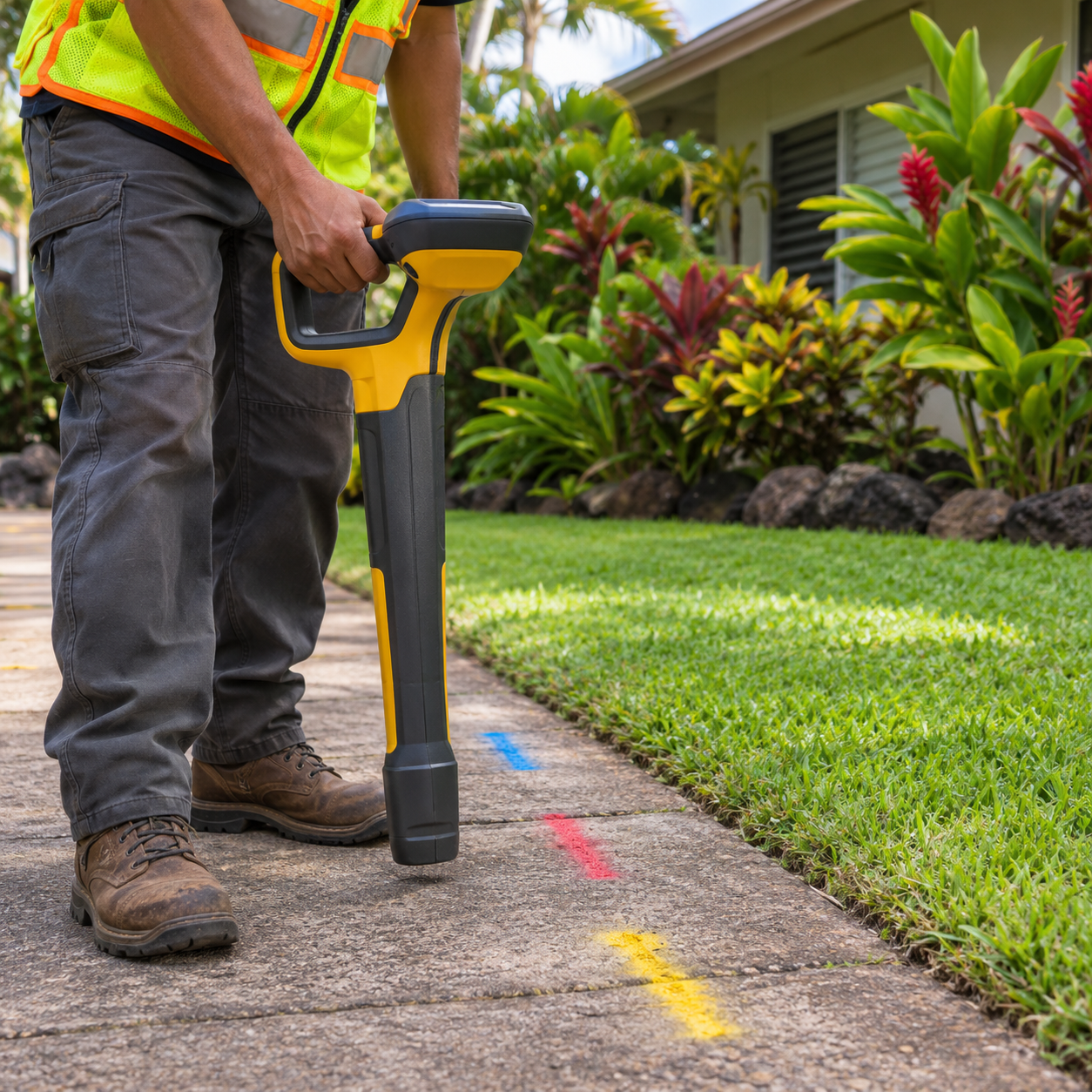
Before digging, root cutting, or grinding, process the required underground locate request and clarify coverage for private lines. Hawaii 811’s private-locator guidance distinguishes privately owned lines from utility-operated facilities. A sewer-camera distance reading is not a complete buried-service map or proof of safe excavation depth.
Have the plumber and tree contractor agree on the sequence. If the tree will remain, establish root-protection limits before excavation. If removal is necessary, specify when the trunk, stump, and conflicting roots will be addressed relative to pipe repair. Avoid leaving the stump decision until equipment arrives.
Keep the inspection findings, repair limits, tree assessment, and restoration responsibilities together. The decision should explain both how the pipe will function afterward and what will happen to the tree. That gives you a clearer basis for authorizing work than proximity alone.

Written By:
Kurt Manalastas
Environmental Property Care Content Writer
Kurt produces research-driven content centered on tree care, landscaping, and environmental property management. Drawing from arborist-informed practices, site-specific conditions, and practical homeowner concerns, he provides clear, actionable guidance to help readers maintain safer, healthier, and more sustainable outdoor environments.