Difficulties When Removing Trees
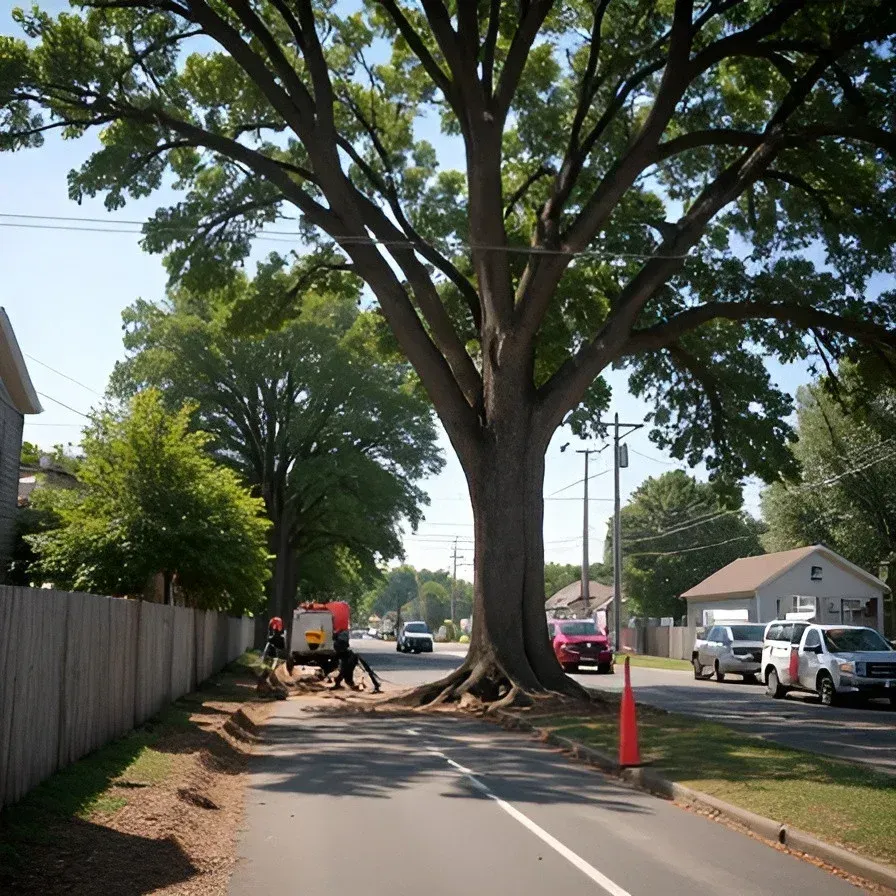
Tree removal job is perilous in general. To successfully fall a tree, you must be familiar with tree physics, biology, instruments, advanced cutting techniques, and other topics. Individuals who try to remove trees on their own risk being hurt by falling limbs, faulty equipment, or the tree itself.
If you undertake a drastic size reduction or remove huge limbs, you will most certainly notice a spike in growth. Large cuts offer a gap for water, disease, and pests to enter the tree (never use a wound sealant because having an area where disease can escape the tree is just as vital).
Besides these, there can be many other difficulties you can encounter while removing trees. Today, we’ll go through all those common difficulties when removing trees and factors impacting tree removal.
Common Tree Removal Difficulties
1. Power lines
Working around electric wires is dangerous, and you should every time presume the wires are active. If you, your tools, or the tree strike a power cable, you may, if you're lucky, shut out the power in your area. You will almost certainly get electrocuted.
Another myth regarding electricity lines that people may assume is that the black coating on them is protection. It is not correct. The black coat on electricity lines protects the metal cable from the weather. Even with weather-proofing, you can still get electrocuted.
2. Improper equipment
We mandate tree removal workers to wear full-body protection gear from top to bottom. Our Oahu tree service providers are also educated to use tools such as chainsaws, ropes, cranes, and wood chippers to properly fall and remove a tree.
Homeowners would require all of these tools — as well as the necessary skills – to complete a safe and successful removal. They put themselves in unneeded danger if they don't have it.
3. Decaying wood
A dead tree frequently decays from the inside out, making it exceedingly unstable. Cranes are sometimes used by experts to remove such deadwood.
If you suspect your tree is decaying, get our Oahu tree service to remove it before it falls unexpectedly. When removing decaying trees, there are crucial tree biology mechanisms to consider, so professional assistance is always required.
4. Gravity
You have no control over where the tree falls once it begins to fall. It may also not fall in the direction you expect, even if you use properly cut indentations or ropes to influence it. Because of the lapse in judgment, the tree could fall on homes, electricity lines, or humans.
5. Concrete
Trees can sometimes grow through concrete slabs as well if they have cracks in them. Removing these can be tricky and will typically require the assistance of a concrete contractor if you want to also keep the slab in place.
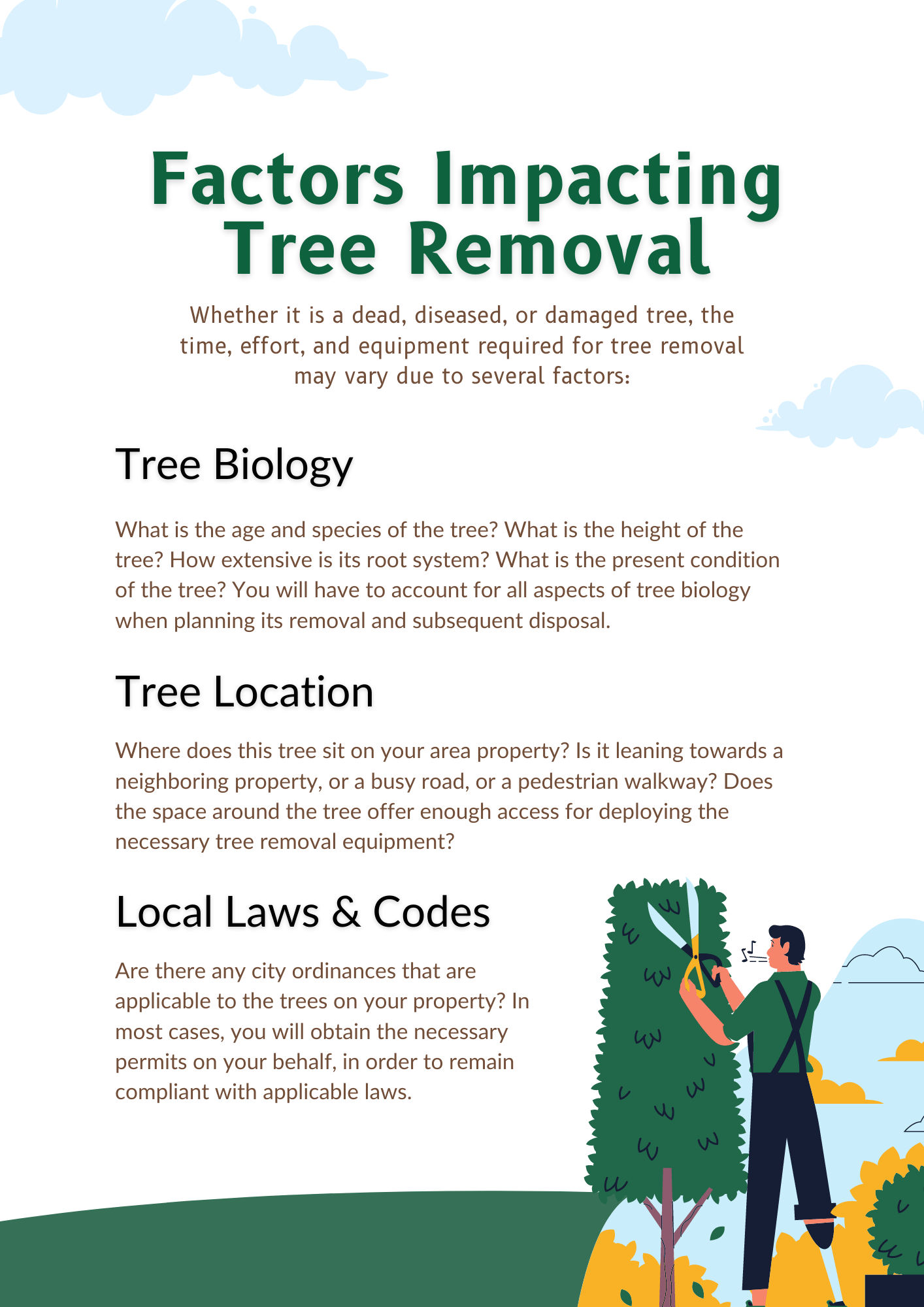
What Factors Impact Tree Removal?
Tree Removal By Trusted Arborist
In summary, homeowners shouldn't ever try and remove trees on their own. It's not worth taking the risk, and it'll almost certainly create worse problems than it solves.
A competent tree removal business, such as Oahu tree service, has the knowledge, abilities, equipment, and staff to remove affected trees safely and efficiently. We are a Tree Care Industry Association-certified tree service company that is licensed, bonded, and fully insured.
Our certified arborists remove trees of any size, type, or complexity. We also provide same-day emergency Oahu tree removal services for storm damage removal or any fallen trees. Get
Oahu tree removal services now!