Coconut Tree Trimming Mistakes Oahu Homeowners Commonly Make
Bottom Line:
Coconut trees are forgiving up to a point — and then they are not. The mistakes Oahu homeowners make most often with coconut tree trimming are not dramatic in the moment, but they compound over time into trees that are harder to maintain, more hazardous, and sometimes past the point of recovery. Most of them are avoidable with a little knowledge and the right help.
Coconut trees often seem low-maintenance until the warning signs become too obvious to ignore. They grow steadily, they look fine from a distance, and it is easy to put off trimming until there is a visible reason to deal with them. By the time most Oahu homeowners call a tree service, the job is bigger than it needed to be — and sometimes the tree is in worse shape than it looks.
Most common coconut tree trimming mistakes are entirely avoidable with the right maintenance approach. They are not complicated errors. They are the kind of things that happen when homeowners are working from incomplete information or skipping steps that seem optional until they are not. Here is what to watch out for.
Waiting Too Long Between Trims
This is the most widespread mistake, and it compounds every other problem on this list. Coconut trees in Oahu’s climate grow year-round. Dead fronds accumulate, coconut clusters mature, and the canopy gets heavier with each passing month of neglect. The recommended interval for professional trimming is every six to twelve months, depending on the tree’s growth rate and proximity to structures. When that interval stretches to two or three years, the job becomes significantly more complex and the tree accumulates hazards that would not have developed with consistent care. Professional
coconut tree trimming in Oahu on a regular schedule keeps the work manageable and the tree healthy — waiting until something forces the issue makes both harder.
The weight of accumulated dead fronds is not trivial. A single dead coconut frond can weigh 25 to 35 pounds, and a tree with 20 or 30 dead fronds hanging below the canopy is carrying hundreds of pounds of dead material that stresses the tree, creates pest habitat, and increases the risk of frond drop during the trade wind gusts that move through Oahu regularly. The longer it goes, the worse the risk profile gets.
Over-Pruning the Living Fronds
On the other end of the spectrum is the homeowner — or the inexperienced crew — who takes too much off. Over-pruning a coconut tree, sometimes called “hurricane cutting” or “skinning,” removes healthy green fronds in an attempt to reduce wind resistance or simply because it looks cleaner. In practice, it does the opposite of what it intends.
Coconut trees photosynthesize through their living fronds. Remove too many of them and you starve the tree of the energy it needs to grow, produce fruit, and maintain its immune response to disease and pests. A properly trimmed coconut palm should retain all of its healthy green fronds and have only the dead, dying, and fully brown material removed. Any crew that leaves a coconut tree with a sparse canopy and exposed trunk sections has done more harm than good, regardless of how tidy it looks right after the trim.
On Oahu, where certain pest pressures — including the coconut rhinoceros beetle — are an ongoing concern, a stressed and over-pruned tree is more vulnerable to infestation and disease than a properly maintained one. Stress from over-pruning reduces the tree’s natural defenses at exactly the time when they need to be working.
DIY Trimming Without the Right Equipment or Training
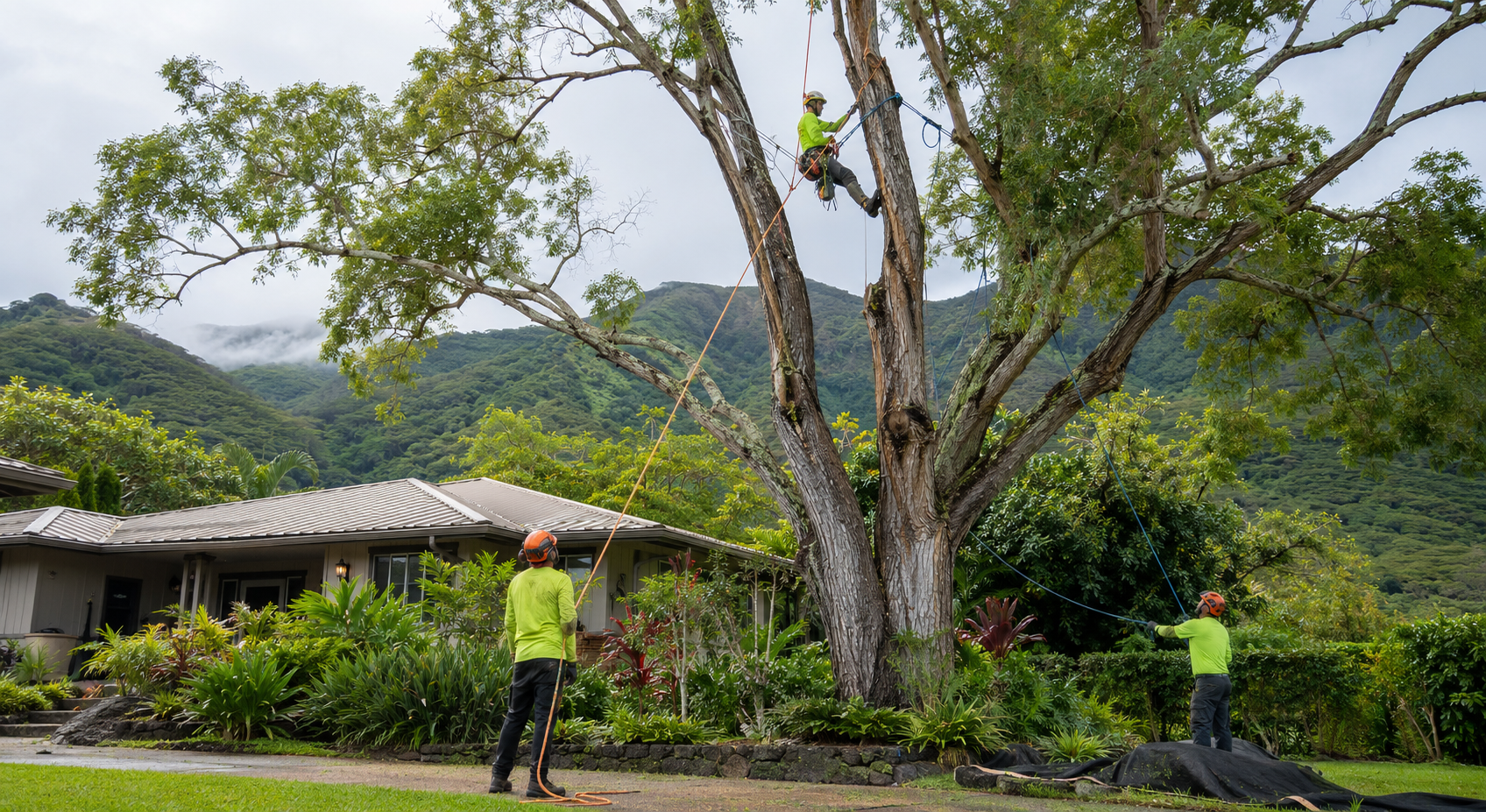
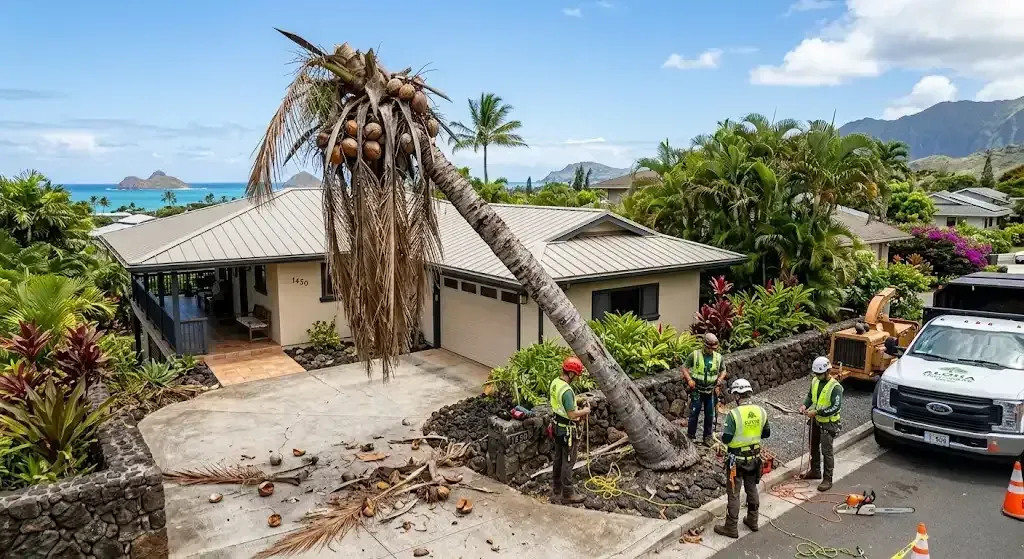
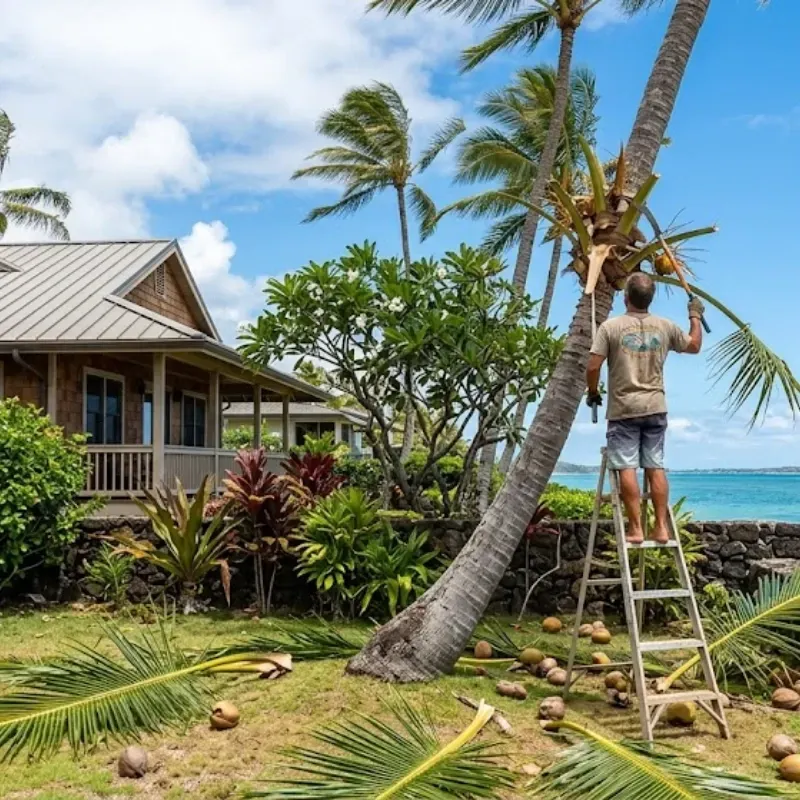
Coconut trees look manageable from the ground. At 40 or 60 or 80 feet, they look different. The height alone makes coconut tree trimming a genuinely dangerous task for anyone without the proper training, equipment, and experience working at elevation in a tree canopy. Add to that the weight of the fronds and coconut clusters being removed, the unpredictability of how they fall, and the proximity to rooftops, power lines, and neighboring properties, and it becomes clear why this is not a ladder-and-pole-saw situation for most residential lots.
At Oahu Tree Trimming & Removal Experts, owner Luke started his career with a passion for technical climbing and rigging, and the team has spent more than eight years developing the skills to work safely in Hawaii’s specific conditions — tight lots, coastal winds, mature trees near structures, and the variety of species that Oahu’s landscape presents. The reason DIY coconut tree trimming goes wrong is rarely lack of effort. It is lack of the specific training and equipment that make high-elevation tree work safe. A falling frond or dislodged coconut cluster from height can cause serious injury and property damage that far exceeds the cost of a professional trim.
Ignoring Coconut Drop Near High-Use Areas
Mature coconuts can weigh anywhere from a few pounds to over ten pounds, and a coconut falling from 50 to 80 feet is a genuine hazard. This is particularly relevant on Oahu, where residential lots are often small and coconut trees growing in yards, along driveways, near pools, or adjacent to walkways sit directly over areas where people spend time.
One of the most common mistakes homeowners make is treating coconut management as separate from general tree trimming — either ignoring mature coconut clusters until they drop naturally, or not thinking about the hazard at all.
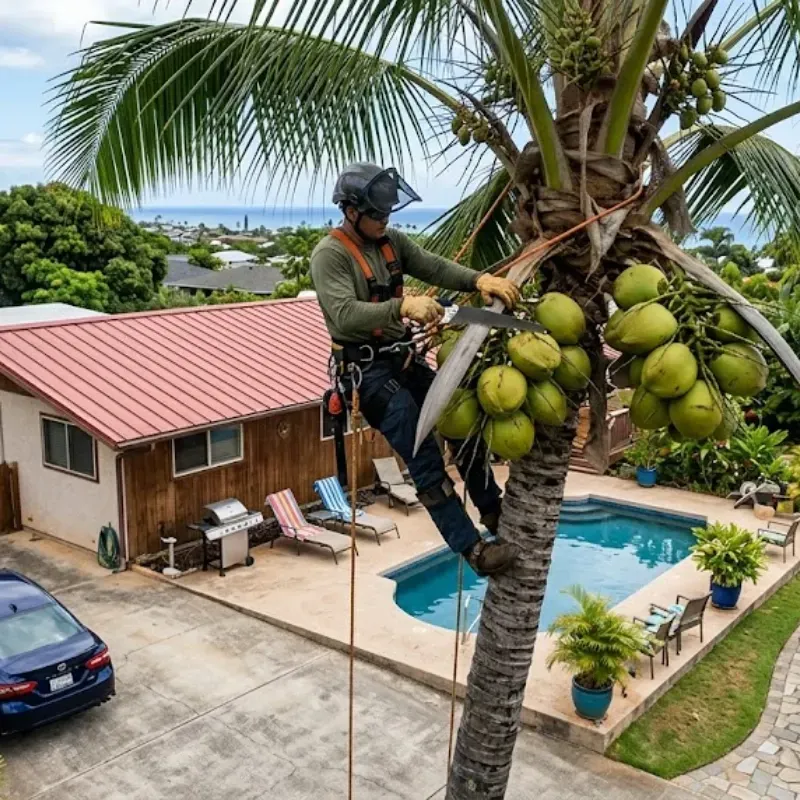
A proper trimming schedule for a coconut tree near high-use areas should include removal of maturing coconut clusters before they reach a size and weight that makes natural drop a safety concern. This is not a complex task when it is part of a regular maintenance visit, but it is the kind of detail that gets missed when trimming is infrequent or done by someone who is not thinking about the full picture.
Using the Wrong Cutting Tools or Technique
The cuts made during a coconut tree trim matter more than most people realize. Fronds should be cut cleanly and close to the trunk — not torn, hacked, or left with large stubs that create wounds the tree has to heal around. Ragged cuts create larger entry points for disease and pests. Stubs left too long can harbor moisture and rot that works its way toward the trunk over time. A clean, proper cut heals faster and leaves the tree in better structural and health condition.
The tools used matter too. Dull blades crush and tear rather than cut cleanly, which creates larger wounds and more tissue damage. Shared tools that have not been sanitized between trees can transmit disease from one tree to another — a real concern in areas where palm diseases and pests are present. A professional crew that maintains and sanitizes their equipment between jobs is protecting not just the tree being worked on but every tree on the property.
If your property has multiple trees — coconut palms alongside other tropical species — the trimming approach needs to account for each species’ specific requirements, not just apply the same technique across the board. If your property has multiple trees, our professional tree care in Honolulu covers the full range of Oahu’s tropical species with species-specific care built into every visit.
Hiring Based on Price Without Checking Credentials
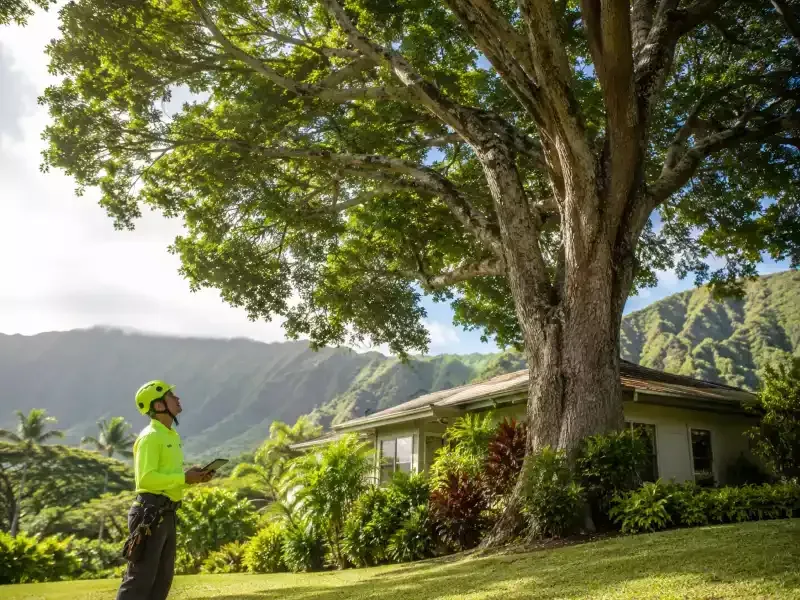
Coconut tree trimming on Oahu is a service that varies enormously in quality depending on who is doing the work. The lowest price is almost never the best value, and in tree work specifically, the consequences of poor technique show up in tree health, property damage, and in some cases, injuries that would not have occurred with a properly trained crew.
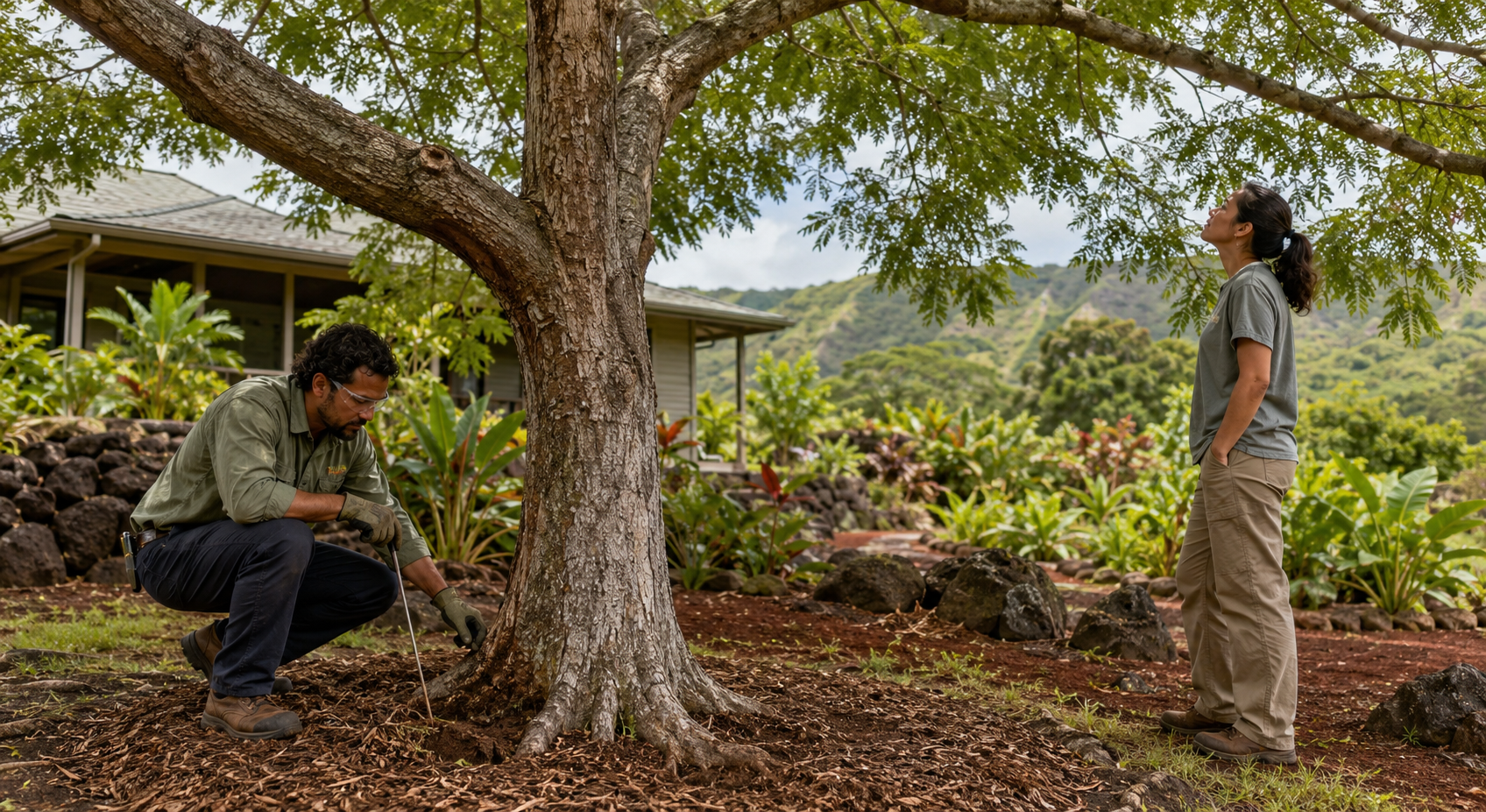
The questions worth asking before hiring any tree service are straightforward: Are they licensed and insured? Does the crew have ISA arborist credentials or direct experience working under ISA-certified arborists? Can they demonstrate knowledge of proper pruning technique rather than just the ability to get up in a tree? Do they carry liability coverage sufficient to cover property damage if something goes wrong? When the work involves height and falling loads near a home, any hesitation around those questions should be treated as a serious risk signal.
Working with credentialed professionals is not just about safety — it is about results. Trees that are trimmed correctly by people who understand how they grow, how they heal, and what they are vulnerable to in Hawaii’s specific environment come out of the process healthier and better set up for long-term performance.
For more on what ISA certification means and why it matters for Oahu property owners, our article on why certified arborists matter in Oahu goes into the specifics of what that training involves and what it means for the care your trees receive.

Written By:
Domenique Bomediano
Landscape & Tree Care Educational Content Writer
Domenique Jose Bomediano creates research-based content focused on tree care, landscape management, and environmental property concerns. By combining arborist-backed practices, regional considerations, and practical homeowner needs, he helps readers better understand how to maintain safer, healthier outdoor spaces.