Eco-Friendly Ways to Repurpose Coconut Tree Waste After Removal in Hawaii
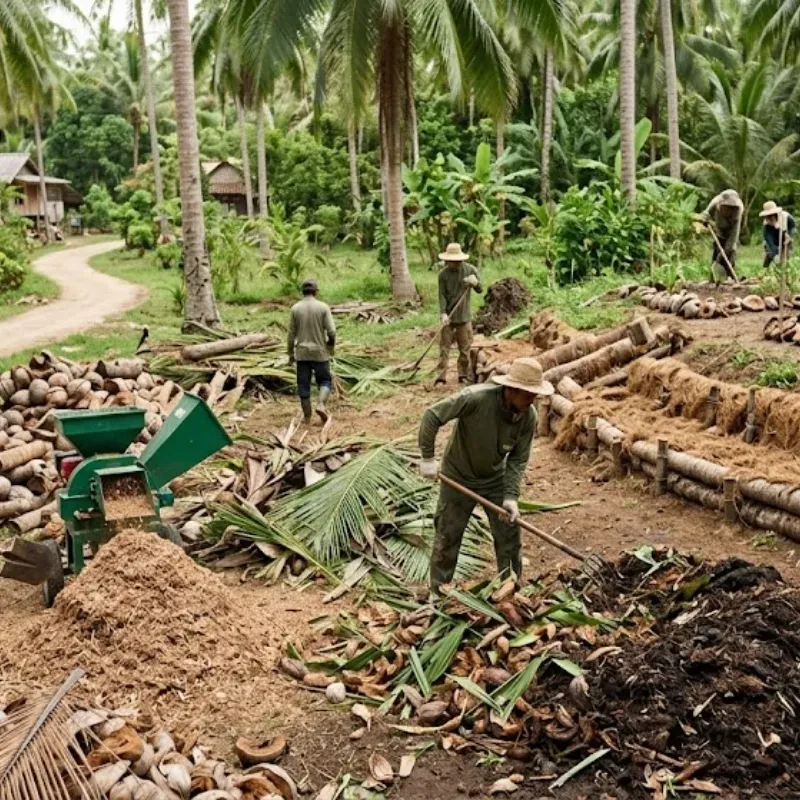
Sustainable Landscape Insight: After coconut tree removal in Hawaii, fronds, husks, and trunk sections can be repurposed into mulch, soil amendments, compost material, and erosion-control features that continue benefiting the landscape. Reusing this organic material reduces hauling costs, supports healthier tropical soils, and creates more sustainable long-term property maintenance.
The coconut tree, often called the “tree of life,” provides value long before it is removed. It continues to offer value through nearly every part of its structure. In Hawaii, this becomes especially important when tree removal services in Hawaii are needed, as coconut palms leave behind fronds, husks, trunk sections, and organic material that can be thoughtfully repurposed instead of discarded.
The most effective approach is to treat this material as a usable landscape resource rather than waste, particularly in a region where green waste disposal costs and landfill pressure continue to rise.
Why Repurposing Coconut Tree Waste Matters More in Hawaii
Hawaii’s tropical climate changes the waste conversation completely. High humidity, year-round plant growth, and frequent storm debris mean organic waste accumulates faster here than in many mainland environments.
Across areas like Kāneʻohe, Kalihi Valley, and the windward side of Oahu, coconut removals often produce large volumes of reusable organic material that homeowners overlook
Our tree care experts note that repurposing reduces hauling volume, lowers disposal fees, supports healthier soil, and keeps useful biomass on-site where it can still benefit the property.
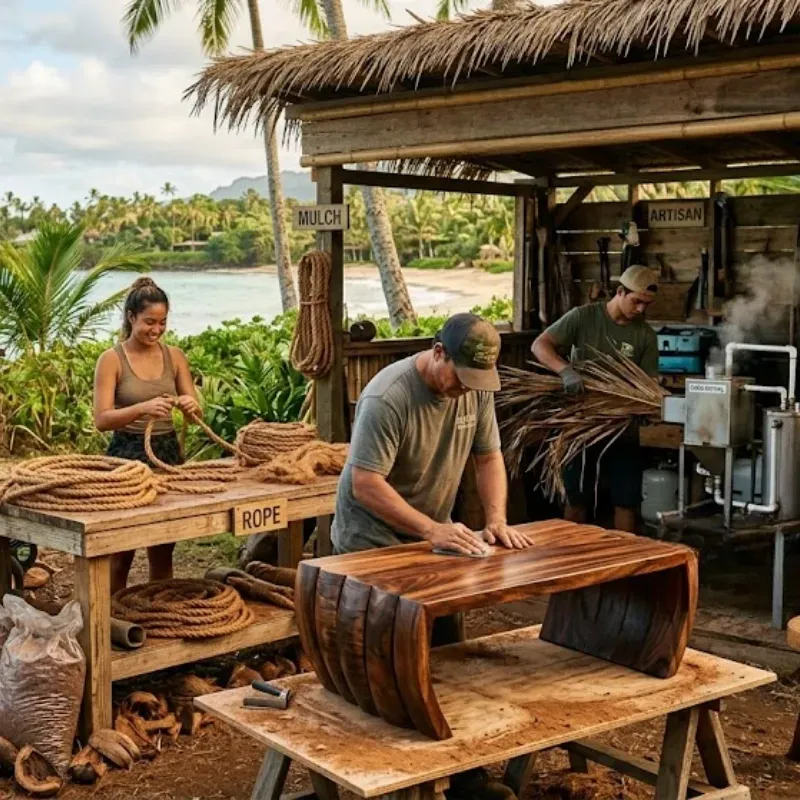
This is especially relevant for island homeowners where transport and dumping costs are naturally higher.
It is also important to note that not every coconut tree should be removed immediately, and recognizing the right conditions is key to preventing damage and unnecessary waste. Learn more about when to remove a coconut tree in Hawaii, especially in areas like Oahu where climate and risk factors play a major role.
Mulch and Ground Cover Are Usually the Best First Option
Shredded coconut fronds and chipped trunk sections make excellent mulch for tropical landscaping beds. Around banana plants, ti leaf borders, heliconia zones, and non-edible ornamentals, coconut mulch helps retain moisture, regulate root temperature, and reduce weed competition.
In Hawaii’s warmer coastal neighborhoods like Hawaiʻi Kai or Pearl City, soil dries quickly under direct sun and trade wind exposure. Organic mulch slows that moisture loss significantly.
The tradeoff is that coconut material breaks down more slowly than softer green waste. That slower decomposition is actually an advantage for erosion-prone slopes, but it makes it less ideal if a homeowner needs rapid compost turnover.
A common mistake is piling fresh mulch directly against tree trunks or house siding. In our work, keeping a few inches of breathing room prevents moisture trapping, pest activity, and fungal buildup.
Coconut Husks Can Improve Soil Structure in Tropical Gardens
Coconut husks are one of the most underused byproducts after removal.
When broken down properly, the coir fibers inside husks improve water retention and aeration in raised beds and garden soils. For Hawaii homeowners growing taro, ginger, ornamentals, or container herbs, this can create better root stability in fast-draining soils.
Local conditions matter here. Many Oahu properties, especially leeward areas near Kapolei and Ewa, deal with dry spells and compacted fill soil. Coconut coir helps buffer those conditions better than many bagged imported amendments.
The smarter move is to age or process husks before mixing them into soil. Fresh husks used incorrectly can tie up moisture unevenly and slow decomposition.
Coconut husk use in soil is closely tied to how nutrients behave and how long coconut trees remain productive. The full picture comes down to climate, soil biology, and nutrient balance working together. Review the role of nutrients and soil health in coconut trees across Hawaii, especially in areas like Oahu.
Trunk Sections Can Become Functional Landscape Features
Hauling every trunk section away is usually the least creative use of the material.
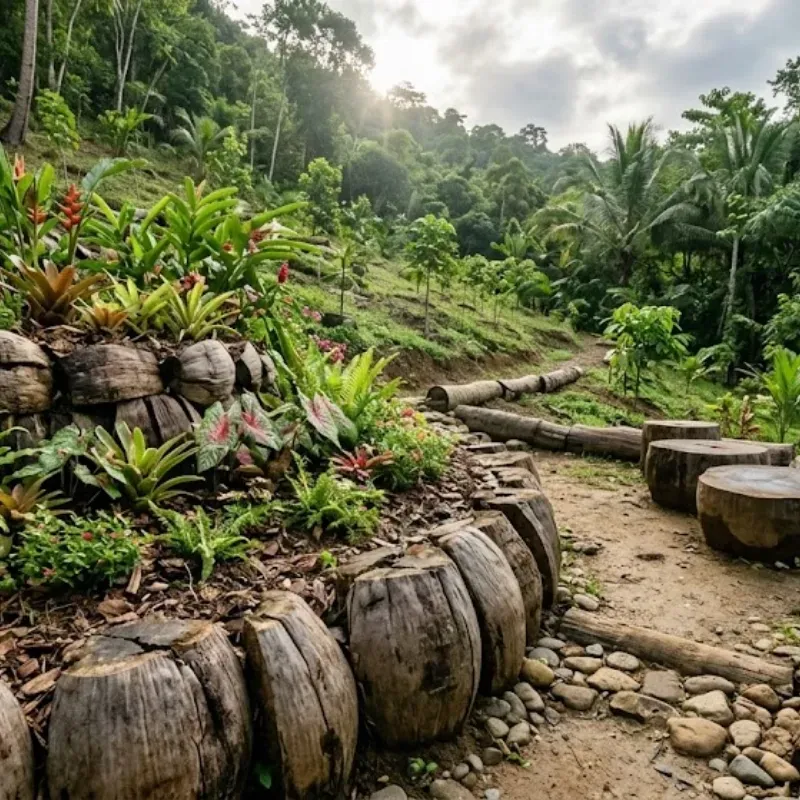
Larger coconut trunk cuts can be repurposed into:
- rustic garden edging
- raised planter borders
- natural seating
- pathway dividers
- erosion-control barriers on slopes
On hillside properties in places like Pacific Palisades or the back slopes of Mānoa, these trunk sections can serve as temporary soil retention aids during replanting projects.
The tradeoff is lifespan. Coconut wood in humid environments eventually softens and decomposes. That makes it excellent for naturalized gardens but less reliable for permanent structural uses.
Fronds and Smaller Debris Can Support Composting
Fronds are often dismissed as messy, but they can play a valuable role in compost systems when shredded.
Because coconut fronds are fibrous and carbon-rich, they balance greener nitrogen-heavy waste such as grass clippings and kitchen scraps. In Hawaii’s warm climate, compost activity remains relatively active year-round, which makes on-site decomposition highly practical.
Still, the common mistake is using oversized frond pieces. Large uncut sections take too long to break down and create messy piles that attract insects.
Shredding or cutting them first leads to a much healthier compost ratio.
Habitat and Erosion Uses for Coastal Properties
For some Hawaii homes near the coast, coconut debris can serve ecological landscape purposes.
Layered frond sections and trunk chips can stabilize loose soil in wind-exposed areas, especially on properties affected by salt air and intermittent heavy rain. We’ve seen this work well on North Shore lots where runoff channels form quickly after storms.
Natural debris layering also creates microhabitats for beneficial insects and supports moisture retention around hardy native and adapted plants.
This localized reuse strategy works especially well in Hawaii because decomposition stays active without the freeze-thaw breakdown common in many mainland climates.
The Smarter Decision After Coconut Removal
The most sustainable outcome after removal is rarely full disposal. The better decision is to sort the waste by future function: mulch, soil amendment, compost carbon, slope support, or natural borders.
That decision reduces hauling, lowers environmental impact, and keeps more of the tree’s value working on-site.
Final Takeaway
For Hawaii homeowners, coconut tree waste should be treated as a reusable landscape asset rather than automatic trash.
The clearest next step is to identify which portions can improve soil, conserve water, support erosion control, or reduce future landscaping costs. When repurposed strategically for Hawaii’s tropical conditions, removed coconut material continues serving the property long after the tree itself is gone.