When Should You Remove a Coconut Tree in Oahu, Hawaii? Key Risk Factors to Know
Core Insight: Coconut trees in Oahu should be removed when structural risks such as leaning, internal decay, excessive height, or proximity to people and property create safety hazards. By assessing these factors early and prioritizing risk management over appearance, homeowners can prevent accidents, reduce long-term costs, and make safer, more informed decisions.
In our work across Oahu, we have seen more injuries, property damage, and emergency removals caused by neglected coconut trees than almost any other species. Knowing when a coconut tree should be removed is not about aesthetics. It is about managing predictable risk in a storm-prone, high-humidity environment.

Why Coconut Trees Become Dangerous Over Time
Coconut palms grow quickly, often reaching 60 to 80 feet in height. Unlike hardwood trees, palms do not strengthen through secondary growth. Their trunks do not thicken significantly with age, and their internal structure can degrade without obvious warning signs, which is why many homeowners rely on Oahu tree removal services to assess potential risks early.
In Oahu’s climate, three factors accelerate risk. First, constant trade winds apply repeated lateral stress to tall palms. Second, salt exposure weakens tissue over time. Third, high humidity promotes internal rot that is difficult to detect from the outside.
The result is a tree that can look healthy but fail structurally under moderate wind loads. The Hawaii Department of Health has documented multiple serious injuries and fatalities caused by falling coconuts and palm failures across the state. According to research published in the Journal of Trauma, falling coconuts have caused severe head injuries, including cases requiring craniotomies, demonstrating that coconut impacts can result in significant trauma.
In our experience, coconut trees become hazardous not suddenly, but gradually. The problem is that homeowners rarely recognize the warning phase.
Key Risk Factor 1: Leaning or Root Plate Movement
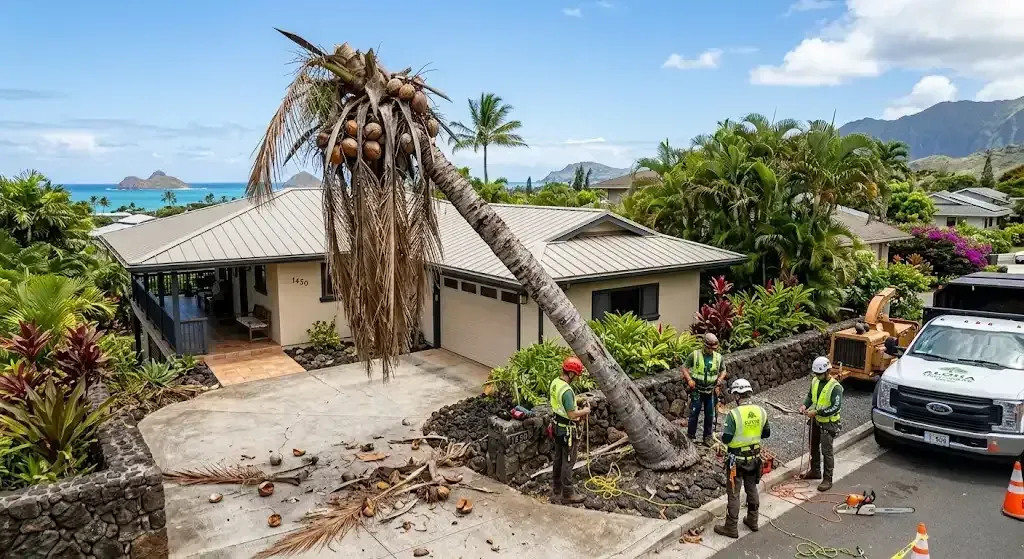
A coconut tree that begins to lean is already in a failure progression.
Palms have shallow, fibrous root systems. Once the root plate shifts, the tree rarely re-anchors itself fully. On sloped properties or near retaining walls, this risk increases significantly.
Oahu tree removal services have removed many leaning palms in East Oahu and Windward areas where soil becomes saturated during winter rains, causing slow root failure. Waiting often leads to full uprooting during the next storm.
Key Risk Factor 2: Internal Trunk Decay
Unlike broadleaf trees, coconut palms show few external signs of internal decay.
Common causes include:
- Ganoderma butt rot
- Chronic water pooling at the base
- Old mechanical injuries from trimming equipment
Once decay compromises the central column, the trunk can fail suddenly without splitting or cracking first.
In our
Honolulu tree removal team inspections, hollow or spongy trunk sections are among the strongest indicators that removal is necessary rather than continued pruning.
| Risk Factor | Description | Indicators/Notes |
|---|---|---|
| Leaning or Root Plate Movement | Shallow fibrous roots, leaning indicates failure progression | Higher risk on slopes or saturated soil; often leads to full uprooting |
| Internal Trunk Decay | Few external signs, central column compromised | Ganoderma butt rot, water pooling, old mechanical injuries |
| Overheight and Canopy Load | Top-heavy canopy increases bending stress | Height > 70 ft, unsafe canopy reduction, proximity to structures |
| Proximity to Structures | Near driveways, entrances, play areas | Palms within 15 ft of structures rarely suitable for long-term retention |
Key Risk Factor 3: Overheight and Canopy Load
Height itself is not the problem. Load distribution is.
Coconut palms that are allowed to retain too many fronds and fruit clusters develop top-heavy canopies. This shifts the center of mass upward and increases bending stress at the trunk base.
A common mistake is removing only dead fronds while leaving heavy fruit clusters intact.
In our work, we often recommend removal when:
- The palm exceeds 70 feet
- The canopy cannot be reduced safely
- The tree is within falling distance of a structure
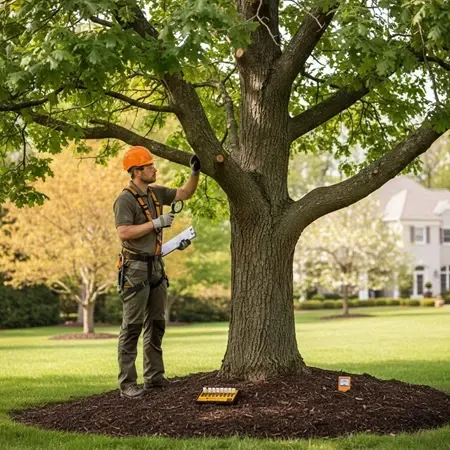
At that height, controlled removal becomes safer than repeated high-risk maintenance. If the lean is increasing year over year, removal is usually the safest option. Learn how to recognize local tree hazards and Hawaii’s most common tree issues to identify risks early and protect your property.
Key Risk Factor 4: Proximity to Structures and Walkways
Location matters as much as tree condition.
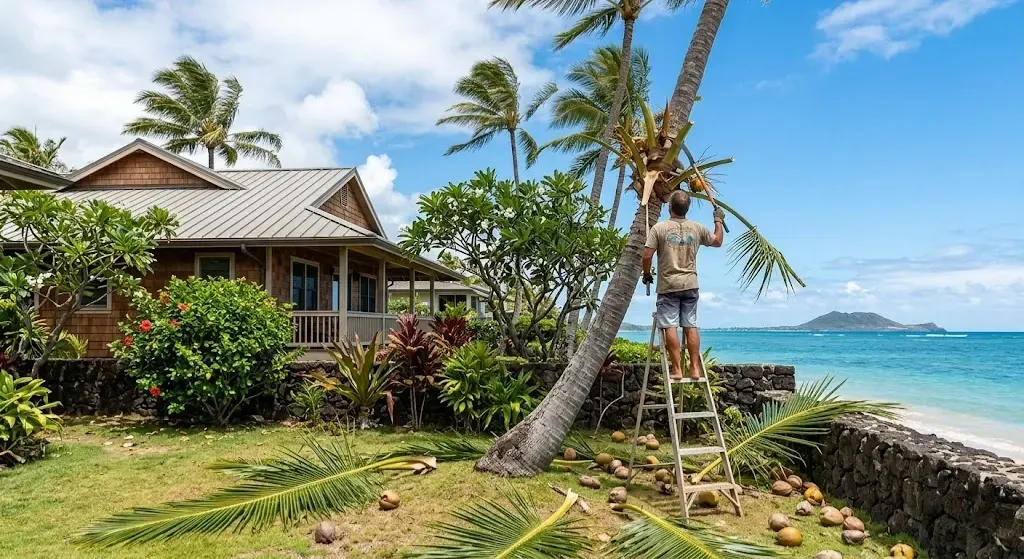
Coconut palms near driveways, play areas, building entrances, and parking lots create unavoidable exposure to falling coconuts and fronds.
The Hawai‘i Department of Agriculture has highlighted hazards associated with damaged coconut palms as part of statewide efforts to manage invasive pests and protect public safety. In our experience, palms within 15 feet of occupied structures rarely remain suitable for long-term retention.
Tradeoffs Between Pruning and Removal
Homeowners often ask whether aggressive pruning can extend a coconut tree’s life safely. Pruning reduces short-term risk but increases long-term structural stress. Every major cut creates an entry point for decay organisms. Over-pruned palms often decline faster than unpruned ones.
Removal becomes the smarter decision when:
- Annual pruning frequency increases
- Structural risk remains despite maintenance
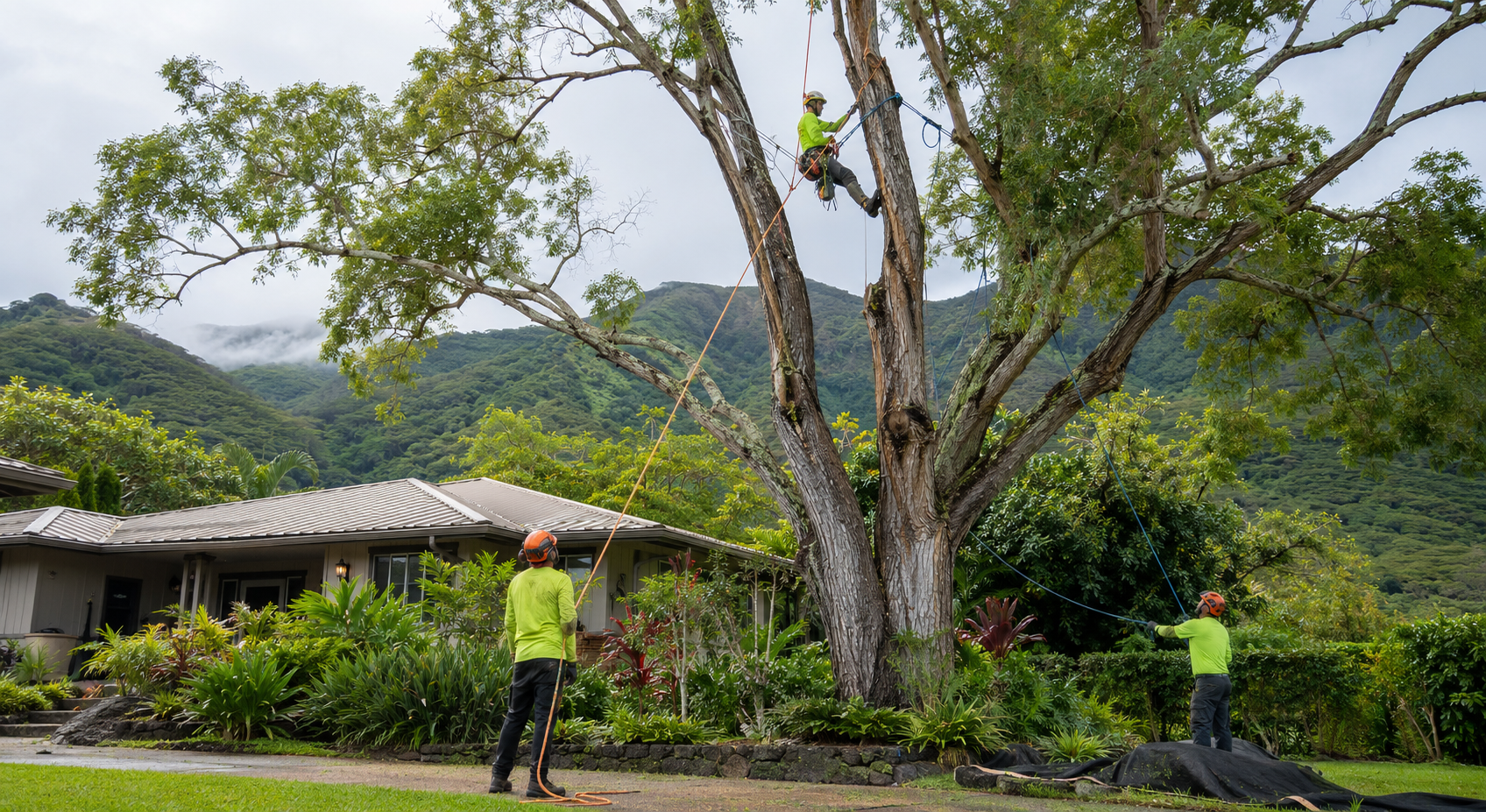
- Access requires repeated high-risk climbing
We have seen many cases where two years of expensive pruning cost more than a single controlled removal.

Common Mistakes
Based on our field experience, the most common mistakes include:
- Waiting for visible cracks before acting
- Assuming green fronds mean structural health
- Using unlicensed trimmers for high palms
- Ignoring gradual lean progression
But the biggest error is assuming coconut trees fail slowly.
Why Oahu Conditions Change the Risk Profile
Oahu’s microclimates vary widely by region. Windward areas experience higher rainfall and soil saturation. Leeward areas experience stronger trade winds and drought stress. Coastal zones add salt exposure.
These factors mean coconut palms in Oahu age faster structurally than palms in many other regions.
How Professionals Decide When Removal Is Necessary
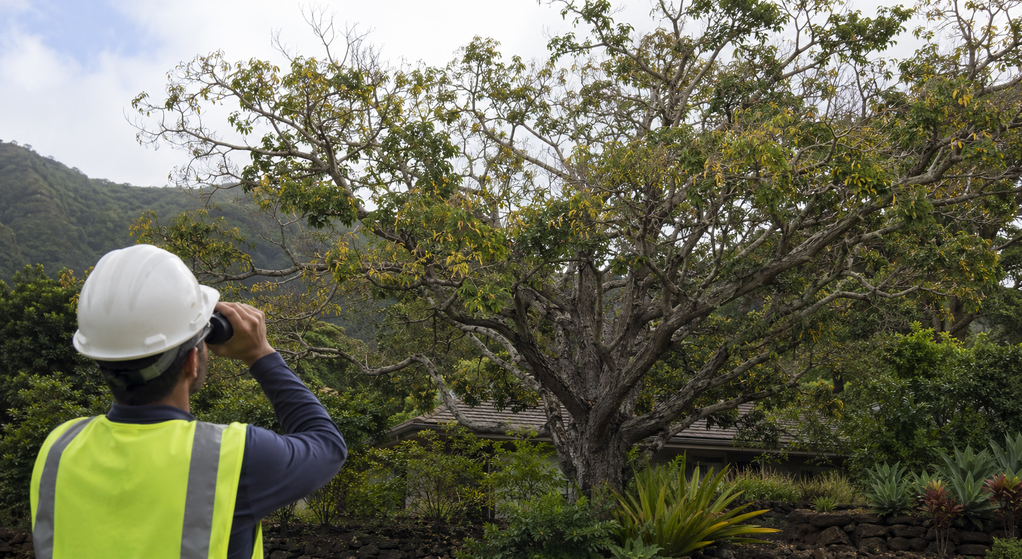
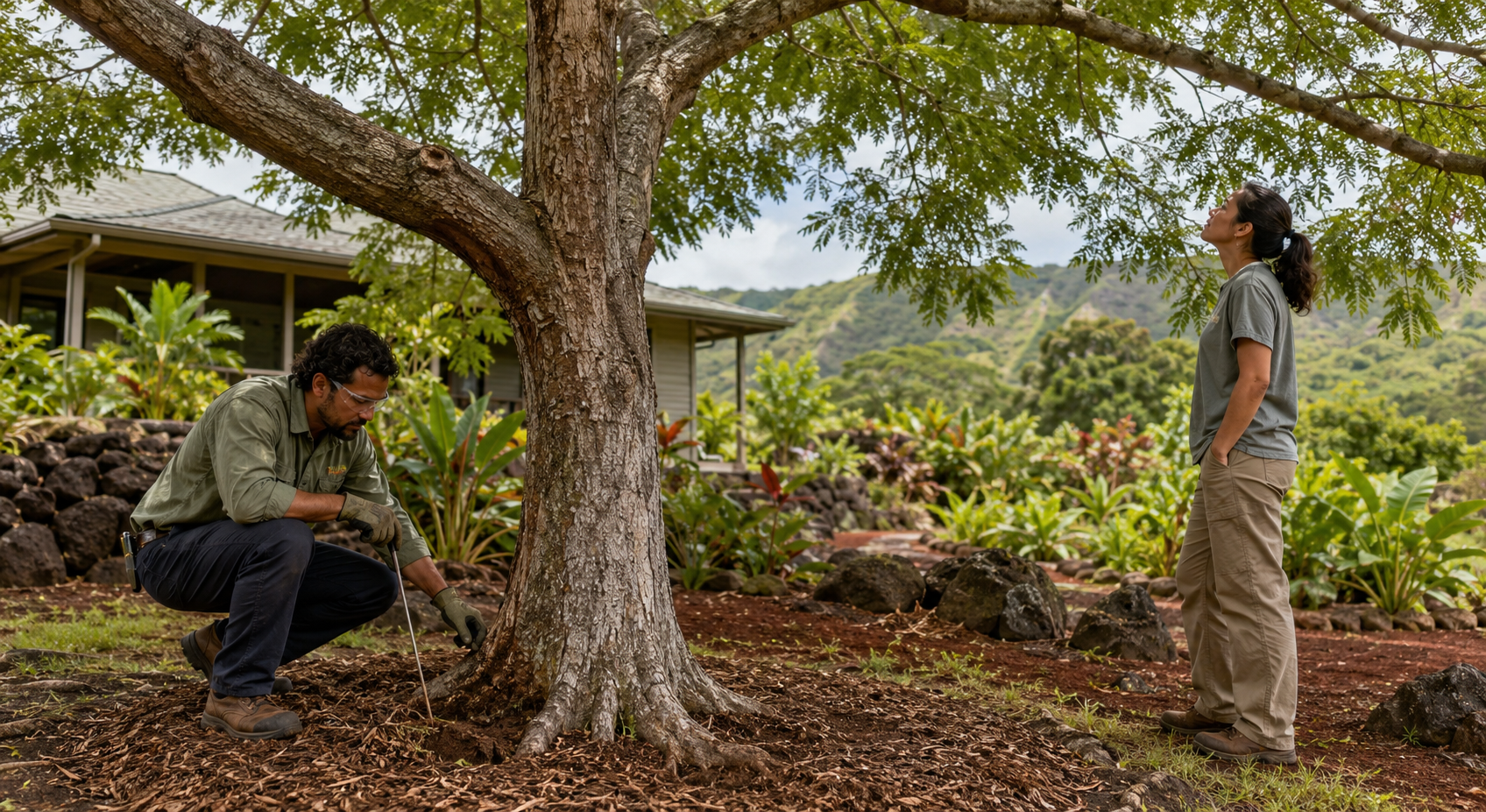
In our process, we evaluate:
- Trunk soundness through tapping and probe testing
- Root plate stability
- Canopy mass and fruit load
- Fall zone exposure
- Access and rigging feasibility
We also consider the owner’s tolerance for risk. Some palms may survive five more years. The question is whether those five years justify the exposure.
Clear Takeaway
Coconut trees in Oahu should be removed when structural stability, location, and maintenance risk converge.
The highest-risk indicators are:
- Progressive leaning
- Internal decay
- Excessive height with heavy canopy
- Proximity to people or buildings
- Waiting rarely improves the outcome.
The smarter decision is based on risk management, not appearance.

What’s the Next Step?
If you have a mature coconut tree on your property, a professional structural assessment is the most reliable way to make the decision confidently.
In our work, early evaluation prevents emergency removals, property damage, and preventable injuries.