Signs Your Coconut Tree Needs Professional Pruning or Removal in Oahu
Bottom Line:
Coconut trees are a defining part of Oahu’s landscape, but they require regular care to remain safe and healthy. Dead fronds, trunk damage, leaning, and pest issues are clear warning signs. Delaying pruning or removal increases property risk and often leads to more complex and costly work when the problem is finally addressed.
Coconut trees often blend into the background of a property until a problem becomes noticeable. They are so much a part of the Oahu landscape that it is easy to stop really looking at them — until a frond comes down on your car, or you notice the trunk is leaning a little closer to your roof than it used to. By then, what might have been a routine trimming job has sometimes become something more significant.
Coconut trees usually show warning signs well before they reach a crisis point. Knowing what to look for — and understanding the difference between a tree that needs routine maintenance and one that needs to come down — is genuinely useful for any Oahu homeowner with one of these trees on their property. Here is what to watch for.
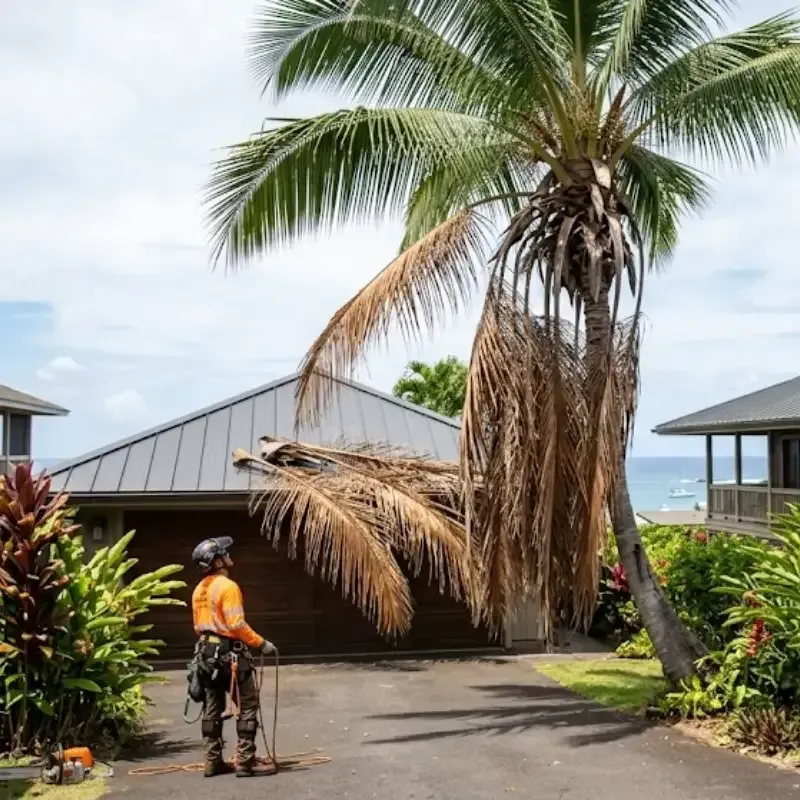
Dead Frond Accumulation
This is the most common and most visible sign that a coconut tree is overdue for professional attention. Dead fronds — the dry, brown ones that hang below the living canopy — are a normal part of the tree’s growth cycle. The problem is when they are allowed to accumulate rather than being removed on a regular schedule. A healthy maintenance routine for coconut trees in Oahu typically means professional trimming every six to twelve months, depending on the tree’s growth rate and proximity to structures. For dedicated coconut tree trimming services in Oahu, catching dead frond buildup early keeps the job manageable and protects the tree’s long-term health.
When dead fronds are left in place, they add significant weight to the tree, create habitat for pests like rats and insects, and increase the risk of frond drop during wind events. A single dead coconut frond can weigh 20 to 30 pounds. Several dozen of them concentrated in the canopy creates a real hazard for anything below — walkways, cars, rooftops, or people. If a tree is carrying more dead fronds than healthy ones, it is well past the point where professional attention is needed.
Fronds Drooping Closer to the Trunk
Healthy coconut trees hold their fronds out at a relatively consistent angle from the crown. When you notice fronds starting to droop downward or hang much closer to the trunk than usual, it is a sign that the tree is under stress. This can be related to nutrient deficiency, drought stress in periods of low rainfall, root system issues, or early-stage disease. On its own it does not necessarily mean the tree needs to come down, but it does mean a professional should take a look before the situation progresses.
In Oahu’s coastal environment, where salt air and variable rainfall create specific stress conditions for coconut palms, drooping fronds are not uncommon — but they should not be ignored. A trained arborist can assess whether the issue is environmental and manageable with proper care, or whether it reflects a deeper problem with the tree’s structure or health.
Coconut Drop Near High-Traffic Areas
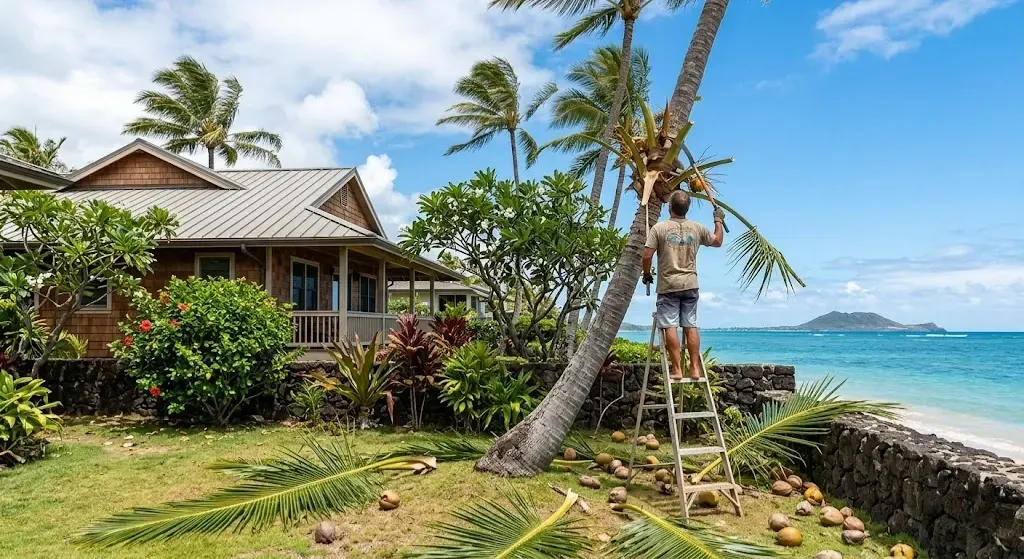
Coconuts can weigh anywhere from a few pounds to well over ten pounds depending on their stage of development. A coconut falling from a tree that sits near a driveway, walkway, patio, or public area is a genuine safety and liability concern. If your coconut tree is dropping fruit in or near areas where people spend time, that is not something to normalize — it is a sign that the tree needs more frequent maintenance to keep coconut clusters trimmed before they mature and drop.
Some homeowners in Oahu have their trees serviced specifically for coconut management, separate from the regular frond trimming cycle. For trees near pools, guest areas, or street-facing property lines, this is a reasonable precaution. The liability exposure from an injury caused by a falling coconut is real, and it is the kind of thing that is easy to prevent with a consistent maintenance schedule.
Visible Trunk Damage or Softness
The trunk of a healthy coconut tree should be firm and consistent in texture. If you notice soft spots when you press on the base of the trunk, discoloration or dark staining that was not there before, holes or cavities in the trunk surface, or a distinctly spongy feel anywhere along the lower third of the tree, these are serious warning signs. They can indicate internal rot, fungal infection, or pest damage that has compromised the structural integrity of the tree from the inside.
Trunk damage is one of the situations where the difference between a tree that can be saved with treatment and a tree that needs to come down before it fails is not always obvious from ground level.
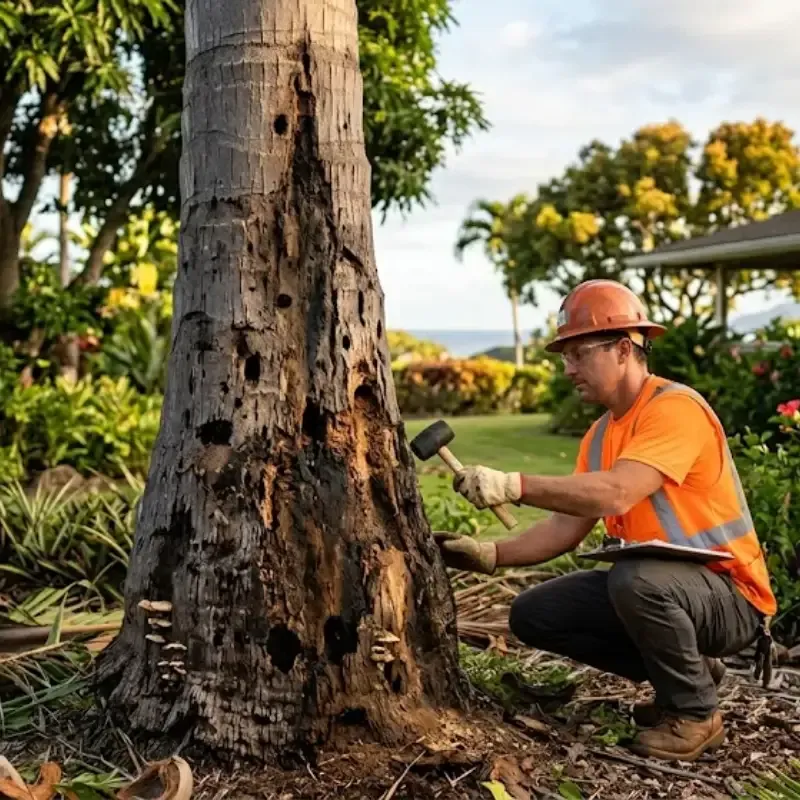
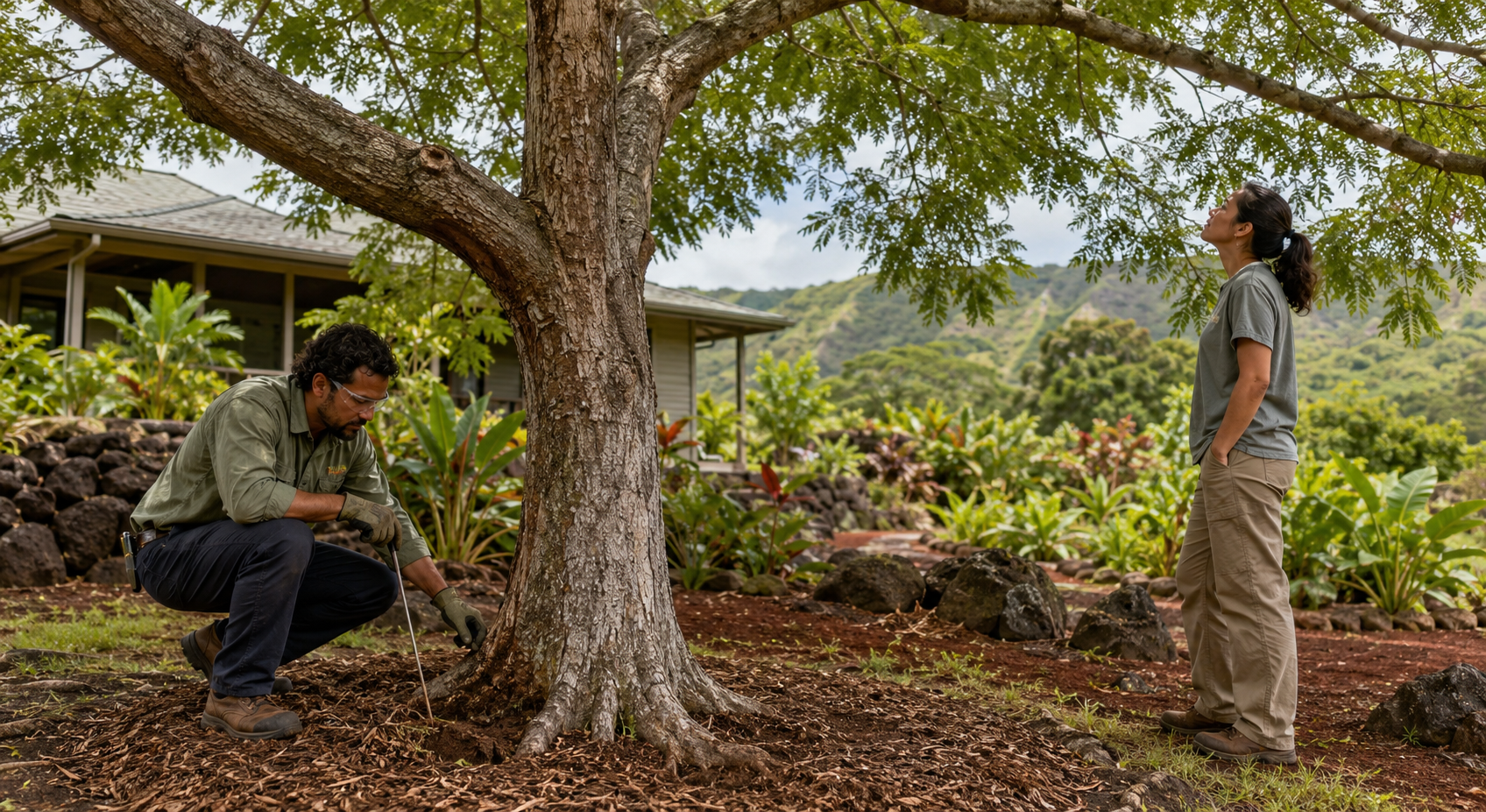
At Oahu Tree Trimming & Removal Experts, owner Luke and his team have eight-plus years of hands-on experience with hazardous and structurally compromised trees across the island. When trunk damage is present, they assess it up close rather than from a distance — because what looks stable from the ground is not always stable when you are working at height. If there is any doubt about a tree’s internal condition, an inspection is worth more than an assumption.
Significant or Sudden Leaning
Coconut trees naturally lean — often toward light, water, or the prevailing wind direction — and a gradual lean that has been present for years is usually not a concern on its own. What should get your attention is a lean that has developed or increased noticeably over a short period, particularly if it is directed toward a structure, power line, or area where people spend time.
Sudden leaning can indicate root failure, erosion beneath the root zone, or soil saturation after heavy rain that has reduced the soil’s ability to support the tree. In coastal Oahu where sandy soils and high water tables are common in some neighborhoods, this type of root zone instability is not rare. A tree that has shifted its angle meaningfully over a single season deserves a professional assessment sooner rather than later.
Signs of Pest or Disease Pressure
Coconut trees on Oahu face specific pest and disease pressures that are worth knowing. The coconut rhinoceros beetle has been an ongoing concern in Hawaii in recent years, causing damage to the spear leaf — the central developing frond — that results in a distinctive V-shaped cut pattern when the leaf opens. If you notice irregular damage to new growth, holes at the crown of the tree, or fronds that are emerging already damaged or stunted, beetle activity may be the cause.
Bud rot, caused by a fungal pathogen, is another serious threat to coconut palms in humid conditions. It presents as browning and collapse of the newest fronds at the crown of the tree. Because the bud is the growth point for the entire palm, damage to it is often fatal to the tree. If the crown of your coconut tree shows signs of collapse or the newest fronds are dying before they fully develop, a professional evaluation is urgent.
Identifying and responding to pest or disease issues early is significantly more effective than addressing them after they have progressed. If you have concerns about any coconut tree on your property — or about other tropical trees that share similar risk factors — our team provides professional assessments across all of Oahu. For properties needing routine care alongside pest monitoring, our professional tree trimming in Honolulu services include evaluation of tree health at every visit, not just the trim.

When Removal Is the Right Answer
Not every coconut tree that shows warning signs needs to come down, but some do — and recognizing when removal is the safer and more responsible choice is important. Trees that have significant internal rot at the trunk base, that have failed at the root zone and are no longer stable, that are severely infested with pests that cannot be controlled, or that have died from bud rot or other causes are candidates for removal rather than continued maintenance.
The location of the tree matters too. A coconut palm in open space away from structures carries a different risk than one of the same condition growing within falling distance of your roof, a neighbor’s property, a power line, or a public walkway. In urban and suburban Oahu neighborhoods where lots are tight and trees are close to structures, a tree that might be left to decline naturally in a rural setting becomes a genuine liability that needs to be addressed.
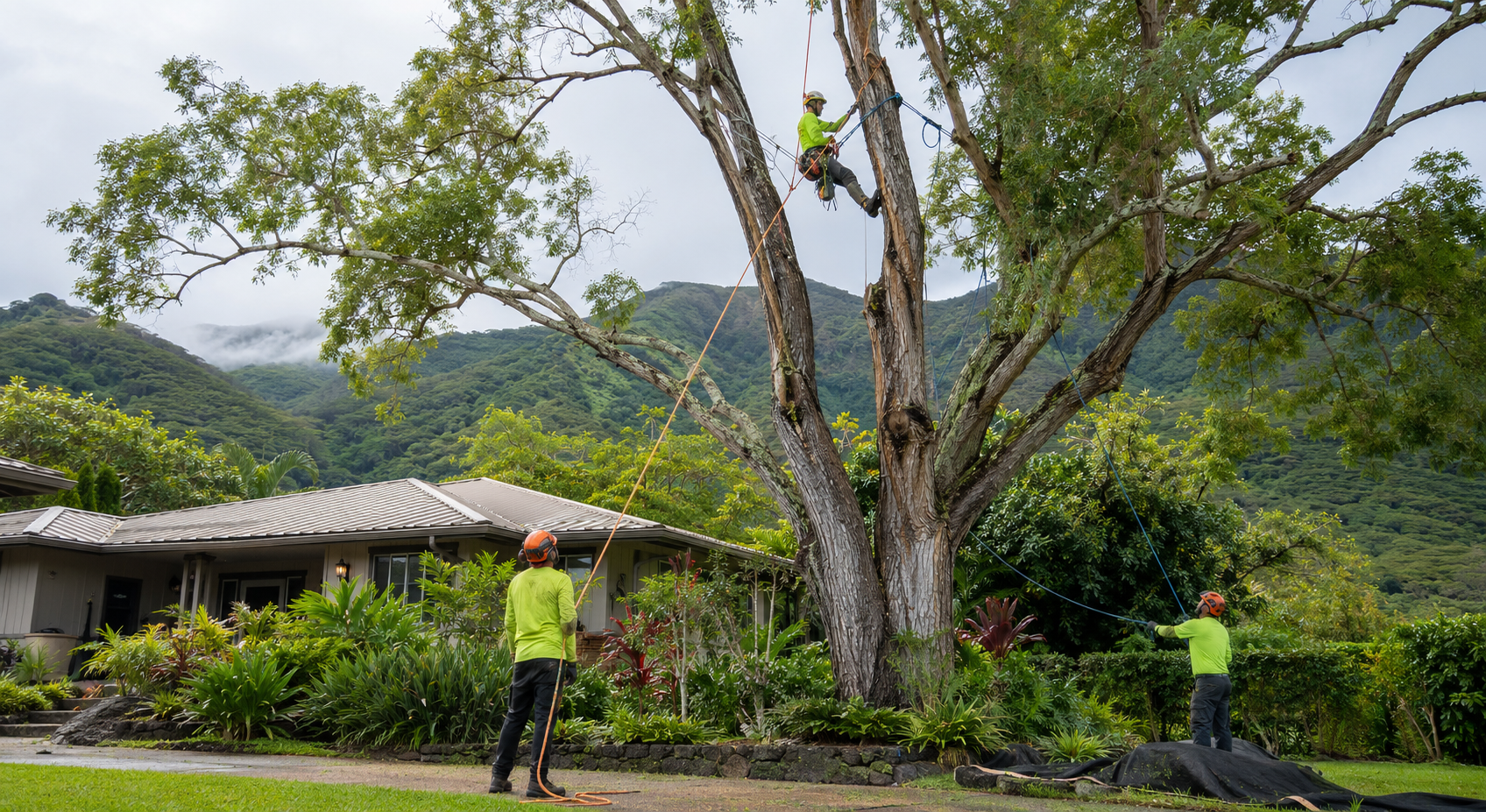
Coconut tree removal in Oahu requires proper equipment and technical rigging when the tree is near structures, which is the case for most residential properties on the island. It is not a job for an untrained crew with a chainsaw. Our tree removal services in Honolulu cover the full range from straightforward removals in open space to complex technical rigging jobs in tight lots where precision and safety are critical. If you are unsure whether a tree on your property needs to come down, the most useful first step is an honest on-site evaluation — not a decision made from a photo or a description over the phone.

Written By:
Domenique Bomediano
Landscape & Tree Care Educational Content Writer
Domenique Jose Bomediano creates research-based content focused on tree care, landscape management, and environmental property concerns. By combining arborist-backed practices, regional considerations, and practical homeowner needs, he helps readers better understand how to maintain safer, healthier outdoor spaces.