Common Mistakes to Avoid When Caring for Koa Trees in Oahu
The Safer Approach
Koa trees in Oahu are best protected through restrained, site-specific care. Avoid overwatering, topping, excessive pruning, heavy fertilization, root-zone damage, poor planting locations, and delayed responses to dieback or disease symptoms. Preserving adequate space, drainage, healthy roots, and a natural canopy supports long-term stability.
Koa is one of Hawaiʻi’s most important native trees, but it is easy to damage through well-intended maintenance. Homeowners often assume that more water, fertilizer, and pruning will produce a healthier tree. Those habits can instead create stress, decay, weak growth, and safety concerns.
Anyone comparing
tree trimming services in Hawaii should understand that koa requires conservative, species-specific care shaped by Oahu’s rainfall, soils, elevation, and exposure. Because koa can become a very large tree, mistakes made during planting or early care may become increasingly difficult to correct as the tree matures.
Treating Koa Like an Ordinary Landscape Tree
At Oahu Tree Trimming and Removal Services, more than eight years of hands-on tree work across the island has shown why koa should not be maintained according to a generic schedule. Standardized pruning, lawn irrigation, and rushed landscaping decisions can weaken trees that might otherwise remain sound.
Conditions also differ between humid neighborhoods near the Koʻolau Range and hotter, drier leeward properties, so care must respond to the individual site.
Tree age, drainage, wind exposure, root condition, nearby construction, and recent weather should guide every decision. A fixed maintenance calendar may be convenient, but convenience alone is not a sound basis for koa care.
Planting in a Poor Location
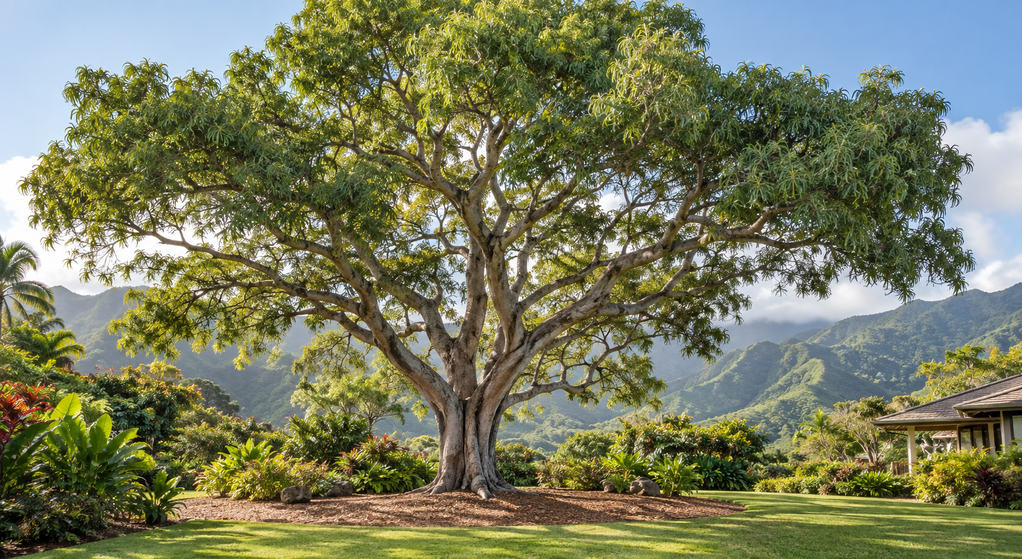
Koa needs room to mature. Its canopy and root system can become substantial, which makes planting location an important long-term decision. The tree generally performs best where it has adequate sunlight, drainage, overhead clearance, and space for roots to develop without repeated disturbance.
Planting close to a house, retaining wall, driveway, utility line, or narrow property boundary can create future conflicts. Those problems may not be obvious while the tree is young, but an expanding canopy and root system can eventually interfere with structures or create the need for repeated corrective pruning.
Choose the location according to the mature tree rather than the size of the seedling. Consider sunlight, drainage, overhead clearance, nearby structures, and available root space before planting.
For additional guidance, learn more about growing a koa tree from seed and selecting a suitable planting site from the beginning.
Overwatering and Ignoring Drainage
Koa needs moisture during establishment, but constantly saturated soil can create problems. Young trees require closer monitoring because their developing root systems have less access to surrounding soil. Established trees should be watered according to rainfall, soil moisture, drainage, and visible condition rather than an automatic daily schedule.
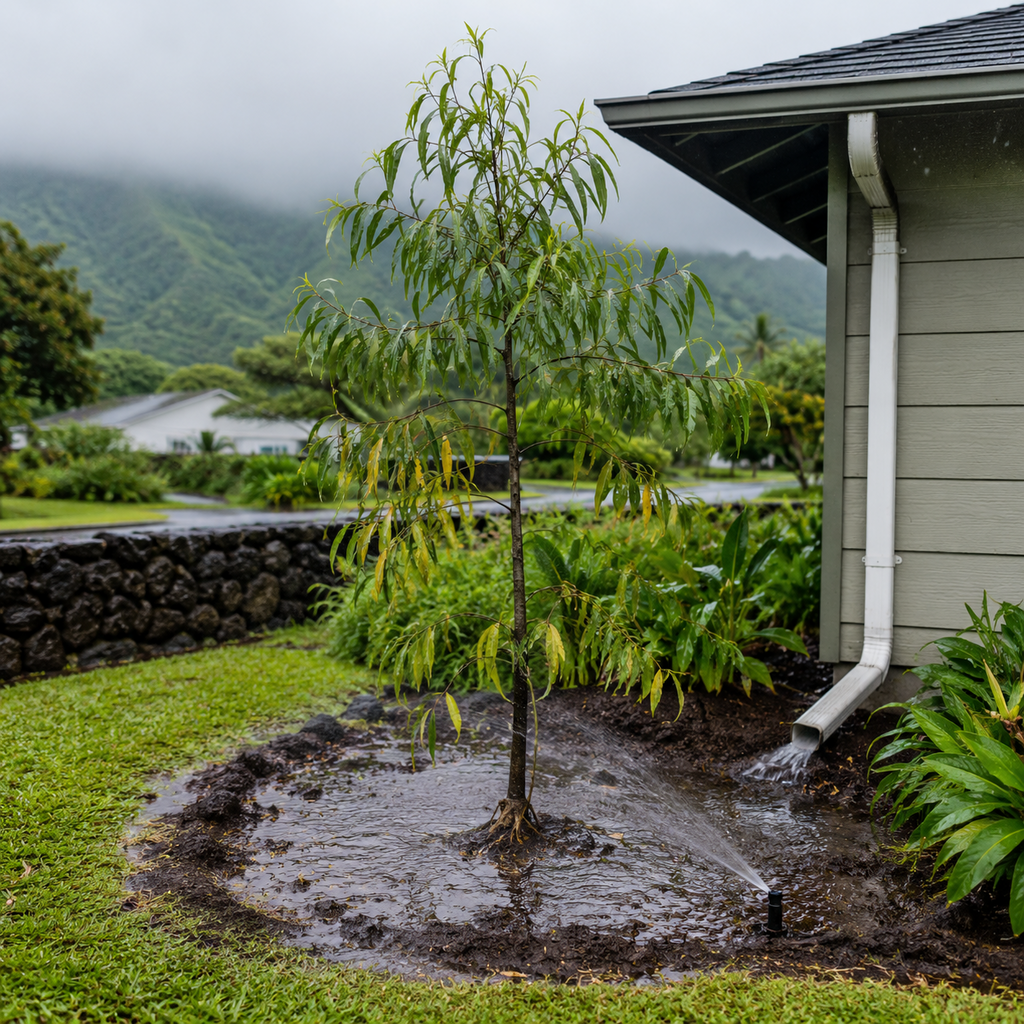
Poor drainage can be particularly misleading because root stress caused by excess moisture may resemble drought-related decline. Yellowing foliage, canopy thinning, and weak growth do not automatically mean a koa needs more water.
Before increasing irrigation, look for pooled water, nearby downspout discharge, compacted soil, or other conditions that may be keeping the root zone excessively wet.
Damaging or Compacting the Root Zone
Many koa problems begin below ground. Weed trimmers, mowers, vehicles, trenching, grade changes, construction activity, and heavy foot traffic can injure roots or compact the surrounding soil.
Damage near the trunk or major roots may interfere with the tree’s ability to absorb water, support the canopy, and remain securely anchored. Young trees can also develop long-term problems when roots are restricted or poorly positioned during planting.
Cutting roots for a walkway, utility line, driveway, or other improvement can reduce stability and limit the tree’s ability to support its canopy. Root pruning may sometimes be necessary, but it should not be treated as routine yard work.
Before cutting significant roots, consider their size, location, distance from the trunk, surrounding soil, tree lean, canopy weight, and the structural consequences of removing them.
Pruning Too Much or Topping the Tree
Topping is not an appropriate shortcut for controlling the size of a koa tree. Removing major portions of the canopy at once creates large wounds, disrupts the tree’s natural structure, and can produce fast regrowth with weaker attachments.
Aggressive pruning may also place additional stress on the remaining canopy and create future maintenance problems.
A better approach is selective structural pruning based on a clear reason for each cut. Dead, broken, rubbing, poorly attached, or structurally compromised branches may require attention, especially where they threaten roofs, walkways, driveways, or frequently used areas.
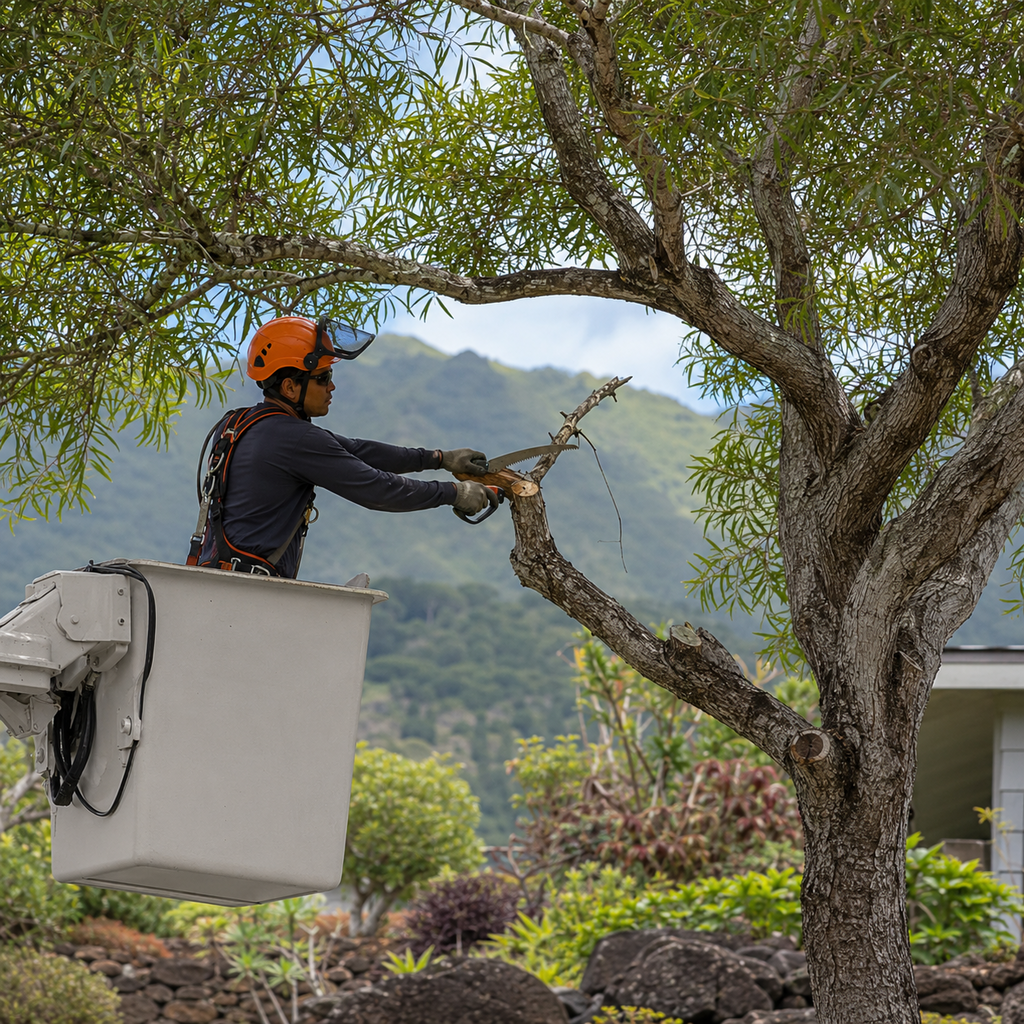
Healthy mature limbs should not be removed simply to make the canopy smaller or more symmetrical. The amount of living foliage removed, branch attachment, tree age, surrounding property, and overall canopy structure should all influence the pruning decision.
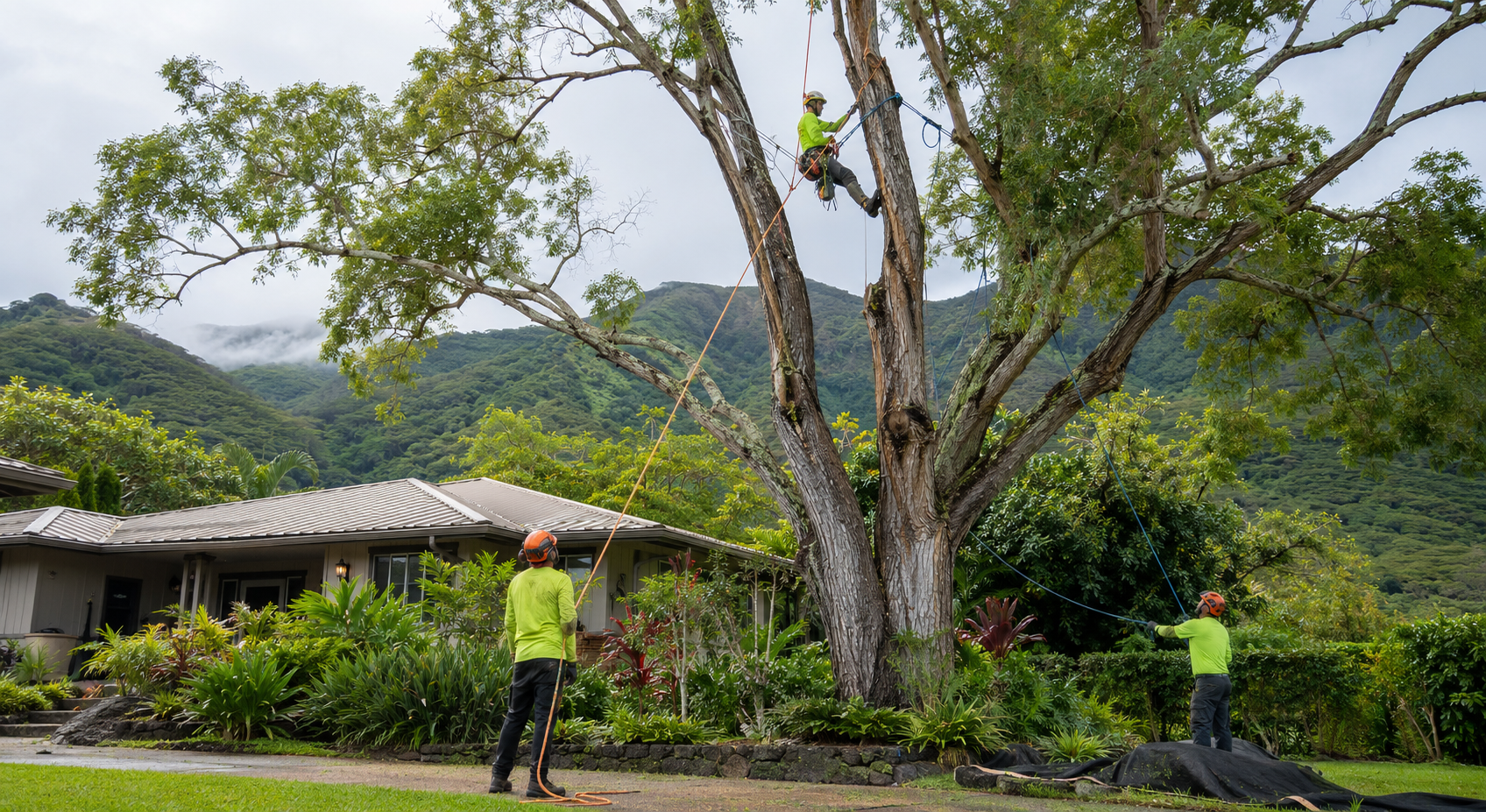
Improper rope placement, uncontrolled limb drops, flush cuts, and excessive canopy removal can damage both the tree and surrounding property.
For additional guidance, learn more about
koa tree trimming in Oahu before removing branches from a mature tree.
Misusing Mulch and Fertilizer
Mulch can help conserve moisture, moderate soil conditions, and reduce damage from lawn equipment, but it should not be piled against the trunk. Keeping the trunk flare visible reduces prolonged moisture contact around the base and makes it easier to notice developing problems.
Spread mulch across the surrounding root area instead of building a mound around the trunk.
Heavy fertilizer is another common mistake. Adding more fertilizer is not a reliable response to poor growth when the underlying problem may be compacted soil, drainage, root injury, planting conditions, or disease.
Excessive fertilization may encourage growth without correcting the condition that caused the tree to decline.
When a nutrient problem is genuinely suspected, soil or tissue testing provides a better basis for deciding what the tree needs than simply applying more fertilizer.
Ignoring Pests, Dieback, and Koa Wilt Symptoms
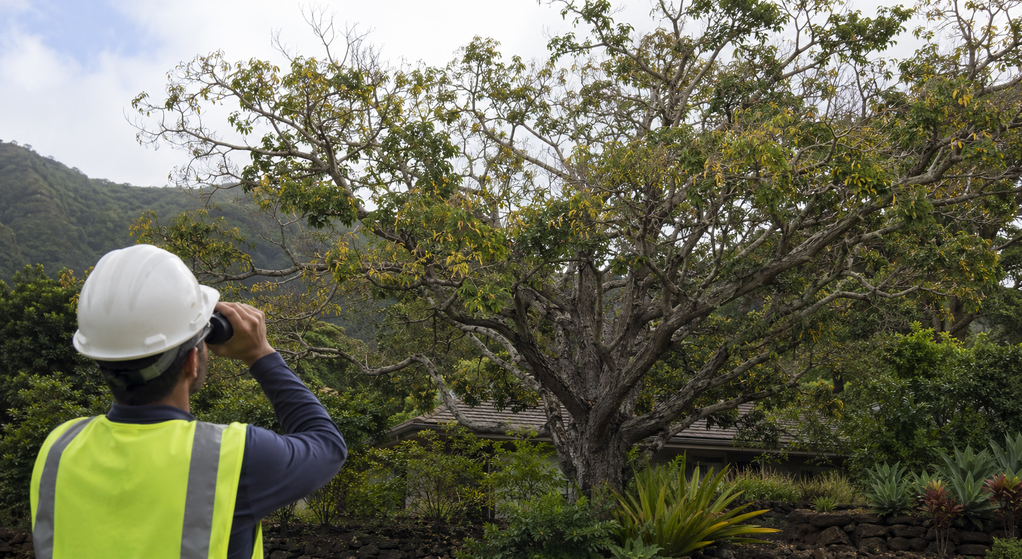
Sudden yellowing, wilting on one part of the canopy, rapid thinning, dark staining in the sapwood, unusual sap discharge, and progressive dieback deserve attention. Koa wilt is a serious disease associated with soil-borne Fusarium fungi and has been observed on Oahu and other Hawaiian islands.
University of Hawaiʻi Forestry Extension guidance on koa wilt
notes that affected trees may develop yellowing or wilting, canopy dieback, dark staining, and other signs of vascular decline. The guidance also makes an important distinction: not every unhealthy koa has koa wilt. Root damage, poor planting conditions, restricted soil, drought stress, insects, and other diseases can produce similar symptoms.
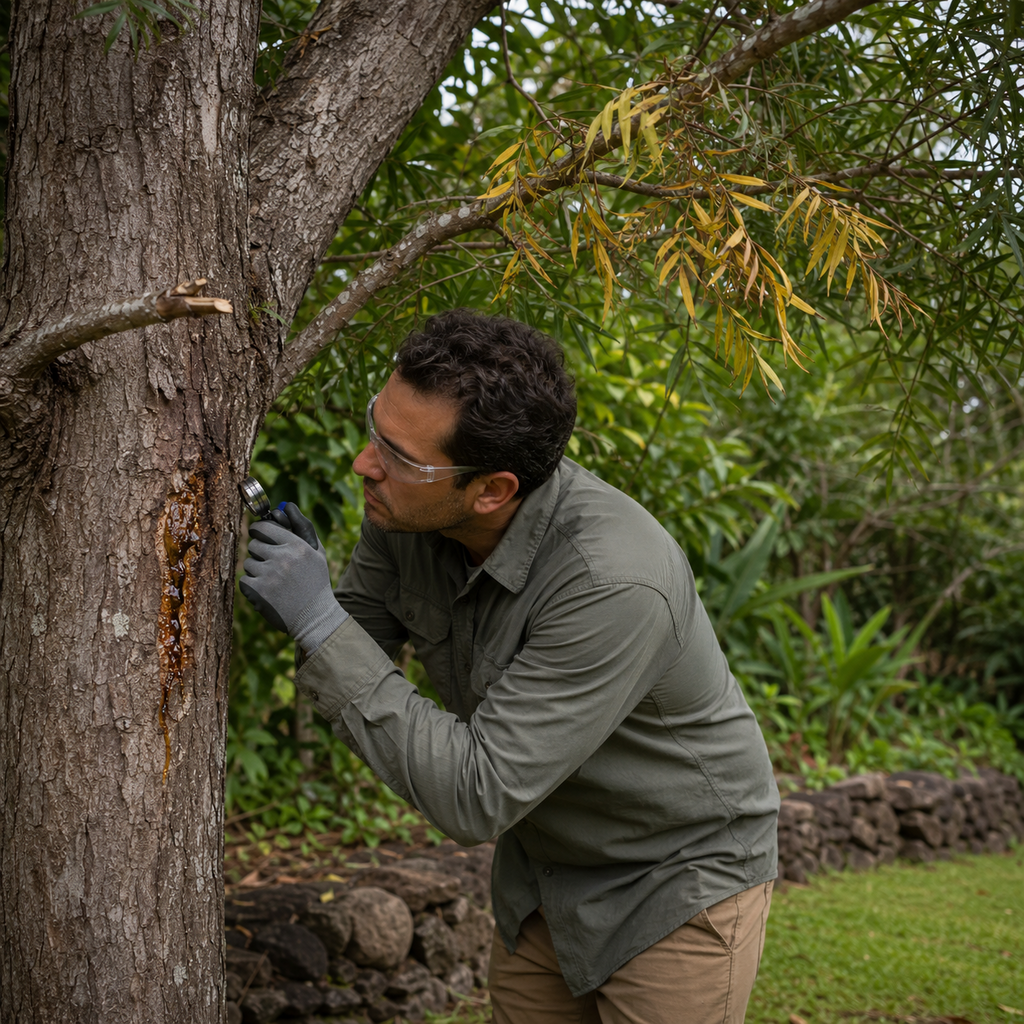
That distinction matters.
Applying fungicide, increasing irrigation, or removing major limbs without understanding the cause can waste time and potentially increase stress on the tree. When koa wilt is suspected, contaminated soil and plant material should also be handled carefully, and tools used around an affected tree should be cleaned before they are used elsewhere.
Diagnosis should come before treatment.
The Smarter Approach to Koa Care
The best koa care is restrained, observant, and site-specific. Protect the roots, water according to actual conditions, preserve a natural canopy, and investigate sudden changes before choosing a treatment.
When large branches, advanced dieback, construction damage, root disturbance, or stability concerns are present, arrange a professional assessment rather than experimenting with aggressive pruning or treatment.
A healthy koa should not require constant intervention. It needs adequate space, suitable soil and drainage conditions, careful pruning, root protection, and early attention when something changes.
Those practices give Oahu property owners a clearer path toward preserving a safer, stronger native tree.

Written By:
Kurt Manalastas
Environmental Property Care Content Writer
Kurt produces research-driven content centered on tree care, landscaping, and environmental property management. Drawing from arborist-informed practices, site-specific conditions, and practical homeowner concerns, he provides clear, actionable guidance to help readers maintain safer, healthier, and more sustainable outdoor environments.