Why Koa Trees in Oahu Should Not Be Treated Like Ordinary Yard Trees
Specialized Care Matters
Koa trees in Oahu require species-specific care because their native value, large mature size, sensitive roots, pruning needs, and vulnerability to disease set them apart from ordinary yard trees. Conservative pruning, root-zone protection, site-aware maintenance, and careful risk assessment help preserve both the tree and surrounding property.
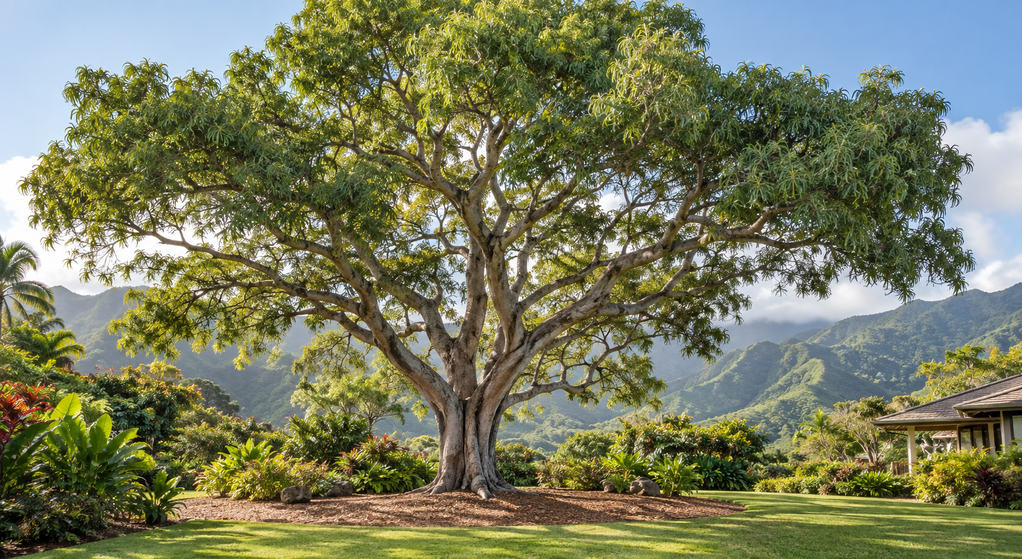
Koa trees should not be managed according to the same assumptions used for ordinary landscape trees. Their endemic status, mature size, cultural significance, species-specific health risks, and sensitivity to disturbance mean that routine yard-maintenance practices can have much larger consequences.
Anyone hiring a tree trimming service in Hawaii for a koa tree should expect more than basic branch cutting. Species identification, structure, root condition, growing environment, surrounding property, and long-term health should influence whether pruning is appropriate and how much intervention the tree can tolerate.
On Oahu, this distinction matters whether a koa is growing in a residential yard, rural property, restoration area, or near native forest. The goal is not to make koa care unnecessarily complicated. It is to avoid applying generic maintenance schedules and landscaping assumptions to a tree that requires more deliberate decision-making.
Koa Has a Different Place in Hawaii’s Landscape
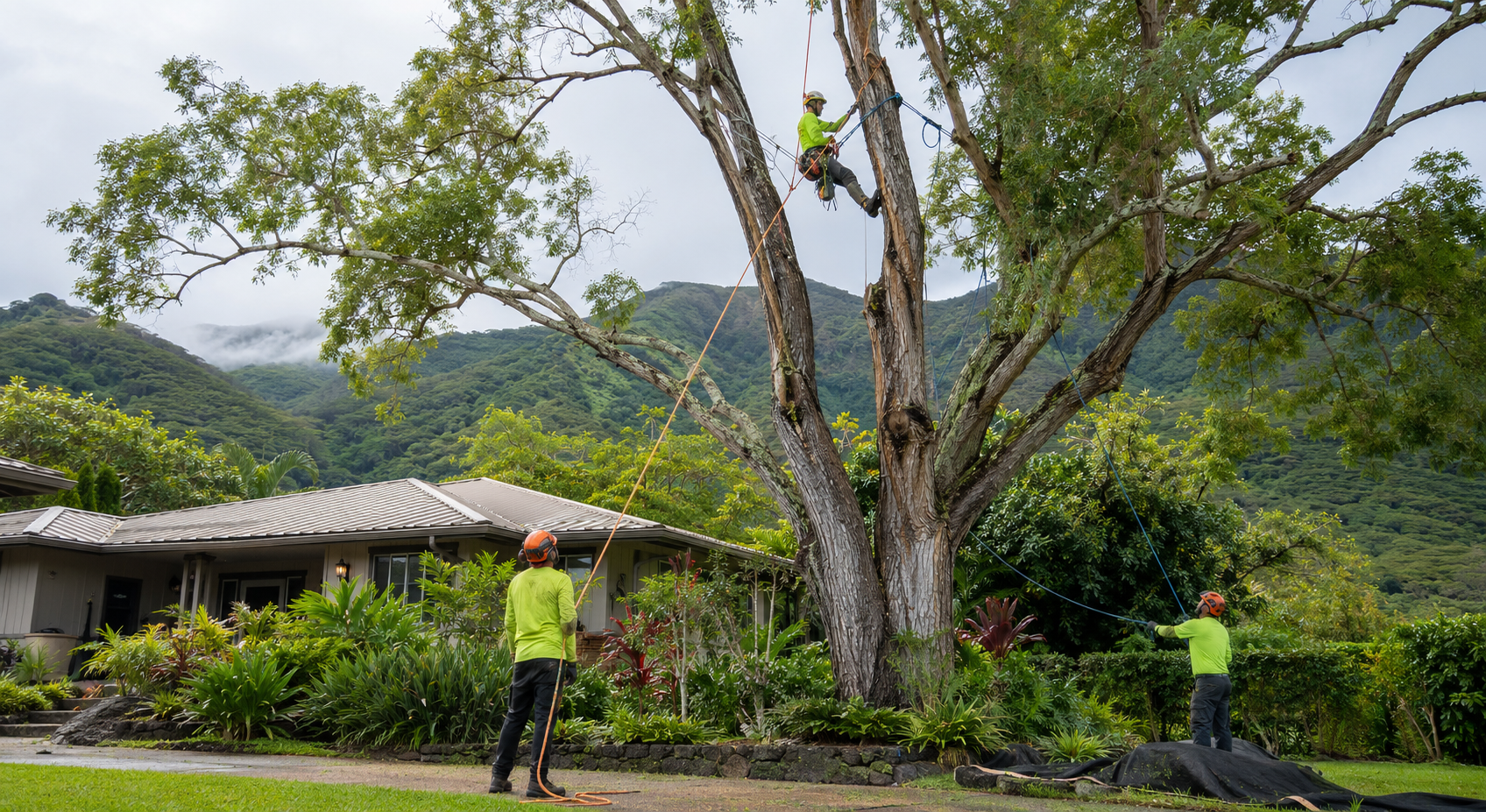
Through years of climbing, pruning, and managing trees across the island, Oahu Tree Trimming and Removal Services has seen why species identification should come before tree work begins. A maintenance approach that may be tolerated by a common ornamental tree can be inappropriate for koa because the consequences of structural damage, root disturbance, or unnecessary removal extend beyond appearance.
Koa is endemic to the Hawaiian Islands. It is also deeply connected to Hawaiian history and culture, with traditional uses that included voyaging canoes, surfboards, tools, and other important objects.
That background does not mean every koa must remain untouched. It does mean decisions involving pruning, construction, or removal deserve more consideration than routine cosmetic yard maintenance.
The first question should not be, “How can we make this tree smaller?” It should be, “What does this particular koa actually need, and what are the consequences of intervening?”
Koa Roots Make Ordinary Landscaping Decisions More Consequential
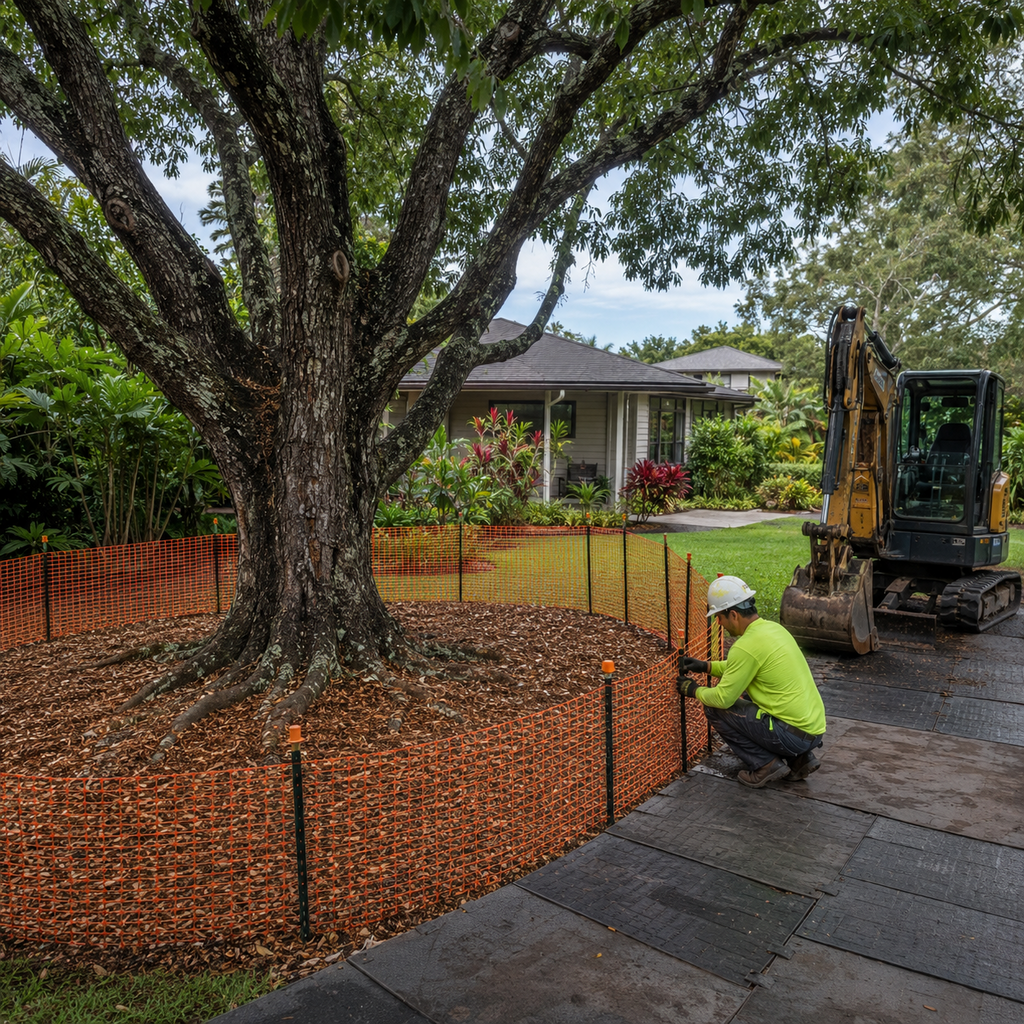
For many landscape trees, homeowners may think of trenching, driveway work, grade changes, or soil compaction as separate property-improvement issues. Around a mature koa, those activities can become part of the tree-care decision because they may disturb roots that support both health and structural stability.
Roots can be damaged by excavation, trenching, concrete installation, vehicle traffic, changes in soil grade, and repeated contact with lawn equipment. A tree may continue to look healthy for some time after disturbance, which can make root damage easy to underestimate.
Young koa can also develop long-term problems when roots are restricted or poorly positioned during establishment. This is another reason a koa should not simply be fitted into whatever space remains after other landscaping decisions have been made.
The practical difference is that work near a koa should account for the tree before equipment, paving, or excavation enters the root area. Protecting the root zone is not an optional landscaping preference; it is part of preserving the tree’s long-term stability.
Koa Pruning Is Not Routine Size Control
Ordinary yard trees are often pruned primarily for shape, clearance, or size control. Koa requires a more restrained approach because removing large amounts of living canopy can alter structure, create major wounds, and place the tree under unnecessary stress.
Proper koa pruning should begin with a specific reason for the cut. That may include removing deadwood, addressing a weak attachment, improving necessary clearance, or reducing a legitimate safety concern.
Young koa may benefit from selective structural pruning that helps establish stronger future growth. Mature trees usually require a more conservative approach because large cuts permanently alter canopy structure and weight distribution.
Property owners should review important considerations before trimming a koa tree in Oahu to understand how tree age, branch condition, attachment, canopy structure, and surrounding property should influence pruning decisions.
The difference from ordinary cosmetic trimming is important: a koa should not be repeatedly reduced simply because its natural size has become inconvenient. If the tree was planted in an unsuitable location, continual aggressive pruning may create a new structural problem rather than solve the original space conflict.
Koa Wilt Adds a Species-Specific Health Concern
Another reason koa cannot be treated like an ordinary yard tree is the presence of Koa-specific disease concerns.
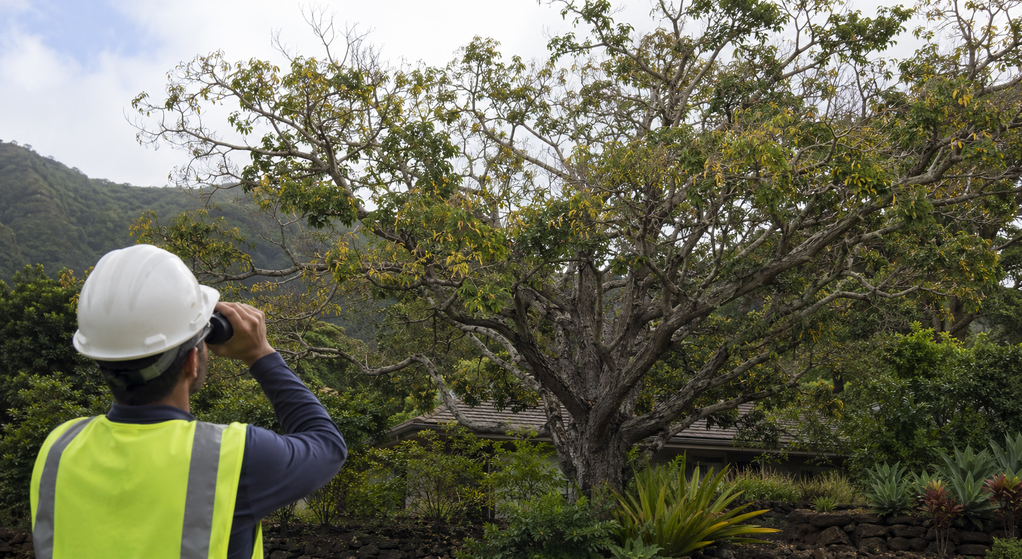
Koa wilt is associated with soil-borne Fusarium fungi and can interfere with the tree’s vascular system. Possible symptoms include yellowing or wilting, rapid canopy decline, dark staining in affected wood, bark problems, and progressive dieback.
University of Hawaiʻi Forestry Extension guidance on koa wilt also makes an important point: similar symptoms can result from other causes, including root injury, planting problems, restricted soil, drought stress, insects, and other diseases.
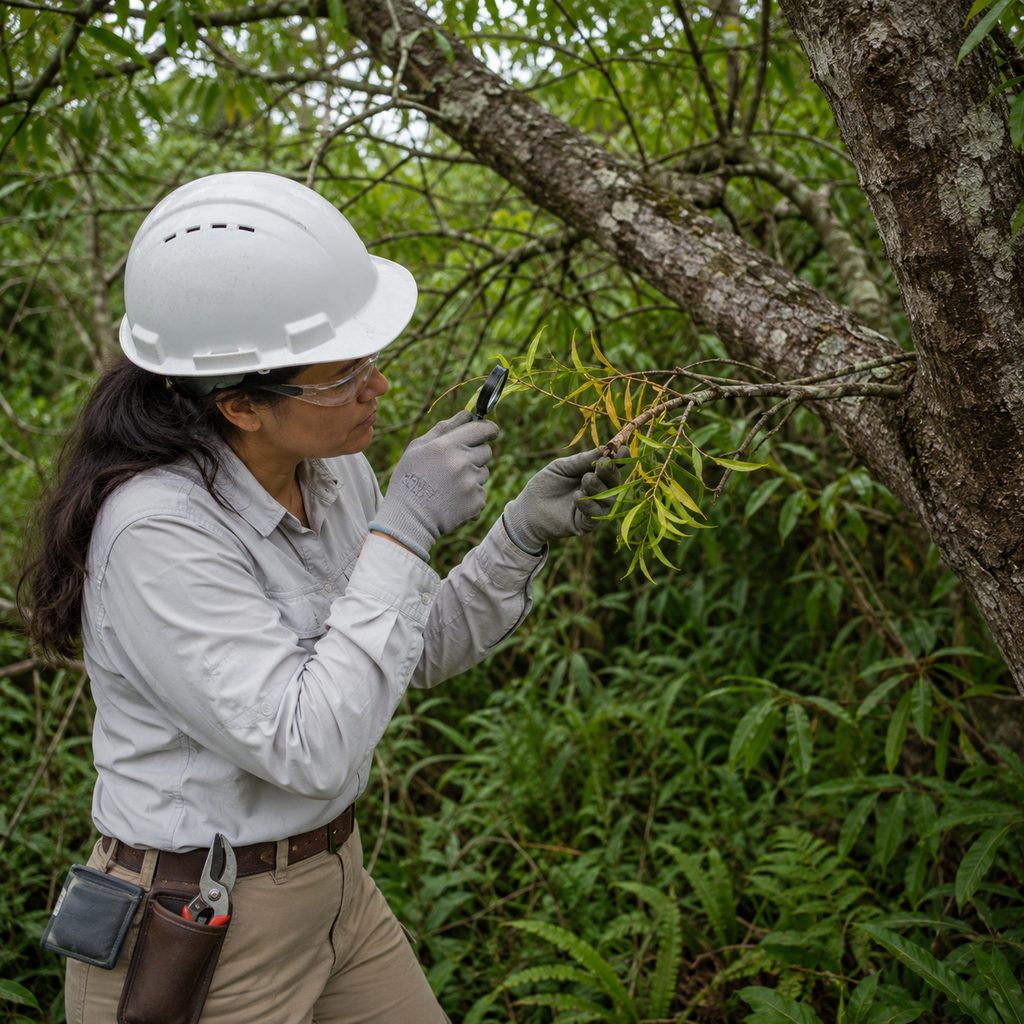
That distinction matters because the first visible symptom should not automatically determine the treatment. Cutting off a discolored branch, adding more water, or assuming the tree must be removed can all be premature responses when the underlying cause has not been identified.
For this article, the key takeaway is not how to diagnose every form of koa decline. It is that species-specific disease risk gives property owners another reason to evaluate the whole tree before treating it like an ordinary landscape problem.
Oahu’s Conditions Make Generic Maintenance Schedules Unreliable
A generic yard-maintenance calendar assumes that similar trees need similar care at similar times. Koa on Oahu does not fit neatly into that model.
A tree growing in wetter Windward Oahu may experience very different moisture and drainage conditions from one growing in a hotter, drier leeward area. Soil depth, elevation, wind exposure, surrounding vegetation, irrigation, and nearby development can further change how the tree responds.
That means a watering or fertilizing schedule that works in one neighborhood may be inappropriate in another.
A koa growing in shallow urban soil beside pavement may face different pressures from a koa growing on a larger rural property. Likewise, a tree exposed to strong wind or repeated construction activity may require different monitoring from one growing in a protected location.
The important distinction is that koa care should respond to actual site conditions rather than automatically follow a lawn or ornamental-tree maintenance routine.
Koa’s Value Changes the Preservation Decision — But Does Not Eliminate Safety Concerns
Koa’s native and cultural importance gives preservation more weight in the decision-making process, but it does not mean every tree can or should remain in place regardless of condition.
A koa with manageable defects may be preserved through selective pruning, monitoring, clearance management, or root-zone protection. In those situations, removing the entire tree simply because it has one damaged limb or visible defect may be unnecessarily aggressive.
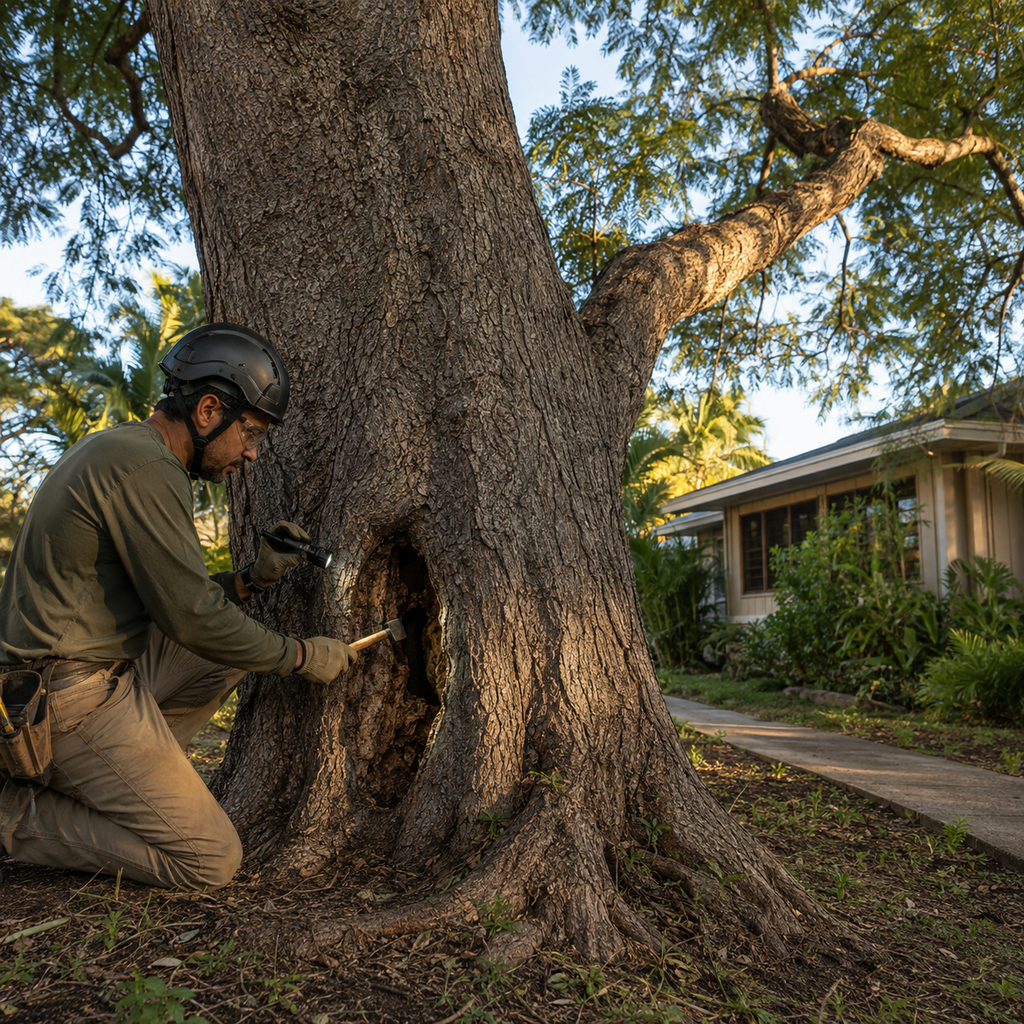
However, preservation should not override legitimate structural risk.
A tree with severe trunk decay, major root failure, unstable soil, or compromised limbs may threaten a home, road, utility area, neighboring property, or frequently occupied space. When those risks cannot be reduced to an acceptable level through responsible treatment, removal may become the safer option.
This is where koa differs from both extremes. It should not be treated as a disposable yard tree, but it should not be preserved automatically simply because it is koa.
The decision should account for the tree’s condition, native value, structural defects, surroundings, and consequences if failure occurs.
Give Koa the Specialized Consideration It Deserves
Oahu homeowners should arrange a professional evaluation when a koa develops sudden canopy thinning, hanging or broken branches, trunk cracks, unusual leaning, disturbed soil around its roots, or possible disease symptoms.
The assessment should look at the tree as a complete system rather than focusing only on the most visible defect.
The central takeaway is straightforward: koa deserves species-specific decision-making because it is not an ordinary ornamental tree. Its roots, natural size, pruning response, native significance, disease risks, and growing environment all change how property owners should think about maintenance.
Protecting a koa does not mean avoiding every intervention. It means using intervention for a clear reason, understanding the consequences, and balancing preservation with the safety of the people and property around it.
Homeowners planning to establish a new koa can also follow a step-by-step guide to growing a healthy koa tree so species-specific considerations begin at planting rather than after problems develop.

Written By:
Kurt Manalastas
Environmental Property Care Content Writer
Kurt produces research-driven content centered on tree care, landscaping, and environmental property management. Drawing from arborist-informed practices, site-specific conditions, and practical homeowner concerns, he provides clear, actionable guidance to help readers maintain safer, healthier, and more sustainable outdoor environments.