Koa Tree Removal in Oahu: Safety, Preservation, and Property Protection
The Responsible Approach
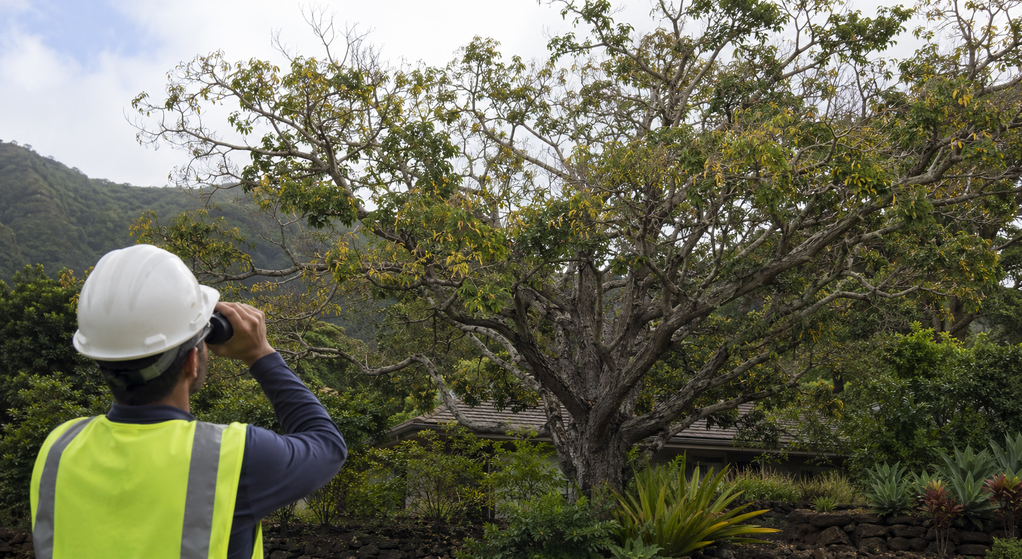
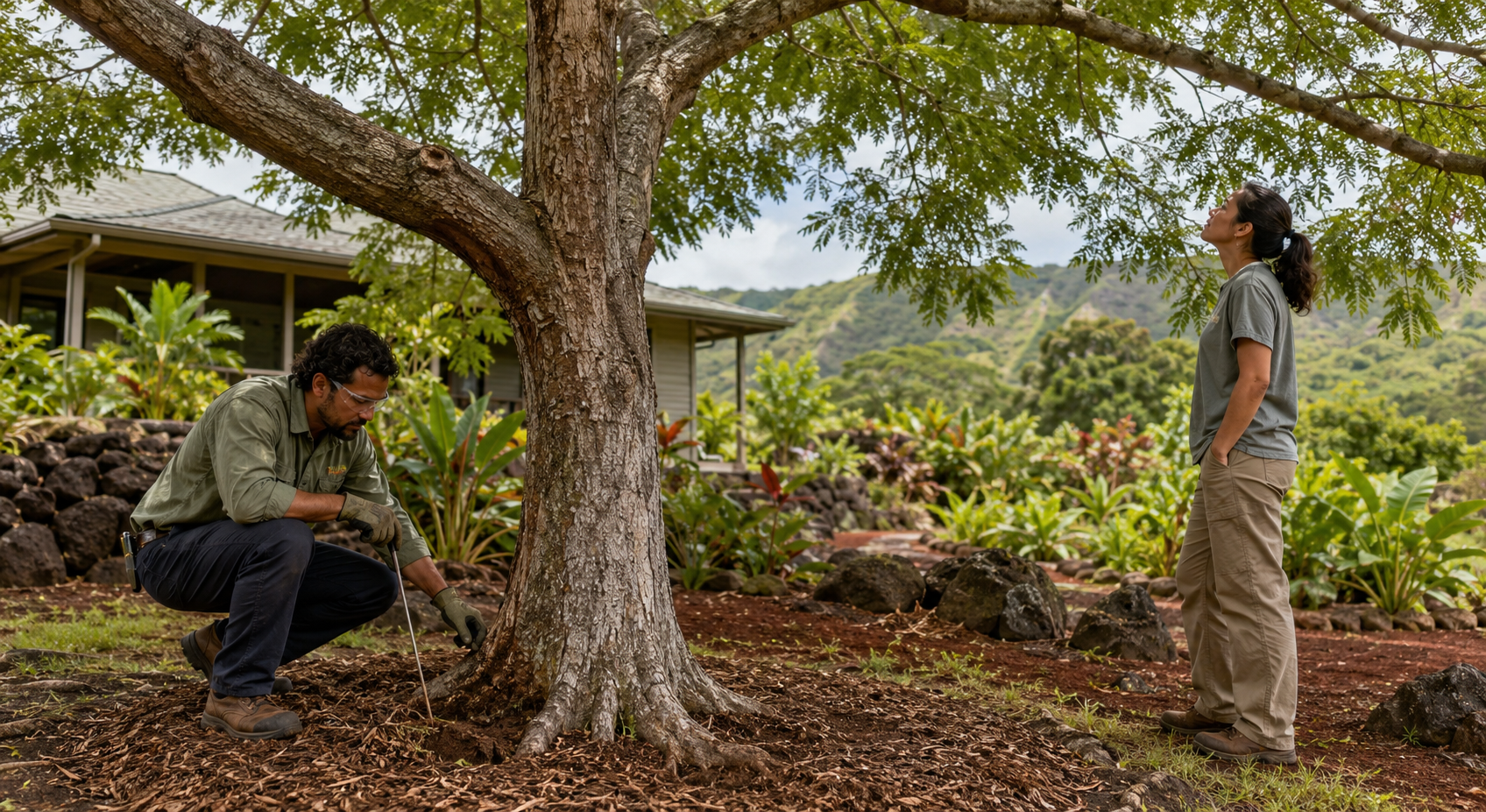
Koa tree removal in Oahu should begin with a professional assessment, not an automatic decision to cut. Healthy or manageable trees should be preserved, while dead, unstable, severely decayed, or high-risk trees may require controlled removal that accounts for regulations, disease prevention, limited access, and surrounding property.
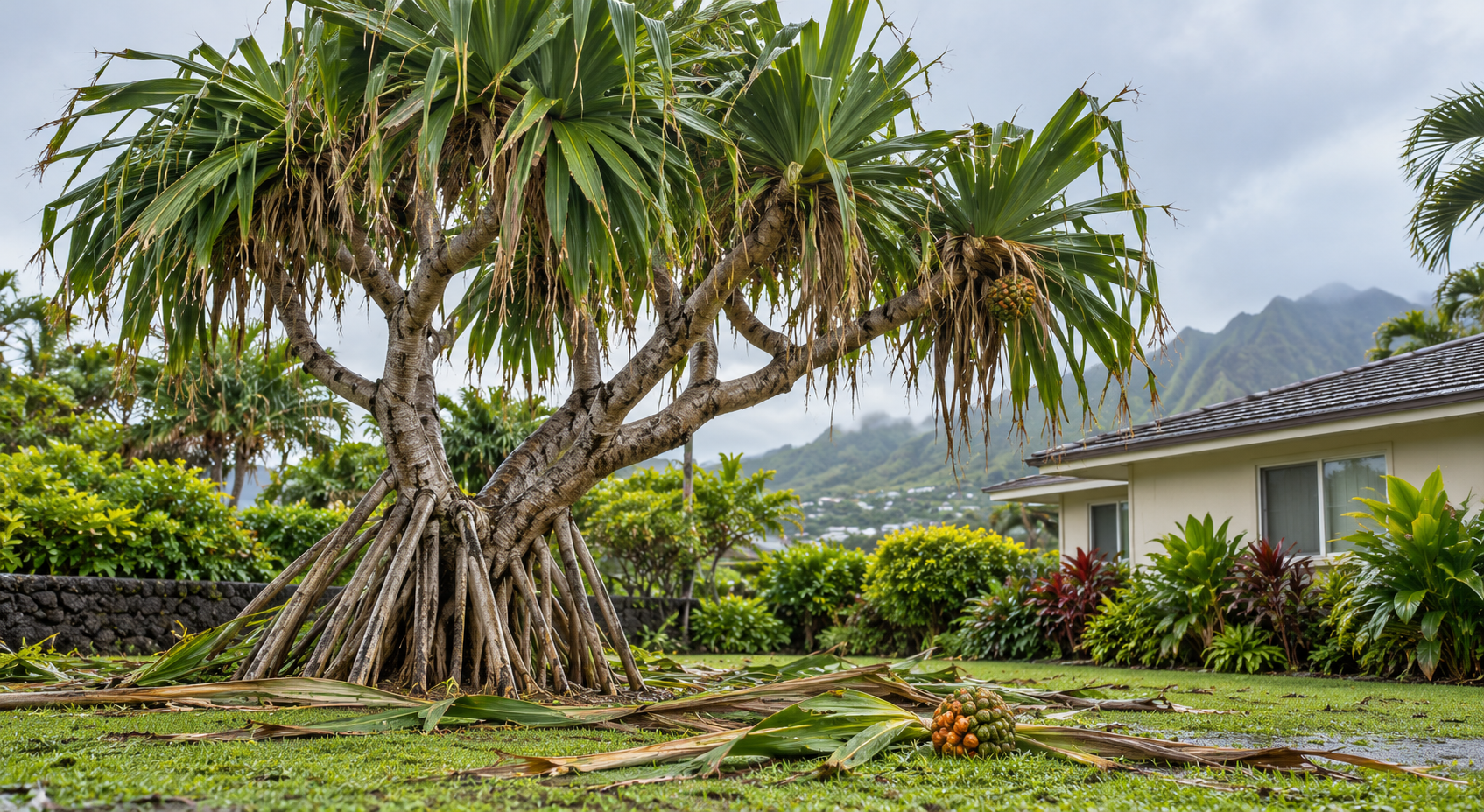
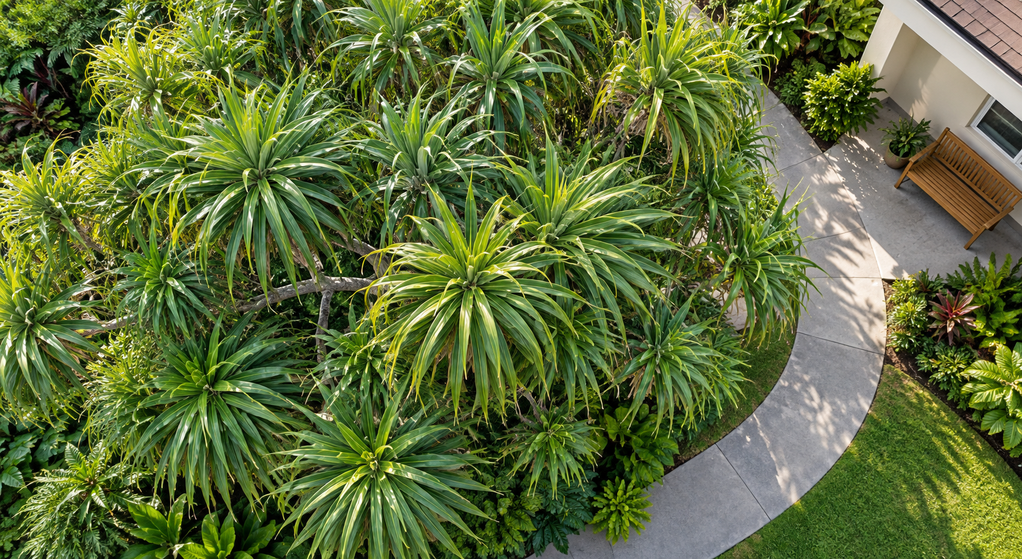
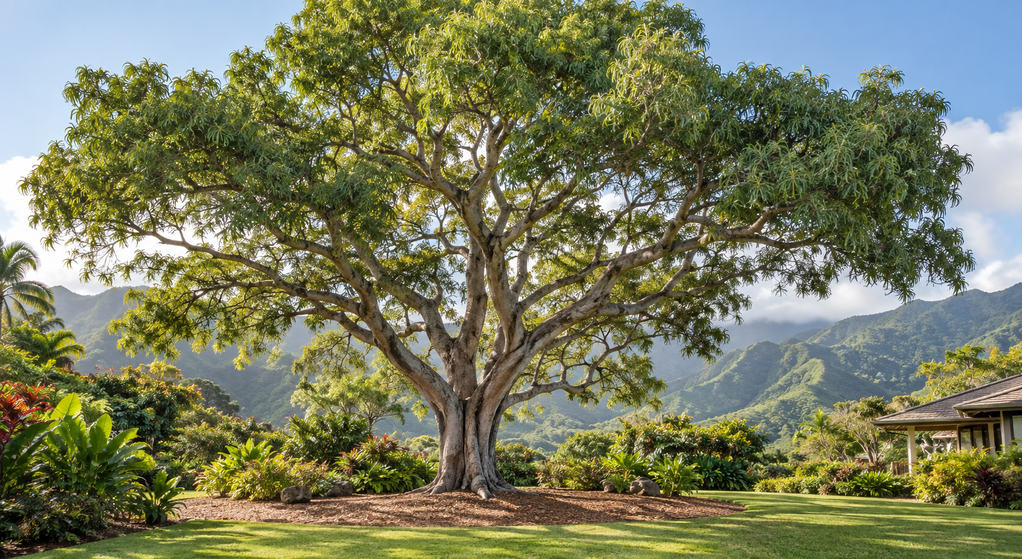
Koa is one of Hawaii’s most important native trees, valued for its role in native forests, cultural significance, and distinctive wood. That value makes removal a decision that deserves more care than an ordinary landscaping choice. Property owners considering tree removal services in Hawaii should begin with a professional assessment because a declining canopy, leaning trunk, or exposed root does not automatically mean a koa tree must come down.
The responsible position is clear: preserve a healthy koa whenever its risks can be managed, but do not delay removal when structural failure could injure someone or damage a home. Koa forests support native wildlife, watersheds, and soil health, so unnecessary removal should be avoided. Preservation should never become an excuse for leaving a dangerous tree beside an occupied structure.
Determine Whether Removal Is Truly Necessary
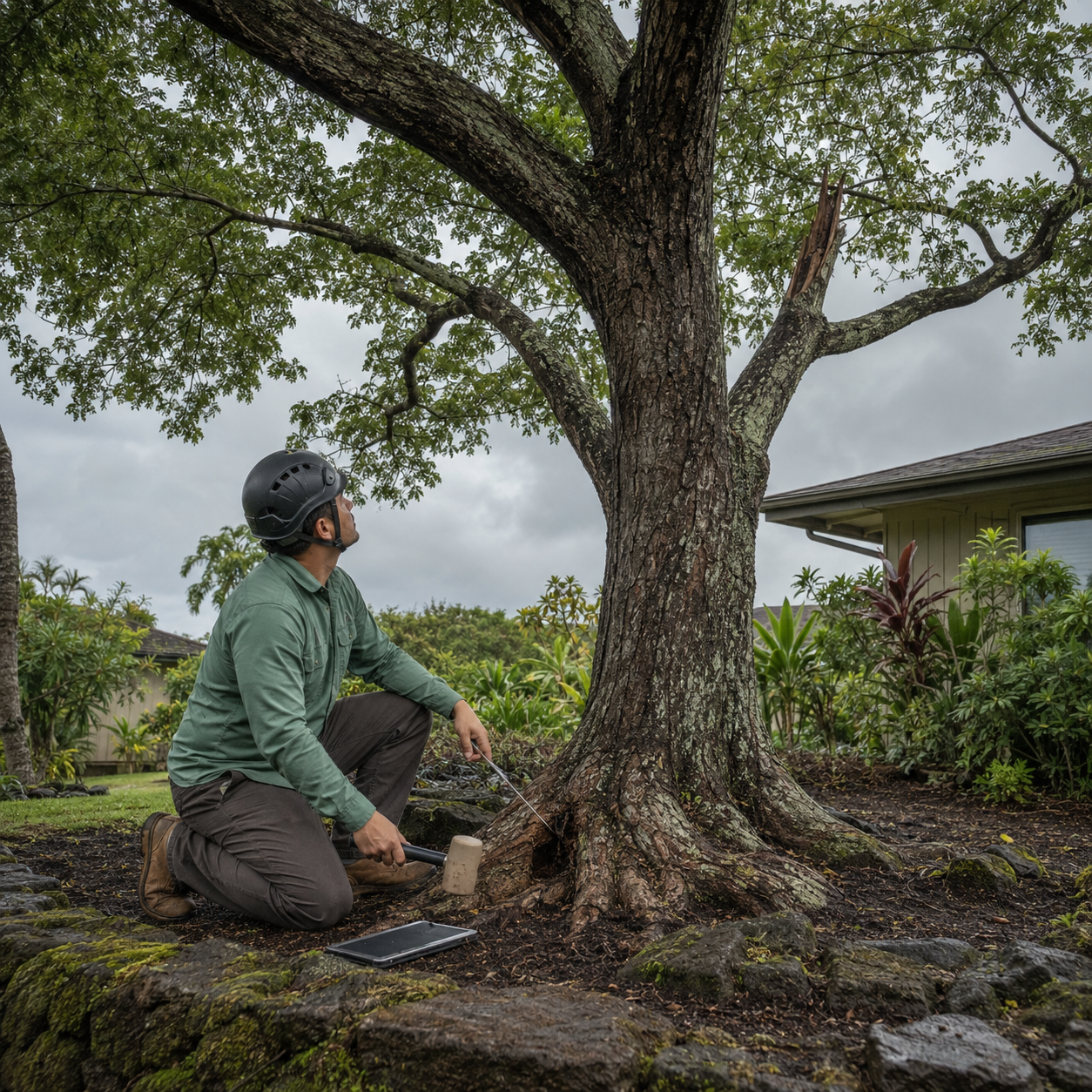
Through tree removal work across Oahu, Oahu Tree Trimming and Removal Services has seen property owners assume that every hollow, lean, or dead branch requires complete removal. That conclusion is often premature. A proper assessment considers the trunk, root flare, major unions, canopy condition, soil movement, nearby targets, and the consequences if part of the tree fails.
Removal becomes reasonable when the tree is dead, rapidly declining, uprooting, severely storm-damaged, or affected by extensive decay in load-bearing wood. It may also be necessary when large limbs hang over bedrooms, driveways, utility areas, retaining walls, or frequently used outdoor spaces and corrective pruning cannot reduce the risk enough.
The tradeoff matters. Keeping a structurally compromised tree may expose the property to preventable damage, while removing a recoverable tree eliminates shade, habitat, landscape value, and years of growth. The assessment should determine whether the defect can be isolated or affects the whole tree.
Consider Preservation Before Full Removal
Selective pruning, structural trimming, support systems, root-zone protection, and scheduled monitoring may allow a koa tree to remain safely. Removing one damaged leader or reducing weight on an overextended limb can be more appropriate than full removal.
Aggressive topping is a poor substitute for proper pruning. We have seen over-topped trees in Hawaii produce fast, weakly attached growth that creates a larger maintenance problem later. Heavy root cutting can also reduce stability and interrupt water uptake. Root pruning should account for root size, distance from the trunk, soil conditions, and the canopy supported by the remaining roots.
Koa pruning should remain conservative and purposeful. Large or unnecessary cuts can create additional stress, alter canopy balance, and leave injuries that become more difficult to manage as the tree matures.
Check Ownership, Location, and Tree Status
Before pruning or removing a koa tree, confirm who owns or manages the tree and whether any protected designation applies. A tree located beside a street, within a planting strip, or near a public right-of-way should not automatically be treated as an ordinary privately managed yard tree.
The City and County of Honolulu Exceptional Tree Program requires an approved permit before pruning a designated Exceptional Tree. City-managed street trees and other trees affected by public-property requirements may also require review or authorization before work proceeds.
This does not mean every privately owned koa requires a special tree-work permit. Requirements can depend on the tree’s ownership, location, protected status, property conditions, and the type of work being proposed. Property owners should verify the tree’s status with the appropriate City office before significant pruning or removal begins rather than relying on assumptions about where the tree appears to be located.
Plan the Removal Around Oahu Property Conditions
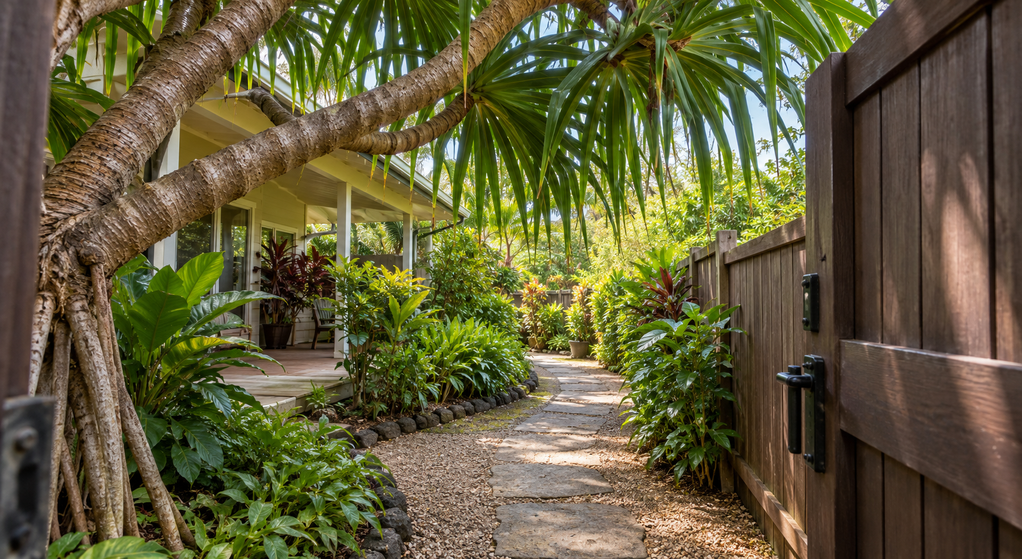
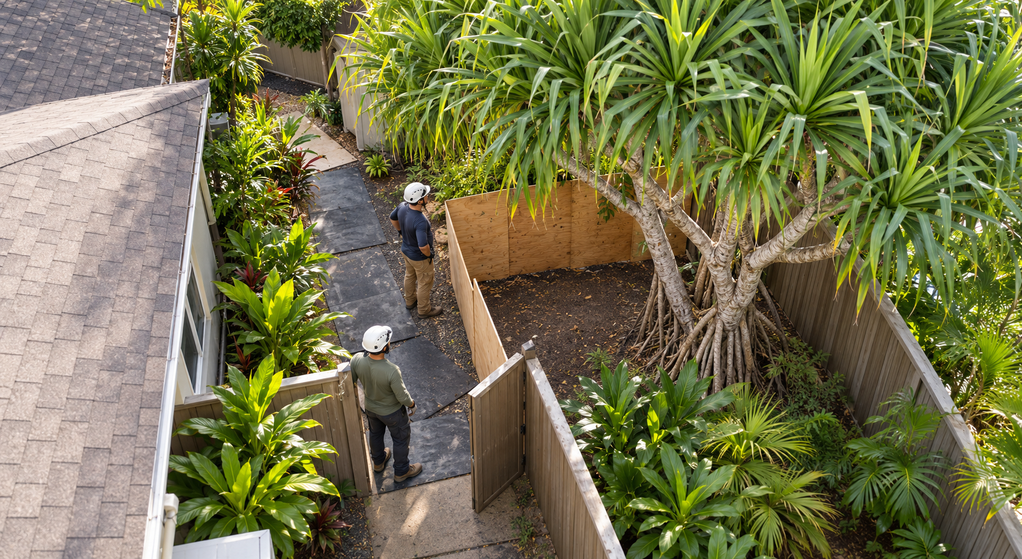
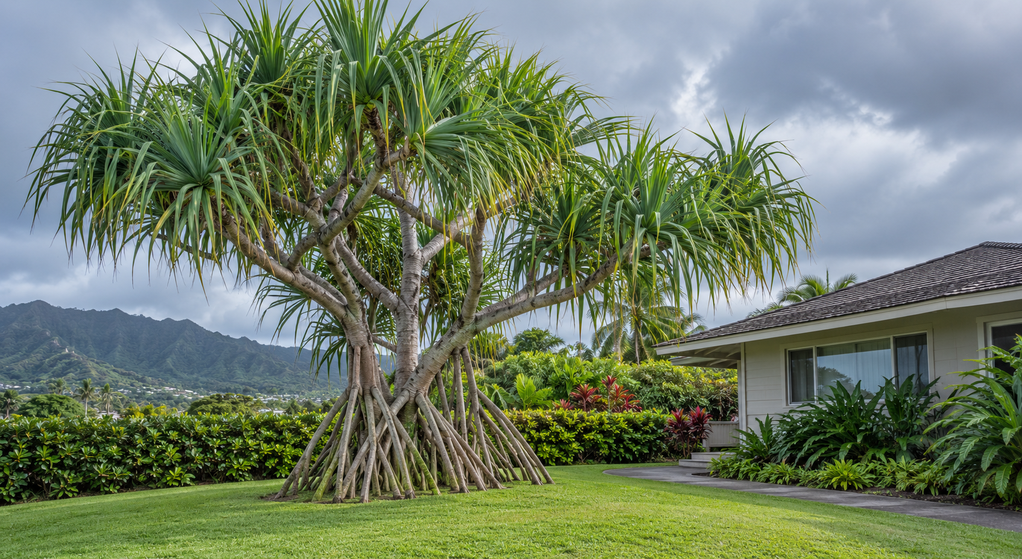
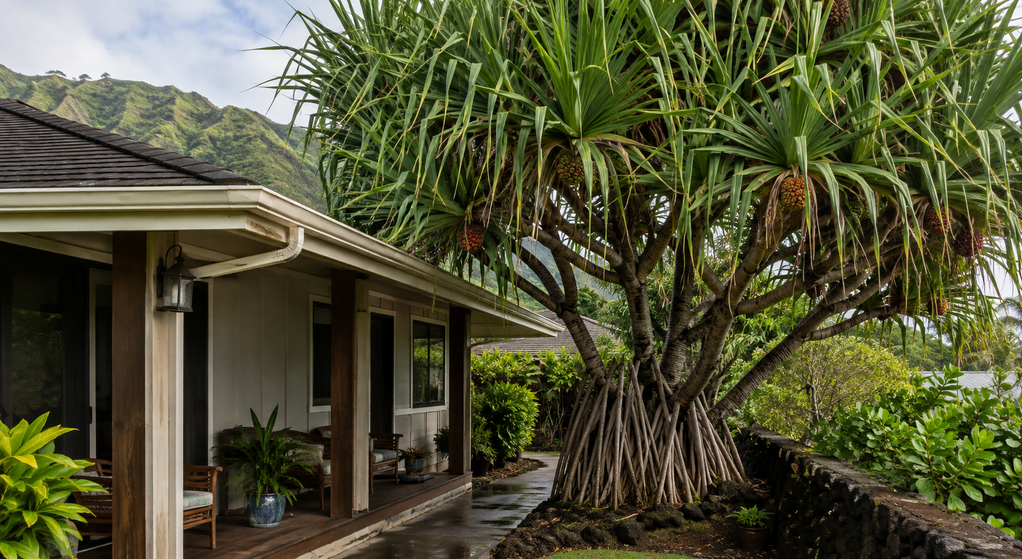
Oahu properties often provide little room for uncontrolled felling. Homes may sit close together, slopes may restrict equipment access, and roofs, fences, solar panels, utility lines, and tropical landscaping may surround the tree. Windward Oahu’s wet conditions can also soften access routes and increase soil disturbance. These challenges of tree trimming and removal in Honolulu make careful planning, controlled rigging, and site protection especially important.
Technical climbing and rigging are usually safer when there is no open drop zone. The canopy can be dismantled in controlled sections, with ropes and lowering systems managing each piece.
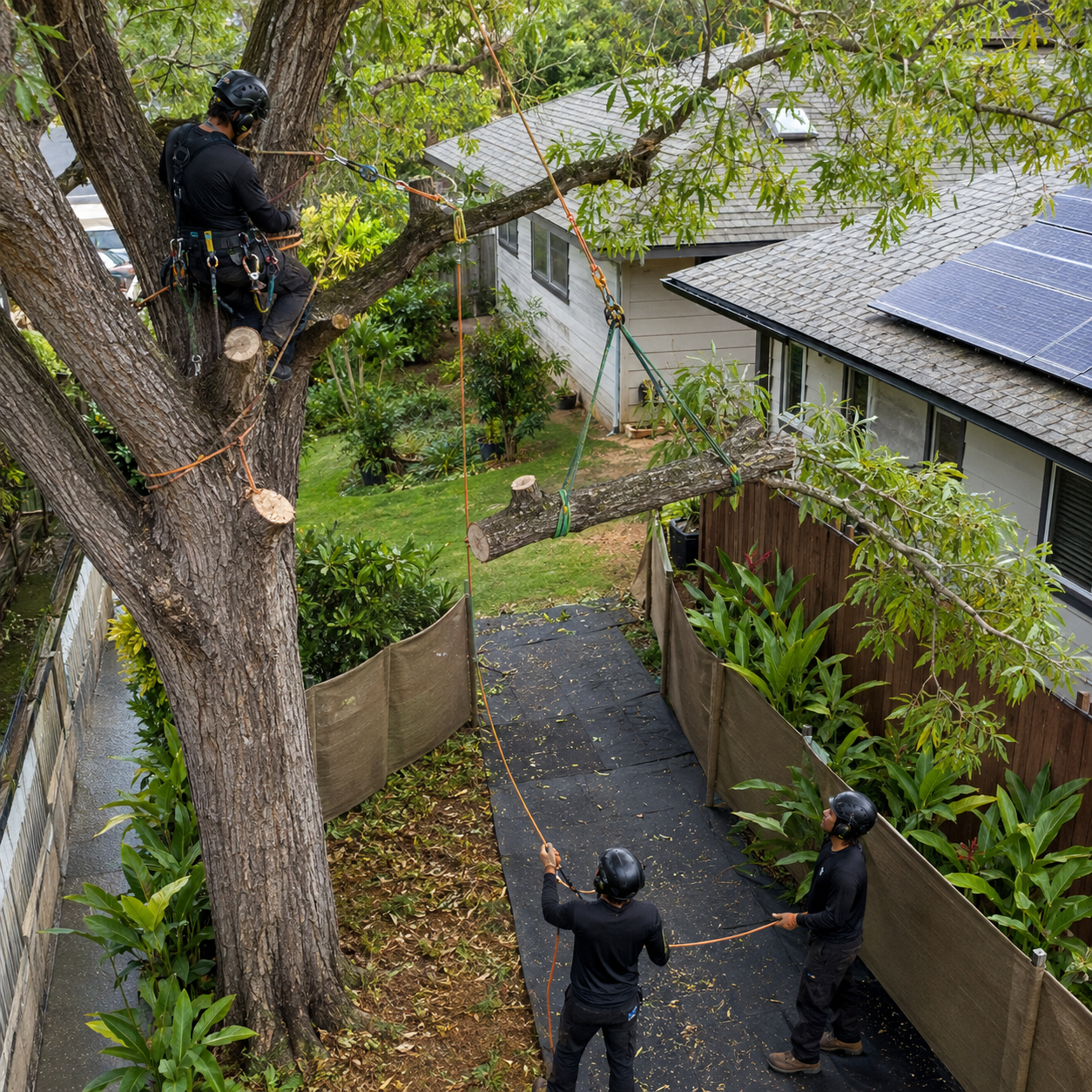
Experience with high-risk removals, including 100-foot albizia trees in Kalihi Valley, reinforces a rule that also applies to koa: the cutting method must match the landing space, wood condition, weight distribution, and consequences of a mistake.
Before cutting begins, the crew should establish the work zone, document nearby structures, protect vulnerable landscaping, and plan debris routes. Residents, pets, vehicles, and unnecessary personnel must remain outside the controlled area.
Watch for Koa Wilt and Prevent Contamination
Koa wilt is a serious disease associated with soil-borne Fusarium fungi. Symptoms may include yellowing or wilting in part of the canopy, rapid dieback, dark staining in sapwood or roots, bark splitting, and sap discharge. Similar symptoms can result from root damage, poor planting, restricted soil, drought stress, or other diseases, so appearance alone is not a final diagnosis.
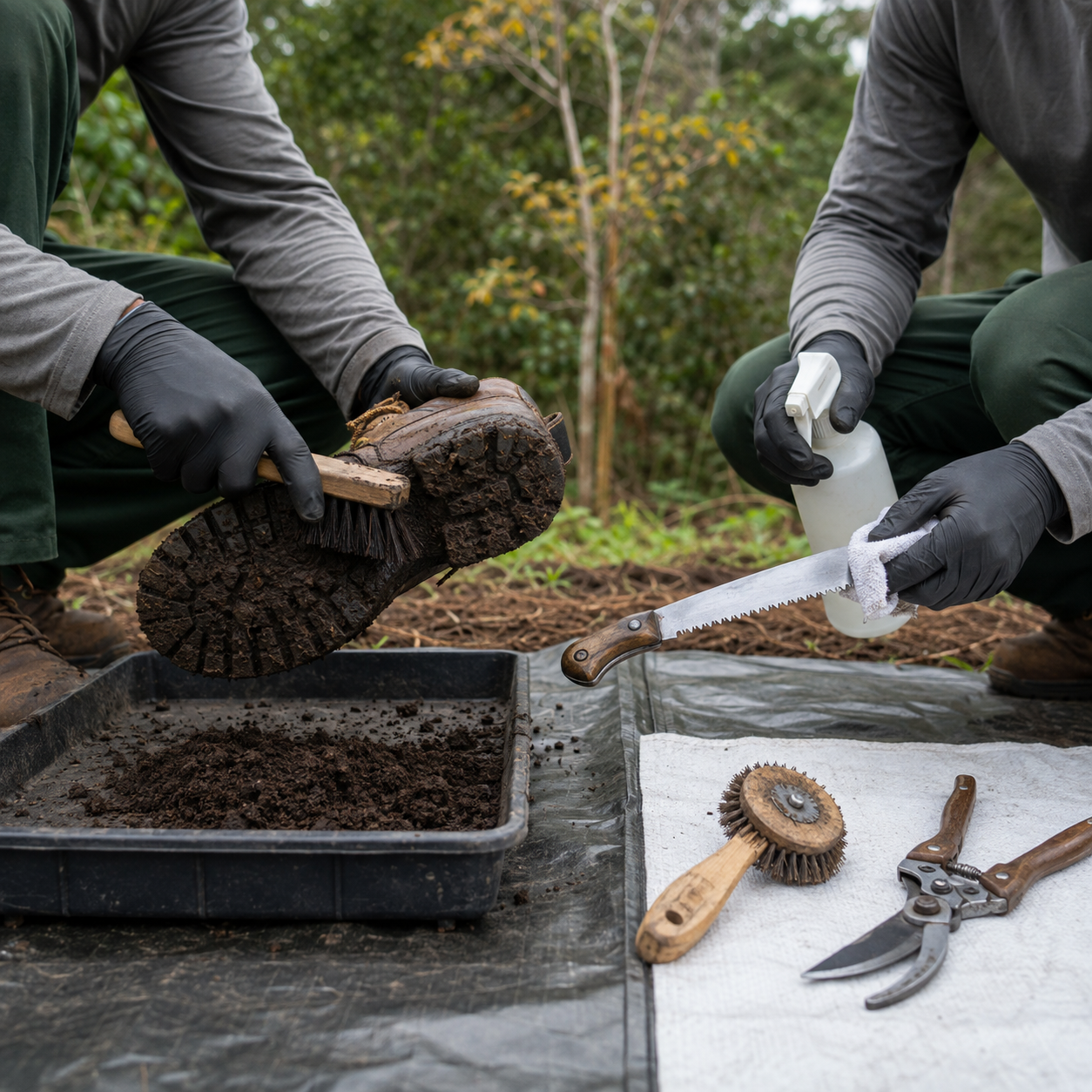
When disease is suspected, soil and plant material should be handled carefully.
University of Hawaiʻi Forestry Extension guidance on koa wilt recommends cleaning soil from shoes, tools, tires, and equipment after leaving affected sites and sterilizing cutting tools used on infected trees.
These precautions help reduce the risk of moving contaminated material into other planting areas.
Disease symptoms should also be evaluated before major pruning or removal decisions are made. The presence of yellowing, dieback, or staining alone does not establish that koa wilt is the cause, and the removal plan should account for both the condition of the tree and the possibility of contaminated soil or plant material.
Protect the Property After Removal
Property protection continues after the final trunk section reaches the ground. Stump grinding depth should reflect future plans. A shallow grind may be enough for lawn restoration, while construction, paving, or replanting may require deeper work. Large-root excavation requires caution near retaining walls, drainage lines, utilities, and slopes.
Usable koa wood should be evaluated before disposal. Sound sections may be suitable for milling, carving, furniture, or keepsakes. Salvage depends on ownership, wood quality, access, contamination concerns, and transportation costs.
Make the Decision With Evidence
A koa tree should remain when targeted care can preserve it at an acceptable level of risk. It should be removed when defects, decline, location, and potential consequences show that preservation cannot adequately protect people or property.
The next step should be a documented on-site assessment that identifies the tree, explains its defects, compares preservation with removal, checks regulatory concerns, and outlines site protection. When that assessment determines that a tree cannot be preserved safely, property owners can review how professionals handle high-risk tree removal in Oahu to understand how structural condition, restricted drop zones, controlled rigging, nearby structures, and site protection affect the removal plan.
This gives Oahu property owners a sound decision based on safety, respect for native trees, and the long-term condition of the property.

Written By:
Kurt Manalastas
Environmental Property Care Content Writer
Kurt produces research-driven content centered on tree care, landscaping, and environmental property management. Drawing from arborist-informed practices, site-specific conditions, and practical homeowner concerns, he provides clear, actionable guidance to help readers maintain safer, healthier, and more sustainable outdoor environments.