Managing Hala Trees Along Fences and Property Lines in Oahu
Safety Insight
Managing hala near an Oahu property line starts with defining the exact clearance conflict—gate access, overhanging growth, fence work, or roots—then choosing the least disruptive response. Coordinate neighbor access, protect prop roots, plan fence work around the tree, and reassess when recurring interference shows the site is too constrained.
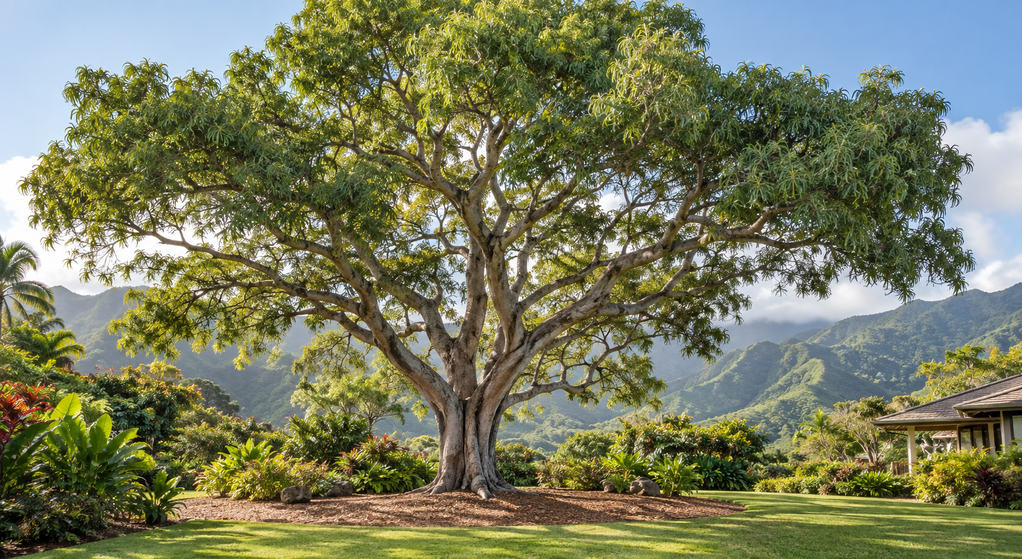
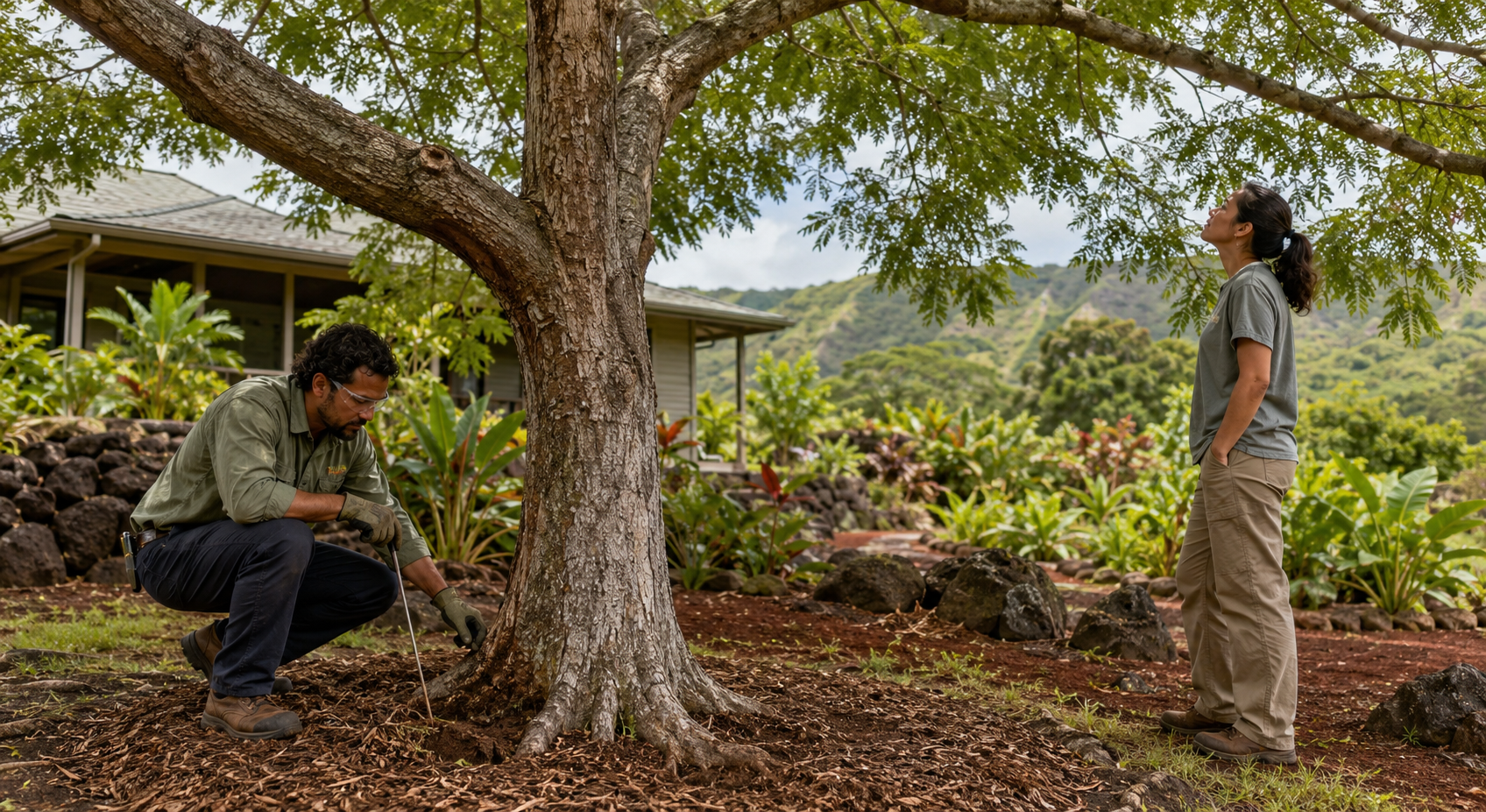
A hala beside a fence can create several different boundary conflicts. Leaves may brush someone using a gate, a branch may extend over a neighboring yard, or prop roots may occupy the space planned for fence posts. Each calls for a different decision. “Cut everything back to the line” is not a complete maintenance plan.
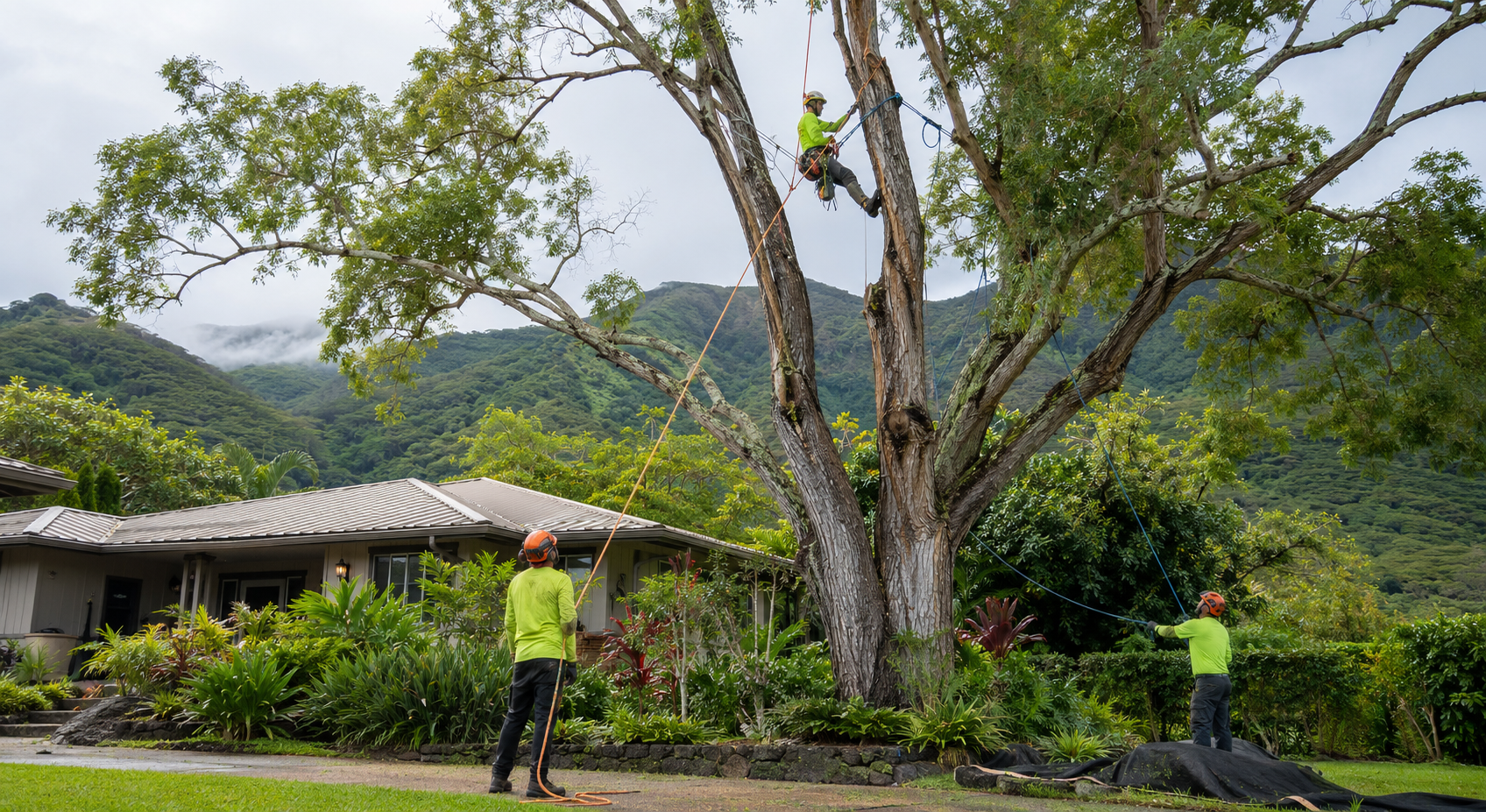
Professional tree trimming services in Honolulu and across Oahu cover pruning and clearance work when the goal is to retain the tree rather than remove it.
Oahu Tree Trimming and Removal Services provides trimming and removal with owner involvement in pruning and technical tree work. For a boundary tree, define the clearance problem before deciding which service is appropriate.
Two existing Oahu guides provide broader context. How to Manage Overgrown Hala Trees on Residential Properties addresses cleanup, clearance, tree condition, and selective maintenance, while Is Your Hala Tree Growing Too Close to Your House? focuses on roof, wall, walkway, and building-clearance conflicts. This page is narrower: it focuses on property lines, fence work, neighbor access, and recurring boundary interference.
Define the Boundary Space That Must Stay Usable
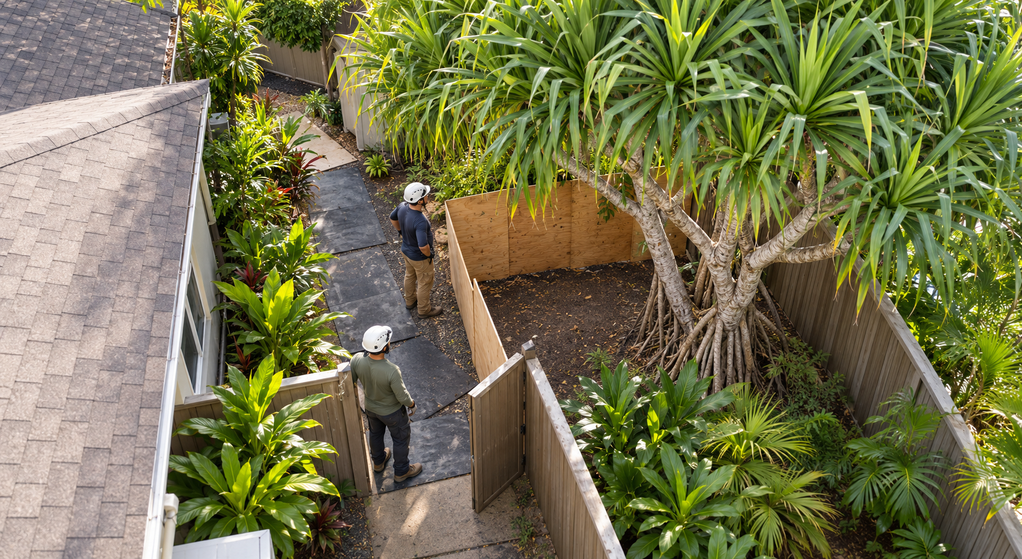
Begin with the way the boundary area is actually used. A rarely visited planting strip creates different concerns from a narrow passage, driveway entrance, or gate used every day. Identify the interference instead of treating every overhanging leaf as the same problem.
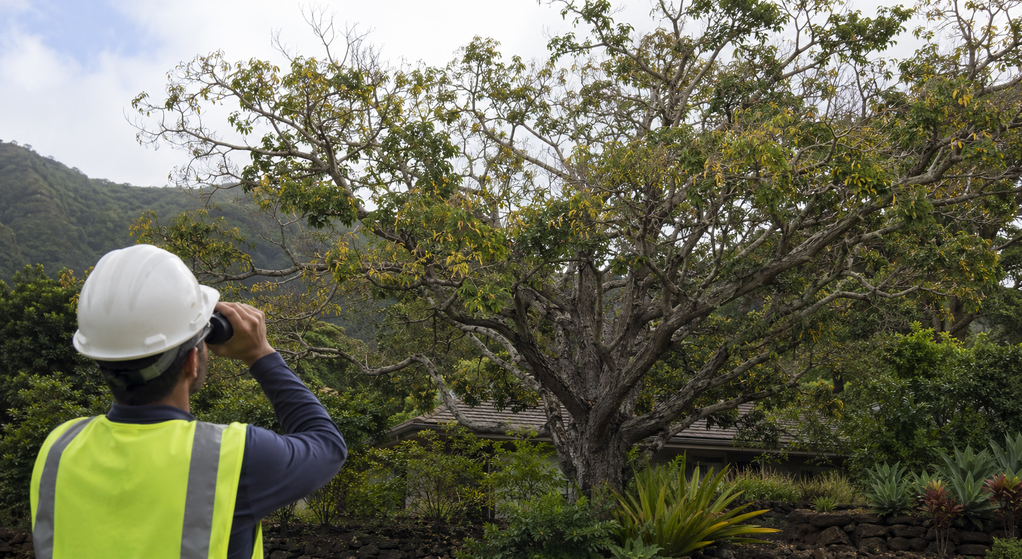
Photograph the tree from your side and note where foliage or branches contact people, fencing, or structures; whether the conflict involves flexible leaves, a substantial branch, or roots; and how workers could reach the area and remove debris.
Discuss the proposed work with the neighbor before arranging
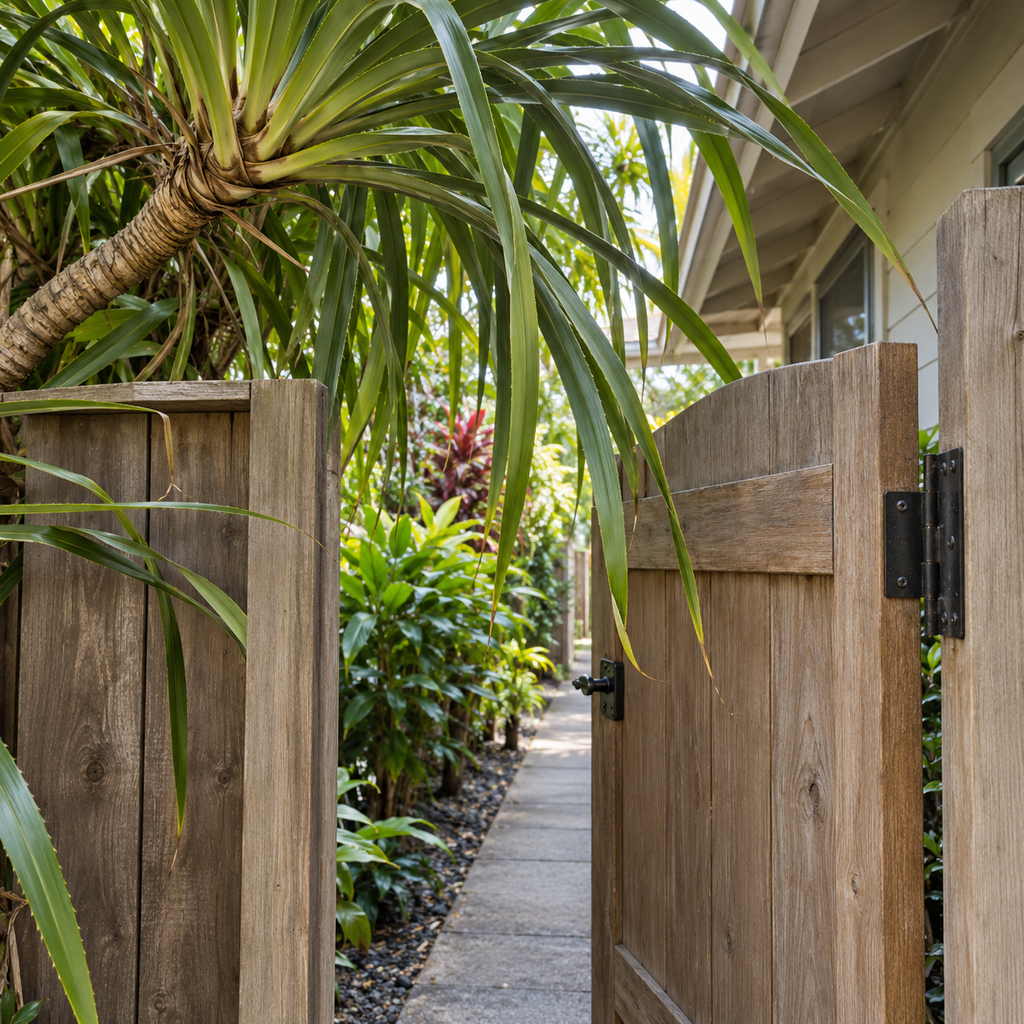
access through their yard. If the boundary location or tree ownership is uncertain, resolve that uncertainty before authorizing cuts. A fence alone should not be treated as proof of the legal property line.
Write a specific objective, such as restoring comfortable gate access while retaining shade. A defined clearance target is more useful than simply asking to “trim the tree.”
Separate Routine Cleanup From Boundary Clearance
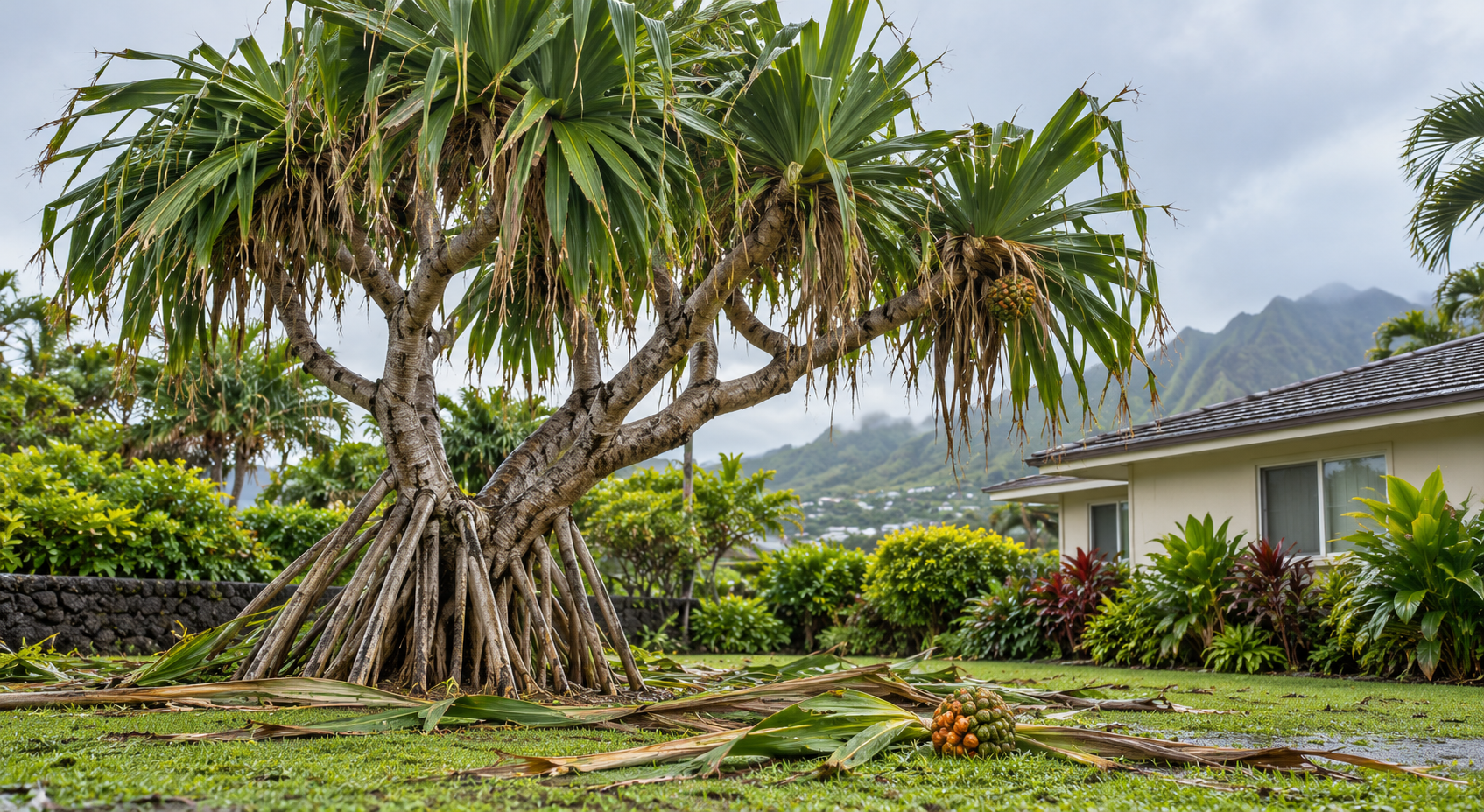
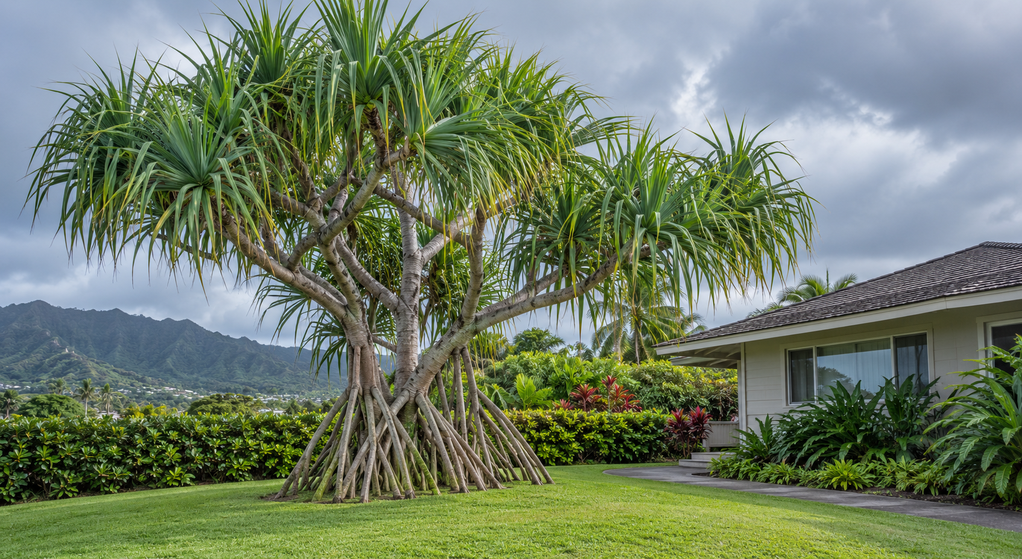
Hala does not become permanently smaller because lower leaves look tidier. The University of Hawaiʻi’s Native Hawaiʻi Plants guidance on hala growth and maintenance describes a wide-branched plant with a spread around 20 feet. It notes that yellow or brown leaves may be removed while hala otherwise self-prunes, and that many forms have sharply toothed leaf margins.
That distinction matters along a fence. Removing dead foliage can reduce debris and improve access, but it does not reposition a live branch that extends into the neighboring yard. Repeatedly clipping leaf tips to follow a straight fence line also leaves the branch structure and available growing space unchanged.
If living growth needs reduction, ask a qualified arborist familiar with hala whether selective cuts can provide the required clearance. Avoid designing a flat-sided canopy or fixed height first and then forcing the tree to match it.
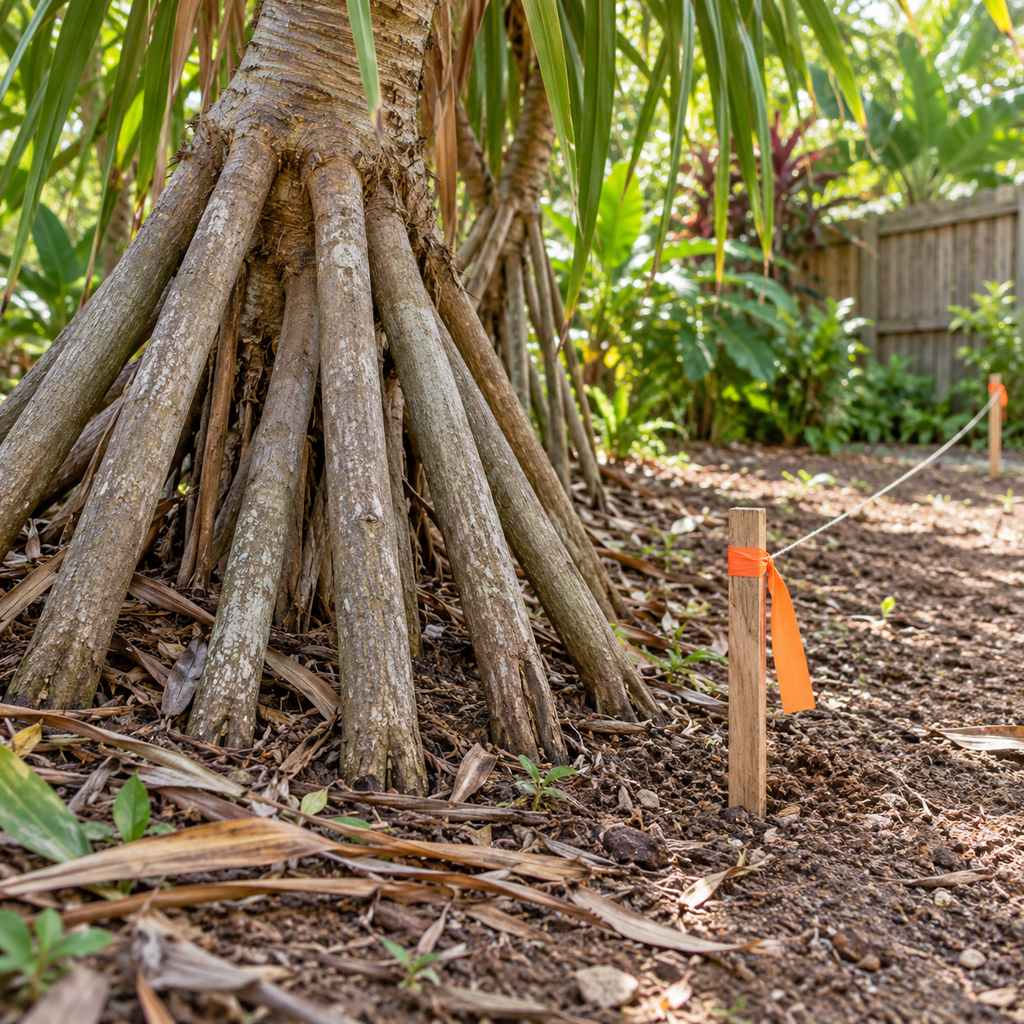
Coordinate Fence Work Before Disturbing Prop Roots
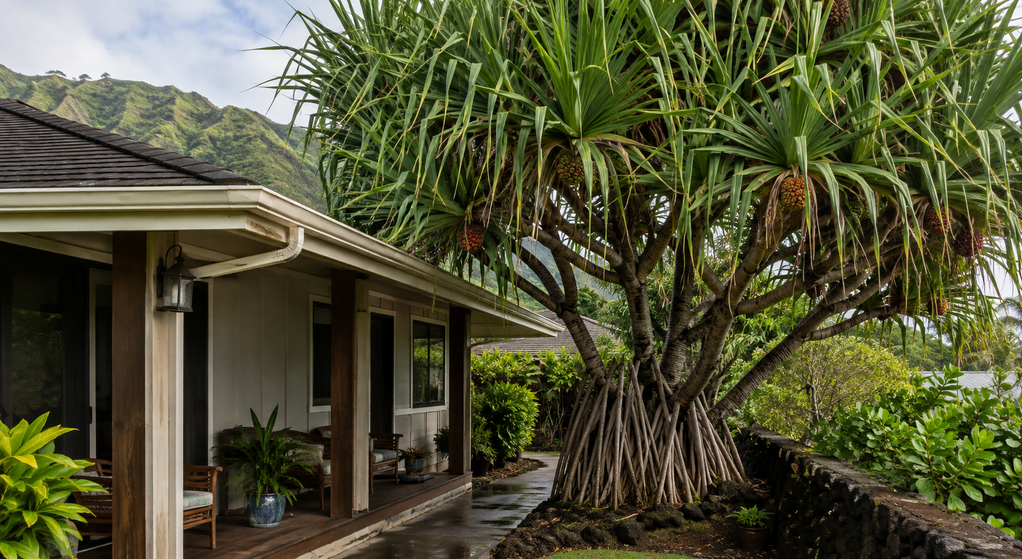
A new fence can turn an existing hala into a construction conflict even when the canopy needs little attention. Identify visible prop roots before choosing post locations, digging trenches, or setting a continuous footing.
Do not authorize root cutting simply because a root crosses the proposed fence alignment. Have the tree assessed first, and ask the fence installer whether post positions or other details can change within the available property space. Any alternative still needs to meet the fence’s own structural requirements.
Keep tree work and fence work in the same conversation. Mark the proposed excavation and give the arborist that information before work begins so one contractor is not planning around roots another contractor expects to remove.
If an existing fence is already leaning or cracked, document the damage and nearby roots. Proximity alone does not prove that the tree caused the damage or show which repair will last.
Use Returning Interference as a Space-Planning Signal
After the initial work, photograph the gate, fence, or passage from a repeatable position. Record what was removed and which parts of the tree were retained. During routine yard checks, compare usable clearance with those photographs.
Avoid assigning the same quarterly or annual cutting schedule to every hala. Set the review interval around the individual tree, the amount of available clearance, and how quickly interference returns. A review can result in no pruning at all.
If the same problem returns quickly, ask whether the first intervention addressed only foliage while leaving the branch position, fence alignment, or overall site constraint unchanged. More frequent cutting may increase maintenance without creating a workable long-term arrangement.
New cracks, broken growth, or a noticeable change in lean call for professional assessment rather than another cosmetic trim.
Set a Limit on Repeated Corrective Work
Before approving another round of cutting, compare three options: retaining the tree with limited work, changing the nearby feature or fence layout, and removing the tree. Include access through either property, protection of the fence, debris handling, and the likely need for future visits.
Retention is more practical when limited work provides useful clearance and enough growing space remains. Reconsider it when the plan depends on repeated major cuts or unresolved prop-root conflicts. Removal does not need to be the starting assumption, but repeated corrective work should not become the only strategy.
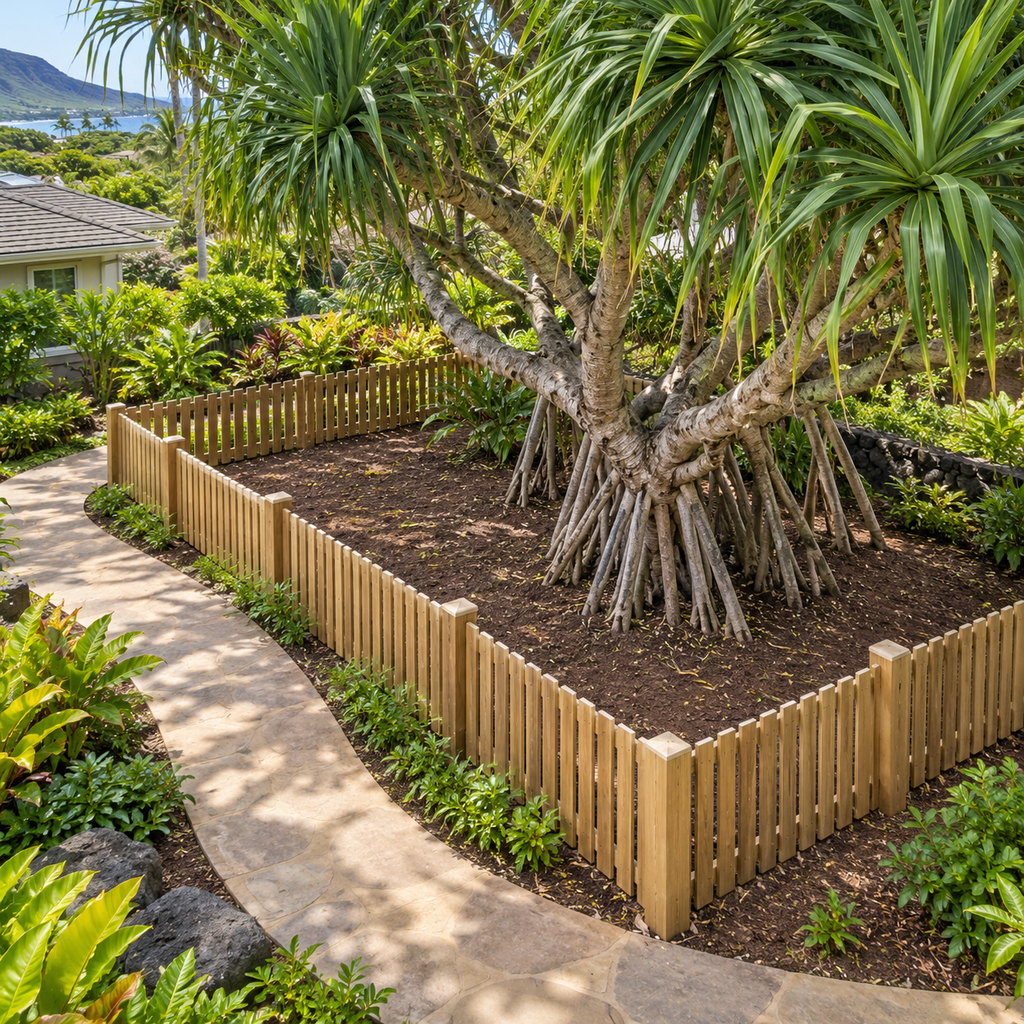
If replacement planting is chosen, select the new plant for its mature width and the space available for future maintenance.
Successful boundary management leaves a usable gate, passage, or fence line and a realistic maintenance plan. The goal is not to force a hala into an artificial property-line shape; it is to create an arrangement the tree and both properties can accommodate as the landscape develops.

Written By:
Kurt Manalastas
Environmental Property Care Content Writer
Kurt produces research-driven content centered on tree care, landscaping, and environmental property management. Drawing from arborist-informed practices, site-specific conditions, and practical homeowner concerns, he provides clear, actionable guidance to help readers maintain safer, healthier, and more sustainable outdoor environments.