Tree Roots Lifting a Driveway: Can You Keep the Tree and Repair the Surface?
Safety Insight
You may be able to keep a tree beside a lifted driveway if repairs accommodate its roots without compromising stability. Confirm what caused the movement, assess the roots before demolition, and compare rerouting, selective replacement, and temporary surface corrections. Cutting roots simply to restore the original driveway height can create bigger problems.
A raised driveway panel does not automatically mean the nearby tree must go. It does mean that replacing concrete at the same depth, in the same place, may recreate the conflict. The useful question is whether a workable driving surface can coexist with the roots the tree needs.
When discussing tree trimming and care services in Honolulu, separate proposed tree work from the arborist assessment needed to judge root disturbance. A pruning proposal alone does not establish that a driveway repair is safe for the tree.
Oahu Tree Trimming and Removal Services provides tree care and removal on Oahu. Keep the tree-work scope distinct from the driveway repair scope so each proposal clearly identifies its responsibilities.
Two companion discussions help separate assessment from removal logistics: when to call a professional arborist covers signs worth reporting, while difficulties when removing trees addresses access and nearby obstacles if removal becomes necessary. Neither determines how much root disturbance this driveway repair can tolerate.
Before choosing that option, have the tree and pavement assessed together. A paving quote alone cannot establish how much root disturbance the tree can tolerate.
Confirm What Is Moving Before Planning the Repair
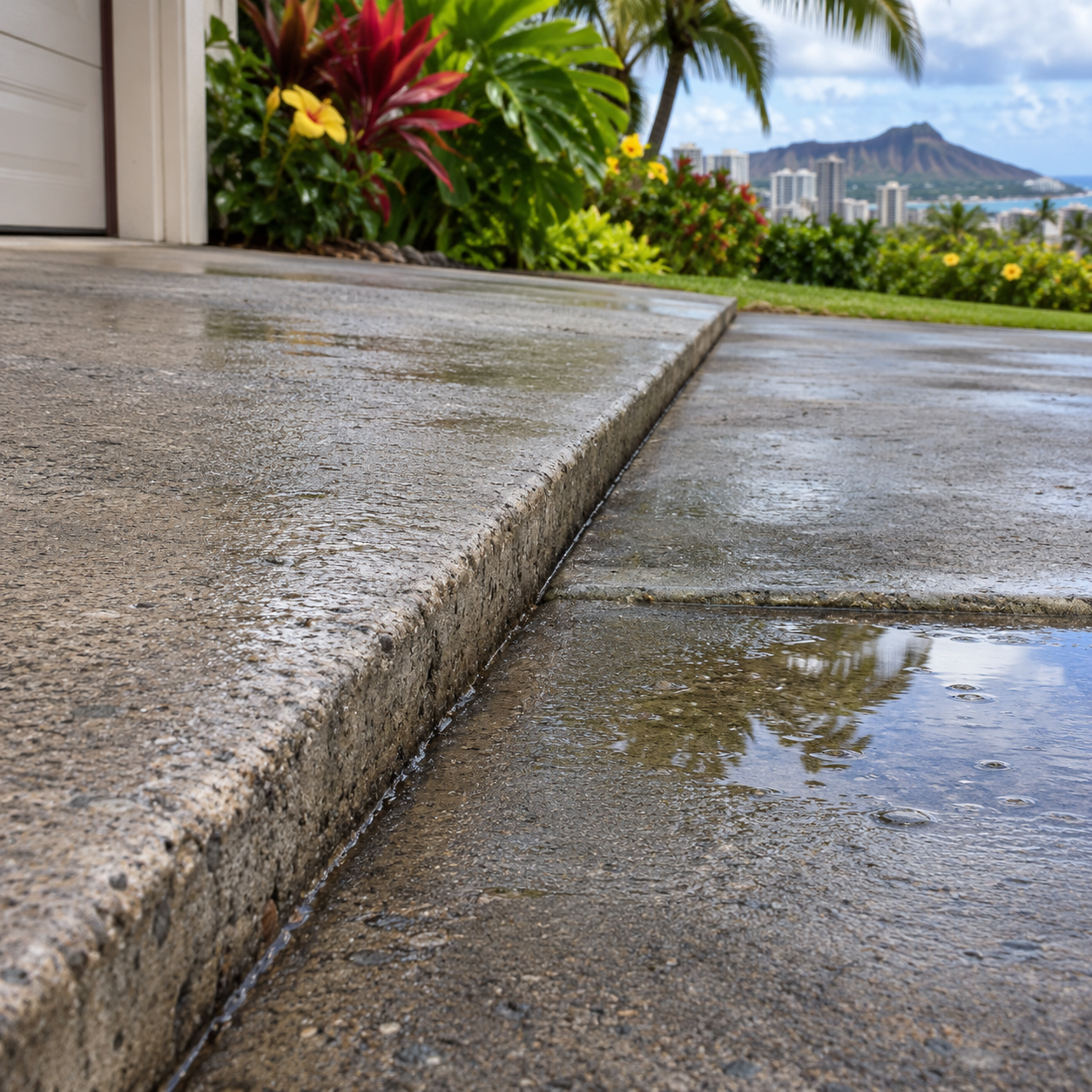
Roots growing beneath pavement can lift it as they enlarge. However, a height difference can also develop when an adjoining panel settles. Cracks beside a tree are clues, not proof of the cause.
Photograph the raised area, note whether it has changed, and record where water collects after rain. Have the pavement contractor evaluate the slab and base while an arborist considers the tree, root location, and proposed excavation.
Restrict access around an unstable panel or significant trip edge while arranging assessment. A temporary hazard correction and a lasting repair may be separate jobs.
Root Cutting Is the Decision That Needs the Most Care
An exposed root can look like an obstacle to remove. It may also contribute to anchorage and supply a substantial network of smaller roots. Cutting it can affect tree health, stability, or both.
Relevant considerations include the root’s size, distance from the trunk, number of roots affected, existing defects, and earlier excavation. A healthy-looking canopy does not establish that cutting beneath it is safe. Neither does a rule based only on root diameter.
The International Society of Arboriculture’s guide to avoiding tree damage during construction explains why root protection needs an arborist’s involvement before work begins. It
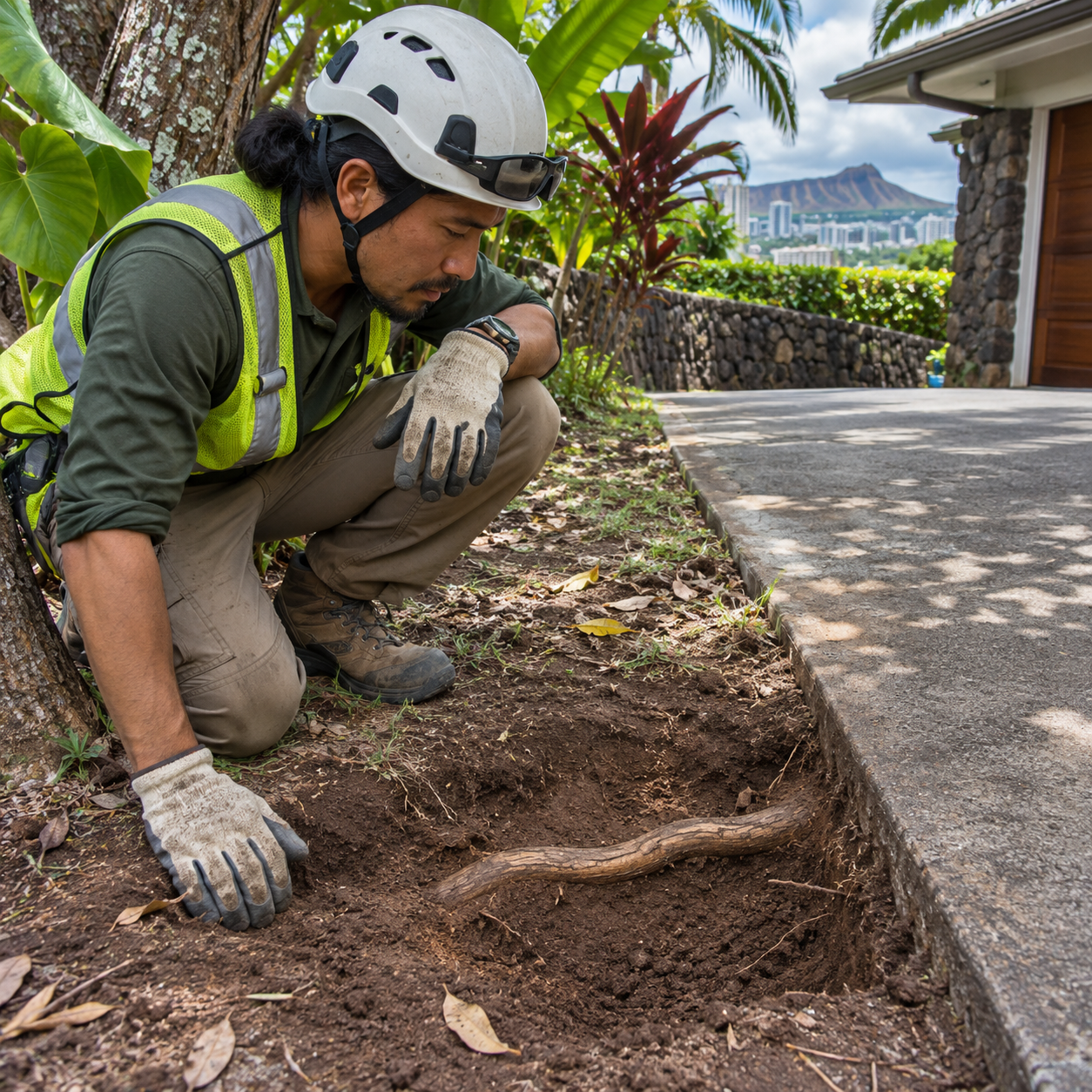
supports a tree-specific protection plan rather than a universal safe root-cutting distance.
If the tree also has a changing lean, damaged trunk, or declining canopy, include those concerns before committing to new pavement. Describe the wider problem when requesting an assessment.
Installing a root barrier beside an established tree is not automatically a preservation measure. Digging the barrier trench may itself sever roots, and a barrier cannot reverse damage already present.
Compare Repairs by the Space They Leave for Roots
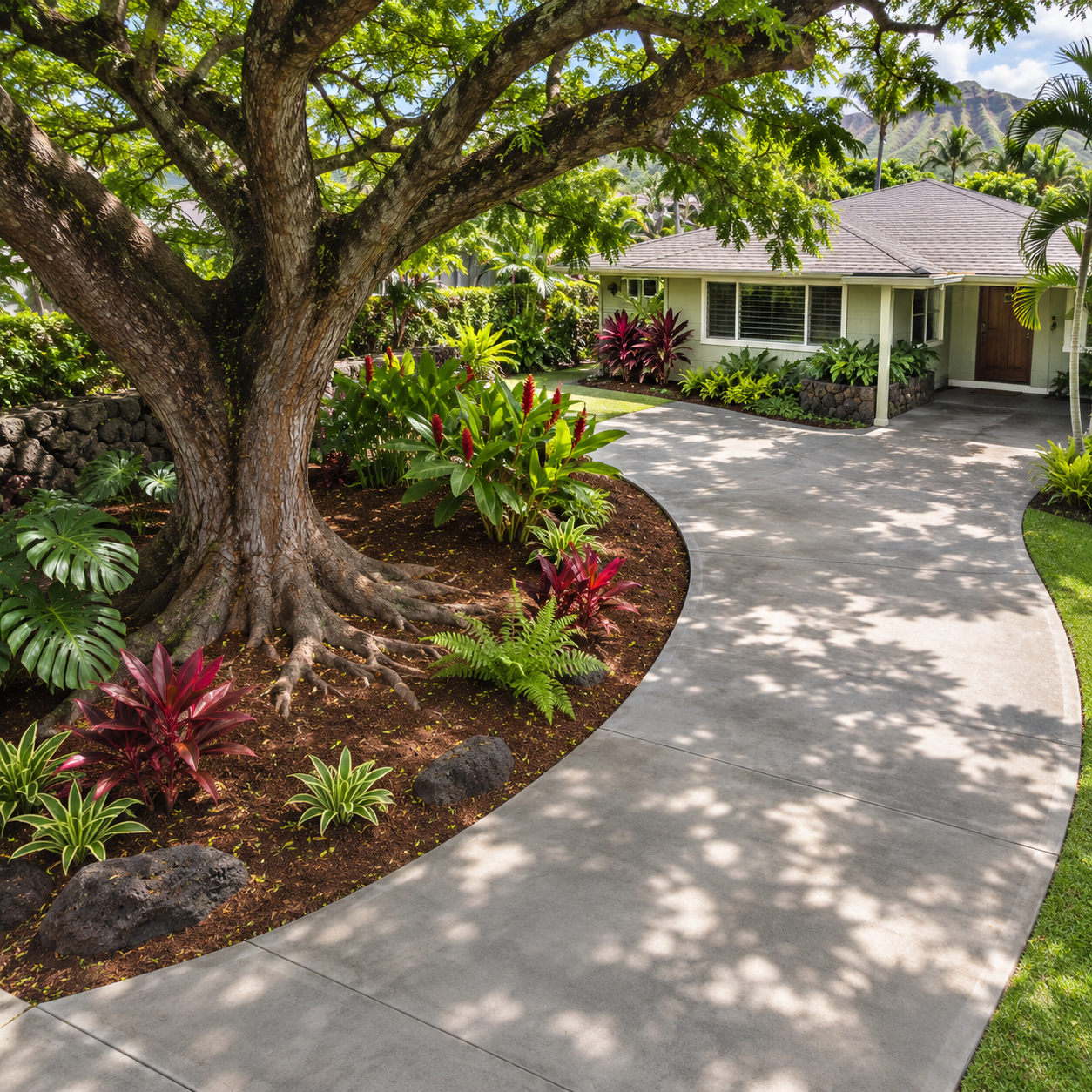
Different repairs solve different parts of the problem. Ask what each option changes below the surface, not just how it will look afterward.
Grinding or a temporary transition: A contractor may be able to reduce a small trip edge where slab condition and thickness allow. This does not stop root growth. Ask how much usable concrete remains and whether the correction will require monitoring or repeat work.
Replacing individual panels: Selective replacement can limit the work area, but removing the old slab is only the beginning. Excavating and compacting a conventional replacement base may conflict with roots. Establish the acceptable excavation limits before approving this option.
Moving the driveway edge: Narrowing or shifting part of the pavement may provide lasting separation where space permits. Check vehicle turning, gate clearance, parking width, and access to the house. On a constrained Honolulu lot, a small alignment change may solve the root conflict but create an unusable entrance.
Bridging roots or changing surface levels: A designed system may span retained roots rather than bear directly on them. Vehicle loads, supports, future growth, and drainage require appropriate design. Simply pouring concrete over exposed roots is not equivalent to constructing a bridge.
Using removable pavers: Pavers can make future adjustment easier, but roots can still lift them. Their excavation and base requirements also matter. A change of finish alone does not resolve the underlying conflict.
For any raised repair, check where rainwater will flow. The new surface should not create a low pocket against the house or obstruct an existing drainage route.
When Keeping the Tree Becomes Difficult to Justify
Preservation becomes less practical when a usable driveway requires cutting important supporting roots, the tree already has substantial defects, or there is no room for a suitable redesign. Repeated repairs also deserve scrutiny if every cycle requires more excavation near the trunk.
If removal becomes the preferred option, resolve equipment access, nearby buildings, and overhead obstacles before rebuilding the driveway. Check the tree’s designation and any required approvals under Honolulu’s exceptional-tree regulations; these protections apply to designated trees, not every mature yard tree.
Removal alone does not restore the pavement. The repair proposal still needs to address the stump, remaining roots within the construction area, unsuitable material, and preparation of the replacement base. Clarify these costs before comparing preservation with removal.
Agree on the Root Plan Before Demolition Starts
Ask for a coordinated sequence: tree assessment, repair concept, controlled exposure where needed, and a decision before roots are cut. Specify who can authorize changes if demolition reveals larger or more numerous roots than expected.
The written proposal should identify protected areas, excavation limits, equipment access, drainage changes, and follow-up checks. Keeping the tree is a realistic goal when the driveway design accommodates it. The most useful repair plan explains how both the driving surface and the tree will remain viable after construction.

Written By:
Kurt Manalastas
Environmental Property Care Content Writer
Kurt produces research-driven content centered on tree care, landscaping, and environmental property management. Drawing from arborist-informed practices, site-specific conditions, and practical homeowner concerns, he provides clear, actionable guidance to help readers maintain safer, healthier, and more sustainable outdoor environments.