How Hala Trees Differ from Other Common Trees in Hawaii
Safety Insight
Hala trees differ from coconut palms, mango trees, and other familiar Hawaii landscape trees in their branching pattern, supporting roots, leaves, and fruit. Understanding those differences helps property owners judge space requirements, plan cleanup, and distinguish normal hala features from problems that need closer assessment.
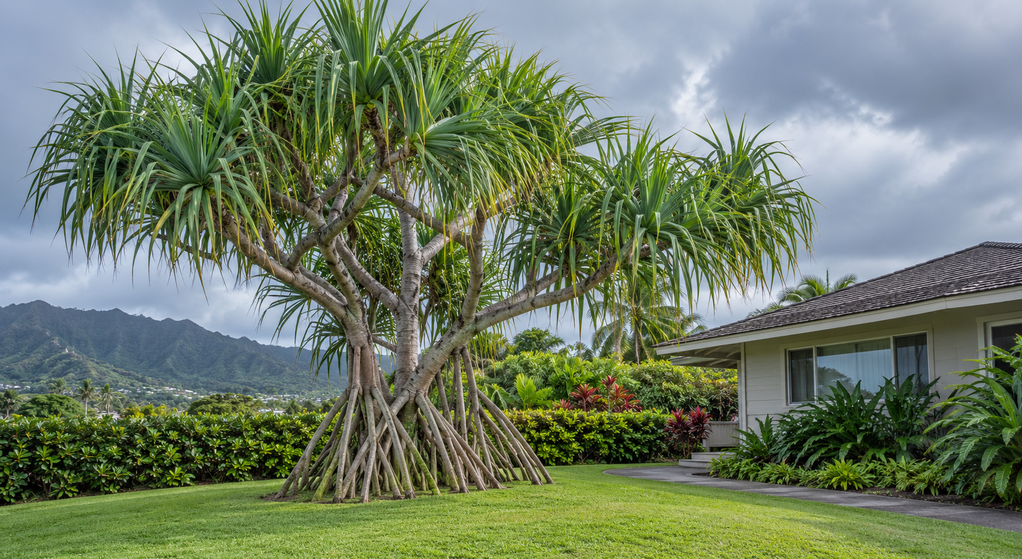
A hala can look palm-like from a distance, but its spreading branches and stilt-like roots tell a different story. For Honolulu property owners, those features matter when deciding whether a tree fits beside a driveway, walkway, or outdoor seating area.
If a cramped location has you considering professional tree removal services in Honolulu, first identify the actual conflict: overhead growth, access around the base, or a change in the tree’s condition. An unusual shape alone does not establish that removal is necessary.
Oahu Tree Trimming and Removal Services provides trimming and removal across Oahu. Explaining which part of the tree interferes with daily use gives that conversation a clearer starting point than simply requesting a smaller tree.
Related reading: whether a hala tree is growing too close to your house supports one adjacent consideration, while managing overgrown hala trees on residential properties addresses another. This article focuses on species-specific comparison.
A Palm-Like Appearance With a Different Structure
Hala, Pandanus tectorius, is a pandanus rather than a true palm or pine. The common name “screw pine” refers to its spiral leaf arrangement, not a relationship to conifers.
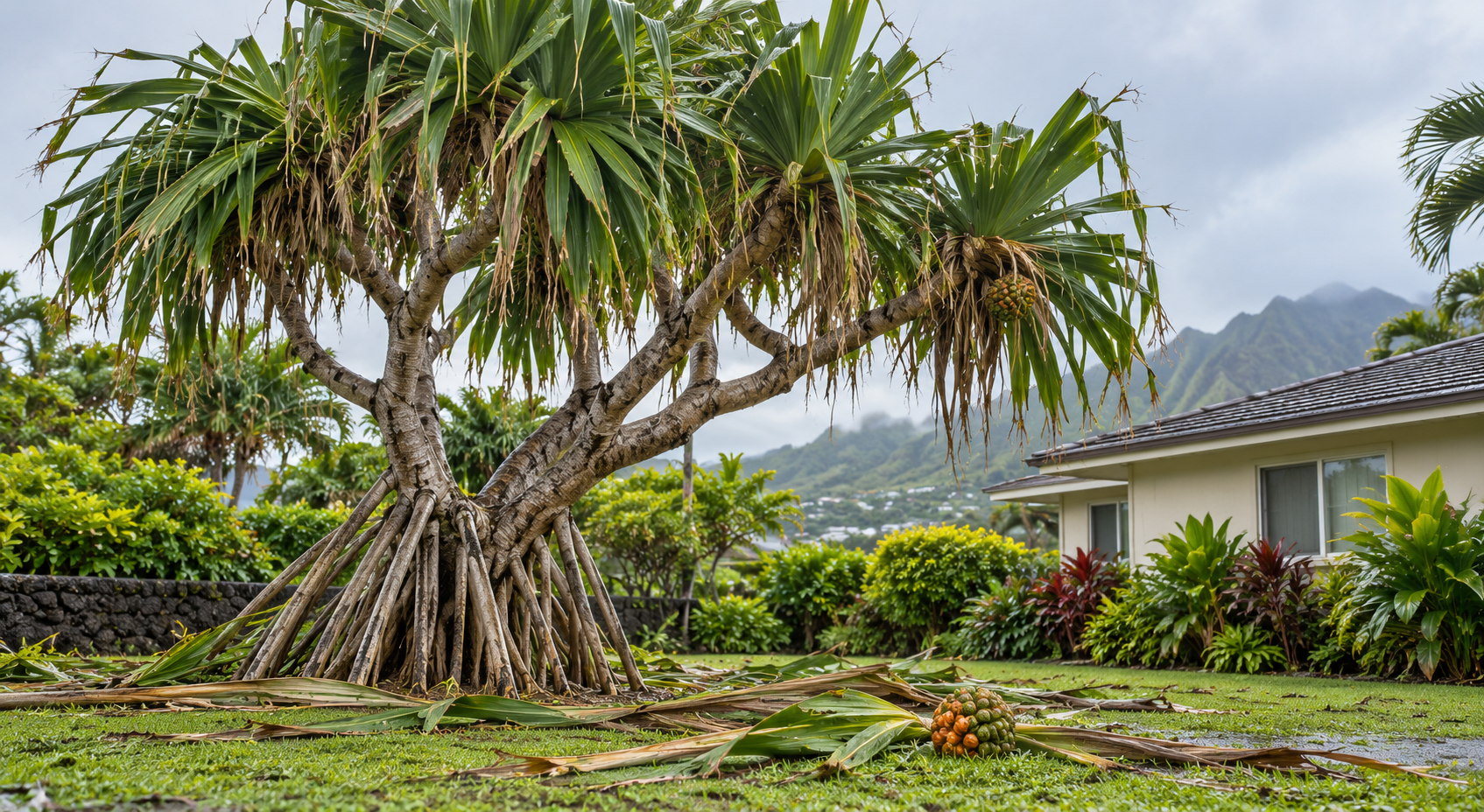
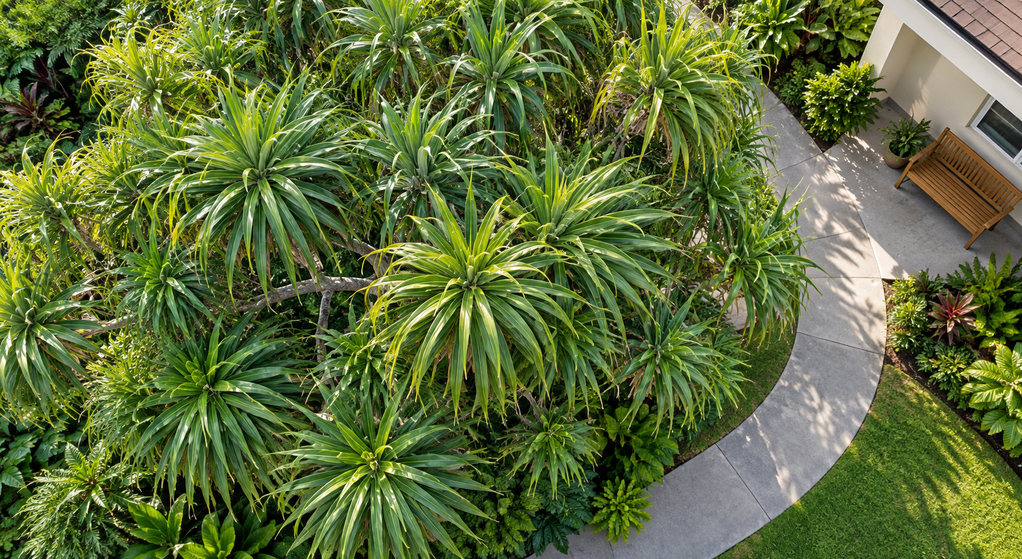
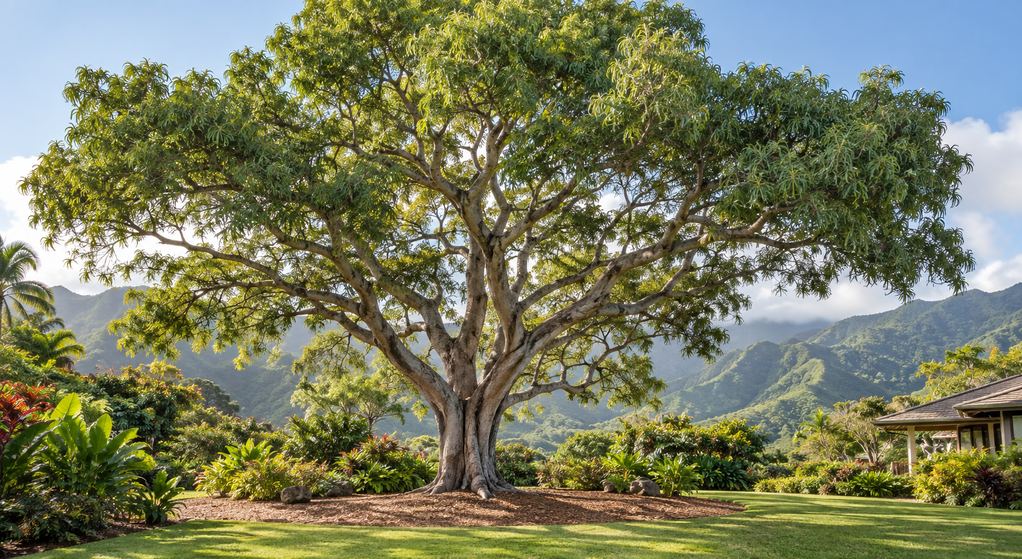
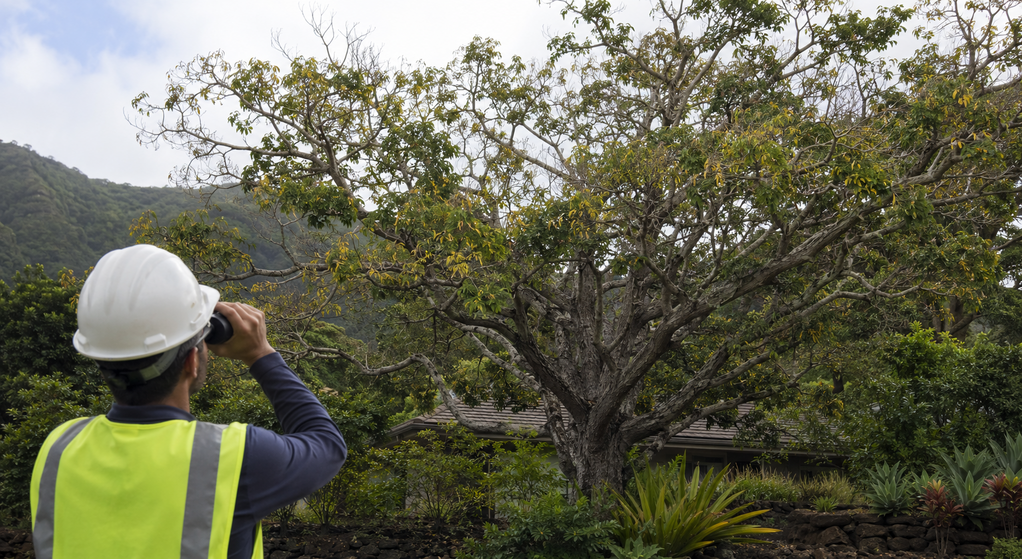
Compare three familiar silhouettes. A coconut palm usually carries its crown above a single, unbranched trunk. A mango has a branching canopy filled with broad leaves. Hala combines conspicuous branches with clusters of long, strap-like leaves near their ends. Its outline can be irregular without that alone indicating poor health.
TheUniversity of Hawaii’s guide to hala characteristics and landscape care describes a tree commonly reaching 20–30 feet tall with a comparable canopy spread. It also identifies the thick prop roots that support its crown. These dimensions are planning guidance, not a prediction for every specimen.
The practical comparison is therefore more than height. When looking at a planting location, consider the space occupied at ground level, shoulder height, and roof level. A spot that appears suitable for an upright trunk may not accommodate a spreading hala comfortably.
The Roots Change How You Use the Ground Beneath It
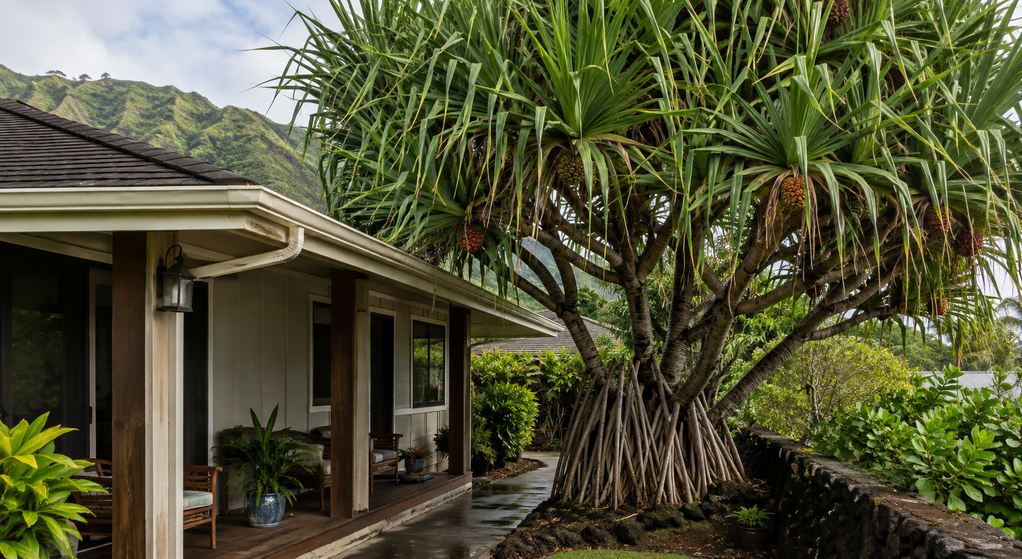
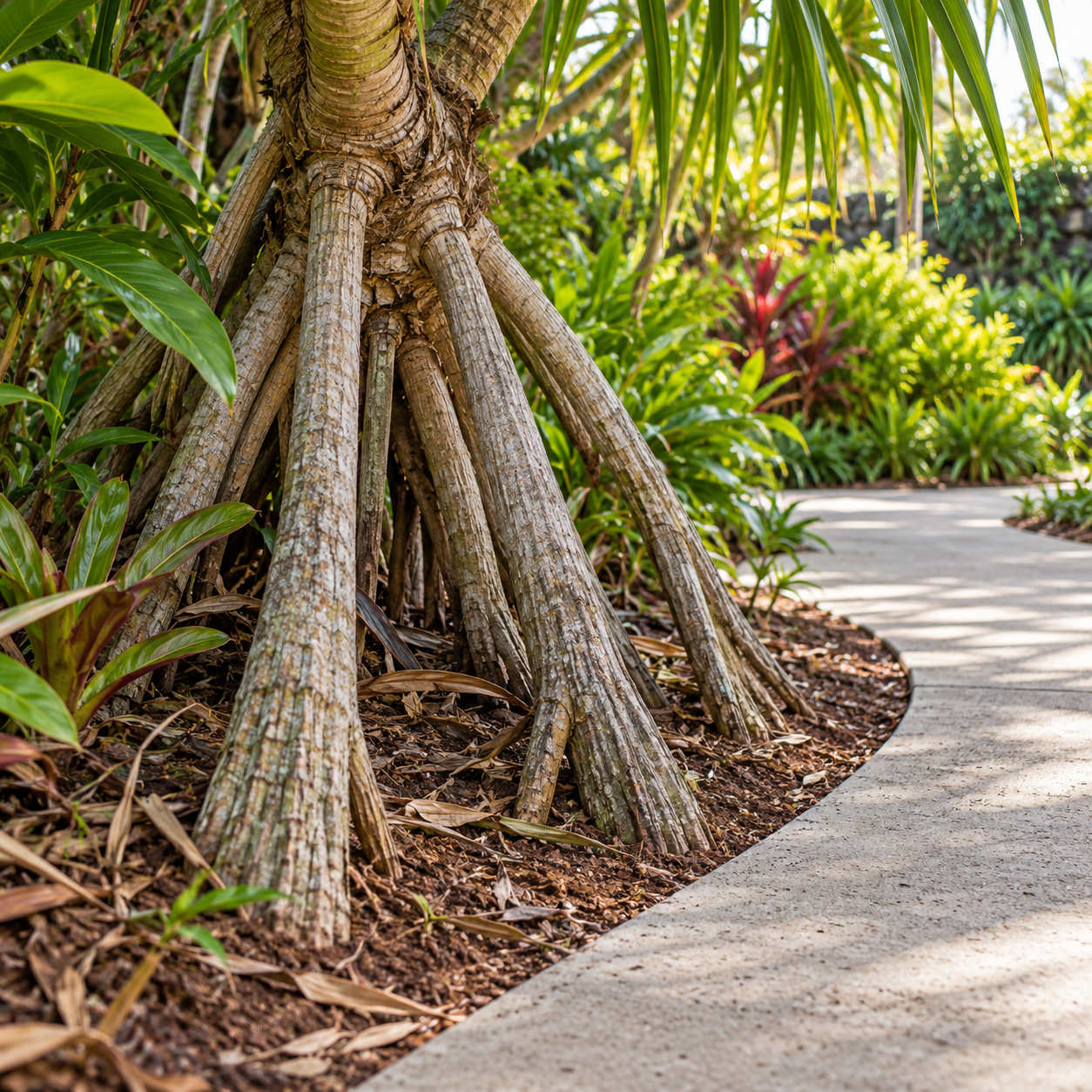
Hala’s aboveground supports are normal structural features. Their presence does not, by itself, mean soil has washed away or the tree is failing. That distinction matters when someone proposes removing them to tidy the base.
Other trees can also have exposed or aerial roots, so roots alone are not a reliable identification method. With hala, evaluate the supports together with the branching pattern and leaf clusters.
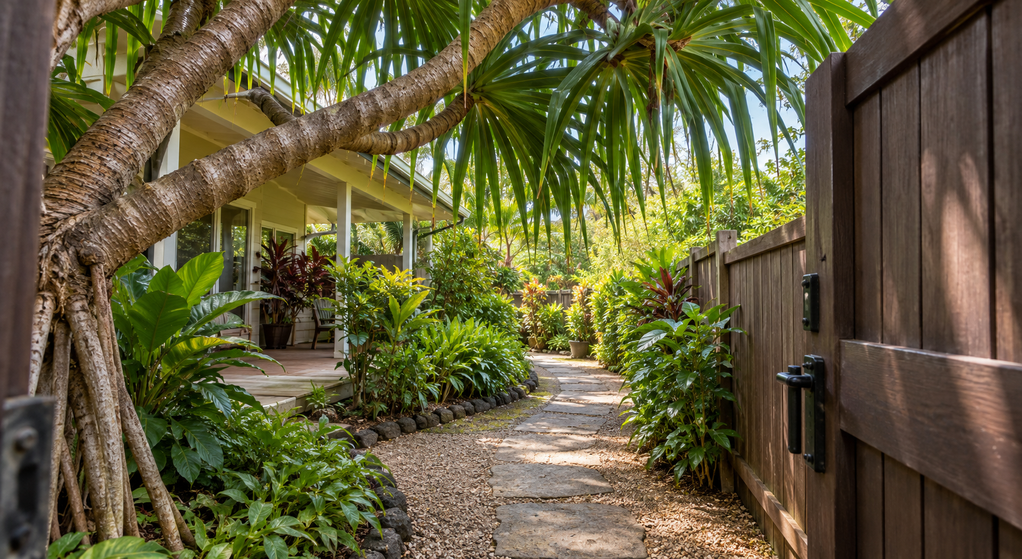
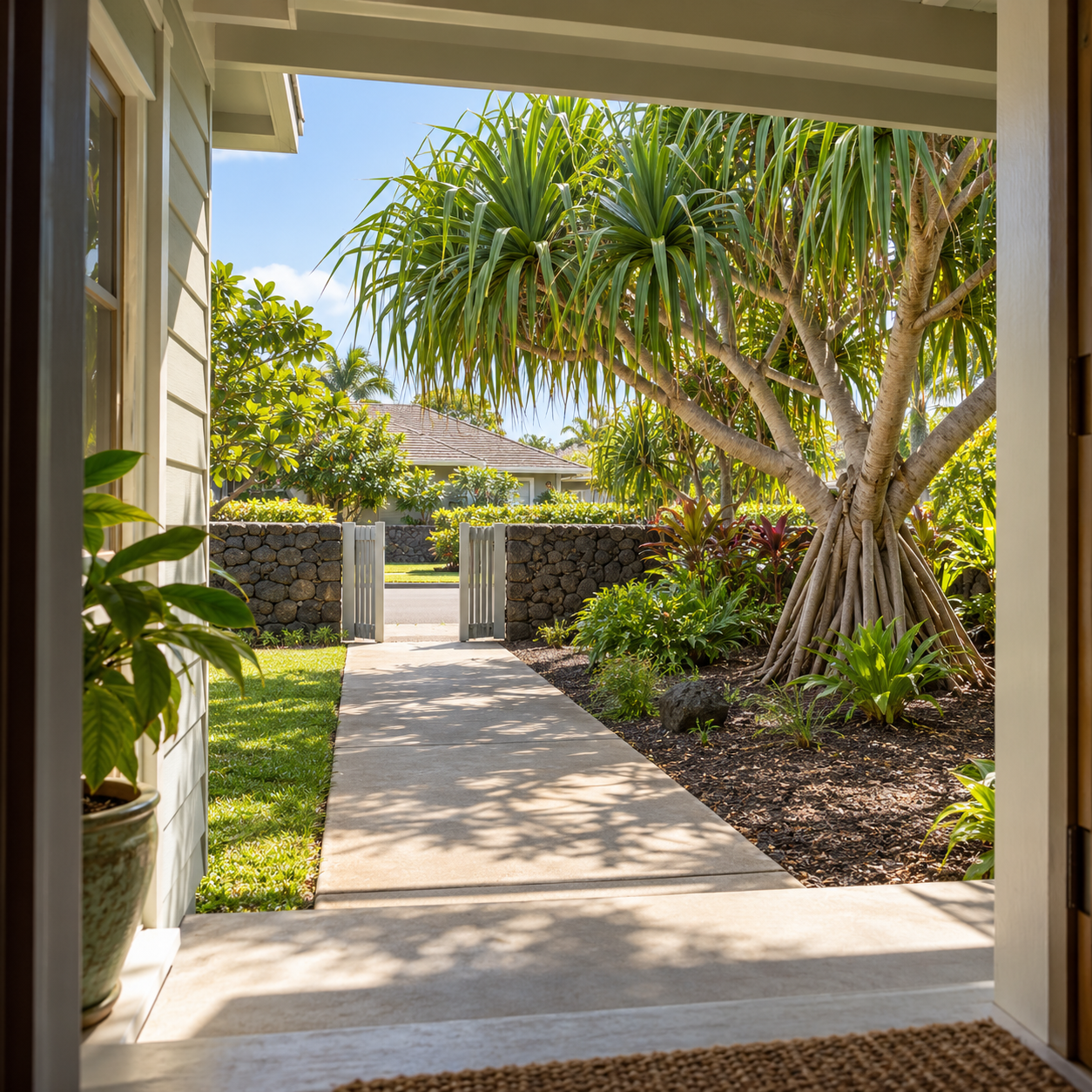
For a property owner, the immediate question is access. Can someone carry groceries along the path without stepping between roots? Is a planned gate opening usable? Would paving require cutting through existing supports?
Leaves and Fruit Create a Different Cleanup Routine
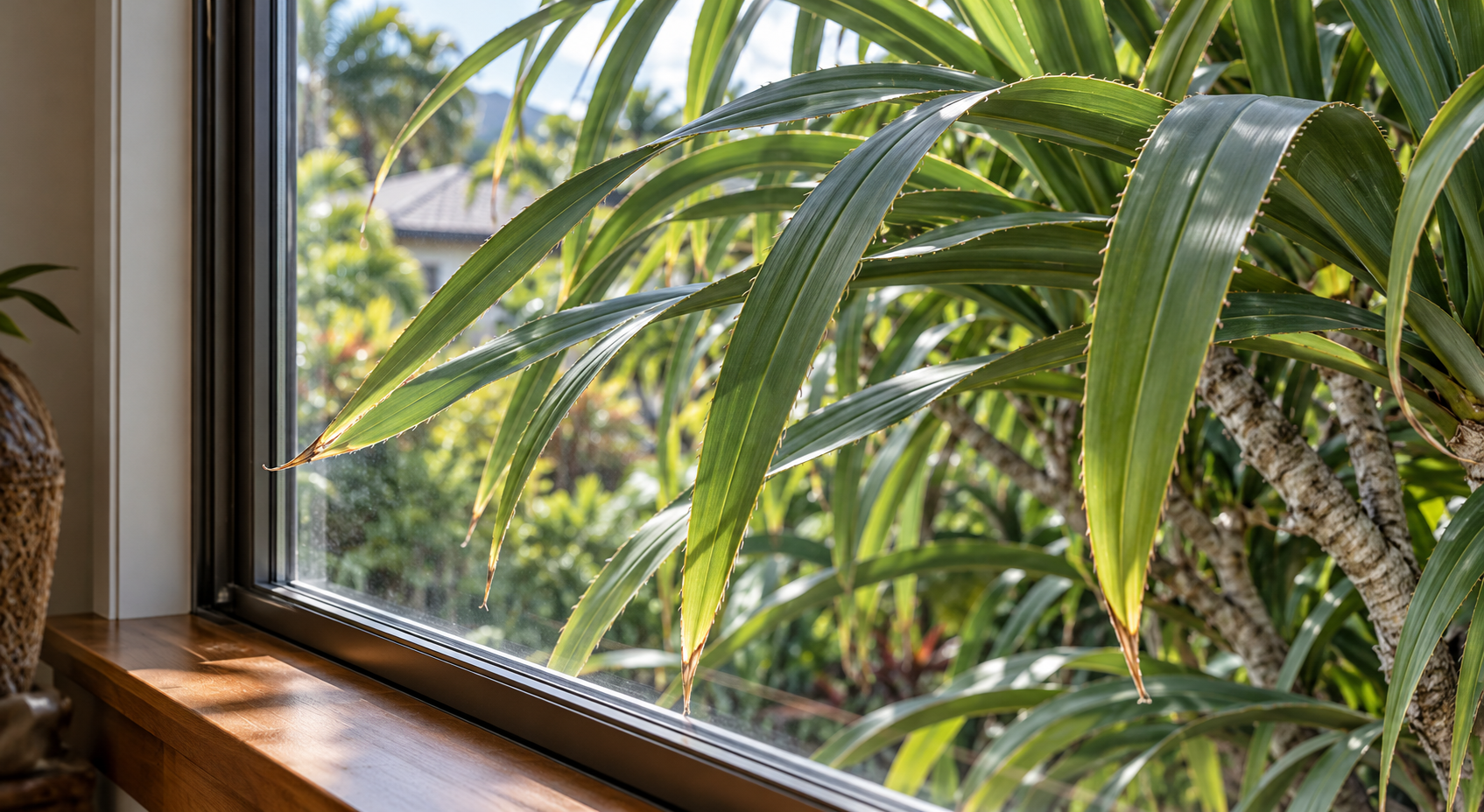
Hala’s long leaves, often edged with prickles, create a different handling task from small fallen leaves. Its female trees produce segmented fruit clusters, while male trees produce flowers rather than those fruits. A hala without fruit is therefore not necessarily unhealthy.
Instead of assuming every tropical tree needs the same cleanup schedule, inspect what actually reaches the ground. Compare the location of fallen material with the way the yard is used:
Beside an entrance: Check whether leaves or fruit pieces obstruct the route people use daily.
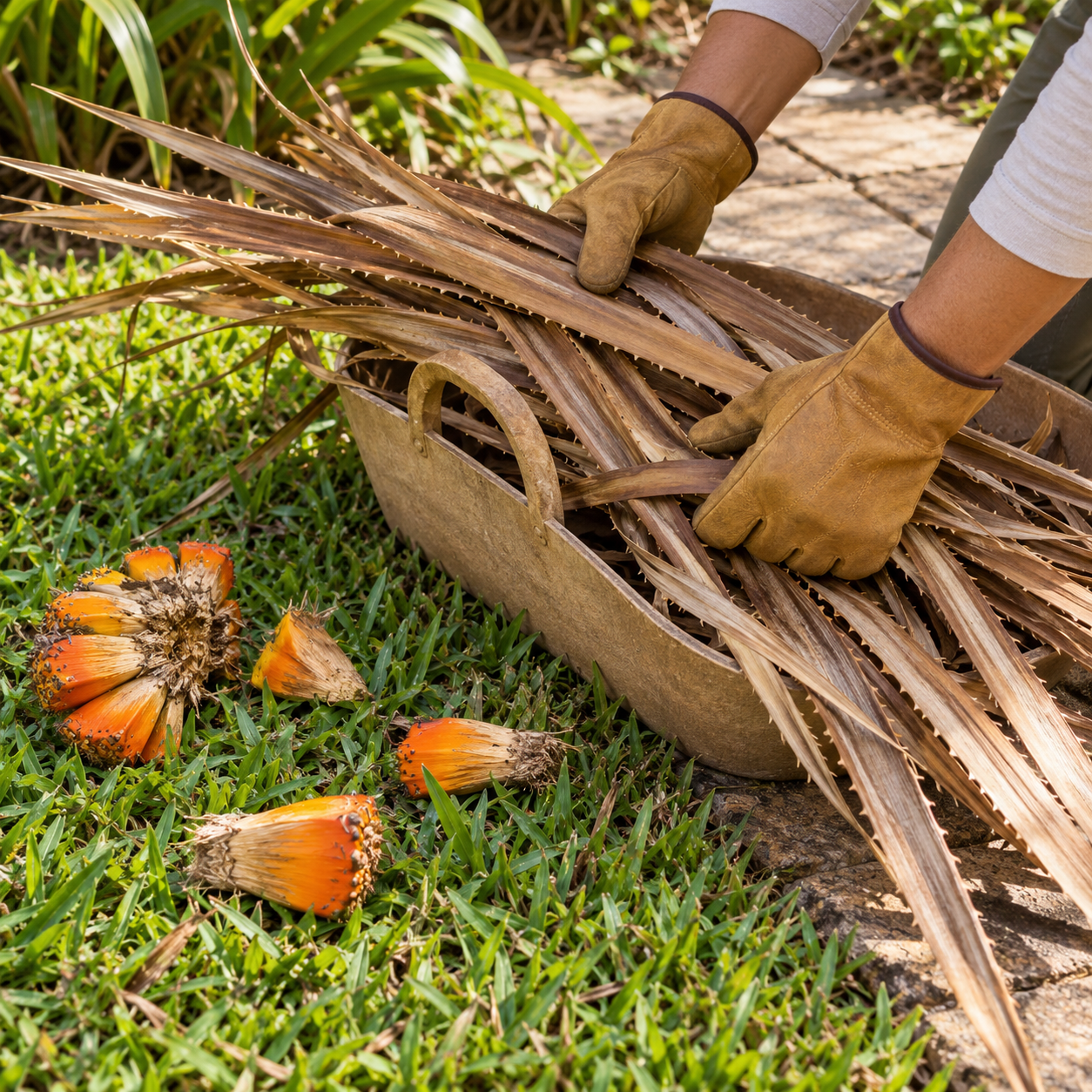
Above seating: Note whether material lands where people spend time, rather than only in an unused planting bed.
Along a driveway: Check the walking route between parked cars and the house, not just the parking surface.
This is a different planning problem from harvesting mangoes or managing coconuts overhead. The useful question is what falls, where it lands, and whether the household can reasonably keep that area clear. Use gloves when handling prickly leaves, and leave elevated cutting to appropriately equipped professionals.
Pruning Needs a More Specific Goal Than “Thin It Out”
Hala’s clustered foliage makes a general request to “open up the tree” ambiguous. Removing old brown leaves, clearing a branch from a roof, and reducing overall spread are separate jobs with different consequences for appearance and space.
Before work begins, point out the exact obstruction. A leaf brushing a walkway does not automatically justify removing the branch carrying it. Equally, clearing foliage will not resolve a conflict involving supporting roots.
Decide Whether the Tree and the Site Still Fit
Hala tolerates coastal salt exposure, but that advantage does not resolve a crowded planting location. On a Honolulu property, a tree can suit the broader environment while conflicting with a narrow side yard or frequently used entrance.
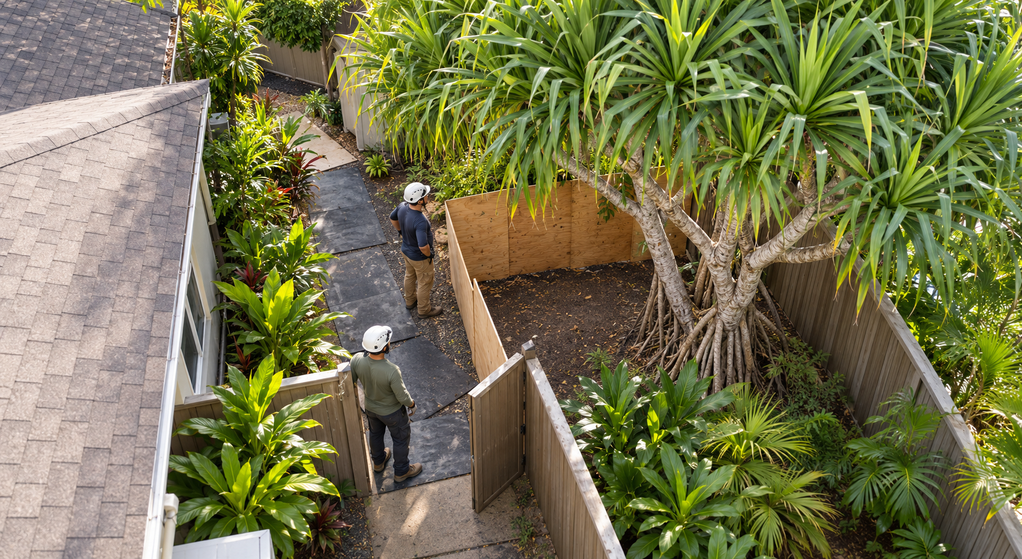
Before requesting work, photograph the whole tree, its base, and the specific conflict from a safe position. Record whether the concern is longstanding or newly noticed. Separate routine cleanup from proposed construction and from changes that warrant professional assessment.
The best comparison with other Hawaii trees is functional: how much space this tree occupies, what maintenance it creates, and how people use the surrounding area. Hala’s distinctive form can be an asset when the landscape gives it room.

Written By:
Kurt Manalastas
Environmental Property Care Content Writer
Kurt produces research-driven content centered on tree care, landscaping, and environmental property management. Drawing from arborist-informed practices, site-specific conditions, and practical homeowner concerns, he provides clear, actionable guidance to help readers maintain safer, healthier, and more sustainable outdoor environments.