The Positive Impact of Professional Tree Trimming Services in Oahu: Why Hire Experts?
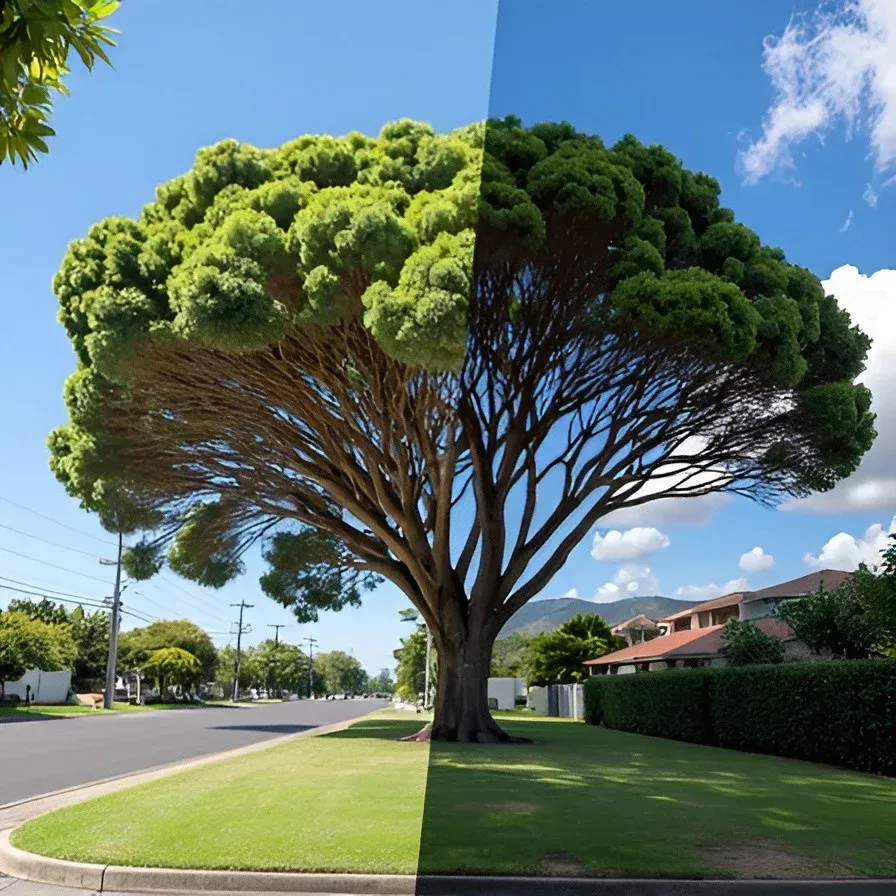
Tree trimming may seem like it’s just a basic way of keeping your trees neat and harmless enough to blend with their surrounding environment. But did you know that a simple cut, when properly done, can benefit the tree and your community in more ways than one?
Let us explore the benefits and the influence that professional tree trimming can offer.
Improving Tree Health
- Dead, sick, and dying branches can house pests and pathogens, cutting these specific branches off prevents the disease from spreading to the healthy parts of the tree, securing healthier growth.
- Trimming the canopy allows air and sunlight better movement and penetration throughout the tree, this keeps moisture from sitting too long in the inner layers and reduces the probability of fungal infections.
- Proper trimming and cutting methods enable the tree to direct its energy to its healthier parts, thus promoting the growth of new shoots and branches.
- Overcrowding can cause competition among branches for space and resources, fixing this problem through trimming allows a better distribution for growth.
Enhanced Safety
- Trimming removes hazardous branches that can pose a safety risk, especially during storms and high winds where dead or dying branches are more susceptible to breaking and falling.
- Cutting tree branches that are touching or are growing too close to buildings creates a safe clearance between them and prevents the limbs of the tree from rubbing against the structure or causing damage from the contact.
- Proper tree trimming techniques ensure that tree branches do not interfere or get tangled with utility lines. This minimizes the risk of power outages and electrical hazards from happening.
- In hazard-prone areas such as intersections, driveways, and pedestrian paths, blocked and obscured sightlines can be especially dangerous, trimming resolves that by adding more visibility around the tree.
Enhanced Aesthetic Appeal
- Trimming trees is a way to shape their form into a desired appearance, creating an aesthetic outdoor element that matches the property’s overall landscape design.
- Some trees are trimmed to complement nearby buildings, structures, or landscapes by framing them or acting as a natural background that highlights their features and adds to their visual appeal.
- Trees that are properly trimmed blend harmoniously into the overall landscape design, be it in residential areas, parks, or integrated into urban streetscapes. Proper trimming ensures trees are well integrated into the visual aesthetic of their surroundings, complementing the structures and the environment around them.
- Healthy and Beautifully shaped trees add property value from their enhanced aesthetic appeal, this gives the area a perception of quality design and a well-maintained environment.
Improved Fruit Production
- Trimming trees allows more sunlight to pass through, enabling light to penetrate and reach into the inner and darker parts of the tree to enhance photosynthesis and improve fruit production.
- Air movement becomes more fluid when there is more space between the branches, this reduces humidity and lowers the risk of fungal disease from trapped moisture that can affect fruit production.
- Trimming dead and dying branches allow better growth at the same time protects the branches that bear fruit from being exposed and contaminated by pests and pathogens.
Promotes structural strength
- When trimming is done on young trees, it guides the growth patterns and encourages the development of forming a structurally solid tree with a strong central leader and well-spaced scaffold branches as it matures.
- Trimming prevents co-dominant leaders from forming, a phenomenon where two or more main branches fight for dominance at the top of the trees. This cutting is especially required because co-dominant leaders are susceptible to splitting and can weaken the tree’s structure in time.
- Proper trimming methods encourage the formation of branch collars and swollen areas of the tree where the branches meet the trunk. These collars make it easy for professional tree trimmers to spot the best place to cut, because cutting at the branch collar helps the tree contain the wound better, reducing the risk of decay from an open cut.
- Because trimming trees adds better air and wind movement through its branches, it helps the structure stay strong and upright through strong and high winds with a minimized possibility of breaking from pressure.
Environmental Benefits
- Tree trimming promotes healthy trees, and healthy trees can filter pollutants more efficiently from the air through their leaves and bark.
- Trees play a vital role in stormwater management by effectively reducing water run-off and erosion. Proper trimming can effectively improve the tree’s canopy structure, which in turn improves its ability to catch rainfall and allow the water to seep into the soil more efficiently.
Trimming practices have greatly shown their influence and effect through the positive impact it has on the Oahu community. Coming from our professional tree-trimming experts in Oahu, the benefits are greatly significant. Proper tree trimming includes enhancing the visual and aesthetic appearance of neighborhoods and promoting the overall health of their trees which is why getting help from professional tree trimmers is essential in ensuring your trees are well taken care of, contact us today!