How to Find Reliable Coconut Tree Cutting Services in Hawaii
Every year in Hawai’i, an estimated million dollars worth of property damage is caused by falling trees, including coconut palms. If you live in the islands, you know that those iconic palms can quickly become hazardous if left untamed or improperly trimmed. This makes professional care of coconut trees an absolute essential. But choosing a reliable coconut tree cutting services professional in Hawai’i can be a daunting decision.
In this article, you’ll find a clear and step by step guide to navigate local rules and find the professionals who abide by them. Ready to protect your home and enjoy a safer future? Let’s start.
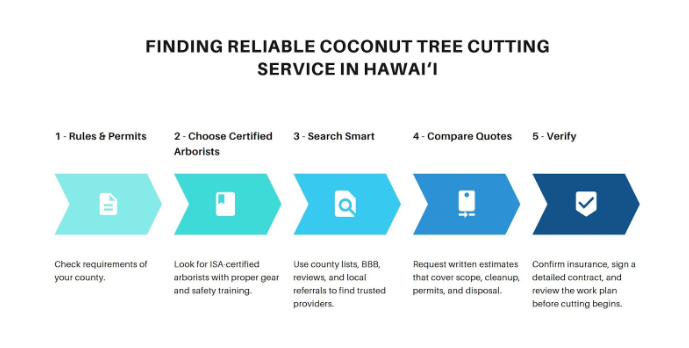
Step 1: Understand Local Rules and Permits
Before you hire a coconut tree cutting service, it’s important to know that Hawai’i has specific rules for tree removal. In fact, each county manages its own permitting process and the requirements can vary.
For example, if a coconut palm grows on public property, near a roadway, or within a historic district, you may need a permit from the relevant department. Private property owners, on the other hand, usually don’t need a permit for routine tree trimming, but full tree removal does if the tree is large or poses risks to neighboring land.
Hawai’i law also requires licensed contractors for most professional tree work. Look for companies with a C-27 (landscaping) or C-27B (tree trimming and removal) classification from the state Contractors License Center.
Step 2: Find Certified and Safety-Trained Arborists
Not all tree services are equal. A reliable coconut tree cutting service should have staff trained in arboriculture, ideally with certification from the International Society of Arboriculture (ISA). ISA-certified arborists understand palm biology, pruning techniques, and disease management, which helps keep your tree healthy if it is being trimmed rather than removed.
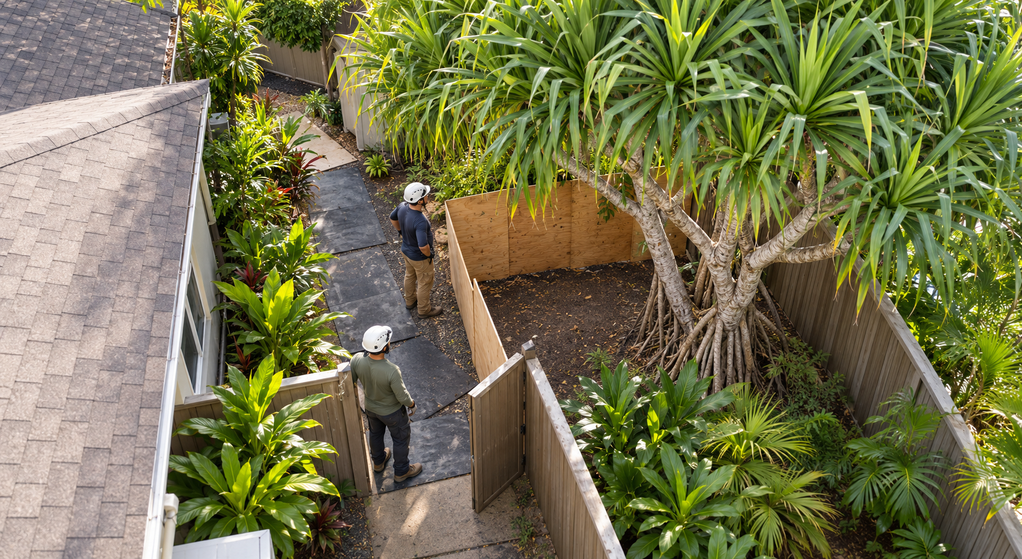
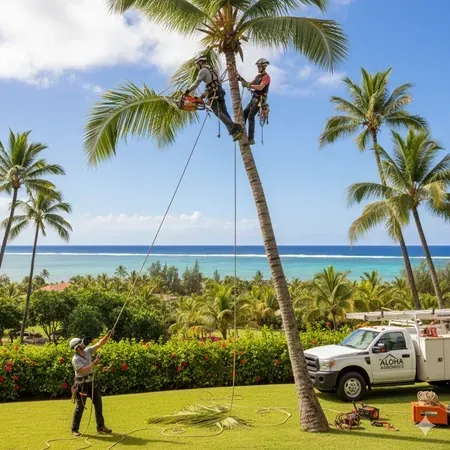
Safety is just as important as knowledge. Since coconut palms can grow more than 60 feet tall, a reputable crew should arrive with proper equipment such as climbing gear. Workers should also wear helmets, harnesses, and protective clothing.
Finally, confirm that the company follows Occupational Safety and Health Administration (OSHA) standards and local best practices. This protects not only the workers but also your property. By choosing professionals experienced in tree trimming services, you reduce the risk of accidents and ensure the job is done safely.
Step 3: Search in the Right Places
Finding a trustworthy coconut tree cutting service in Hawai’i starts with knowing where to look.
County websites sometimes publish lists of approved contractors and these can be a reliable first stop. The Better Business Bureau is another good source. Online platforms like Yelp or even local Facebook community groups often provide firsthand accounts from other residents. Word of mouth is also powerful, so asking neighbors or local property managers can reveal which companies consistently do good work.
A tip for reading reviews is to focus on patterns rather than single opinions. Consistent mentions of punctuality, thorough cleanup, and clear communications are strong indicators of professionalism. On the other hand, repeated complaints about missed appointments or surprise fees should raise concern.
Red flags to watch out for include companies that only advertise vague services like “cheap tree cutting” but never specify if they provide licensed tree removal. A reliable provider should have a track record that is easy to verify.
Step 4: Compare Quotes
Once you have a shortlist of providers, request detailed written estimates.
A good quote from a coconut tree cutting service provider should outline the full scope of work: whether it involves trimming or full removal. It should also note the required equipment as well as any permits the company will handle on your behalf.
A rule of thumb is that: cheaper isn’t always safe. A very low estimate may signal that the company lacks insurance, uses untrained labor, or cuts corners on disposal. Reliable providers charge fairly because they invest in safety, training, and proper equipment. Companies offering both tree trimming and tree removal services often provide more transparent, itemized estimates.
Step 5: Verify Insurance, Contracts, and On-Site Work
Before any cutting begins, confirm that the coconut tree cutting service carries both general liability insurance and workers’ compensation. Liability coverage protects your property if damage occurs, while workers’ comp ensures you are not held responsible if a crew member gets injured. Always ask for proof of coverage and make sure it is current.
A written contract is equally important. It should clearly outline the agreed price, scope of work, cleanup responsibilities, disposal method, and project timeline. Avoid services that only offer verbal promises, as these can easily lead to disputes.
Homeowners can also prepare the site by clearing vehicles or furniture from the work area and ensuring pets and children remain safely inside. On the day of service, take a quick walk-through with the crew leader. Confirm where debris will fall, how equipment will be positioned, and what the cleanup plan looks like. This final check helps avoid misunderstandings and ensures safe, efficient work.
If the project involves larger palms or hazardous locations, it’s often best to work with experienced professionals who handle both tree trimming and tree removal. This way, you know the company is prepared for anything that may come up once work begins.
Quick Checklist
Hiring the right coconut tree cutting service in Hawai’i is about more than convenience. It protects your property, keeps your family safe, and ensures that work follows state and county rules. All of these things make the stakes of this decision high.
Here’s a quick checklist to guide your decisions:
- Verify permit and contractor license
- Confirm ISA certification or equivalent training
- Collect detailed written quotes
- Check liability and workers’ comp insurance
- Finalize a clear contract and schedule
- Inspect the site after work is complete
Following these steps makes the process straightforward and ensures your palms are managed safely and responsibly.