The Basics of Chainsaws: An Essential Guide for Arborists and Tree Care Enthusiasts in Oahu, HI
A chainsaw is a wonderful tool for Oahu arborists, forestry professionals, and tree care enthusiasts. This indispensable tool can become a great friend of yours once you have it in your tree care journey, and is considered one of the best must-have tools for tree trimming and cutting, as mentioned in our previous blog. However, unlike the other tools that can be used immediately, this one, while offering significant advantages, still carries risks and hazards that could lead to dangers or worse, catastrophic consequences. So, if you are interested in adding this tool to your arsenal, here is what you need to know to maximize the benefits of utilizing chainsaws and avoid errors and drawbacks in your tree-cutting and trimming tasks.
Trust Your Instincts and Stay Safe
Before we proceed to the actual things you need to do, you should know your limits. Chainsaws are great and powerful tools for cutting trees, but they are not the only things they might cut in the process if you are unaware of how to use it properly or you lack confidence. Trusting your instinct can be just as important as technical know-how. If something feels off or bugs you—stop and assess the situation. Intuition can prevent accidents and keep you safe during this kind of task. Your arms and legs are far more important than the branches being cut.
If you're unsure about the risks, you might want to review how professionals emphasize avoiding common safety pitfalls in tree trimming.
Know the Right Chainsaw
There are many types of chainsaws that you can use and identifying the ideal factors, such as power source, bar length, weight, and intended purpose, is essential. Here are the details you need to know:
Gas-Powered Chainsaws: The best for heavy-duty cutting tasks like felling large trees.
Electric Chainsaws: Ideal for small to medium jobs near a power source.
Battery-Powered Chainsaws: Offer portability and are ideal for quick and smaller tasks.
Pole Chainsaws: Perfect for trimming hard-to-reach branches.
These types of chainsaws have their own advantages and disadvantages and you need to weigh what will benefit you the most for better efficiency. For more advanced guidance, our post on expert tree care techniques offers strategies used by top arborists on Oahu.
Use Protective Equipment Before Getting Started
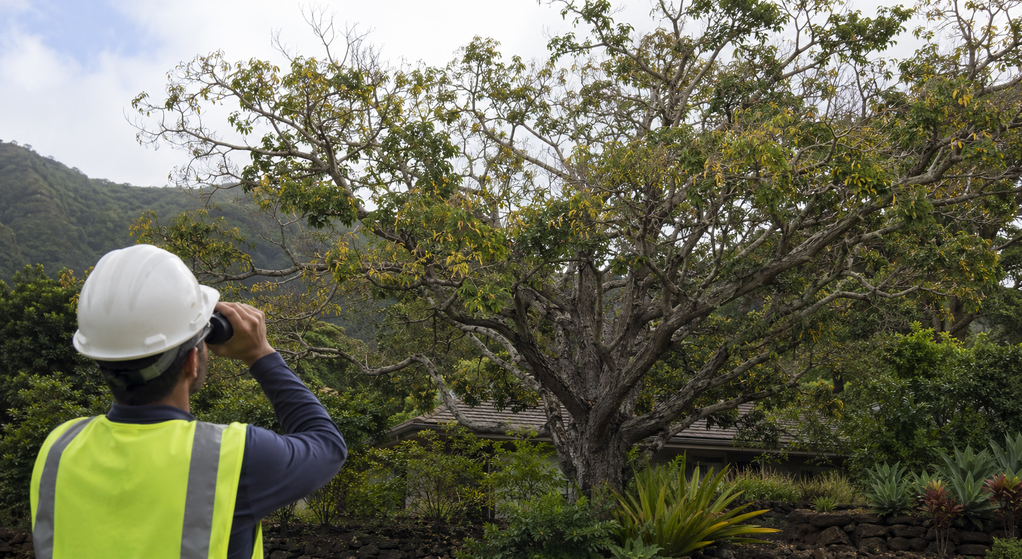
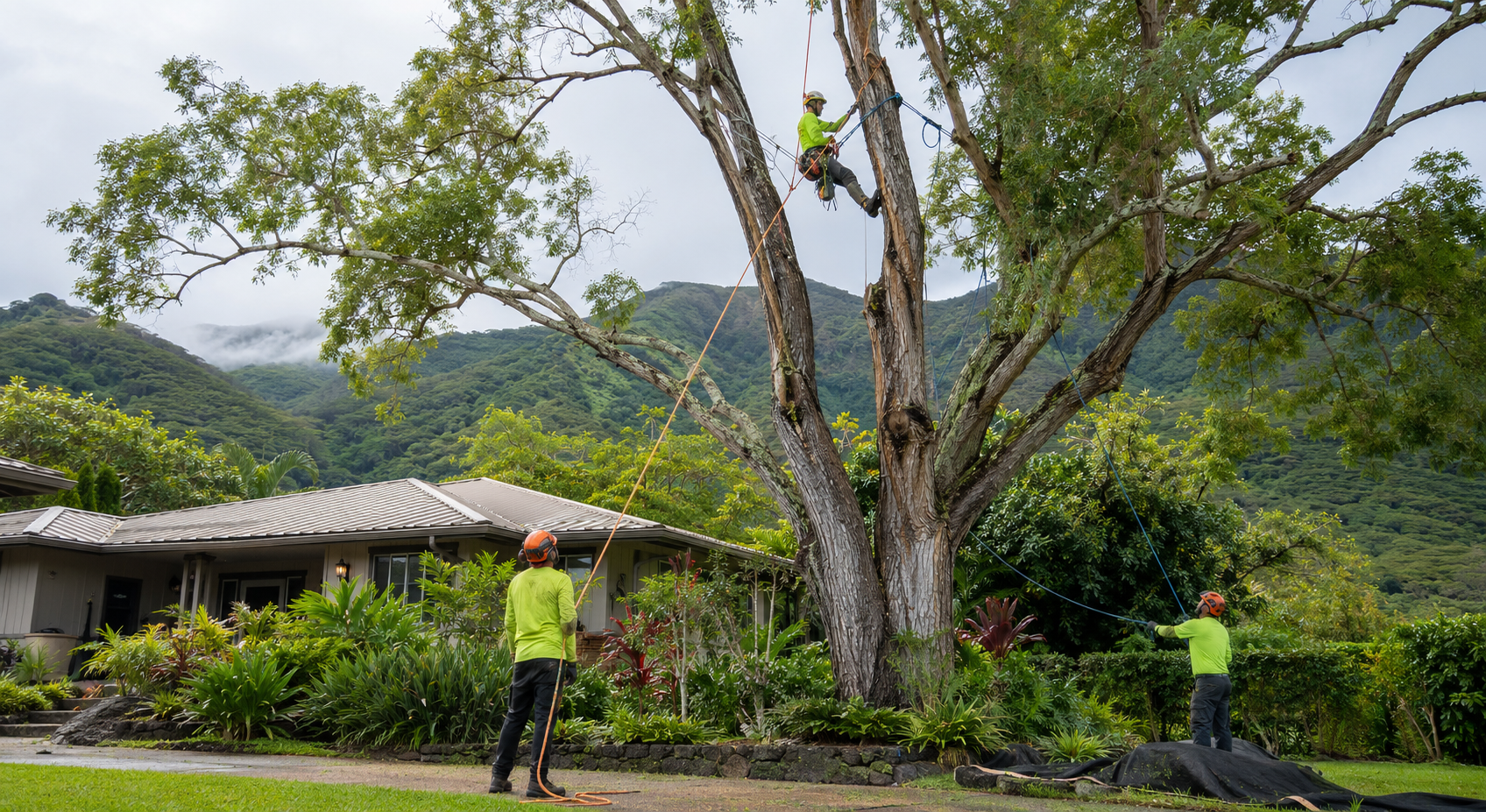
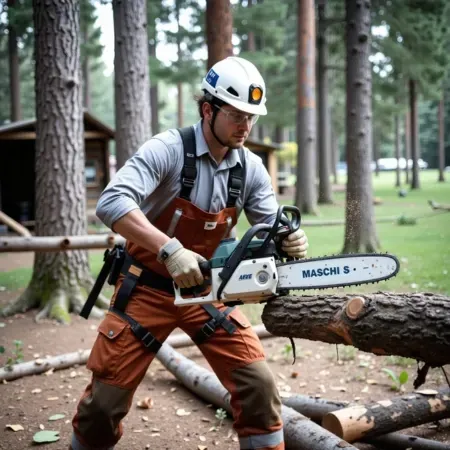
Once you have built your confidence and your chainsaw is ready, the next step is to put on protective gear to enhance safety. As we have mentioned, your safety is more important than trees being cut or trimmed. That is why equipping yourself with the PPE used by professional tree cutters in Oahu:
Head Protection – A hard hat or helmet to protect your head from falling objects.
Eye and Face Protection – Safety glasses or a face shield for added protection against flying debris.
Hearing Protection – Ear covers or noise canceling cups to reduce noise exposure.
Good Gloves – They should be made of anti-saw fabric for hand protection and a better grip.
Leg Protection – Work pants or chainsaw chaps
Foot Protection – Steel-toe work boots with a good grip for protecting your feet from falling objects and avoiding trips and falls while handling a chainsaw.
Check Your Chainsaw and The Area
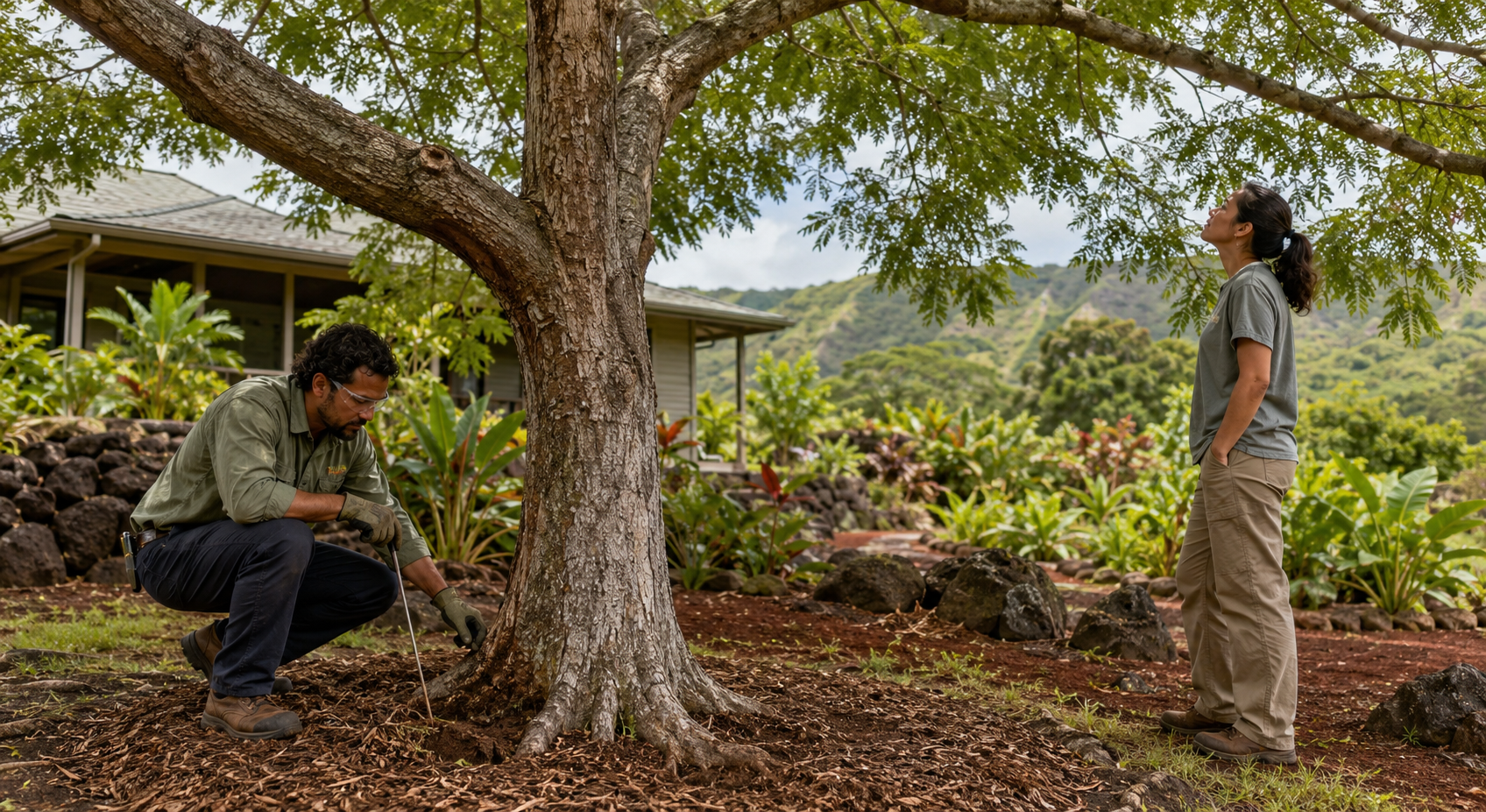
Before starting, thoroughly check your chainsaw. Make sure that the chain is sharp and properly tensioned, there are no loose bolts, leaks, or cracks, the chain brake is properly working, the chain is lubricated, and there is enough fuel or battery power for the whole process.
After assessing your chainsaw, next check your surroundings if there are obstacles that could cause trips or falls, pets or people in the immediate vicinity, or unstable branches or uneven ground. Inspecting these parts can help prevent breakdowns and accidents during use.
For more safety tips and cost-effective planning, check out our post on tree trimming and removal cost insights.
Basic Rules for Working with a Chainsaw
After setting everything up, it is time to learn how to handle your chainsaw efficiently and safely. First, you should know the proper stance. For stability, stand with your feet shoulder-width apart and avoid sudden jerks or swinging motions. Wrap your thumbs firmly around the handles to have a secure grip and don’t be afraid to hold it close to your body. This will improve your balance, make the saw feel lighter and help you avoid working with a curved spine.
Additionally, Oahu tree care professionals suggest avoiding holding the chainsaw above shoulder level to secure your control and always maintain a distance of 5 meters from others. Another thing that you should be aware of is the kickback. It happens when the tip of the guide bar contacts an object that can cause the chainsaw to jerk forward. To prevent this, avoid cutting with the upper part of the bar tip or the kickback zone, and always maintain a firm grip. Kickback can also happen if the chainsaw is not well-maintained, which is why an Oahu-certified arborist needs to keep their chainsaw in good condition.
Best Practices to Avoid Injuries
Plan Your Cuts: Think thoroughly before cutting to avoid unintended movement.
Take Breaks: Avoid overexerting yourself, as it affects your stability and efficiency. It is best to take breaks during extended use.
Work With a Partner: Having someone with you in the cutting process can help in case of emergencies.
Always Maintain Your Chainsaw: Maintaining your chainsaw in good condition and sharp reduces the chance of kickback.
You can also brush up on basic tree care tips to further improve your trimming outcomes and overall tree health.
Final Advice
Having a chainsaw in your tree-cutting task can help you to get the job done more easily and quickly. However, Oahu tree cutters suggest taking chainsaw courses available in your area and not just buying and using one without taking safety precautions or understanding the know-how. Just a friendly reminder: curiosity killed the cat.
You can also consider giving the tree cutting and trimming task to the hands of professionals instead. Oahu Tree Trimming and Removal Experts can help you achieve the best result without compromising your safety and will help you learn more from them. If you need assistance from one of the most trusted and reliable arborists that can be found in Oahu, reach out to us by sending a message or filling out our form.